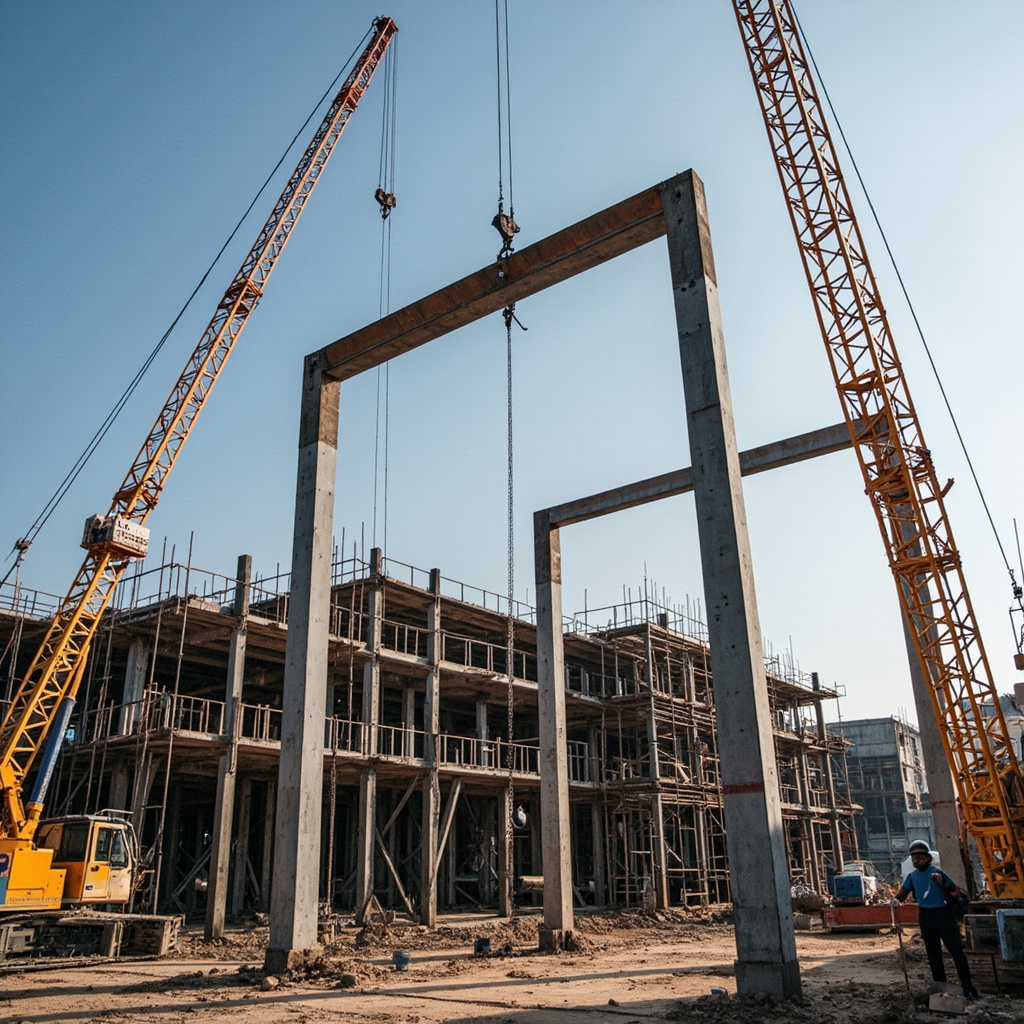
Deep-dive into Africa's $4.2 billion <a href="/products" class="text-primary-600 hover:text-primary-800 underline underline-offset-2"><a href="/products".
Market Size & Growth: $4.2B and Accelerating
Africa's fastener market reached approximately USD 3.8 billion in 2025 and is projected to hit USD 4.2 billion by end of 2026, growing at 7.2% CAGR — nearly double the global average of 3.8%. Growth is driven by: African Continental Free Trade Area (AfCFTA) boosting cross-border construction, urbanization rate of 4.1% (highest globally), infrastructure investment commitments exceeding $150 billion through 2030, and housing deficit of 56 million units requiring massive construction. The top 5 markets (South Africa, Nigeria, Egypt, Kenya, Morocco) account for 65% of demand, but the fastest growth is in secondary markets: Ghana, Tanzania, Ethiopia, and Côte d'Ivoire. Related resources: high-tensile bolts anchor bolts stainless steel fasteners hex bolts lock nuts washers self-drilling screws socket screws. This procurement framework applies to fastener sourcing for construction, mining, energy, automotive, and general industrial applications. The decision logic prioritizes quality consistency, supplier reliability, and total cost of ownership over short-term unit price. For B2B buyers in Africa, Latin America, and Southeast Asia, additional considerations include regional customs requirements, container consolidation options, and payment security mechanisms. Standardized specifications that travel across projects reduce training time, RFQ processing time, and supplier onboarding effort. This procurement framework applies to fastener sourcing for construction, mining, energy, automotive, and general industrial applications. The decision logic prioritizes quality consistency, supplier reliability, and total cost of ownership over short-term unit price. For B2B buyers in Africa, Latin America, and Southeast Asia, additional considerations include regional customs requirements, container consolidation options, and payment security mechanisms. Standardized specifications that travel across projects reduce training time, RFQ processing time, and supplier onboarding effort.
| Country | Market Size 2025 | Growth Rate | Key Driver |
|---|---|---|---|
| South Africa | $1.1B | 4.5% | Infrastructure renewal + mining |
| Nigeria | $650M | 9.2% | Housing + oil & gas |
| Egypt | $580M | 6.8% | New capital city + transport |
| Kenya | $340M | 8.5% | Real estate + manufacturing |
| Morocco | $280M | 5.5% | Automotive + renewable energy |
| Ghana | $180M | 11.3% | Oil revenue + urbanization |
| Tanzania | $150M | 10.1% | Transport infrastructure |
| Ethiopia | $120M | 12.5% | Industrial parks + dams |
Product Demand: What Africa Needs
Fastener demand in Africa is heavily skewed toward construction-grade products, unlike mature markets where automotive and aerospace dominate. The top product categories by value: roofing fasteners (nails, screws, washers) at 28%, structural bolts (8.8 and 10.9 grade) at 22%, concrete anchors and fixings at 15%, general hardware (screws, nuts, washers) at 20%, and specialty fasteners (stainless, high-tensile) at 15%. The single highest-demand item: IBR roofing nails (SABS 1195 compliant) in Southern Africa, and self-drilling screws with EPDM washers in East and West Africa. Standards-based procurement requires continuous learning as ISO, ASTM, DIN, and GB standards are revised every 3-5 years. Subscribe to standards update notifications and review specifications annually. The most common standards used in international fastener trade are ISO 898-1 (mechanical properties), ISO 3506-1 (stainless), ISO 3269 (acceptance inspection), ISO 4042 (coatings), and ISO 1502 (thread gauges). For B2B buyers, building a standards reference library with at least the top 20 standards relevant to your product mix is essential. Standards-based procurement requires continuous learning as ISO, ASTM, DIN, and GB standards are revised every 3-5 years. Subscribe to standards update notifications and review specifications annually. The most common standards used in international fastener trade are ISO 898-1 (mechanical properties), ISO 3506-1 (stainless), ISO 3269 (acceptance inspection), ISO 4042 (coatings), and ISO 1502 (thread gauges). For B2B buyers, building a standards reference library with at least the top 20 standards relevant to your product mix is essential.
| Product | Demand Index | Price Sensitivity | Quality Requirement |
|---|---|---|---|
| IBR roofing nails | ★★★★★ | High | SABS/standard compliant |
| Self-drilling screws | ★★★★★ | Medium | Drill point #2-#3 |
| Structural bolts 8.8 | ★★★★ | Medium | ISO 898-1 certified |
| Concrete anchors | ★★★★ | Low | ETA/CE marked |
| Wire nails (common) | ★★★★ | Very High | Basic |
| Stainless fasteners | ★★★ | Low | Marine grade 316 |
Distribution Channels: How to Reach the Market
Africa's fastener distribution is fragmented and relationship-driven. Understanding the channel structure is critical for market entry. Tier 1: National distributors with warehouse networks — high volume, 60-90 day payment terms, require brand reputation and consistent supply. Tier 2: Regional wholesalers — medium volume, 30-60 day terms, price-sensitive, strong in secondary cities. Tier 3: Retail hardware chains (Builders Warehouse, Cashbuild, Game) — consumer/small contractor market, require barcoding and packaging standards. Direct: Online B2B platforms are emerging — Africa-speaking (Nigeria), ManoShop (West Africa), Howsell (Kenya) — but still represent less than 5% of total volume. The comparison methodology above uses typical ranges from industry data and TradeGo procurement experience 2018-2024. Actual market prices fluctuate with raw material costs (steel, zinc, nickel), energy costs, labor costs, and currency exchange rates. For accurate comparison, request identical RFQs from 3-5 qualified suppliers and compare landed cost (product + shipping + insurance + duties). The lowest unit price is rarely the lowest total cost of ownership. The comparison methodology above uses typical ranges from industry data and TradeGo procurement experience 2018-2024. Actual market prices fluctuate with raw material costs (steel, zinc, nickel), energy costs, labor costs, and currency exchange rates. For accurate comparison, request identical RFQs from 3-5 qualified suppliers and compare landed cost (product + shipping + insurance + duties). The lowest unit price is rarely the lowest total cost of ownership.
| Channel | Volume | Margin | Payment Terms | Entry Difficulty |
|---|---|---|---|---|
| National distributor | High | 15-25% | 60-90 days | Hard — requires track record |
| Regional wholesaler | Medium | 20-30% | 30-60 days | Medium — price competitive |
| Hardware retail chain | Medium | 25-40% | 45-90 days | Medium — packaging requirements |
| Direct to contractor | Low-Med | 40-50% | COD-30 days | Easy — relationship-based |
| Online B2B | Low | 10-15% | Prepaid | Easy — low barrier |
Compliance & Standards by Region
Standards compliance is non-negotiable for formal sector sales. Southern Africa (SADC): SABS (South Africa), SABS 1195 for roofing nails, SANS 127 for bolts. Compulsory specification VC 8055 for certain fastener types. East Africa (EAC): EAC marking required, Kenya Bureau of Standards (KEBS) certification, PVoC inspection for imports. West Africa (ECOWAS): SONCAP (Nigeria) mandatory for all imports, varying standards by country. North Africa: mostly European standards (EN/ISO), CE marking accepted. Pan-African: AfCFTA is harmonizing standards, but implementation varies. Practical advice: Start with SABS certification for Southern Africa (largest market), then expand to KEBS and SONCAP. The verification checklist applies to both initial supplier qualification and ongoing batch inspection. For high-risk applications (load-bearing structural, pressure vessels, mining, marine), add fatigue testing, salt-spray testing (ASTM B117), torque-tension testing, and post-installation inspection. The cost of additional verification is 0.1-0.3% of order value, while undetected quality failures can be 10-100x the order value in damages. The verification checklist applies to both initial supplier qualification and ongoing batch inspection. For high-risk applications (load-bearing structural, pressure vessels, mining, marine), add fatigue testing, salt-spray testing (ASTM B117), torque-tension testing, and post-installation inspection. The cost of additional verification is 0.1-0.3% of order value, while undetected quality failures can be 10-100x the order value in damages.
| Region | Certification | Lead Time | Cost Estimate |
|---|---|---|---|
| South Africa | SABS + LoA | 8-12 weeks | $3,000-8,000 |
| Kenya | KEBS + PVoC | 4-6 weeks | $1,500-3,000 |
| Nigeria | SONCAP + CoC | 3-5 weeks | $2,000-4,000 |
| Egypt | GOEIC registration | 4-8 weeks | $1,000-2,500 |
| Morocco | CMA marking | 6-10 weeks | $2,000-5,000 |
Recommended Entry Strategy for Manufacturers
Phase 1 (Months 1-3): Start with South Africa — largest market, clearest standards, most developed distribution. Focus on IBR roofing nails and self-drilling screws. Partner with 1-2 national distributors. Obtain SABS certification. Phase 2 (Months 4-9): Expand to Kenya and Nigeria. Use South Africa as reference market. Apply for KEBS and SONCAP in parallel. Attend Africa Big 7 (Johannesburg) and Buildexpo Africa (Nairobi). Phase 3 (Months 10-18): Add secondary markets via distributor network. Launch online B2B presence. Consider local warehousing in Johannesburg for 48-hour delivery. Supplier evaluation should be a continuous process, not a one-time exercise. Re-evaluate suppliers annually based on delivery performance, quality metrics, price competitiveness, and responsiveness. Maintain a supplier scorecard with weighted metrics: on-time delivery (25%), quality acceptance rate (30%), price competitiveness (20%), responsiveness (15%), and documentation accuracy (10%). Drop suppliers scoring below 70% over a 6-month period and qualify replacements. Supplier evaluation should be a continuous process, not a one-time exercise. Re-evaluate suppliers annually based on delivery performance, quality metrics, price competitiveness, and responsiveness. Maintain a supplier scorecard with weighted metrics: on-time delivery (25%), quality acceptance rate (30%), price competitiveness (20%), responsiveness (15%), and documentation accuracy (10%). Drop suppliers scoring below 70% over a 6-month period and qualify replacements.
Key Risks & Mitigation
Currency risk: Naira and Shilling volatility — price in USD, accept local currency only through reputable forex dealers. Payment risk: 60-90 day terms are standard — use LC (Letter of Credit) for new customers, open account only after 3+ successful transactions. Quality perception: Chinese fasteners face skepticism in Africa — lead with quality certifications, offer free sample batches, provide mill test certificates with every shipment. Logistics: Port delays in Lagos and Mombasa average 14-21 days — factor into delivery commitments, consider Dar es Salaam as alternative for East Africa. Competition: Indian manufacturers dominate price-sensitive segments, Turkish manufacturers compete in mid-range — differentiate on quality certification and consistent supply. For more information, also see our guides on [East Africa market](/en/industry/east-africa-construction-fastener-market), [roofing fasteners](/en/industry/ibr-roofing-nails-installation-guide), [bolt specifications](/en/industry/bolt-grade-markings-guide). For B2B buyers operating in multiple countries, harmonize specifications with regional standards and local customs requirements. Common regional frameworks: SABS (South Africa), KEBS (Kenya), TBS (Tanzania), ZIMRA (Zimbabwe), SON (Nigeria), and AfCFTA standards for pan-Africa trade. Local standards compliance is often mandatory for public infrastructure projects, mining operations, and government tenders. For B2B buyers operating in multiple countries, harmonize specifications with regional standards and local customs requirements. Common regional frameworks: SABS (South Africa), KEBS (Kenya), TBS (Tanzania), ZIMRA (Zimbabwe), SON (Nigeria), and AfCFTA standards for pan-Africa trade. Local standards compliance is often mandatory for public infrastructure projects, mining operations, and government tenders.
Frequently Asked Questions
See frequently asked questions below.
Related resources: high-tensile bolts anchor bolts stainless steel fasteners hex bolts lock nuts washers self-drilling screws socket screws.What is the minimum order quantity for African markets?
Distributors typically expect 20ft container loads (18-25 tons). For initial orders, some distributors accept 10ft or LCL shipments, but unit costs increase 15-25%. Start with a full container of your best-selling product line.
Do I need a local agent to sell in Africa?
Not legally required in most countries, but highly recommended. A good agent handles customs clearance, local certification, distributor relationships, and payment collection. Commission rates are typically 3-8% depending on market and product.
How long does it take to get SABS certification?
8-12 weeks for standard fasteners. You'll need to submit samples for testing (4-6 weeks), factory documentation, and quality system evidence. Using a local consultant reduces this to 6-8 weeks.
What payment methods are safest for African exports?
For new relationships: Irrevocable Letter of Credit (LC) at sight. After 3+ successful transactions: 30% advance + 70% against Bill of Lading. For established partners: Open account with credit insurance (Euler Hermes, Coface).
Targeting the African fastener market? TradeGo offers SABS-ready products with full certification support.
Get Quote