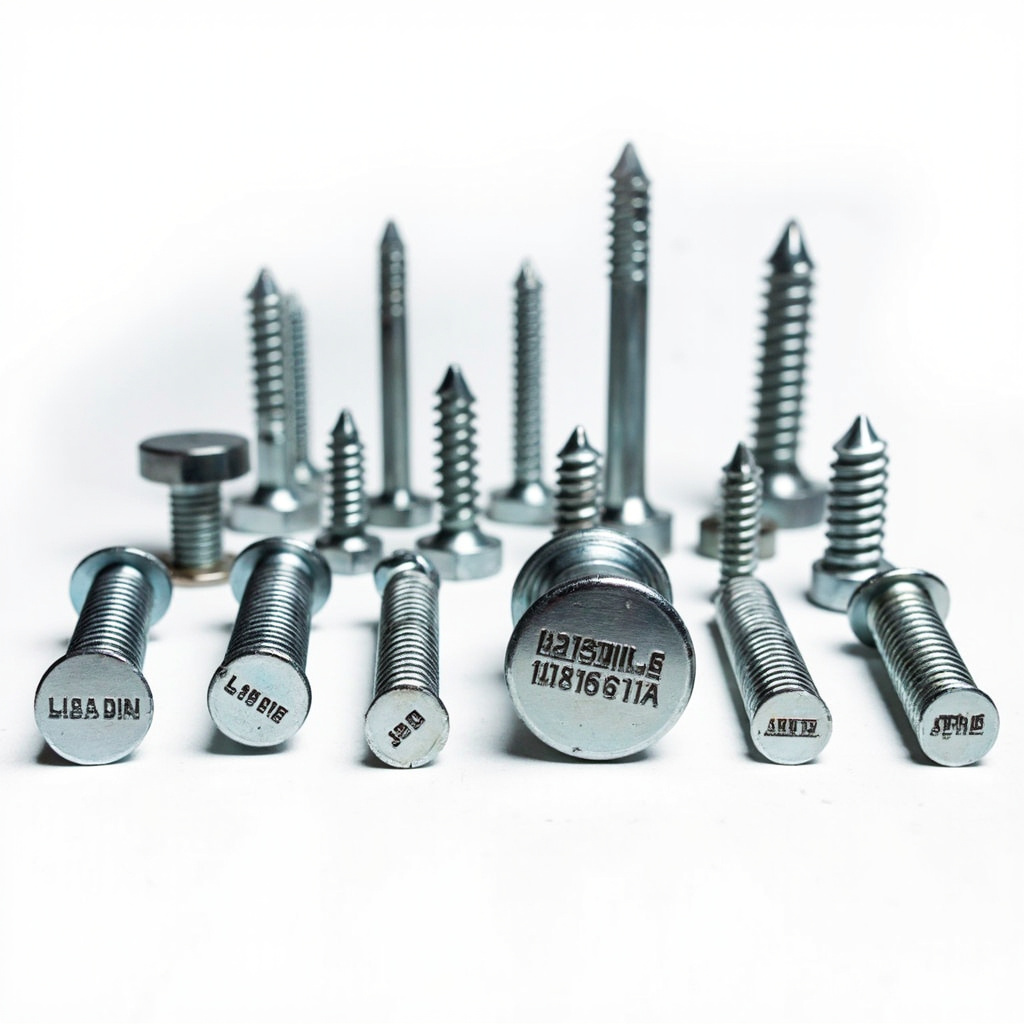
Compare DIN, ANSI, GB, and SABS <a href="/products" class="text-primary-600 hover:text-primary-800 underline underline-offset-2"><a href="/products".
Overview of Major Fastener Standards
Fastener standards define dimensional tolerances, mechanical properties, and testing requirements that ensure interchangeability and reliability. The four most relevant standards for international construction are DIN (Deutsches Institut für Normung, Germany), ANSI/ASME (American National Standards Institute), GB (Guobiao, China), and SABS (South African Bureau of Standards). DIN standards are the most widely referenced in Africa and the Middle East due to historical European influence on construction practices. ANSI/ASME standards dominate in North America and American-influenced markets. GB standards are increasingly common as Chinese-manufactured fasteners dominate the global supply. SABS standards are essential for projects in South Africa and SADC member states. Understanding the relationships between these standards is critical for procurement — a bolt specified as DIN 931 Grade 8.8 may not be dimensionally identical to an ANSI B18.2.1 Grade 5 bolt, even though their mechanical properties are similar. Key differences exist in head dimensions, thread profiles, and tolerance classes. Related resources: high-tensile bolts anchor bolts stainless steel fasteners hex bolts lock nuts washers self-drilling screws socket screws. This procurement framework applies to fastener sourcing for construction, mining, energy, automotive, and general industrial applications. The decision logic prioritizes quality consistency, supplier reliability, and total cost of ownership over short-term unit price. For B2B buyers in Africa, Latin America, and Southeast Asia, additional considerations include regional customs requirements, container consolidation options, and payment security mechanisms. Standardized specifications that travel across projects reduce training time, RFQ processing time, and supplier onboarding effort. This procurement framework applies to fastener sourcing for construction, mining, energy, automotive, and general industrial applications. The decision logic prioritizes quality consistency, supplier reliability, and total cost of ownership over short-term unit price. For B2B buyers in Africa, Latin America, and Southeast Asia, additional considerations include regional customs requirements, container consolidation options, and payment security mechanisms. Standardized specifications that travel across projects reduce training time, RFQ processing time, and supplier onboarding effort. This procurement framework applies to fastener sourcing for construction, mining, energy, automotive, and general industrial applications. The decision logic prioritizes quality consistency, supplier reliability, and total cost of ownership over short-term unit price. For B2B buyers in Africa, Latin America, and Southeast Asia, additional considerations include regional customs requirements, container consolidation options, and payment security mechanisms. Standardized specifications that travel across projects reduce training time, RFQ processing time, and supplier onboarding effort. This procurement framework applies to fastener sourcing for construction, mining, energy, automotive, and general industrial applications. The decision logic prioritizes quality consistency, supplier reliability, and total cost of ownership over short-term unit price. For B2B buyers in Africa, Latin America, and Southeast Asia, additional considerations include regional customs requirements, container consolidation options, and payment security mechanisms. Standardized specifications that travel across projects reduce training time, RFQ processing time, and supplier onboarding effort.
| Standard | Origin | Primary Market | Key Bolt Std | Key Nut Std |
|---|---|---|---|---|
| DIN | Germany | Europe, Africa, Middle East | DIN 931/933 | DIN 934 |
| ANSI/ASME | USA | North America, Gulf | B18.2.1 | B18.2.2 |
| GB | China | China, global supply | GB/T 5782/5783 | GB/T 6170 |
| SABS | South Africa | SADC region | SABS 135 | SABS 136 |
Grade Equivalency and Mechanical Properties
Mechanical grade equivalency between standards is one of the most common sources of confusion in international fastener procurement. While grade designations differ, the underlying mechanical properties often align. DIN Grade 4.6 (tensile strength 400 MPa, yield 240 MPa) is approximately equivalent to ANSI SAE Grade 2 and GB Grade 4.6. DIN Grade 8.8 aligns with ANSI SAE Grade 5 and GB Grade 8.8. DIN Grade 10.9 corresponds to ANSI SAE Grade 8 and GB Grade 10.9. However, dimensional differences mean these bolts are not always physically interchangeable. Head width and height vary between standards — a DIN hex head bolt has different across-flats dimensions than an ANSI hex bolt of the same nominal diameter. For example, an M10 DIN bolt has a 17mm across-flats head, while a 3/8" ANSI bolt has a 9/16" (14.3mm) across-flats head. Always specify both the standard and the grade when ordering to avoid receiving dimensionally incompatible fasteners. Standards-based procurement requires continuous learning as ISO, ASTM, DIN, and GB standards are revised every 3-5 years. Subscribe to standards update notifications and review specifications annually. The most common standards used in international fastener trade are ISO 898-1 (mechanical properties), ISO 3506-1 (stainless), ISO 3269 (acceptance inspection), ISO 4042 (coatings), and ISO 1502 (thread gauges). For B2B buyers, building a standards reference library with at least the top 20 standards relevant to your product mix is essential. Standards-based procurement requires continuous learning as ISO, ASTM, DIN, and GB standards are revised every 3-5 years. Subscribe to standards update notifications and review specifications annually. The most common standards used in international fastener trade are ISO 898-1 (mechanical properties), ISO 3506-1 (stainless), ISO 3269 (acceptance inspection), ISO 4042 (coatings), and ISO 1502 (thread gauges). For B2B buyers, building a standards reference library with at least the top 20 standards relevant to your product mix is essential. Standards-based procurement requires continuous learning as ISO, ASTM, DIN, and GB standards are revised every 3-5 years. Subscribe to standards update notifications and review specifications annually. The most common standards used in international fastener trade are ISO 898-1 (mechanical properties), ISO 3506-1 (stainless), ISO 3269 (acceptance inspection), ISO 4042 (coatings), and ISO 1502 (thread gauges). For B2B buyers, building a standards reference library with at least the top 20 standards relevant to your product mix is essential. Standards-based procurement requires continuous learning as ISO, ASTM, DIN, and GB standards are revised every 3-5 years. Subscribe to standards update notifications and review specifications annually. The most common standards used in international fastener trade are ISO 898-1 (mechanical properties), ISO 3506-1 (stainless), ISO 3269 (acceptance inspection), ISO 4042 (coatings), and ISO 1502 (thread gauges). For B2B buyers, building a standards reference library with at least the top 20 standards relevant to your product mix is essential.
| DIN Grade | ANSI Grade | GB Grade | Tensile (MPa) | Yield (MPa) |
|---|---|---|---|---|
| 4.6 | SAE Grade 2 | 4.6 | 400 | 240 |
| 5.6 | — | 5.6 | 500 | 300 |
| 8.8 | SAE Grade 5 | 8.8 | 800 | 640 |
| 10.9 | SAE Grade 8 | 10.9 | 1000 | 900 |
| 12.9 | — | 12.9 | 1200 | 1080 |
Compliance and Certification Requirements
Construction projects in different regions require fasteners that meet specific certification and compliance standards. In South Africa, SABS mark certification is mandatory for fasteners used in government-funded construction and public infrastructure. SABS 135 (bolts) and SABS 136 (nuts) align closely with ISO 898-1 and ISO 898-2 respectively. Zimbabwe accepts both SABS and DIN-certified fasteners for most projects. The Gulf Cooperation Council (GCC) countries increasingly require GSO (Gulf Standardization Organization) certification, which is based on ISO standards. For projects in East Africa, KEBS (Kenya Bureau of Standards) and TBS (Tanzania Bureau of Standards) certification may be required. When sourcing fasteners from China, request GB/T test reports and ensure the manufacturer has ISO 9001 certification. For critical structural applications, always request mill test certificates (MTC) per EN 10204 Type 3.1, which provides traceability from raw material to finished product. The cost premium for certified fasteners is typically 3-8% but is non-negotiable for structural compliance. For more information, also see our guides on [DIN and ISO standards](/en/industry/din-iso-fastener-standards-guide), [quality control](/en/industry/fastener-quality-control-iso9001), [bolt grades](/en/industry/bolt-grade-markings-guide). The comparison methodology above uses typical ranges from industry data and TradeGo procurement experience 2018-2024. Actual market prices fluctuate with raw material costs (steel, zinc, nickel), energy costs, labor costs, and currency exchange rates. For accurate comparison, request identical RFQs from 3-5 qualified suppliers and compare landed cost (product + shipping + insurance + duties). The lowest unit price is rarely the lowest total cost of ownership. The comparison methodology above uses typical ranges from industry data and TradeGo procurement experience 2018-2024. Actual market prices fluctuate with raw material costs (steel, zinc, nickel), energy costs, labor costs, and currency exchange rates. For accurate comparison, request identical RFQs from 3-5 qualified suppliers and compare landed cost (product + shipping + insurance + duties). The lowest unit price is rarely the lowest total cost of ownership. The comparison methodology above uses typical ranges from industry data and TradeGo procurement experience 2018-2024. Actual market prices fluctuate with raw material costs (steel, zinc, nickel), energy costs, labor costs, and currency exchange rates. For accurate comparison, request identical RFQs from 3-5 qualified suppliers and compare landed cost (product + shipping + insurance + duties). The lowest unit price is rarely the lowest total cost of ownership. The comparison methodology above uses typical ranges from industry data and TradeGo procurement experience 2018-2024. Actual market prices fluctuate with raw material costs (steel, zinc, nickel), energy costs, labor costs, and currency exchange rates. For accurate comparison, request identical RFQs from 3-5 qualified suppliers and compare landed cost (product + shipping + insurance + duties). The lowest unit price is rarely the lowest total cost of ownership.
Can I substitute DIN bolts for SABS bolts on a South African project?
Only if the project specifications allow it and the DIN bolts meet equivalent mechanical properties. For government-funded projects, SABS certification is typically mandatory. Check with the project engineer before substituting.
Are GB standard fasteners acceptable for international projects?
Yes, provided they meet the specified mechanical grade requirements and come with proper test certifications. GB/T standards are increasingly aligned with ISO standards. Always request MTC and test reports.
Frequently Asked Questions
See frequently asked questions below.
Related resources: high-tensile bolts anchor bolts stainless steel fasteners hex bolts lock nuts washers self-drilling screws socket screws. The verification checklist applies to both initial supplier qualification and ongoing batch inspection. For high-risk applications (load-bearing structural, pressure vessels, mining, marine), add fatigue testing, salt-spray testing (ASTM B117), torque-tension testing, and post-installation inspection. The cost of additional verification is 0.1-0.3% of order value, while undetected quality failures can be 10-100x the order value in damages. The verification checklist applies to both initial supplier qualification and ongoing batch inspection. For high-risk applications (load-bearing structural, pressure vessels, mining, marine), add fatigue testing, salt-spray testing (ASTM B117), torque-tension testing, and post-installation inspection. The cost of additional verification is 0.1-0.3% of order value, while undetected quality failures can be 10-100x the order value in damages. The verification checklist applies to both initial supplier qualification and ongoing batch inspection. For high-risk applications (load-bearing structural, pressure vessels, mining, marine), add fatigue testing, salt-spray testing (ASTM B117), torque-tension testing, and post-installation inspection. The cost of additional verification is 0.1-0.3% of order value, while undetected quality failures can be 10-100x the order value in damages. The verification checklist applies to both initial supplier qualification and ongoing batch inspection. For high-risk applications (load-bearing structural, pressure vessels, mining, marine), add fatigue testing, salt-spray testing (ASTM B117), torque-tension testing, and post-installation inspection. The cost of additional verification is 0.1-0.3% of order value, while undetected quality failures can be 10-100x the order value in damages.What are Technical Guide and how are they used?
Technical Guide are essential components in construction and manufacturing. Proper selection depends on load requirements, environmental conditions, and material compatibility.
How do I choose the right fastener for my project?
Consider the material being fastened, load requirements, environmental exposure, and applicable standards. Consult with a professional if unsure about specifications.
What materials are available for these fasteners?
Common materials include carbon steel, stainless steel, alloy steel, and specialty alloys. Each offers different strength, corrosion resistance, and cost characteristics.
Do you offer custom manufacturing?
Yes, we offer custom fastener manufacturing to spec. Contact our sales team with your requirements for pricing and lead times.
Need certified fasteners for your project? TradeGo Fasteners supplies DIN, GB, and SABS certified products.
Get Quote