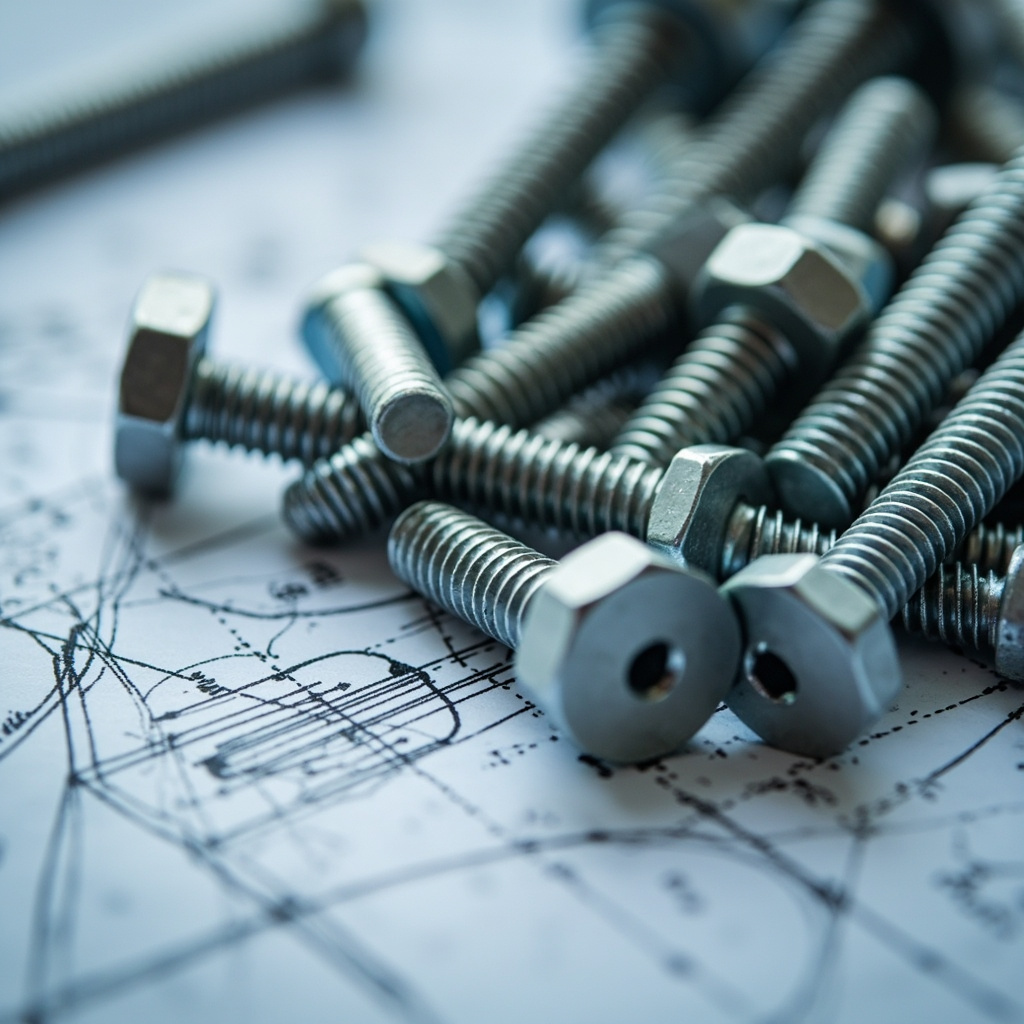
Master DIN and ISO <a href="/products" class="text-primary-600 hover:text-primary-800 underline underline-offset-2"><a href="/products".
Why Fastener Standards Matter for Procurement
Using standardized fasteners ensures interchangeability, quality consistency, and supply chain reliability. In African industrial projects, where equipment may originate from Europe, China, or South Africa, understanding both DIN (German) and ISO (International) standards prevents costly mismatches. A single non-standard bolt can halt an entire assembly line. Related resources: high-tensile bolts anchor bolts stainless steel fasteners hex bolts lock nuts washers self-drilling screws socket screws. This procurement framework applies to fastener sourcing for construction, mining, energy, automotive, and general industrial applications. The decision logic prioritizes quality consistency, supplier reliability, and total cost of ownership over short-term unit price. For B2B buyers in Africa, Latin America, and Southeast Asia, additional considerations include regional customs requirements, container consolidation options, and payment security mechanisms. Standardized specifications that travel across projects reduce training time, RFQ processing time, and supplier onboarding effort. This procurement framework applies to fastener sourcing for construction, mining, energy, automotive, and general industrial applications. The decision logic prioritizes quality consistency, supplier reliability, and total cost of ownership over short-term unit price. For B2B buyers in Africa, Latin America, and Southeast Asia, additional considerations include regional customs requirements, container consolidation options, and payment security mechanisms. Standardized specifications that travel across projects reduce training time, RFQ processing time, and supplier onboarding effort. This procurement framework applies to fastener sourcing for construction, mining, energy, automotive, and general industrial applications. The decision logic prioritizes quality consistency, supplier reliability, and total cost of ownership over short-term unit price. For B2B buyers in Africa, Latin America, and Southeast Asia, additional considerations include regional customs requirements, container consolidation options, and payment security mechanisms. Standardized specifications that travel across projects reduce training time, RFQ processing time, and supplier onboarding effort.
DIN Hex Bolts: The Industry Foundation
DIN 931 defines hex bolts with a shaft partially threaded — the most common structural fastener worldwide. DIN 933 specifies fully threaded hex bolts. Both use metric dimensions and specify mechanical properties through property classes (8.8, 10.9, 12.9). The key difference: DIN 931 has an unthreaded shank portion that provides higher shear strength in structural connections. Standards-based procurement requires continuous learning as ISO, ASTM, DIN, and GB standards are revised every 3-5 years. Subscribe to standards update notifications and review specifications annually. The most common standards used in international fastener trade are ISO 898-1 (mechanical properties), ISO 3506-1 (stainless), ISO 3269 (acceptance inspection), ISO 4042 (coatings), and ISO 1502 (thread gauges). For B2B buyers, building a standards reference library with at least the top 20 standards relevant to your product mix is essential. Standards-based procurement requires continuous learning as ISO, ASTM, DIN, and GB standards are revised every 3-5 years. Subscribe to standards update notifications and review specifications annually. The most common standards used in international fastener trade are ISO 898-1 (mechanical properties), ISO 3506-1 (stainless), ISO 3269 (acceptance inspection), ISO 4042 (coatings), and ISO 1502 (thread gauges). For B2B buyers, building a standards reference library with at least the top 20 standards relevant to your product mix is essential. Standards-based procurement requires continuous learning as ISO, ASTM, DIN, and GB standards are revised every 3-5 years. Subscribe to standards update notifications and review specifications annually. The most common standards used in international fastener trade are ISO 898-1 (mechanical properties), ISO 3506-1 (stainless), ISO 3269 (acceptance inspection), ISO 4042 (coatings), and ISO 1502 (thread gauges). For B2B buyers, building a standards reference library with at least the top 20 standards relevant to your product mix is essential.
| Standard | Thread Type | Head Type | Typical Use |
|---|---|---|---|
| DIN 931 | Partial thread | Hex | Structural connections |
| DIN 933 | Full thread | Hex | General assembly |
| DIN 934 | Nut companion | Hex | With DIN 931/933 |
| DIN 125 | Washer companion | Flat | Under hex head |
ISO Hex Bolt Standards: Global Equivalents
ISO 4014 is the international equivalent of DIN 931, while ISO 4017 replaces DIN 933. These standards are nearly identical in dimensions but use the ISO property class system (8.8, 10.9, 12.9) identical to DIN. For procurement in Africa, either standard is acceptable, and many manufacturers produce bolts certified to both. The comparison methodology above uses typical ranges from industry data and TradeGo procurement experience 2018-2024. Actual market prices fluctuate with raw material costs (steel, zinc, nickel), energy costs, labor costs, and currency exchange rates. For accurate comparison, request identical RFQs from 3-5 qualified suppliers and compare landed cost (product + shipping + insurance + duties). The lowest unit price is rarely the lowest total cost of ownership. The comparison methodology above uses typical ranges from industry data and TradeGo procurement experience 2018-2024. Actual market prices fluctuate with raw material costs (steel, zinc, nickel), energy costs, labor costs, and currency exchange rates. For accurate comparison, request identical RFQs from 3-5 qualified suppliers and compare landed cost (product + shipping + insurance + duties). The lowest unit price is rarely the lowest total cost of ownership. The comparison methodology above uses typical ranges from industry data and TradeGo procurement experience 2018-2024. Actual market prices fluctuate with raw material costs (steel, zinc, nickel), energy costs, labor costs, and currency exchange rates. For accurate comparison, request identical RFQs from 3-5 qualified suppliers and compare landed cost (product + shipping + insurance + duties). The lowest unit price is rarely the lowest total cost of ownership.
| DIN Standard | ISO Equivalent | Key Difference |
|---|---|---|
| DIN 931 | ISO 4014 | Dimensionally identical, different origin |
| DIN 933 | ISO 4017 | Dimensionally identical, different origin |
| DIN 934 | ISO 4032 | Dimensionally identical, different origin |
| DIN 125 | ISO 7089 | Dimensionally identical, different origin |
Mechanical Property Classes Explained
Property classes (e.g., 8.8, 10.9, 12.9) indicate the fastener's mechanical performance. The first number × 100 = minimum tensile strength in MPa. The ratio of the two numbers × 10 = yield strength as percentage of tensile. For African construction, 8.8 is sufficient for general applications; 10.9 is standard for structural steel; 12.9 is reserved for high-stress machinery. The verification checklist applies to both initial supplier qualification and ongoing batch inspection. For high-risk applications (load-bearing structural, pressure vessels, mining, marine), add fatigue testing, salt-spray testing (ASTM B117), torque-tension testing, and post-installation inspection. The cost of additional verification is 0.1-0.3% of order value, while undetected quality failures can be 10-100x the order value in damages. The verification checklist applies to both initial supplier qualification and ongoing batch inspection. For high-risk applications (load-bearing structural, pressure vessels, mining, marine), add fatigue testing, salt-spray testing (ASTM B117), torque-tension testing, and post-installation inspection. The cost of additional verification is 0.1-0.3% of order value, while undetected quality failures can be 10-100x the order value in damages. The verification checklist applies to both initial supplier qualification and ongoing batch inspection. For high-risk applications (load-bearing structural, pressure vessels, mining, marine), add fatigue testing, salt-spray testing (ASTM B117), torque-tension testing, and post-installation inspection. The cost of additional verification is 0.1-0.3% of order value, while undetected quality failures can be 10-100x the order value in damages.
| Property Class | Tensile Strength (MPa) | Yield Strength (MPa) | Common Application |
|---|---|---|---|
| 4.8 | 400 | 320 | Light general use |
| 8.8 | 800 | 640 | General construction |
| 10.9 | 1000 | 900 | Structural steel |
| 12.9 | 1200 | 1080 | High-stress machinery |
Other Critical DIN Fastener Standards
Beyond hex bolts, several other DIN standards are essential for industrial procurement: DIN 6921 specifies hex flange bolts with built-in serrated washers for vibration-resistant connections. DIN 6798 defines tab washers (castle) that lock nuts in place. DIN 975 provides threaded rods (studding) used for structural connections and pipe hanging. DIN 562 covers square nuts for residential and light commercial applications. Supplier evaluation should be a continuous process, not a one-time exercise. Re-evaluate suppliers annually based on delivery performance, quality metrics, price competitiveness, and responsiveness. Maintain a supplier scorecard with weighted metrics: on-time delivery (25%), quality acceptance rate (30%), price competitiveness (20%), responsiveness (15%), and documentation accuracy (10%). Drop suppliers scoring below 70% over a 6-month period and qualify replacements. Supplier evaluation should be a continuous process, not a one-time exercise. Re-evaluate suppliers annually based on delivery performance, quality metrics, price competitiveness, and responsiveness. Maintain a supplier scorecard with weighted metrics: on-time delivery (25%), quality acceptance rate (30%), price competitiveness (20%), responsiveness (15%), and documentation accuracy (10%). Drop suppliers scoring below 70% over a 6-month period and qualify replacements. Supplier evaluation should be a continuous process, not a one-time exercise. Re-evaluate suppliers annually based on delivery performance, quality metrics, price competitiveness, and responsiveness. Maintain a supplier scorecard with weighted metrics: on-time delivery (25%), quality acceptance rate (30%), price competitiveness (20%), responsiveness (15%), and documentation accuracy (10%). Drop suppliers scoring below 70% over a 6-month period and qualify replacements.
| Standard | Product Type | Key Feature |
|---|---|---|
| DIN 6921 | Hex flange bolt | Integrated serrated washer |
| DIN 6798 | Tab washer | Locking action |
| DIN 975 | Threaded rod | Full-length threading |
| DIN 562 | Square nut | Low-cost residential use |
| DIN 931 | Hex bolt (partial) | Most common structural fastener |
Procurement Considerations for African Markets
When sourcing DIN/ISO fasteners for African projects: verify third-party test certificates (SABS, Bureau Veritas, or equivalent) — many suppliers claim compliance without documentation. Check packaging markings — legitimate fasteners are laser-marked with property class, manufacturer ID, and batch number. Confirm zinc coating weight — hot-dip galvanizing (HDG) per ISO 1461 is essential for coastal African environments. For South African projects, SANS/SABS standards may supersede DIN/ISO; always verify with the engineering team. For B2B buyers operating in multiple countries, harmonize specifications with regional standards and local customs requirements. Common regional frameworks: SABS (South Africa), KEBS (Kenya), TBS (Tanzania), ZIMRA (Zimbabwe), SON (Nigeria), and AfCFTA standards for pan-Africa trade. Local standards compliance is often mandatory for public infrastructure projects, mining operations, and government tenders. For B2B buyers operating in multiple countries, harmonize specifications with regional standards and local customs requirements. Common regional frameworks: SABS (South Africa), KEBS (Kenya), TBS (Tanzania), ZIMRA (Zimbabwe), SON (Nigeria), and AfCFTA standards for pan-Africa trade. Local standards compliance is often mandatory for public infrastructure projects, mining operations, and government tenders. For B2B buyers operating in multiple countries, harmonize specifications with regional standards and local customs requirements. Common regional frameworks: SABS (South Africa), KEBS (Kenya), TBS (Tanzania), ZIMRA (Zimbabwe), SON (Nigeria), and AfCFTA standards for pan-Africa trade. Local standards compliance is often mandatory for public infrastructure projects, mining operations, and government tenders.
Frequently Asked Questions
See frequently asked questions below.
Related resources: high-tensile bolts anchor bolts stainless steel fasteners hex bolts lock nuts washers self-drilling screws socket screws.Are DIN and ISO fasteners interchangeable?
Yes, in most cases. DIN and ISO hex bolt standards are dimensionally identical. A DIN 931 bolt will fit an ISO 4014 application. However, always verify the property class and coating match the engineering specification.
What property class should I use for structural steel in Africa?
Property class 10.9 (ISO) or 8.8 (DIN) is standard for structural steel connections in most African building codes. For coastal or high-humidity environments, specify hot-dip galvanized 10.9 bolts. Always consult local SABS or equivalent standards.
Can I use DIN bolts with ISO nuts?
Yes, DIN 934 nuts and ISO 4032 nuts are dimensionally identical and fully interchangeable. The same applies to washers (DIN 125 / ISO 7089). Mixing DIN and ISO components from the same property class is standard industry practice.
Need DIN/ISO certified fasteners for your African project? Get a factory-direct quote from TradeGo.
Get Quote