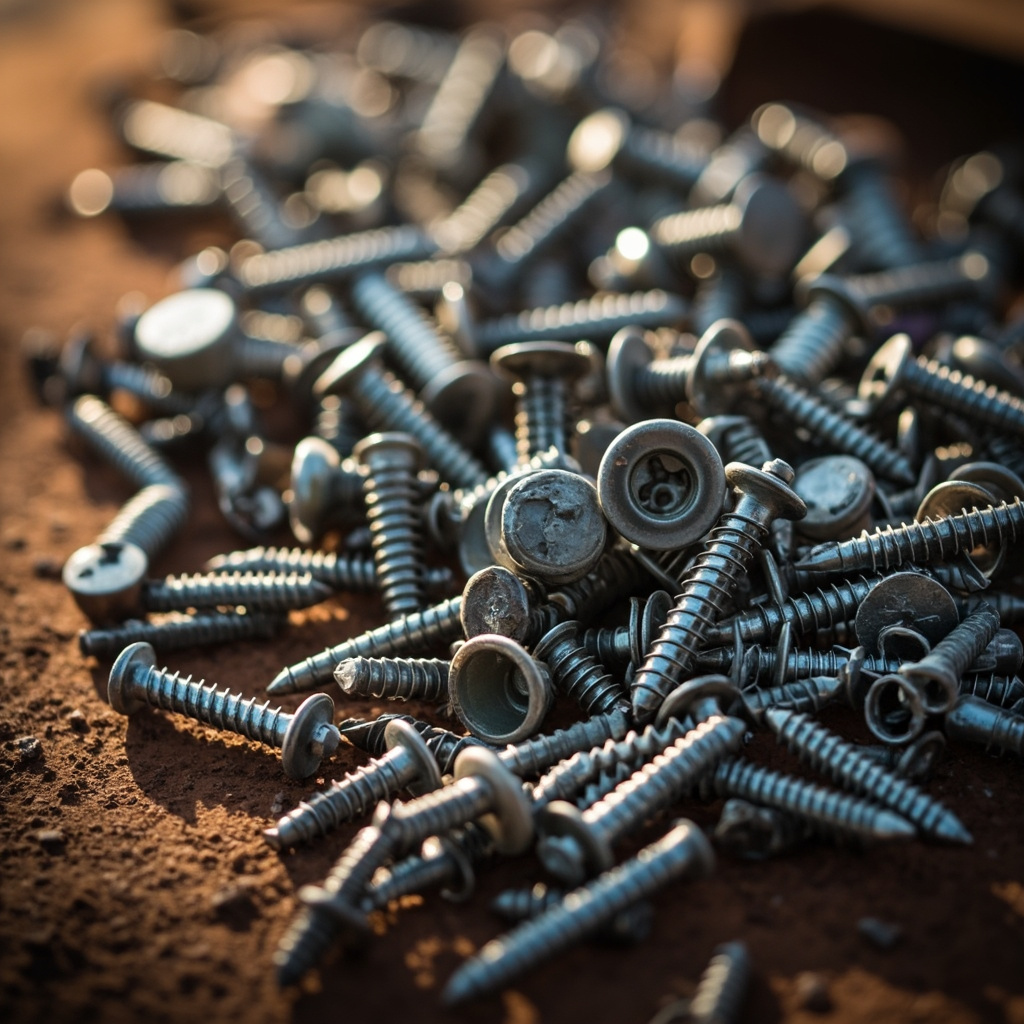
Expert DRC mining fastener logistics for mining concessions. Reliable supply chain solutions for mining hardware in Democratic Republic of Congo. Get a custom quote today.
DRC Mining Fastener Logistics: Concession Challenges
The Democratic Republic of Congo hosts some of the world's most significant mining concessions, particularly within the Katanga Copperbelt, yet the infrastructure required to support industrial fastener supply chains remains critically underdeveloped. DRC mining fastener logistics presents a constellation of challenges that procurement managers must understand before establishing supply agreements for mining hardware. The country's ranking in global logistics performance indices consistently places it among the most difficult jurisdictions for industrial supply chain operations, a reality that directly impacts fastener availability and project cost structures. Infrastructure limitations create the foundational challenge for mining concession fastener logistics. The DRC possesses approximately 152,000 kilometers of road network, yet less than 2% comprises paved surfaces suitable for year-round heavy vehicle transit [5]. Mining concessions located in Lualaba and Haut-Katanga provinces depend on routes connecting Lubumbashi to remote sites that become impassable during rainy seasons from November through April, creating seasonal delivery windows that procurement managers must factor into inventory planning. The absence of railway infrastructure connecting major mining hubs to seaports forces reliance on trucking corridors that increase transit times and vulnerability to road conditions. Regulatory complexity compounds physical infrastructure challenges. The DRC Mining Registry maintains oversight of all concession operations and requires documentation for imported industrial materials [1]. Procurement managers must ensure fastener shipments include certificates of origin, commercial invoices with HS code classifications, and technical specifications matching the equipment being serviced. Customs procedures at border crossings and in Kinshasa involve multiple inspection stages that historically add 5-15 days to clearance timelines, according to industry reporting from regional logistics providers [7]. Transportation network vulnerabilities extend beyond physical infrastructure to include security considerations along transport corridors. The African Development Bank infrastructure assessments note that route selection between Lubumbashi and mining sites requires ongoing security evaluation, particularly for convoys carrying high-value industrial components [5]. Established logistics partners with local knowledge can navigate these security considerations more effectively than procurement teams unfamiliar with regional dynamics. Effective DRC mining fastener logistics requires strategic supply chain architecture that accounts for these interconnected challenges. Procurement managers should establish relationships with freight forwarders experienced in DRC corridor operations and consider warehouse staging locations that enable rapid deployment to mining sites while buffering against transit delays.
Custom Fastener Solutions for Mining Concessions
Mining concessions operating in the DRC require fastener solutions engineered for operational environments that differ substantially from standard construction applications. Procurement managers must understand the technical specifications driving fastener selection to avoid costly equipment failures and project delays. Custom fastener solutions tailored to mining applications address corrosion resistance, tensile strength requirements, and equipment-specific dimensional tolerances that generic fastener suppliers cannot reliably satisfy. Underground mining operations in the DRC present extreme environmental conditions that standard zinc-plated fasteners cannot withstand. The humidity within Katanga's underground mine shafts frequently exceeds 80% relative humidity, creating conditions where conventional electroplated coatings fail within months. Procurement managers should specify hot-dip galvanizing (HDG) for underground applications, as the 85-100 micron zinc coating thickness provides sacrificial protection that continues functioning even after surface abrasion occurs during installation. For hydraulic system applications where fastener exposure to chemical fluids occurs, stainless steel AISI 316L grade fasteners offer superior corrosion resistance compared to standard AISI 304 grades due to the addition of 2-3% molybdenum that inhibits chloride-induced stress corrosion cracking. Open-pit mining operations demand high-tensile fasteners meeting specific ASTM and ISO standards for structural integrity under dynamic loading conditions. The ISO 898 standard defines mechanical properties for carbon and alloy steel fasteners, while ASTM F1554 specifies requirements for anchor bolts in structural applications [3][4]. For heavy machinery assembly involving Caterpillar or Komatsu equipment, procurement managers must verify that replacement fasteners carry proper grade markings and material test reports confirming yield strength and Rockwell hardness values within equipment manufacturer tolerances. Using non-conforming fasteners in critical structural applications creates liability exposure and potential equipment damage that far exceeds the cost savings from specification compromise. Surface infrastructure projects including processing facilities, accommodation blocks, and storage structures require construction-grade fasteners meeting EN 14399 standards for preloaded structural bolting [3]. These standards specify requirements for assembly groups including nuts, washers, and bolts that must function as complete systems rather than individual components. Procurement managers should specify assemblies from single manufacturers to ensure compatibility, as mixing components from different suppliers can result in improper preload and joint failure under operational loads. Custom fastener kitting services provide significant supply chain advantages for DRC mining operations. Consolidated kits containing all fasteners required for specific maintenance procedures or equipment rebuilds reduce on-site sorting time and minimize the risk of installing incorrect fasteners. This approach becomes particularly valuable when supporting multiple equipment brands across a mining operation, as each manufacturer specifies different fastener configurations that field technicians may not immediately recognize.
DRC Mining Fastener Logistics: Import and Customs Guide
Importing fasteners for DRC mining concessions requires navigating customs procedures at multiple points, from origin ports through border crossings to final delivery at mining sites. Procurement managers must understand the regulatory landscape, port options, and documentation requirements to avoid costly clearance delays that disrupt mining operations. The import and customs process for industrial fasteners involves technical classifications, tariff determinations, and compliance verification that demand careful preparation. South African ports, particularly Durban and Cape Town, serve as primary entry points for DRC-bound fastener shipments due to established logistics infrastructure and direct trucking connections to Lubumbashi [2]. The South African Revenue Service maintains tariff classification databases that procurement managers should consult to determine applicable duties and taxes for fastener imports [2]. Fasteners typically fall under HS Chapter 73 (Iron and Steel Articles) with specific classifications ranging from 7318.15 for bolts through 7318.16 for nuts, each carrying different duty rates that affect total landed cost calculations. Tanzania's Dar es Salaam port provides an alternative import route through the Central Corridor, connecting via Tanzania Zambia (TANZAM) Highway to Zambian border crossings before entering DRC territory [6]. This route offers different transit time characteristics than South African routing, with typical sea-to-Lubumbashi delivery requiring 6-8 weeks versus 4-6 weeks from South African ports. The Tanzania Ports Authority provides scheduling and vessel arrival information that logistics coordinators can access for shipment planning [6]. Procurement managers should evaluate both routing options against their inventory positioning strategies, as faster South African routing may justify higher transportation costs for time-sensitive applications. All imported fasteners must comply with DRC import licensing requirements established by the Ministry of Commerce. The DRC Mining Registry oversees industrial material imports for mining sector operations and may require specific documentation for materials entering concession areas [1]. Certificate of origin documentation confirms the manufacturing country of origin, which affects tariff treatment under bilateral trade agreements that the DRC maintains with regional partners. Procurement managers should ensure suppliers provide proper certificates with each shipment to avoid customs disputes. Tariff classification accuracy directly impacts duty payments and customs clearance speed. The DRC customs authority applies the Harmonized Commodity Description and Coding System, with fastener duties typically ranging from 10-20% depending on specific HS classification and declared value [2]. Misclassification of fasteners can result in penalty assessments, shipment holds, and the requirement to provide additional technical documentation supporting declared classifications. Working with customs brokers experienced in DRC trade regulations becomes essential for navigating these classification complexities, as incorrect tariff treatment creates significant financial exposure on bulk fastener shipments.
Supply Chain Optimization for Mining Fastener Procurement
Strategic supply chain optimization transforms DRC mining fastener logistics from a reactive procurement function into a proactive operational asset. Mining concession operators that establish optimized supply channels achieve consistent fastener availability while managing inventory costs and reducing the operational risk of equipment downtime caused by fastener shortages. Procurement managers implementing supply chain optimization strategies must address sourcing relationships, warehouse positioning, lead time management, and technology enablement. Regional supplier networks spanning South Africa, Tanzania, and Zambia provide multiple sourcing options that reduce dependency on single supply routes and mitigate corridor disruptions. South African industrial distributors offer comprehensive fastener ranges meeting international standards with established logistics connections to DRC mining regions [2]. Tanzanian suppliers access the Central Corridor routing through Dar es Salaam, while Zambian suppliers provide cross-border delivery to DRC southern provinces. Maintaining qualified suppliers across all three sourcing regions enables procurement managers to redirect shipments through alternative routes when primary corridors experience disruptions, whether from weather events, security concerns, or infrastructure failures. Establishing strategic warehouse locations near mining concession hubs represents a critical investment in supply chain resilience. Warehouse facilities in Lubumbashi serving as regional distribution points can maintain inventory buffers sized to cover 4-8 weeks of consumption for critical fastener categories. This staging approach reduces the impact of transit time variability on mine-site availability and enables rapid response to emergency fastener requirements. Procurement managers should evaluate third-party logistics providers offering warehousing services in Lubumbashi, comparing storage costs against the operational value of improved availability. Lead time management becomes particularly important when coordinating fastener deliveries with scheduled maintenance shutdowns and project milestones. Mining operations typically schedule equipment maintenance during planned shutdowns where fastener availability directly determines whether work proceeds on schedule. Procurement managers should establish firm lead time commitments with suppliers, including penalty provisions for deliveries that miss confirmed arrival dates. For critical-path maintenance activities, identifying expedited shipping options that can reduce standard lead times by 50% or more provides contingency capacity for urgent requirements. Vendor-managed inventory programs allow mining operators to maintain optimal stock levels without bearing full inventory carrying costs and management burden. Under these arrangements, qualified suppliers monitor on-site fastener consumption and automatically replenish inventory according to predetermined reorder points. This approach transfers inventory ownership to the supplier until consumption occurs, improving cash flow while ensuring continuous fastener availability. Procurement managers implementing vendor-managed inventory should establish clear consumption reporting protocols and reconciliation procedures to prevent inventory discrepancies.
Cost Factors in Mining Fastener Logistics to DRC
Understanding the comprehensive cost structure of DRC mining fastener logistics enables accurate budget forecasting and prevents the procurement surprises that disrupt mining operations. Transportation costs, currency exposure, handling fees, insurance, and volume-based pricing interact in complex ways that procurement managers must analyze systematically to optimize total landed cost. Comprehensive cost analysis often reveals opportunities to reduce expenditure through routing optimization, shipment consolidation, and supplier negotiation. Transportation costs represent the largest variable expense in DRC mining fastener logistics, heavily influenced by route selection and shipment volumes. Routing through South African ports typically incurs higher port handling fees but benefits from shorter overland transit distances, while Tanzania routing involves longer ground transport but may offer competitive ocean freight rates [5][6]. Fuel price fluctuations across African corridors affect trucking rates with typical lag times of 2-4 weeks, meaning procurement managers should anticipate rate adjustments when fuel markets shift. Consolidating fastener shipments into full container loads rather than less-than-container loads typically reduces per-unit transportation costs by 15-25%, making batch ordering economically attractive despite the inventory carrying costs it introduces. Currency exchange rate volatility between USD and regional currencies impacts fastener pricing and requires active management to protect procurement budgets. The Congolese franc (CDF) has experienced significant depreciation against USD over recent years, creating import cost inflation that fasteners suppliers pass through to buyers. Procurement managers should consider currency hedging instruments including forward contracts that lock in exchange rates for future shipments, providing budget certainty that enables accurate project cost estimation. For contracts spanning multiple years, building exchange rate contingency allowances into pricing agreements with suppliers provides protection against currency movements beyond hedging capacity. Storage and handling fees at transshipment points accumulate throughout multi-modal logistics chains, often representing 8-12% of total landed costs for DRC-bound fastener shipments. These fees include port storage charges that accrue when shipments miss scheduled pickup windows, handling fees for container loading and unloading at distribution points, and warehouse storage at regional staging locations. Procurement managers can minimize storage costs by ensuring truck capacity matches shipment volumes and by scheduling deliveries to align with available warehouse space. Insurance premiums for fastener shipments traveling to DRC mining regions reflect the security environment and value density of cargo. High-value fastener shipments serving as replacement inventory for critical equipment justify comprehensive marine cargo insurance including war risk coverage for overland transit through regions with elevated security concerns. Deductible levels and coverage limits should match the maximum foreseeable loss scenarios for fastener inventory in transit and storage. Volume-based pricing from established suppliers provides economies of scale that offset logistics expenses through reduced per-unit fastener costs. Annual procurement agreements committing to specified volume thresholds typically secure 8-15% discounts compared to spot purchasing, with larger commitments enabling deeper pricing. Procurement managers should analyze the tradeoff between volume discount benefits and inventory carrying costs to identify optimal order quantities.
Fastener Specifications for DRC Mining Equipment Brands
DRC mining operations deploy diverse equipment brands requiring specific fastener specifications that complicate procurement and inventory management. Each manufacturer designs equipment with fastener requirements matching the mechanical loads, environmental conditions, and assembly tolerances of specific applications. Procurement managers must maintain technical specification databases enabling accurate fastener identification to reduce procurement errors that cause project delays and equipment performance issues. Caterpillar heavy equipment systems deployed extensively in DRC open-pit mining operations require manufacturer-approved fasteners meeting precise torque specifications and material compositions [8]. Cat equipment specifications typically reference ASTM standards including ASTM A490 for high-strength structural bolts and ASTM A194 for heavy hex nuts used in critical applications. Replacement fasteners must carry proper grade markings indicating material heat numbers that enable traceability to manufacturing certifications. Using non-Cat approved fasteners in powertrain applications risks warranty voidance and potential failure liability. Komatsu mining equipment specifies fasteners according to proprietary engineering standards that may differ from ASTM equivalents in dimensional tolerances or material requirements [8]. Hydraulic system fasteners on Komatsu equipment require particular attention, as these applications involve high pressures where fastener failure creates safety hazards and significant fluid leakage. Procurement managers supporting Komatsu equipment should request material specifications from Komatsu technical documentation and verify that replacement fastener materials match or exceed original equipment specifications. Sandvik and Epiroc underground mining equipment demands specialized fasteners for hydraulic systems and structural assemblies operating under extreme pressures. Underground mining equipment in DRC operates in conditions with ambient temperatures exceeding 40°C and humidity levels that accelerate corrosion on unprotected fasteners. These manufacturers specify stainless steel or corrosion-resistant coated fasteners for underground applications, with specific grades including AISI 904L for applications involving acidic groundwater exposure. Procurement managers should ensure replacement fastener specifications explicitly address the environmental conditions of their specific underground operations. Conveyor systems spanning DRC processing facilities require fasteners capable of maintaining clamp force despite continuous vibration and thermal expansion cycles. Belt conveyor structure typically employs Grade 8.8 or 10.9 high-strength bolts per ISO 4014 with appropriate preload to prevent loosening under dynamic loads [3]. The thermal cycling experienced in processing facilities causes joint movement that challenges fastener retention, making lock nut or Prevailing torque nut specifications essential for critical conveyor applications. Lighting and electrical infrastructure installations on DRC mining sites require weather-resistant fasteners suitable for outdoor tropical applications. Salt exposure from air moisture in some mining regions accelerates corrosion on standard steel fasteners, making hot-dip galvanized or stainless steel selections appropriate for these applications. Pole-mounted lighting fixtures experience wind loading that creates cyclic stresses on mounting fasteners, requiring proper lock washer or thread-locking compound specifications to maintain fixture alignment over operational lifetimes.
Need a quote for DRC mining fastener logistics? Contact TradeGo for factory pricing and SADC logistics.
Request Quote