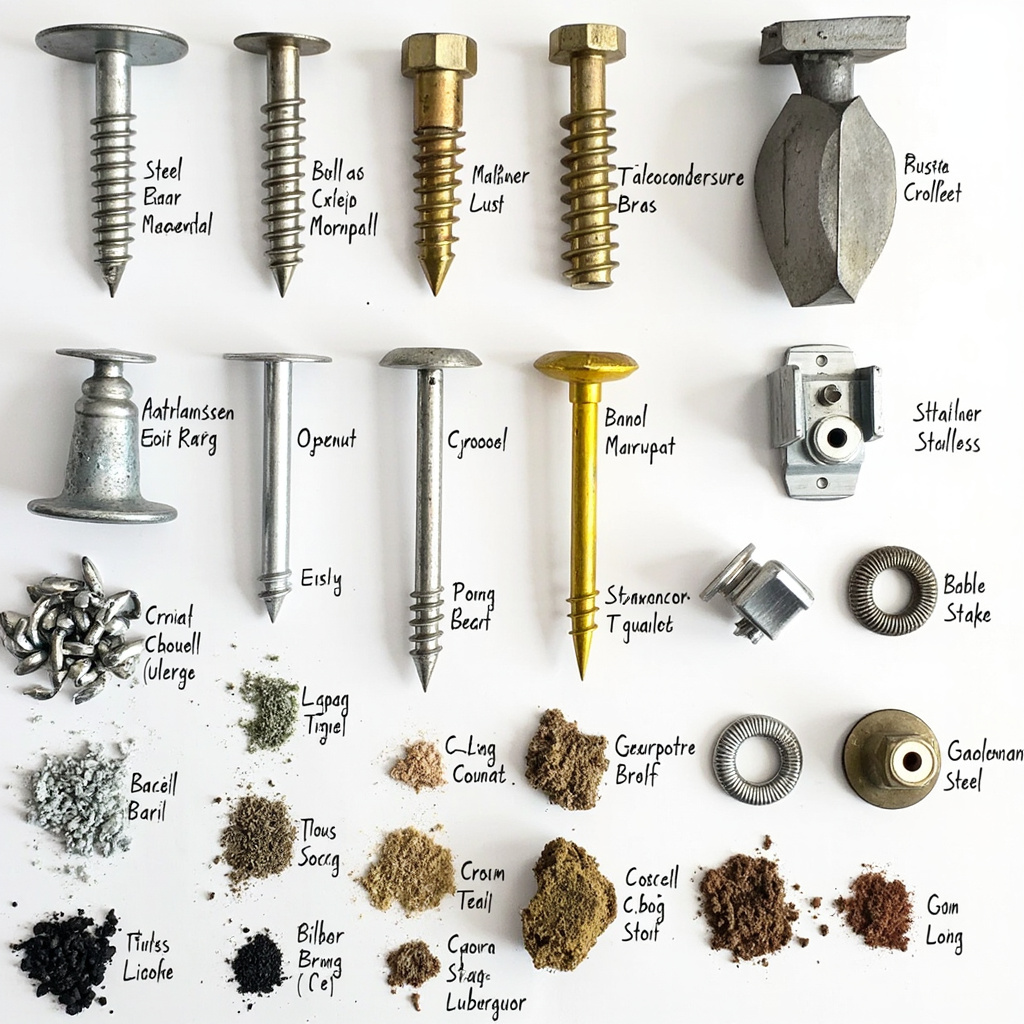
Complete guide to fastener materials: carbon steel, stainless steel, alloy steels, and specialty alloys. Learn how to select the right material for your.
Fastener Materials Overview
Selecting the correct fastener material is critical for achieving reliable, long-lasting connections. The wrong material can lead to premature failure, corrosion, or safety hazards. Fastener materials are broadly categorized into carbon steels, stainless steels, and specialty alloys. Each category has distinct properties suited to different applications and environmental conditions. Key factors in material selection: - Mechanical requirements (strength, hardness) - Environmental conditions (corrosion, temperature) - Cost constraints - Regulatory requirements - Compatibility with joined materials TradeGo supplies fasteners in all standard materials, allowing customers to select the optimal material for their specific requirements. Related resources: high-tensile bolts anchor bolts stainless steel fasteners hex bolts lock nuts washers self-drilling screws socket screws. This procurement framework applies to fastener sourcing for construction, mining, energy, automotive, and general industrial applications. The decision logic prioritizes quality consistency, supplier reliability, and total cost of ownership over short-term unit price. For B2B buyers in Africa, Latin America, and Southeast Asia, additional considerations include regional customs requirements, container consolidation options, and payment security mechanisms. Standardized specifications that travel across projects reduce training time, RFQ processing time, and supplier onboarding effort. This procurement framework applies to fastener sourcing for construction, mining, energy, automotive, and general industrial applications. The decision logic prioritizes quality consistency, supplier reliability, and total cost of ownership over short-term unit price. For B2B buyers in Africa, Latin America, and Southeast Asia, additional considerations include regional customs requirements, container consolidation options, and payment security mechanisms. Standardized specifications that travel across projects reduce training time, RFQ processing time, and supplier onboarding effort.
Carbon Steel Fasteners
Carbon steel is the most common fastener material, offering good strength at economical cost. Carbon steel fasteners are suitable for indoor applications and environments where corrosion is not a primary concern. Low carbon steels (C < 0.25%): General-purpose fasteners, grade 4.6 and below. Good machinability but limited strength. Medium carbon steels (C 0.25-0.6%): Higher strength fasteners, grades 8.8 and 10.9. Require heat treatment for optimal properties. Good balance of strength and ductility. High carbon steels (C > 0.6%): Very high strength potential, grades 10.9 and 12.9. More difficult to process and less ductile. Used for specialized high-strength applications. Coatings for carbon steel fasteners: Zinc electroplating: 5-10 micrometers, good indoor corrosion resistance. Hot-dip galvanizing: 40-60 micrometers, excellent outdoor and zinc plating: 5-10 moderate corrosion protection. Dacromet: 8-12 micrometers, 1000+ hour salt spray resistance. Geomet: Environmentally-friendly, 500+ hour salt spray resistance. Black oxide: Cosmetic finish, minimal corrosion protection. Carbon steel fasteners are suitable for most indoor construction, machinery, and general-purpose applications when properly protected against corrosion. Standards-based procurement requires continuous learning as ISO, ASTM, DIN, and GB standards are revised every 3-5 years. Subscribe to standards update notifications and review specifications annually. The most common standards used in international fastener trade are ISO 898-1 (mechanical properties), ISO 3506-1 (stainless), ISO 3269 (acceptance inspection), ISO 4042 (coatings), and ISO 1502 (thread gauges). For B2B buyers, building a standards reference library with at least the top 20 standards relevant to your product mix is essential. Standards-based procurement requires continuous learning as ISO, ASTM, DIN, and GB standards are revised every 3-5 years. Subscribe to standards update notifications and review specifications annually. The most common standards used in international fastener trade are ISO 898-1 (mechanical properties), ISO 3506-1 (stainless), ISO 3269 (acceptance inspection), ISO 4042 (coatings), and ISO 1502 (thread gauges). For B2B buyers, building a standards reference library with at least the top 20 standards relevant to your product mix is essential.
Stainless Steel Fasteners
Stainless steel fasteners offer superior corrosion resistance, making them essential for outdoor, marine, and chemically aggressive environments. A2 (304) stainless steel: The most common stainless fastener grade. Contains 18% chromium and 8% nickel. Excellent corrosion resistance for most indoor and outdoor applications. Not suitable for chloride-rich or marine environments. A4 (316) stainless steel: Contains 16% chromium, 10% nickel, and 2% molybdenum. The addition of molybdenum significantly improves chloride corrosion resistance, making A4 suitable for marine and coastal applications. A2 vs A4 for African applications: For inland construction in Zimbabwe, Zambia, and other landlocked African nations, A2 (304) stainless offers excellent corrosion resistance at reasonable cost. For coastal projects in South Africa, Mozambique, Ghana, and other coastal nations, A4 (316) stainless is recommended due to salt air exposure. For offshore oil and gas projects, A4 (316) or higher grades are typically required. Stainless steel fasteners have lower strength ratings than equivalent carbon steel grades. A4-80 bolts have strength similar to carbon steel Grade 8.8, while A4-70 bolts are equivalent to Grade 6.8. Important: Stainless steel fasteners must be installed with care to avoid galling (thread seizing). Use appropriate lubrication and avoid excessive tightening torque. The comparison methodology above uses typical ranges from industry data and TradeGo procurement experience 2018-2024. Actual market prices fluctuate with raw material costs (steel, zinc, nickel), energy costs, labor costs, and currency exchange rates. For accurate comparison, request identical RFQs from 3-5 qualified suppliers and compare landed cost (product + shipping + insurance + duties). The lowest unit price is rarely the lowest total cost of ownership. The comparison methodology above uses typical ranges from industry data and TradeGo procurement experience 2018-2024. Actual market prices fluctuate with raw material costs (steel, zinc, nickel), energy costs, labor costs, and currency exchange rates. For accurate comparison, request identical RFQs from 3-5 qualified suppliers and compare landed cost (product + shipping + insurance + duties). The lowest unit price is rarely the lowest total cost of ownership.
Alloy Steel and Specialty Fasteners
Alloy steel fasteners are used when very high strength is required or when carbon steel fasteners cannot provide adequate performance. Common alloying elements: Molybdenum: Improves high-temperature strength and creep resistance. Chromium: Increases hardenability and corrosion resistance. Vanadium: Refines grain structure for improved toughness. Nickel: Improves toughness and impact resistance. Typical alloy steel fasteners include: ASTM A193 B7: Chrome-molybdenum steel for high-pressure applications. Common for oilfield and process industry fasteners. ASTM A320 L7: Low-temperature alloy steel for service down to -101°C. Used in cryogenic applications. ASTM A574: Alloy steel socket head cap screws. Specialty materials: Titanium: Exceptional strength-to-weight ratio. Used in aerospace and high-performance applications. Significant cost premium. Inconel: Nickel-chromium alloy with excellent high-temperature and corrosion resistance. Used in extreme environments. Super duplex stainless: Very high corrosion resistance, higher strength than standard stainless. For demanding marine and chemical applications. For most African construction and mining applications, standard carbon steel or stainless steel fasteners provide adequate performance at economical cost. Reserve alloy steel for specialized high-stress or high-temperature applications. The verification checklist applies to both initial supplier qualification and ongoing batch inspection. For high-risk applications (load-bearing structural, pressure vessels, mining, marine), add fatigue testing, salt-spray testing (ASTM B117), torque-tension testing, and post-installation inspection. The cost of additional verification is 0.1-0.3% of order value, while undetected quality failures can be 10-100x the order value in damages. The verification checklist applies to both initial supplier qualification and ongoing batch inspection. For high-risk applications (load-bearing structural, pressure vessels, mining, marine), add fatigue testing, salt-spray testing (ASTM B117), torque-tension testing, and post-installation inspection. The cost of additional verification is 0.1-0.3% of order value, while undetected quality failures can be 10-100x the order value in damages.
Material Selection for African Applications
African construction and mining environments present unique challenges for fastener materials: High humidity and tropical conditions: Use hot-dip galvanized or stainless steel fasteners. In coastal areas, A4 (316) stainless is recommended. Chemical exposure from mining: For copper and cobalt processing facilities, stainless steel A4 or Dacromet-coated fasteners resist chemical attack. Temperature extremes: Some African regions experience significant temperature variation. Alloy steel fasteners like ASTM A193 B7 handle temperature cycling better than standard materials. Remote locations with limited maintenance: Use higher-corrosion protection than might be specified in developed markets. Hot-dip galvanizing or stainless steel reduces long-term maintenance requirements. Resource constraints: Balance initial cost against maintenance and replacement costs. In remote locations, higher upfront investment in corrosion-resistant fasteners often pays off. For most African applications: - Indoor construction: Zinc-plated carbon steel - General outdoor: Hot-dip galvanized carbon steel - Coastal/marine: A4 (316) stainless steel - Mining chemical environments: A4 stainless or Dacromet - High-temperature applications: ASTM A193 B7 alloy steel Supplier evaluation should be a continuous process, not a one-time exercise. Re-evaluate suppliers annually based on delivery performance, quality metrics, price competitiveness, and responsiveness. Maintain a supplier scorecard with weighted metrics: on-time delivery (25%), quality acceptance rate (30%), price competitiveness (20%), responsiveness (15%), and documentation accuracy (10%). Drop suppliers scoring below 70% over a 6-month period and qualify replacements. Supplier evaluation should be a continuous process, not a one-time exercise. Re-evaluate suppliers annually based on delivery performance, quality metrics, price competitiveness, and responsiveness. Maintain a supplier scorecard with weighted metrics: on-time delivery (25%), quality acceptance rate (30%), price competitiveness (20%), responsiveness (15%), and documentation accuracy (10%). Drop suppliers scoring below 70% over a 6-month period and qualify replacements.
Frequently Asked Questions
See frequently asked questions below.
Related resources: high-tensile bolts anchor bolts stainless steel fasteners hex bolts lock nuts washers self-drilling screws socket screws. For B2B buyers operating in multiple countries, harmonize specifications with regional standards and local customs requirements. Common regional frameworks: SABS (South Africa), KEBS (Kenya), TBS (Tanzania), ZIMRA (Zimbabwe), SON (Nigeria), and AfCFTA standards for pan-Africa trade. Local standards compliance is often mandatory for public infrastructure projects, mining operations, and government tenders. For B2B buyers operating in multiple countries, harmonize specifications with regional standards and local customs requirements. Common regional frameworks: SABS (South Africa), KEBS (Kenya), TBS (Tanzania), ZIMRA (Zimbabwe), SON (Nigeria), and AfCFTA standards for pan-Africa trade. Local standards compliance is often mandatory for public infrastructure projects, mining operations, and government tenders.Can I use stainless steel fasteners with carbon steel parts?
Yes, but be aware of galvanic corrosion when dissimilar metals are joined in presence of moisture. The less noble metal (carbon steel) will corrode faster. Using stainless steel throughout the connection is preferred for critical applications.
What's the difference between 304 and 316 stainless?
316 contains molybdenum which significantly improves chloride corrosion resistance. For marine/coastal applications, 316 is essential. For inland applications, 304 provides excellent corrosion resistance at lower cost.
How do I know if a fastener is strong enough?
Check the grade marking. Higher grades (8.8, 10.9, 12.9 for carbon steel) indicate higher strength. For critical applications, consult a structural engineer.
Can I mix fastener grades in the same assembly?
It's generally acceptable if all fasteners meet or exceed the minimum strength requirement. However, for critical structural applications, use consistent grades throughout.
What's the best coating for outdoor African conditions?
Hot-dip galvanizing provides excellent long-term protection for most outdoor applications. In highly corrosive environments (coastal, mining), stainless steel or specialized coatings like Dacromet are recommended.
Contact TradeGo for fastener material consultation. Email: sales@tradego-fasteners.com
Request Quote