Understand <a href="/products" class="text-primary-600 hover:text-primary-800 underline underline-offset-2"><a href="/products" class="text-primary-600.
Quality Certification Standards for Fasteners
For fastener quality assurance, several certification standards are relevant: ISO 9001 — the most widely recognized quality management system certification; indicates the manufacturer has a documented quality management system; does not guarantee product quality, only that the system exists. IATF 16949 — automotive-specific quality management; very rigorous but not needed for general construction fasteners. EN 14399 — structural bolting system certification in Europe; requires third-party testing and certification of the system. ASTM F1479 — fastner quality specification system. For African construction, always verify: that the supplier has a quality management system; that they can provide material test reports (MTRs) for each batch; that third-party test reports are available on request. ISO 9001 alone is not sufficient — always ask for actual test data. Related resources: high-tensile bolts anchor bolts stainless steel fasteners hex bolts lock nuts washers self-drilling screws socket screws. This procurement framework applies to fastener sourcing for construction, mining, energy, automotive, and general industrial applications. The decision logic prioritizes quality consistency, supplier reliability, and total cost of ownership over short-term unit price. For B2B buyers in Africa, Latin America, and Southeast Asia, additional considerations include regional customs requirements, container consolidation options, and payment security mechanisms. Standardized specifications that travel across projects reduce training time, RFQ processing time, and supplier onboarding effort. This procurement framework applies to fastener sourcing for construction, mining, energy, automotive, and general industrial applications. The decision logic prioritizes quality consistency, supplier reliability, and total cost of ownership over short-term unit price. For B2B buyers in Africa, Latin America, and Southeast Asia, additional considerations include regional customs requirements, container consolidation options, and payment security mechanisms. Standardized specifications that travel across projects reduce training time, RFQ processing time, and supplier onboarding effort.
Understanding Material Test Reports (MTRs)
A Material Test Report (MTR) is a certified document that provides the actual test results for a specific batch of fasteners. An MTR should include: Heat/batch number — traces the fastener to the specific heat of steel it was made from; Manufacturing date — tracks when the batch was produced; Chemical composition — actual percentages of carbon, manganese, chromium, nickel, molybdenum, etc.; Mechanical properties — tensile strength, yield strength, elongation, reduction of area; Hardness — measured in Rockwell or Brinell; Surface treatment/coating — type and thickness of any coating applied. Always verify that the MTR values meet or exceed the specified grade requirements. For example, a Grade 10.9 bolt requires tensile ≥1000 MPa and yield ≥900 MPa — the MTR must show actual measured values, not just 'meets specification.' MTRs from ISO 9001-certified manufacturers typically show actual values, not just 'complies.' Standards-based procurement requires continuous learning as ISO, ASTM, DIN, and GB standards are revised every 3-5 years. Subscribe to standards update notifications and review specifications annually. The most common standards used in international fastener trade are ISO 898-1 (mechanical properties), ISO 3506-1 (stainless), ISO 3269 (acceptance inspection), ISO 4042 (coatings), and ISO 1502 (thread gauges). For B2B buyers, building a standards reference library with at least the top 20 standards relevant to your product mix is essential. Standards-based procurement requires continuous learning as ISO, ASTM, DIN, and GB standards are revised every 3-5 years. Subscribe to standards update notifications and review specifications annually. The most common standards used in international fastener trade are ISO 898-1 (mechanical properties), ISO 3506-1 (stainless), ISO 3269 (acceptance inspection), ISO 4042 (coatings), and ISO 1502 (thread gauges). For B2B buyers, building a standards reference library with at least the top 20 standards relevant to your product mix is essential.
Mechanical Testing Methods
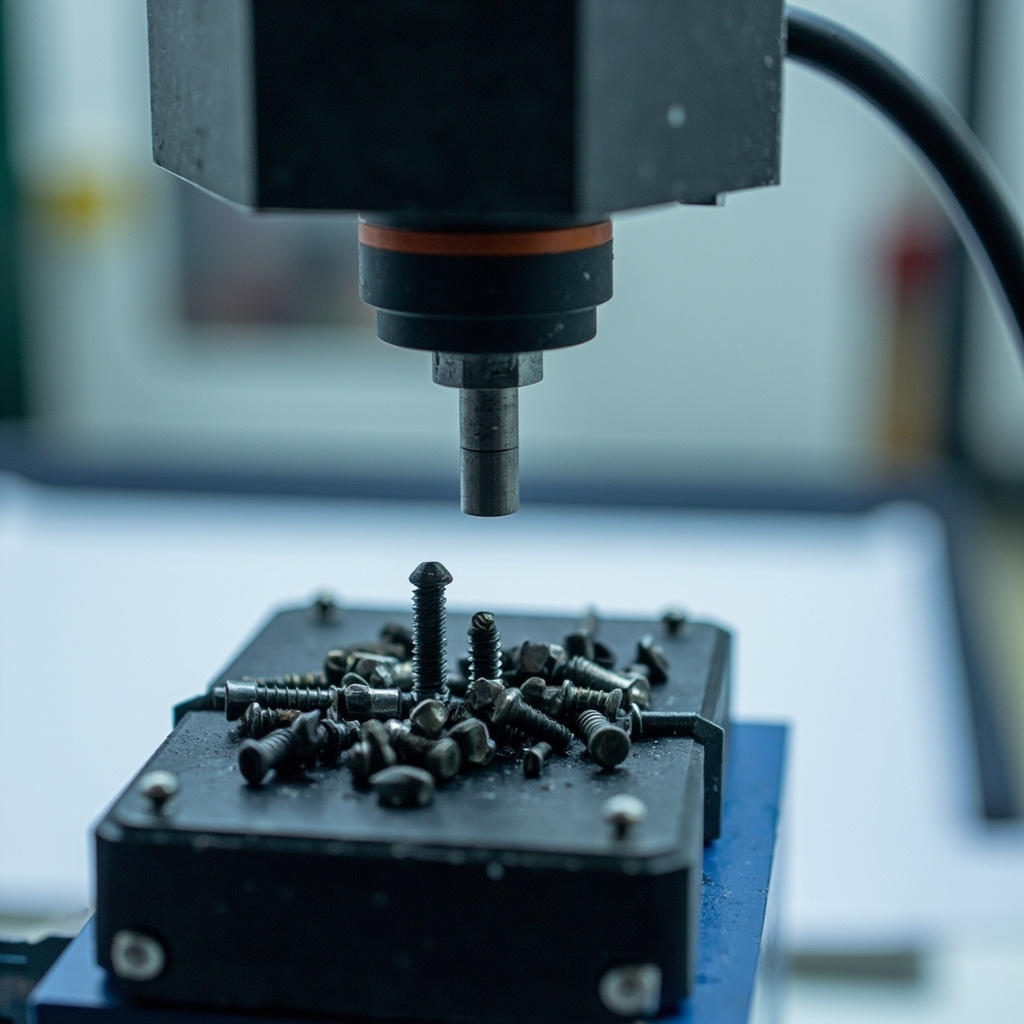
Mechanical testing verifies the strength characteristics of fasteners: Tensile test — applies pulling force until the fastener breaks; measures ultimate tensile strength, yield strength, elongation; the primary strength verification. Proof load test — applies a specified tensile load without causing permanent set; verifies the fastener can carry its rated load without plastic deformation; less destructive than tensile testing. Hardness test — measures resistance to indentation; can be done on finished parts without destroying them; converted to tensile strength for comparison. Impact (Charpy) test — measures toughness (resistance to sudden loading); important for structural fasteners in cold or dynamic loading conditions. Wedge tensile test — applies tensile load at an angle to simulate eccentric loading; used for structural bolting system qualification. The comparison methodology above uses typical ranges from industry data and TradeGo procurement experience 2018-2024. Actual market prices fluctuate with raw material costs (steel, zinc, nickel), energy costs, labor costs, and currency exchange rates. For accurate comparison, request identical RFQs from 3-5 qualified suppliers and compare landed cost (product + shipping + insurance + duties). The lowest unit price is rarely the lowest total cost of ownership. The comparison methodology above uses typical ranges from industry data and TradeGo procurement experience 2018-2024. Actual market prices fluctuate with raw material costs (steel, zinc, nickel), energy costs, labor costs, and currency exchange rates. For accurate comparison, request identical RFQs from 3-5 qualified suppliers and compare landed cost (product + shipping + insurance + duties). The lowest unit price is rarely the lowest total cost of ownership.
| Test Type | What It Measures | Destructive? | Application |
|---|---|---|---|
| Tensile test | UTS, yield, elongation | Yes (breaks sample) | Primary strength verification |
| Proof load | Clamp load capacity | No (if passed) | Quality verification |
| Hardness (HB/HR) | Surface hardness | No | Non-destructive screening |
| Charpy impact | Toughness | Yes (breaks sample) | Low-temperature applications |
| Wedge tensile | Eccentric load capacity | Yes | Structural bolting systems |
Third-Party Testing and Verification
Third-party testing provides independent verification of fastener quality: Bureau Veritas (BV) — French multinational, widely accepted in African mining and construction; SGS — Swiss multinational, strong in West Africa; ALS Global — Australian-based, accepted by major mining companies; Intertek — UK-based, global coverage. For African mining projects, major mining companies (Anglo American, BHP, Rio Tinto, Vale) require fastener test reports from recognized third-party agencies for structural and safety-critical fasteners. For construction projects, third-party testing is less commonly required but is recommended for: high-rise structural connections; seismic zone construction; critical infrastructure (bridges, hospitals); coastal structures exposed to marine environment. Third-party testing costs typically add 5-15% to fastener cost but provides significant risk reduction. The verification checklist applies to both initial supplier qualification and ongoing batch inspection. For high-risk applications (load-bearing structural, pressure vessels, mining, marine), add fatigue testing, salt-spray testing (ASTM B117), torque-tension testing, and post-installation inspection. The cost of additional verification is 0.1-0.3% of order value, while undetected quality failures can be 10-100x the order value in damages. The verification checklist applies to both initial supplier qualification and ongoing batch inspection. For high-risk applications (load-bearing structural, pressure vessels, mining, marine), add fatigue testing, salt-spray testing (ASTM B117), torque-tension testing, and post-installation inspection. The cost of additional verification is 0.1-0.3% of order value, while undetected quality failures can be 10-100x the order value in damages.
Common Fastener Defects to Watch For
Visual inspection can catch many fastener defects before they cause failures: Thread defects — rolled threads should be smooth and consistent; visible seams, laps, or broken threads indicate die damage or material issues; use a magnifying glass for small sizes. Head defects — undersized heads (indicates improper heading die setup), off-center heads (eccentricity), cracks radiating from the head. Surface defects — seams (longitudinal surface laps), laps (internal defects appearing as surface lines), pits (corrosion or die damage). Coating defects — bare spots, lumps, peeling, or excessive roughness in plated or hot-dip galvanized coatings. Marking defects — grade marking absent, incomplete, or in wrong position; indicates possible grade substitution. For critical applications, request a sample lot and conduct your own proof load testing before accepting the batch. Supplier evaluation should be a continuous process, not a one-time exercise. Re-evaluate suppliers annually based on delivery performance, quality metrics, price competitiveness, and responsiveness. Maintain a supplier scorecard with weighted metrics: on-time delivery (25%), quality acceptance rate (30%), price competitiveness (20%), responsiveness (15%), and documentation accuracy (10%). Drop suppliers scoring below 70% over a 6-month period and qualify replacements. Supplier evaluation should be a continuous process, not a one-time exercise. Re-evaluate suppliers annually based on delivery performance, quality metrics, price competitiveness, and responsiveness. Maintain a supplier scorecard with weighted metrics: on-time delivery (25%), quality acceptance rate (30%), price competitiveness (20%), responsiveness (15%), and documentation accuracy (10%). Drop suppliers scoring below 70% over a 6-month period and qualify replacements.
Frequently Asked Questions
See frequently asked questions below.
Related resources: high-tensile bolts anchor bolts stainless steel fasteners hex bolts lock nuts washers self-drilling screws socket screws. For B2B buyers operating in multiple countries, harmonize specifications with regional standards and local customs requirements. Common regional frameworks: SABS (South Africa), KEBS (Kenya), TBS (Tanzania), ZIMRA (Zimbabwe), SON (Nigeria), and AfCFTA standards for pan-Africa trade. Local standards compliance is often mandatory for public infrastructure projects, mining operations, and government tenders. For B2B buyers operating in multiple countries, harmonize specifications with regional standards and local customs requirements. Common regional frameworks: SABS (South Africa), KEBS (Kenya), TBS (Tanzania), ZIMRA (Zimbabwe), SON (Nigeria), and AfCFTA standards for pan-Africa trade. Local standards compliance is often mandatory for public infrastructure projects, mining operations, and government tenders.What is the difference between a mill test report (MTR) and a certificate of conformance (COC)?
A Mill Test Report (MTR) or Material Test Report contains actual measured test values from testing of the specific batch — it is quantitative data. A Certificate of Conformance (COC) or Certificate of Compliance simply states that the product meets the specified requirements — it does not provide actual test data. Always request MTRs, not just COCs. A COC from an unverified supplier could simply be a document saying 'these bolts are Grade 10.9' with no actual evidence. Insist on MTRs with actual chemical and mechanical values.
How do I verify fastener grade marking is correct?
Verify markings: metric hex bolts grade 8.8 are marked '8.8' on the head; Grade 10.9 marked '10.9'; Grade 12.9 marked '12.9'; ISO standard also requires manufacturer identification mark. Imperial (UNC/UNF) grades use radial lines (3 lines for Grade 5, 6 lines for Grade 8). If in doubt, hardness testing with a portable hardness tester provides a non-destructive verification of strength. Send samples to a testing lab for full tensile testing if critical application.
Are batch test reports sufficient or do I need to test every fastener?
Batch testing is standard industry practice — one sample per batch is destructively tested to represent the entire batch. Batch sizes vary by manufacturer, typically 1,000-10,000 pieces per batch for hex bolts. For construction codes that require it (ASTM A325, A490), specific sampling rates are defined in the standard. For most standard applications, MTRs from the manufacturer's batch testing are sufficient. For extremely critical applications (seismic, nuclear, aerospace), 100% testing (every fastener tested) may be required, which significantly increases cost.
Need quality-certified fasteners for your project? Get a factory quote from TradeGo.
Get Quote