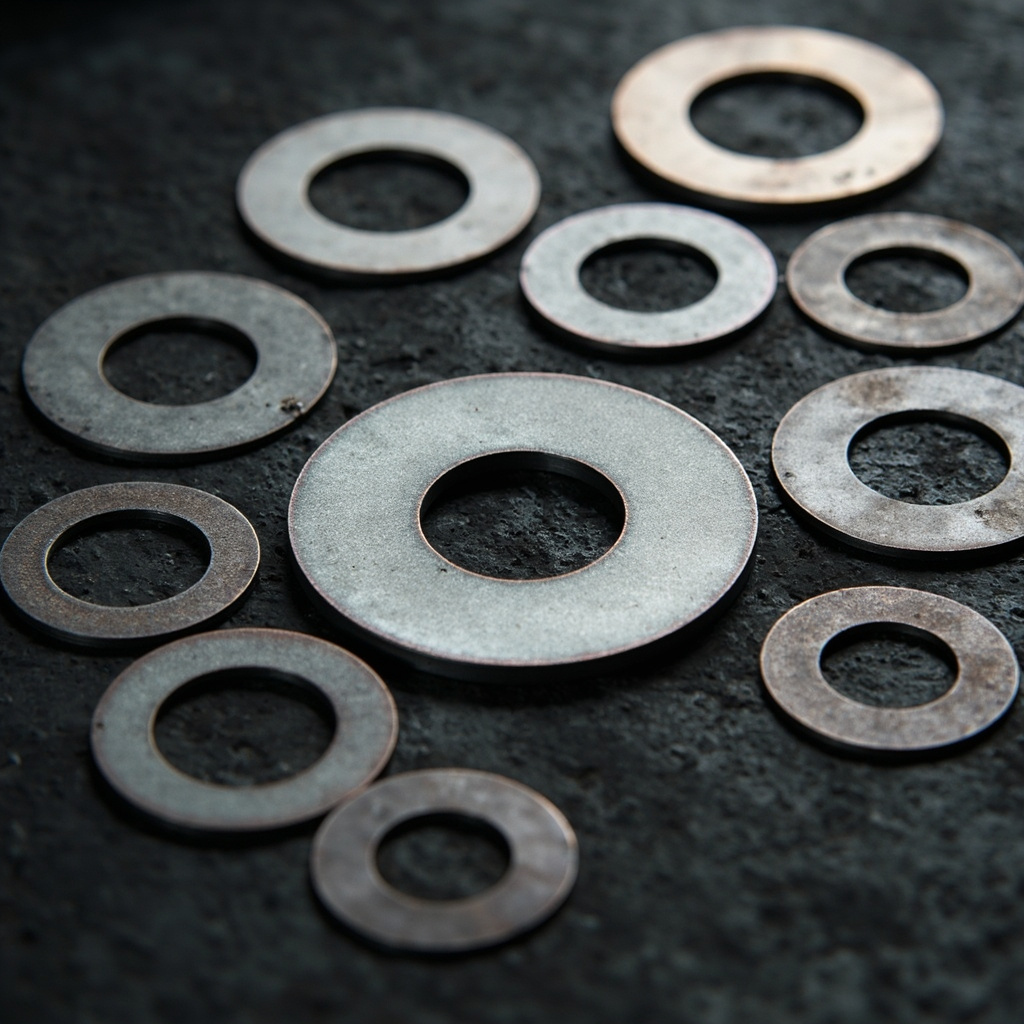
Complete guide to fender <a href="/products#washers" class="text-primary-600 hover:text-primary-800 underline underline-offset-2"><a.
What Do Washers Do?
Washers are disc-shaped fasteners placed under the head of a bolt or nut to distribute the clamping load over a larger bearing area. Without washers, the concentrated load from a bolt head or nut would bear directly on a small area, potentially damaging the bearing surface (especially in soft materials like wood, aluminum, or thin steel). The larger the washer diameter, the greater the bearing area and the lower the surface pressure. For structural steel connections, washers also prevent the bolt head or nut from pulling through the steel plate under tension loading. Related resources: high-tensile bolts anchor bolts stainless steel fasteners hex bolts lock nuts washers self-drilling screws socket screws. This procurement framework applies to fastener sourcing for construction, mining, energy, automotive, and general industrial applications. The decision logic prioritizes quality consistency, supplier reliability, and total cost of ownership over short-term unit price. For B2B buyers in Africa, Latin America, and Southeast Asia, additional considerations include regional customs requirements, container consolidation options, and payment security mechanisms. Standardized specifications that travel across projects reduce training time, RFQ processing time, and supplier onboarding effort. This procurement framework applies to fastener sourcing for construction, mining, energy, automotive, and general industrial applications. The decision logic prioritizes quality consistency, supplier reliability, and total cost of ownership over short-term unit price. For B2B buyers in Africa, Latin America, and Southeast Asia, additional considerations include regional customs requirements, container consolidation options, and payment security mechanisms. Standardized specifications that travel across projects reduce training time, RFQ processing time, and supplier onboarding effort.
Plain Washers (Flat Washers)
Plain washers (also called flat washers) are the most common type. They have a central hole sized to fit the bolt or screw, with a flat bearing surface. The standard series (USS and SAE in imperial; ISO 7089/7090 in metric) specifies outer diameter and thickness for each bolt size. For general applications, standard flat washers are used. Heavy-duty (or 'fender') washers have a larger OD relative to the hole size, providing greater bearing area for soft materials. Standards-based procurement requires continuous learning as ISO, ASTM, DIN, and GB standards are revised every 3-5 years. Subscribe to standards update notifications and review specifications annually. The most common standards used in international fastener trade are ISO 898-1 (mechanical properties), ISO 3506-1 (stainless), ISO 3269 (acceptance inspection), ISO 4042 (coatings), and ISO 1502 (thread gauges). For B2B buyers, building a standards reference library with at least the top 20 standards relevant to your product mix is essential. Standards-based procurement requires continuous learning as ISO, ASTM, DIN, and GB standards are revised every 3-5 years. Subscribe to standards update notifications and review specifications annually. The most common standards used in international fastener trade are ISO 898-1 (mechanical properties), ISO 3506-1 (stainless), ISO 3269 (acceptance inspection), ISO 4042 (coatings), and ISO 1502 (thread gauges). For B2B buyers, building a standards reference library with at least the top 20 standards relevant to your product mix is essential.
| Bolt Size | Washer ID | Standard OD | Heavy Duty OD |
|---|---|---|---|
| M6 | 6.4mm | 12mm | 18mm |
| M8 | 8.4mm | 16mm | 24mm |
| M10 | 10.5mm | 20mm | 30mm |
| M12 | 13mm | 24mm | 37mm |
| M16 | 17mm | 30mm | 50mm |
| M20 | 21mm | 37mm | 50mm |
| M24 | 25mm | 44mm | 60mm |
Fender Washers: When You Need More Bearing Area
Fender washers (also called mudder washers or repair washers) have an oversized outer diameter relative to the hole, providing extra bearing area for: Thin sheet metal — prevents the bolt head or nut from pulling through the thin material; repair and retrofit applications where the existing hole is oversized; soft materials like wood, plastic, aluminum. A standard M10 flat washer has an OD of 20mm. An M10 fender washer might have an OD of 40-50mm — providing 4-6× the bearing area. For African construction with thin metal roofing and cladding, fender washers are essential for preventing pull-through. The comparison methodology above uses typical ranges from industry data and TradeGo procurement experience 2018-2024. Actual market prices fluctuate with raw material costs (steel, zinc, nickel), energy costs, labor costs, and currency exchange rates. For accurate comparison, request identical RFQs from 3-5 qualified suppliers and compare landed cost (product + shipping + insurance + duties). The lowest unit price is rarely the lowest total cost of ownership. The comparison methodology above uses typical ranges from industry data and TradeGo procurement experience 2018-2024. Actual market prices fluctuate with raw material costs (steel, zinc, nickel), energy costs, labor costs, and currency exchange rates. For accurate comparison, request identical RFQs from 3-5 qualified suppliers and compare landed cost (product + shipping + insurance + duties). The lowest unit price is rarely the lowest total cost of ownership.
Spring Washers (Split Lock Washers)
Spring washers (split lock washers) are designed to provide a spring preload that resists bolt loosening under vibration. The split (diagonal cut) creates spring tension that maintains clamp load even when the joint settles. However, the locking effectiveness of split washers is debated — studies show they can actually reduce effective clamp load in some conditions. For critical vibrating joints, use Nord-Lock wedge-locking washers or proper lock nuts rather than relying on split washers alone. Spring washers are most effective when used as a secondary measure with a primary locking method. The verification checklist applies to both initial supplier qualification and ongoing batch inspection. For high-risk applications (load-bearing structural, pressure vessels, mining, marine), add fatigue testing, salt-spray testing (ASTM B117), torque-tension testing, and post-installation inspection. The cost of additional verification is 0.1-0.3% of order value, while undetected quality failures can be 10-100x the order value in damages. The verification checklist applies to both initial supplier qualification and ongoing batch inspection. For high-risk applications (load-bearing structural, pressure vessels, mining, marine), add fatigue testing, salt-spray testing (ASTM B117), torque-tension testing, and post-installation inspection. The cost of additional verification is 0.1-0.3% of order value, while undetected quality failures can be 10-100x the order value in damages.
Washer Materials and Coatings
Washer material must match or be compatible with the bolt and the bearing surface: Zinc-plated steel — standard for most indoor and protected outdoor applications; Hot-dip galvanized (HDG) — for outdoor and corrosive environments, typically used with HDG bolts; Stainless steel 304/316 — for marine/coastal environments and food processing; Hardened steel (through-hardened) — for high-strength structural connections to prevent embedding; Nylon — for electrical insulation and non-marring applications. For African projects, always match the washer material to the bolt and the application environment. Supplier evaluation should be a continuous process, not a one-time exercise. Re-evaluate suppliers annually based on delivery performance, quality metrics, price competitiveness, and responsiveness. Maintain a supplier scorecard with weighted metrics: on-time delivery (25%), quality acceptance rate (30%), price competitiveness (20%), responsiveness (15%), and documentation accuracy (10%). Drop suppliers scoring below 70% over a 6-month period and qualify replacements. Supplier evaluation should be a continuous process, not a one-time exercise. Re-evaluate suppliers annually based on delivery performance, quality metrics, price competitiveness, and responsiveness. Maintain a supplier scorecard with weighted metrics: on-time delivery (25%), quality acceptance rate (30%), price competitiveness (20%), responsiveness (15%), and documentation accuracy (10%). Drop suppliers scoring below 70% over a 6-month period and qualify replacements.
Applications in African Construction
Washers are used in virtually every bolted connection in African construction: Roofing sheet attachment — fender washers with sealing washer (EPDM) under roofing screws to prevent pull-through and water ingress; Timber connections — large flat washers (or plate washers) under bolt heads and nuts to prevent embedding into soft wood; Bridge structural connections — hardened washers under bolt heads bearing on structural steel; Solar panel mounting — stainless fender washers for marine/coastal solar installations; Water tank stand construction — HDG washers for hot-dip galvanized bolt assemblies on water tank supports. For B2B buyers operating in multiple countries, harmonize specifications with regional standards and local customs requirements. Common regional frameworks: SABS (South Africa), KEBS (Kenya), TBS (Tanzania), ZIMRA (Zimbabwe), SON (Nigeria), and AfCFTA standards for pan-Africa trade. Local standards compliance is often mandatory for public infrastructure projects, mining operations, and government tenders. For B2B buyers operating in multiple countries, harmonize specifications with regional standards and local customs requirements. Common regional frameworks: SABS (South Africa), KEBS (Kenya), TBS (Tanzania), ZIMRA (Zimbabwe), SON (Nigeria), and AfCFTA standards for pan-Africa trade. Local standards compliance is often mandatory for public infrastructure projects, mining operations, and government tenders.
Frequently Asked Questions
See frequently asked questions below.
Related resources: high-tensile bolts anchor bolts stainless steel fasteners hex bolts lock nuts washers self-drilling screws socket screws.Should I use a washer under both the bolt head and the nut?
Yes, for structural connections and any joint where the bearing surface may compress. Standard practice is: flat washer under the bolt head; flat washer under the nut (on the far side). This distributes the load on both sides of the joint. For thin material connections, use fender washers (larger OD) on both sides for maximum bearing area.
When should I use hardened washers?
Use hardened washers (through-hardened to HRC 38-45) in high-strength structural connections (Grade 8.8, 10.9, 12.9 bolts). Standard (unhardened) washers can deform (embed) under the high contact pressure from high-strength bolts, reducing the effective clamp load. Hardened washers are also required when the bolt bearing surface is smaller than the washer ID — the hardened washer prevents the bolt from 'punching through' the washer under load.
Are fender washers and repair washers the same thing?
Yes, fender washers and repair washers are the same product — washers with an oversized outer diameter relative to the inner hole. They are called 'fender washers' because they were originally used to repair automotive fenders (thin sheet metal). In construction, they are essential for any thin-sheet or soft-material connection to prevent pull-through of the fastener head or nut.
Need washers for your construction project? Get a factory quote from TradeGo.
Get Quote