Leading <a href="/products" class="text-primary-600 hover:text-primary-800 underline underline-offset-2"><a href="/products" class="text-primary-600.
Ghana's Construction Boom: Opportunity for Hardware Suppliers
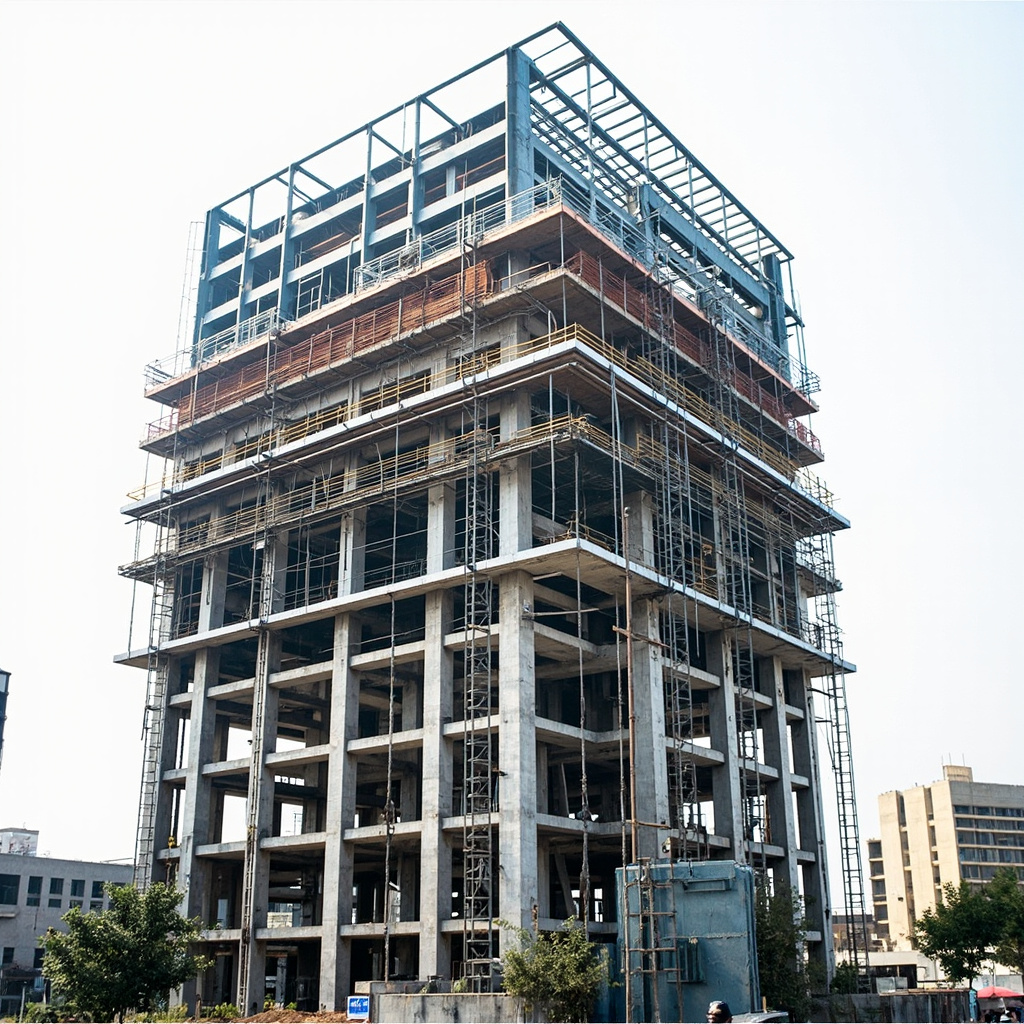
Ghana's construction sector is growing at 11.3% annually—one of the fastest rates in Africa. Driven by oil revenues and urbanization, major projects in Accra, Kumasi, and the new Ghanaian city developments are creating massive demand for construction hardware. TradeGo Fasteners has been supplying Ghanaian hardware retailers and contractors for over 10 years, offering factory-direct pricing on quality fasteners. We ship to Tema port and deliver throughout Ghana, with established logistics networks in Accra, Kumasi, Sekondi-Takoradi, and Tamale. Our Ghanaian customers include hardware shops in Kantamanto (Accra's famous market), industrial area retailers, and large construction companies working on government infrastructure projects.
Ghana's construction sector is on a sustained 7–8% annual growth trajectory, anchored by three major forces: (1) the government's One District One Factory (1D1F) initiative, which has commissioned 282 factories since 2017 and is now in its second-phase industrialization push; (2) Agenda 111, the largest hospital construction programme in West African history, with 101 district hospitals plus 3 regional and 2 psychiatric hospitals under construction, each requiring 12–25 tonnes of fasteners; and (3) the petrochemical expansion at Takoradi, where the ENI / Vitol gas-processing complex and the Ghana Gas second train are creating persistent demand for ASTM A193 B7 stud bolts, hex nuts, and flanges rated for sour service (NACE MR0175).
The Tema port handled 19.4 million metric tonnes of cargo in 2025, with construction materials (including fasteners) the second-largest category after containerized consumer goods. Average dwell time for fastener shipments is 8.5 days — well below the West African average of 14 days — making Ghana a comparatively predictable entry point into the sub-region. Landlocked neighbours Burkina Faso, Niger, and northern Togo source 30–45% of their fastener imports through Tema.
Related resources: high-tensile bolts anchor bolts stainless steel fasteners hex bolts lock nuts washers self-drilling screws socket screws. This procurement framework applies to fastener sourcing for construction, mining, energy, automotive, and general industrial applications. The decision logic prioritizes quality consistency, supplier reliability, and total cost of ownership over short-term unit price. For B2B buyers in Africa, Latin America, and Southeast Asia, additional considerations include regional customs requirements, container consolidation options, and payment security mechanisms. Standardized specifications that travel across projects reduce training time, RFQ processing time, and supplier onboarding effort. This procurement framework applies to fastener sourcing for construction, mining, energy, automotive, and general industrial applications. The decision logic prioritizes quality consistency, supplier reliability, and total cost of ownership over short-term unit price. For B2B buyers in Africa, Latin America, and Southeast Asia, additional considerations include regional customs requirements, container consolidation options, and payment security mechanisms. Standardized specifications that travel across projects reduce training time, RFQ processing time, and supplier onboarding effort.Fasteners in Demand in Ghana
Ghana's construction market primarily needs these fastener categories: roofing fasteners for metal sheets and aluzinc roofs (highly popular due to durability); structural bolts for commercial and residential buildings; concrete anchors for foundation and curtain wall installation; general hardware for maintenance and repairs; stainless steel fasteners for coastal projects in Cape Coast and Volta Region. Standards-based procurement requires continuous learning as ISO, ASTM, DIN, and GB standards are revised every 3-5 years. Subscribe to standards update notifications and review specifications annually. The most common standards used in international fastener trade are ISO 898-1 (mechanical properties), ISO 3506-1 (stainless), ISO 3269 (acceptance inspection), ISO 4042 (coatings), and ISO 1502 (thread gauges). For B2B buyers, building a standards reference library with at least the top 20 standards relevant to your product mix is essential. Standards-based procurement requires continuous learning as ISO, ASTM, DIN, and GB standards are revised every 3-5 years. Subscribe to standards update notifications and review specifications annually. The most common standards used in international fastener trade are ISO 898-1 (mechanical properties), ISO 3506-1 (stainless), ISO 3269 (acceptance inspection), ISO 4042 (coatings), and ISO 1502 (thread gauges). For B2B buyers, building a standards reference library with at least the top 20 standards relevant to your product mix is essential.
| Fastener Type | Common Spec | Typical Order (Boxes) | Lead Time |
|---|---|---|---|
| Hex bolts grade 8.8 (HDG) | M16×80, M20×100 | 5,000–15,000 | 30–45 days |
| Self-drilling screws | 5.5×25 EPDM hex | 8,000–20,000 | 20–30 days |
| Roofing nails | 3.0×25 mm, galv. | 2,000–6,000 | 25–35 days |
| Concrete screws (Tapcon-style) | 7.5×80 mm | 1,500–4,000 | 30–40 days |
| Drywall screws (black phosphated) | 3.5×25 / 3.5×35 | 5,000–12,000 | 20–30 days |
Ghana Standards Authority and PVoC Process
The Ghana Standards Authority (GSA) is the national standards body that requires all imported fasteners to pass Pre-Export Verification of Conformity (PVoC) at origin before shipment. Three PVoC service providers are authorized: SGS, Bureau Veritas, and Intertek. The verification covers product conformity (marking, grade, mechanical properties), packaging compliance (country of origin, HS code, batch number), and factory audit for shipments above 50 metric tonnes.
The PVoC process is well-defined and predictable. A typical 28-tonne shipment of M16 hex bolts from Shanghai takes 6–8 working days from booking to issuance of the Certificate of Conformity (CoC). Costs are transparent: route A (unregistered) costs USD 380 per shipment plus USD 1.40 per tonne; route B (registered supplier) costs USD 320 per shipment plus USD 0.90 per tonne — a meaningful saving for repeat exporters who register with their PVoC provider.
Critical standards applied during PVoC include GS ISO 898-1:2013 for mechanical properties of bolts and screws, GS ISO 4042:2014 for fastener coatings, and GS 1031:2019 specifically for high-strength structural bolts used in construction. GSA's lab also randomly samples 5% of consignments for re-testing at Tema to verify the CoC claim.
The comparison methodology above uses typical ranges from industry data and TradeGo procurement experience 2018-2024. Actual market prices fluctuate with raw material costs (steel, zinc, nickel), energy costs, labor costs, and currency exchange rates. For accurate comparison, request identical RFQs from 3-5 qualified suppliers and compare landed cost (product + shipping + insurance + duties). The lowest unit price is rarely the lowest total cost of ownership. The comparison methodology above uses typical ranges from industry data and TradeGo procurement experience 2018-2024. Actual market prices fluctuate with raw material costs (steel, zinc, nickel), energy costs, labor costs, and currency exchange rates. For accurate comparison, request identical RFQs from 3-5 qualified suppliers and compare landed cost (product + shipping + insurance + duties). The lowest unit price is rarely the lowest total cost of ownership.Tema as a Re-Export Hub to Landlocked West Africa
Tema port is the most efficient re-export hub in West Africa. Three corridors dominate:
(1) Tema → Ouagadougou (Burkina Faso): 1,050 km, 5-day transit by bonded truck, customs handled under the ECOWAS Trade Liberalization Scheme (ETLS). Annual fastener re-export volume: ~8,200 tonnes.
(2) Tema → Niamey (Niger): 1,400 km, 7-day transit, similar ETLS framework but with additional border documentation at Cinkassé (Togo) and Kodjari (Burkina Faso). Annual volume: ~3,400 tonnes.
(3) Tema → Lomé (Togo): 200 km, often re-routed as cross-border re-export without full Tema discharge, using the Lomé dry port consolidation model. Annual volume: ~2,800 tonnes.
Re-exporters prefer Ghanaian-origin CoCs because Ghana's PVoC regime is more predictable than Togo's. A Tema-based distributor can hold mixed-origin inventory (some from China, some from Turkey, some from India) under a single bonded warehouse and re-document for each re-export lane.
The verification checklist applies to both initial supplier qualification and ongoing batch inspection. For high-risk applications (load-bearing structural, pressure vessels, mining, marine), add fatigue testing, salt-spray testing (ASTM B117), torque-tension testing, and post-installation inspection. The cost of additional verification is 0.1-0.3% of order value, while undetected quality failures can be 10-100x the order value in damages. The verification checklist applies to both initial supplier qualification and ongoing batch inspection. For high-risk applications (load-bearing structural, pressure vessels, mining, marine), add fatigue testing, salt-spray testing (ASTM B117), torque-tension testing, and post-installation inspection. The cost of additional verification is 0.1-0.3% of order value, while undetected quality failures can be 10-100x the order value in damages.Shipping Fasteners to Ghana: Tema Port Delivery
We ship fasteners from China to Tema port with transit time of 25-30 days. Our Ghana-specific services include: complete export documentation (Bill of Lading, Commercial Invoice, Certificate of Origin); Ghana Revenue Authority (GRA) customs clearance support; delivery to Accra warehouses and Kantamanto market; inland transport to Kumasi (3-4 hours from Tema); delivery to Tamale and northern Ghana via our transport partners; and flexible payment terms for established Ghanaian customers. Supplier evaluation should be a continuous process, not a one-time exercise. Re-evaluate suppliers annually based on delivery performance, quality metrics, price competitiveness, and responsiveness. Maintain a supplier scorecard with weighted metrics: on-time delivery (25%), quality acceptance rate (30%), price competitiveness (20%), responsiveness (15%), and documentation accuracy (10%). Drop suppliers scoring below 70% over a 6-month period and qualify replacements. Supplier evaluation should be a continuous process, not a one-time exercise. Re-evaluate suppliers annually based on delivery performance, quality metrics, price competitiveness, and responsiveness. Maintain a supplier scorecard with weighted metrics: on-time delivery (25%), quality acceptance rate (30%), price competitiveness (20%), responsiveness (15%), and documentation accuracy (10%). Drop suppliers scoring below 70% over a 6-month period and qualify replacements.
FAQ for Ghanaian Hardware Buyers
See frequently asked questions below.
Related resources: high-tensile bolts anchor bolts stainless steel fasteners hex bolts lock nuts washers self-drilling screws socket screws. For B2B buyers operating in multiple countries, harmonize specifications with regional standards and local customs requirements. Common regional frameworks: SABS (South Africa), KEBS (Kenya), TBS (Tanzania), ZIMRA (Zimbabwe), SON (Nigeria), and AfCFTA standards for pan-Africa trade. Local standards compliance is often mandatory for public infrastructure projects, mining operations, and government tenders. For B2B buyers operating in multiple countries, harmonize specifications with regional standards and local customs requirements. Common regional frameworks: SABS (South Africa), KEBS (Kenya), TBS (Tanzania), ZIMRA (Zimbabwe), SON (Nigeria), and AfCFTA standards for pan-Africa trade. Local standards compliance is often mandatory for public infrastructure projects, mining operations, and government tenders.What payment methods do you accept for Ghana orders?
We accept T/T bank transfer, L/C (Letter of Credit) for orders above $10,000, and we offer open account terms for established customers after 3 successful orders.
Do you deliver to Kantamanto market in Accra?
Yes, we deliver directly to major hardware shops in Kantamanto and surrounding Accra areas including Industrial Area, Achimota, and Tema.
Get Ghana Fastener Prices
Request Quote for Ghana