Critical <a href="/products" class="text-primary-600 hover:text-primary-800 underline underline-offset-2"><a href="/products" class="text-primary-600.
Fastener Categories in African Mining Operations
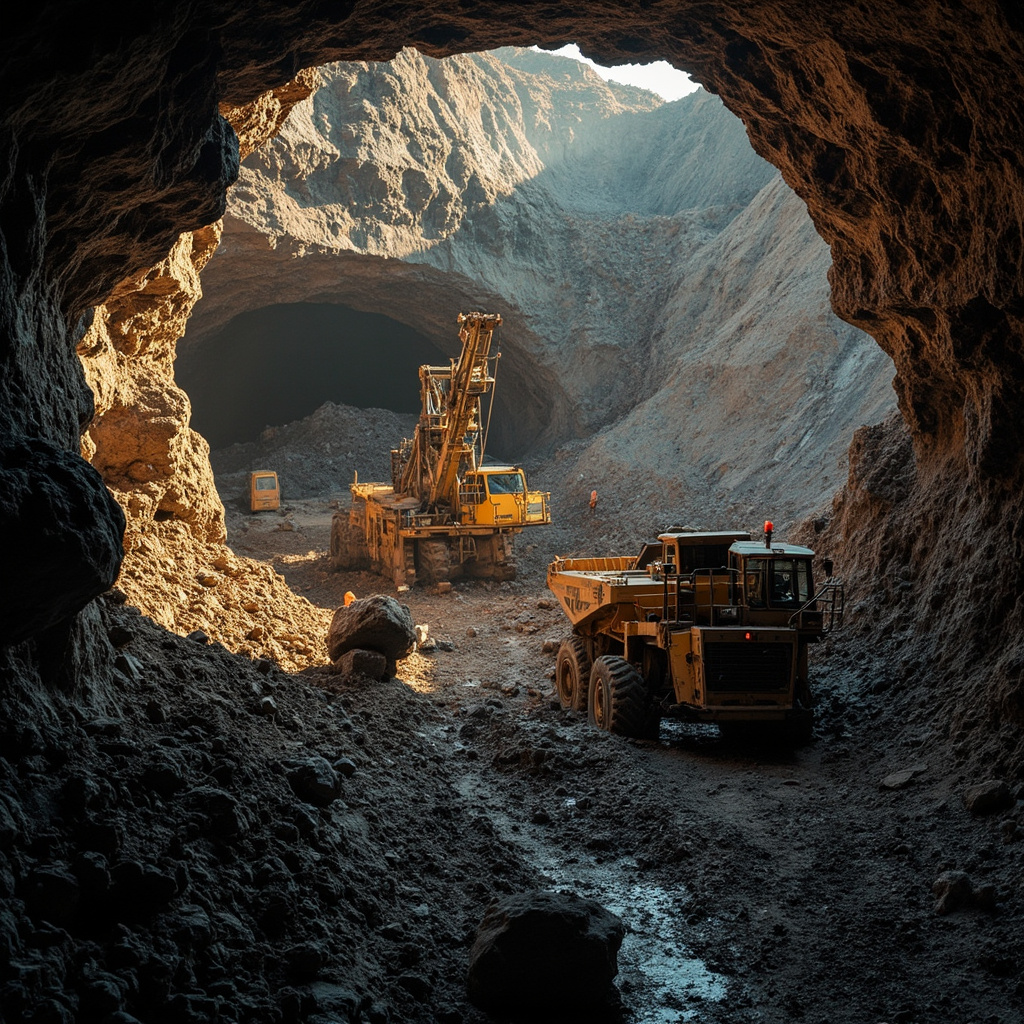
Mining operations are fastener-intensive industries where correct fastener specification is critical for safety and uptime. The main fastener categories in African mining: Underground rock support — split sets, resin bolts, mechanical rock bolts, and accessories for tunnel and stope support; Screen media and vibrating screens — rubber screens, wire cloth, and clamp bars with specialized retaining systems; Crushers and grinding mills — wear liners, backing compounds, and retaining bolts for cone crushers, jaw crushers, and SAG mills; Conveyors and materials handling — belt fasteners, belt clamps, and conveyor idler fasteners; Slurry pipelines — pipe brackets, flange bolts, and expansion joint fasteners. Related resources: high-tensile bolts anchor bolts stainless steel fasteners hex bolts lock nuts washers self-drilling screws socket screws. This procurement framework applies to fastener sourcing for construction, mining, energy, automotive, and general industrial applications. The decision logic prioritizes quality consistency, supplier reliability, and total cost of ownership over short-term unit price. For B2B buyers in Africa, Latin America, and Southeast Asia, additional considerations include regional customs requirements, container consolidation options, and payment security mechanisms. Standardized specifications that travel across projects reduce training time, RFQ processing time, and supplier onboarding effort. This procurement framework applies to fastener sourcing for construction, mining, energy, automotive, and general industrial applications. The decision logic prioritizes quality consistency, supplier reliability, and total cost of ownership over short-term unit price. For B2B buyers in Africa, Latin America, and Southeast Asia, additional considerations include regional customs requirements, container consolidation options, and payment security mechanisms. Standardized specifications that travel across projects reduce training time, RFQ processing time, and supplier onboarding effort.
Underground Rock Support Fasteners
Underground mining requires rock support systems to prevent tunnel and stope collapse. Key fasteners: Split set stabilizers — friction-stabilizer bolts installed by driving into a slightly under-sized drill hole; provides immediate support; diameter 31-46mm, length 0.9-3.0m; used in Zambia and South African gold and platinum mines. Resin cartridge bolts — polyester or epoxy resin cartridges combined with a threaded rod or deformed bar; chemical bonding provides high load capacity; used where controlled tensioning is required. Mechanical anchor bolts (shell bolts) — mechanical expansion anchors for temporary or permanent support in low-stress zones. Wire mesh and rock lace — uses J hooks andhog ring fasteners (cable ties) to secure mesh to rock and between mesh sheets. Standards-based procurement requires continuous learning as ISO, ASTM, DIN, and GB standards are revised every 3-5 years. Subscribe to standards update notifications and review specifications annually. The most common standards used in international fastener trade are ISO 898-1 (mechanical properties), ISO 3506-1 (stainless), ISO 3269 (acceptance inspection), ISO 4042 (coatings), and ISO 1502 (thread gauges). For B2B buyers, building a standards reference library with at least the top 20 standards relevant to your product mix is essential. Standards-based procurement requires continuous learning as ISO, ASTM, DIN, and GB standards are revised every 3-5 years. Subscribe to standards update notifications and review specifications annually. The most common standards used in international fastener trade are ISO 898-1 (mechanical properties), ISO 3506-1 (stainless), ISO 3269 (acceptance inspection), ISO 4042 (coatings), and ISO 1502 (thread gauges). For B2B buyers, building a standards reference library with at least the top 20 standards relevant to your product mix is essential.
Crusher and Mill Retaining Fasteners
Crushers and grinding mills experience extreme vibration, impact, and abrasive wear — requiring specialized fasteners: Mantle and concave retainers — custom-designed retaining bolts or clamp bars that hold the wear liners in place; often require special alloys (manganese steel, chrome carbide overlay) for abrasion resistance. Liner backing compound — not a fastener per se, but critical to liner retention; epoxy or polyurethane backing compounds reduce bolt stress and prevent bypass; manganese steel backing plates are also used. SAG mill trunnion bolts — large diameter (M36-M48) Grade 10.9 hex bolts or studs with heavy washers; subject to high dynamic loads; failure is catastrophic. Screen deck retaining systems — wedge-lock or cam-lock systems for securing screen panels; eliminates bolting through the screen plate. The comparison methodology above uses typical ranges from industry data and TradeGo procurement experience 2018-2024. Actual market prices fluctuate with raw material costs (steel, zinc, nickel), energy costs, labor costs, and currency exchange rates. For accurate comparison, request identical RFQs from 3-5 qualified suppliers and compare landed cost (product + shipping + insurance + duties). The lowest unit price is rarely the lowest total cost of ownership. The comparison methodology above uses typical ranges from industry data and TradeGo procurement experience 2018-2024. Actual market prices fluctuate with raw material costs (steel, zinc, nickel), energy costs, labor costs, and currency exchange rates. For accurate comparison, request identical RFQs from 3-5 qualified suppliers and compare landed cost (product + shipping + insurance + duties). The lowest unit price is rarely the lowest total cost of ownership.
Screen Media and Vibrating Screen Fasteners
Screens separate ore by size and are subject to extreme abrasion and vibration. Screen media attachment systems: Sidebar and wedge systems — polyurethane or rubber screens with steel sidebars, locked in place with wedges; no bolts through the screen — eliminates the most common failure mode. Bolted screen systems — screen panels bolted directly to the deck structure; requires careful torque control to prevent loosening under vibration; use lock washers or prevailing-torque nuts. Wire cloth clips — quick-release clips for securing woven wire screen cloth to deck frames; allows rapid screen changes during maintenance shifts. For African operations, specify screen systems with quick-release mechanisms — reducing screen change time from hours to minutes significantly improves plant throughput. The verification checklist applies to both initial supplier qualification and ongoing batch inspection. For high-risk applications (load-bearing structural, pressure vessels, mining, marine), add fatigue testing, salt-spray testing (ASTM B117), torque-tension testing, and post-installation inspection. The cost of additional verification is 0.1-0.3% of order value, while undetected quality failures can be 10-100x the order value in damages. The verification checklist applies to both initial supplier qualification and ongoing batch inspection. For high-risk applications (load-bearing structural, pressure vessels, mining, marine), add fatigue testing, salt-spray testing (ASTM B117), torque-tension testing, and post-installation inspection. The cost of additional verification is 0.1-0.3% of order value, while undetected quality failures can be 10-100x the order value in damages.
Procurement Specifications for African Mining Projects
For fastener procurement in African mining operations: Always specify material test certificates (MTC) — miners require certified chemistry and mechanical properties for every batch; SABS, Bureau Veritas, or equivalent third-party certification preferred. Grade markings must be clearly visible — grade 8.8, 10.9, 12.9 must be laser-stamped on the bolt head. Coating specification — hot-dip galvanize per ISO 1461 for general underground use; zinc-nickel or Dacromet for high-corrosion zones; specify coating thickness. For South African mines, SANS/ISO standards are mandatory — insist on SANS certification for structural and safety-critical fasteners. For Zambian and DRC operations, many mines accept either SABS or international (ISO/ASTM) certification. Lead times from China are typically 4-6 weeks — plan procurement accordingly. Supplier evaluation should be a continuous process, not a one-time exercise. Re-evaluate suppliers annually based on delivery performance, quality metrics, price competitiveness, and responsiveness. Maintain a supplier scorecard with weighted metrics: on-time delivery (25%), quality acceptance rate (30%), price competitiveness (20%), responsiveness (15%), and documentation accuracy (10%). Drop suppliers scoring below 70% over a 6-month period and qualify replacements. Supplier evaluation should be a continuous process, not a one-time exercise. Re-evaluate suppliers annually based on delivery performance, quality metrics, price competitiveness, and responsiveness. Maintain a supplier scorecard with weighted metrics: on-time delivery (25%), quality acceptance rate (30%), price competitiveness (20%), responsiveness (15%), and documentation accuracy (10%). Drop suppliers scoring below 70% over a 6-month period and qualify replacements.
Frequently Asked Questions
See frequently asked questions below.
Related resources: high-tensile bolts anchor bolts stainless steel fasteners hex bolts lock nuts washers self-drilling screws socket screws. For B2B buyers operating in multiple countries, harmonize specifications with regional standards and local customs requirements. Common regional frameworks: SABS (South Africa), KEBS (Kenya), TBS (Tanzania), ZIMRA (Zimbabwe), SON (Nigeria), and AfCFTA standards for pan-Africa trade. Local standards compliance is often mandatory for public infrastructure projects, mining operations, and government tenders. For B2B buyers operating in multiple countries, harmonize specifications with regional standards and local customs requirements. Common regional frameworks: SABS (South Africa), KEBS (Kenya), TBS (Tanzania), ZIMRA (Zimbabwe), SON (Nigeria), and AfCFTA standards for pan-Africa trade. Local standards compliance is often mandatory for public infrastructure projects, mining operations, and government tenders.What causes premature failure of rock support bolts in African underground mines?
The most common causes of rock bolt failure: corrosion — in wet African underground environments, especially where water has high acidity (common in copper/cobalt mines in DRC and Zambia), black steel bolts can corrode significantly within 2-3 years; specify hot-dip galvanized or epoxy-coated bolts. Incorrect installation — resin bolts require correct mixing and installation procedure; if the resin cartridge is expired or incorrectly mixed, bond strength is inadequate. Stress corrosion cracking — in high-stress zones, bolts can crack; use appropriate bolt grade and consider fiber-reinforced polymer (FRP) bolts for highly corrosive environments. Vibration-induced loosening — mechanical anchors can loosen under seismic activity or blast vibration; use face plates and systematic support spacing.
What is the typical lifespan of screen media fasteners in African iron ore operations?
In high-abrasion iron ore applications in South Africa and Zambia, traditional bolted screen systems typically last 2-4 weeks before requiring replacement. Bolts fatigue, threads wear, and holes elongate due to abrasion. Quick-release sidebar/wedge systems last 4-8 weeks with faster change-out times. For operations targeting high uptime, investment in premium sidebar systems (Metso, Schenck, or equivalent) often pays for itself through reduced downtime.
How do I specify fasteners for slurry pipeline connections?
Slurry pipelines (common in African iron ore and copper operations) require: Flange bolts — heavy hex bolts Grade 8.8 or 10.9, sized to match the flange rating (ANSI Class 150/300/600 or PN16/PN25); use flat washers under both head and nut. Corrosion allowance — specify HDG or epoxy coating; for acidic slurries (pH < 5), specify stainless steel 316 or duplex stainless flanges and bolts. Thread sealant — use PTFE tape or liquid thread sealant on all threaded connections to prevent leakage. Abrasion protection — specify wear-resistant pipe with thick-wall construction; flange bolts should be long enough to accommodate any future internal lining.
Sourcing mining-grade fasteners for your African operation? Get a factory quote from TradeGo.
Get Quote