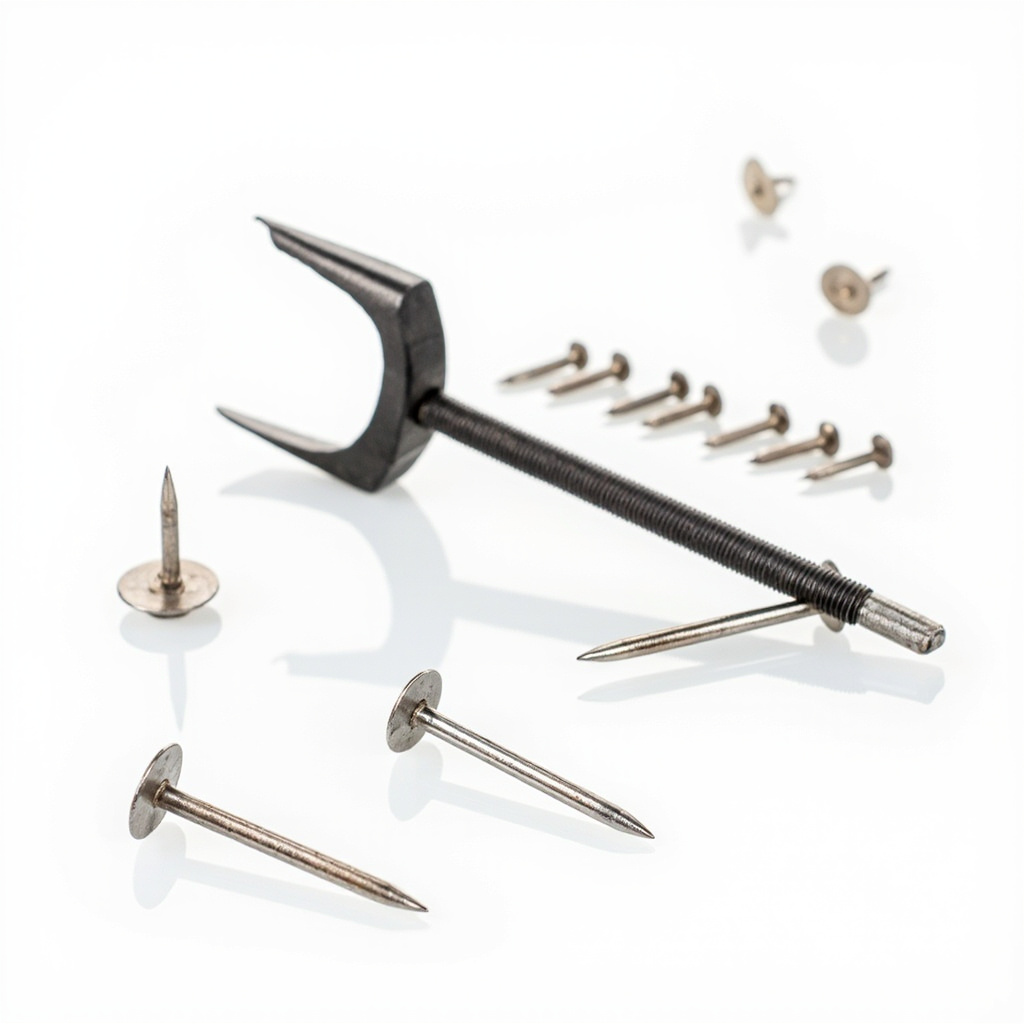
Complete guide to rivets and blind rivets: types, materials, applications, and installation techniques for construction and manufacturing.
Understanding Rivets
Rivets are one of the oldest fastening methods, used for permanent joints where welding or bolting is impractical. Unlike screws or bolts, rivets require access to only one side of the work piece - making them essential for enclosed structures, tank construction, and applications where back-side access is impossible. Blind rivets (pop rivets) extend this capability by allowing installation from a single visible side. They are inserted into a pre-drilled hole and deformed to create a permanent clamp between the rivet body and the mandrel. TradeGo supplies a comprehensive range of rivets and blind rivets for construction, manufacturing, and repair applications across Africa. Related resources: high-tensile bolts anchor bolts stainless steel fasteners hex bolts lock nuts washers self-drilling screws socket screws. This procurement framework applies to fastener sourcing for construction, mining, energy, automotive, and general industrial applications. The decision logic prioritizes quality consistency, supplier reliability, and total cost of ownership over short-term unit price. For B2B buyers in Africa, Latin America, and Southeast Asia, additional considerations include regional customs requirements, container consolidation options, and payment security mechanisms. Standardized specifications that travel across projects reduce training time, RFQ processing time, and supplier onboarding effort. This procurement framework applies to fastener sourcing for construction, mining, energy, automotive, and general industrial applications. The decision logic prioritizes quality consistency, supplier reliability, and total cost of ownership over short-term unit price. For B2B buyers in Africa, Latin America, and Southeast Asia, additional considerations include regional customs requirements, container consolidation options, and payment security mechanisms. Standardized specifications that travel across projects reduce training time, RFQ processing time, and supplier onboarding effort. This procurement framework applies to fastener sourcing for construction, mining, energy, automotive, and general industrial applications. The decision logic prioritizes quality consistency, supplier reliability, and total cost of ownership over short-term unit price. For B2B buyers in Africa, Latin America, and Southeast Asia, additional considerations include regional customs requirements, container consolidation options, and payment security mechanisms. Standardized specifications that travel across projects reduce training time, RFQ processing time, and supplier onboarding effort.
Types of Rivets
Solid Rivets: Traditional rivets requiring access to both sides. Installed by heating and shaping with a hammer and bucking bar. Used in structural steel, shipbuilding, and bridges. Blind Rivets (Pop Rivets): One-sided installation. The mandrel pulls and breaks off during installation. Common types: - Open-end: For general applications where some exposure is acceptable - Closed-end: Sealed body for watertight applications - Multi-grip: Accommodates variable grip ranges - Structural: Higher shear strength for critical connections Specialized Rivets: - Drive rivets: Hammer-in installation for non-critical applications - Split rivets: For very thin materials like sheet metal - Flush rivets: Counter-sunk head for smooth surfaces - Peened rivets: Deformed head after installation for vibration resistance Rivet sizing: Diameter (3.2mm to 6.4mm common), grip range (material thickness), and head style (dome, flat, countersunk) determine application fit. Standards-based procurement requires continuous learning as ISO, ASTM, DIN, and GB standards are revised every 3-5 years. Subscribe to standards update notifications and review specifications annually. The most common standards used in international fastener trade are ISO 898-1 (mechanical properties), ISO 3506-1 (stainless), ISO 3269 (acceptance inspection), ISO 4042 (coatings), and ISO 1502 (thread gauges). For B2B buyers, building a standards reference library with at least the top 20 standards relevant to your product mix is essential. Standards-based procurement requires continuous learning as ISO, ASTM, DIN, and GB standards are revised every 3-5 years. Subscribe to standards update notifications and review specifications annually. The most common standards used in international fastener trade are ISO 898-1 (mechanical properties), ISO 3506-1 (stainless), ISO 3269 (acceptance inspection), ISO 4042 (coatings), and ISO 1502 (thread gauges). For B2B buyers, building a standards reference library with at least the top 20 standards relevant to your product mix is essential. Standards-based procurement requires continuous learning as ISO, ASTM, DIN, and GB standards are revised every 3-5 years. Subscribe to standards update notifications and review specifications annually. The most common standards used in international fastener trade are ISO 898-1 (mechanical properties), ISO 3506-1 (stainless), ISO 3269 (acceptance inspection), ISO 4042 (coatings), and ISO 1502 (thread gauges). For B2B buyers, building a standards reference library with at least the top 20 standards relevant to your product mix is essential.
Materials and Coatings
Rivet material must match or be compatible with the joined materials: Aluminum Rivets: Lightweight, corrosion-resistant, for aluminum and composite panels. Common alloys 5052, 5154, 6061. Steel Rivets: Higher strength for structural applications. Zinc-plated for indoor use, hot-dip galvanized for outdoor. Stainless Steel Rivets: Excellent corrosion resistance for marine, coastal, and chemical environments. A2 (304) for general use, A4 (316) for chloride exposure. Copper Rivets: Electrical applications and decorative use. Good corrosion resistance with distinctive appearance. Monel Rivets: Nickel-copper alloy for extreme environments, salt water, and high temperature. Coatings: Zinc plating: Standard indoor protection Hot-dip galvanizing: Outdoor and harsh environments Trivalent chromium: Environmental alternative to hexavalent zinc For African coastal and mining applications, stainless steel (A4/316) or hot-dip galvanized steel rivets are recommended. The comparison methodology above uses typical ranges from industry data and TradeGo procurement experience 2018-2024. Actual market prices fluctuate with raw material costs (steel, zinc, nickel), energy costs, labor costs, and currency exchange rates. For accurate comparison, request identical RFQs from 3-5 qualified suppliers and compare landed cost (product + shipping + insurance + duties). The lowest unit price is rarely the lowest total cost of ownership. The comparison methodology above uses typical ranges from industry data and TradeGo procurement experience 2018-2024. Actual market prices fluctuate with raw material costs (steel, zinc, nickel), energy costs, labor costs, and currency exchange rates. For accurate comparison, request identical RFQs from 3-5 qualified suppliers and compare landed cost (product + shipping + insurance + duties). The lowest unit price is rarely the lowest total cost of ownership. The comparison methodology above uses typical ranges from industry data and TradeGo procurement experience 2018-2024. Actual market prices fluctuate with raw material costs (steel, zinc, nickel), energy costs, labor costs, and currency exchange rates. For accurate comparison, request identical RFQs from 3-5 qualified suppliers and compare landed cost (product + shipping + insurance + duties). The lowest unit price is rarely the lowest total cost of ownership.
Applications by Industry
Construction and Roofing: IBR and corrugated roofing sheets, ceiling panels, HVAC ductwork, signage installation. Closed-end rivets for watertight requirements. Automotive and Transport: Body panel repair, trim installation, electrical component mounting. Aluminum and steel blind rivets for various strength requirements. Mining and Industrial: Conveyor belt lacing, equipment guards, cable trays, structural maintenance. Stainless or galvanized for mining environments. Marine and Coastal: Boat building, dock hardware, coastal structures. A4 stainless essential for salt water exposure. Electrical: Junction box covers, conduit mounting, panel fabrication. Steel or stainless depending on environment. Household and Appliance: Appliance assembly, furniture manufacturing, decorative trim. Pop rivets allow rapid production assembly. The verification checklist applies to both initial supplier qualification and ongoing batch inspection. For high-risk applications (load-bearing structural, pressure vessels, mining, marine), add fatigue testing, salt-spray testing (ASTM B117), torque-tension testing, and post-installation inspection. The cost of additional verification is 0.1-0.3% of order value, while undetected quality failures can be 10-100x the order value in damages. The verification checklist applies to both initial supplier qualification and ongoing batch inspection. For high-risk applications (load-bearing structural, pressure vessels, mining, marine), add fatigue testing, salt-spray testing (ASTM B117), torque-tension testing, and post-installation inspection. The cost of additional verification is 0.1-0.3% of order value, while undetected quality failures can be 10-100x the order value in damages. The verification checklist applies to both initial supplier qualification and ongoing batch inspection. For high-risk applications (load-bearing structural, pressure vessels, mining, marine), add fatigue testing, salt-spray testing (ASTM B117), torque-tension testing, and post-installation inspection. The cost of additional verification is 0.1-0.3% of order value, while undetected quality failures can be 10-100x the order value in damages.
Installation Guidelines
Proper installation ensures rivet performance: 1. Drill the correct hole: 0.1-0.2mm larger than rivet diameter. Too tight prevents proper setting, too loose reduces clamp force. 2. Select correct rivet: Match diameter and grip range to material thickness. Check manufacturer grip chart. 3. Insert from visible side: Ensure rivet body is fully seated in the application before setting. 4. Set the rivet: Use appropriate rivet tool (hand or pneumatic). Apply steady pressure until mandrel breaks off cleanly. 5. Inspect the installation: Set tail should be intact with no cracks. Rivet body should be fully expanded with good clamp force. Troubleshooting: - Mandrel won't break: Rivet too long for grip range, use shorter rivet - Rivet spins in hole: Hole too large, try next diameter up - Bulge too large: Normal for blind rivets, not a problem - Loose joint: Grip range exceeded, material too thick for rivet selected Supplier evaluation should be a continuous process, not a one-time exercise. Re-evaluate suppliers annually based on delivery performance, quality metrics, price competitiveness, and responsiveness. Maintain a supplier scorecard with weighted metrics: on-time delivery (25%), quality acceptance rate (30%), price competitiveness (20%), responsiveness (15%), and documentation accuracy (10%). Drop suppliers scoring below 70% over a 6-month period and qualify replacements. Supplier evaluation should be a continuous process, not a one-time exercise. Re-evaluate suppliers annually based on delivery performance, quality metrics, price competitiveness, and responsiveness. Maintain a supplier scorecard with weighted metrics: on-time delivery (25%), quality acceptance rate (30%), price competitiveness (20%), responsiveness (15%), and documentation accuracy (10%). Drop suppliers scoring below 70% over a 6-month period and qualify replacements. Supplier evaluation should be a continuous process, not a one-time exercise. Re-evaluate suppliers annually based on delivery performance, quality metrics, price competitiveness, and responsiveness. Maintain a supplier scorecard with weighted metrics: on-time delivery (25%), quality acceptance rate (30%), price competitiveness (20%), responsiveness (15%), and documentation accuracy (10%). Drop suppliers scoring below 70% over a 6-month period and qualify replacements.
Frequently Asked Questions
See frequently asked questions below.
Related resources: high-tensile bolts anchor bolts stainless steel fasteners hex bolts lock nuts washers self-drilling screws socket screws. For B2B buyers operating in multiple countries, harmonize specifications with regional standards and local customs requirements. Common regional frameworks: SABS (South Africa), KEBS (Kenya), TBS (Tanzania), ZIMRA (Zimbabwe), SON (Nigeria), and AfCFTA standards for pan-Africa trade. Local standards compliance is often mandatory for public infrastructure projects, mining operations, and government tenders. For B2B buyers operating in multiple countries, harmonize specifications with regional standards and local customs requirements. Common regional frameworks: SABS (South Africa), KEBS (Kenya), TBS (Tanzania), ZIMRA (Zimbabwe), SON (Nigeria), and AfCFTA standards for pan-Africa trade. Local standards compliance is often mandatory for public infrastructure projects, mining operations, and government tenders. For B2B buyers operating in multiple countries, harmonize specifications with regional standards and local customs requirements. Common regional frameworks: SABS (South Africa), KEBS (Kenya), TBS (Tanzania), ZIMRA (Zimbabwe), SON (Nigeria), and AfCFTA standards for pan-Africa trade. Local standards compliance is often mandatory for public infrastructure projects, mining operations, and government tenders.When should I use blind rivets instead of screws?
Blind rivets are ideal when: only one side is accessible, you need rapid installation, the joint is non-critical and non-structural, or you need a clean appearance without protruding fasteners.
What is the shear strength of blind rivets?
Varies by material and diameter. Typical values: 3.2mm aluminum: 200kg, 4.0mm aluminum: 350kg, 4.8mm steel: 500kg, 4.8mm stainless: 400kg. Check manufacturer specifications for your specific rivet.
Can blind rivets be removed?
Yes, by drilling out the set rivet body. Use a drill slightly smaller than the original hole to avoid damaging the parent material.
What's the difference between open and closed-end rivets?
Open-end: Hollow rivet body, lighter, less expensive, suitable for general use. Closed-end: Sealed end prevents water/particle entry, essential for watertight applications.
Why did my rivet fail during installation?
Common causes: wrong rivet for material thickness, dull rivet tool, damaged rivet, or defective rivet batch. Check tool condition and rivet grip range.
Contact TradeGo for rivet supplies. Email: sales@tradego-fasteners.com
Request Quote