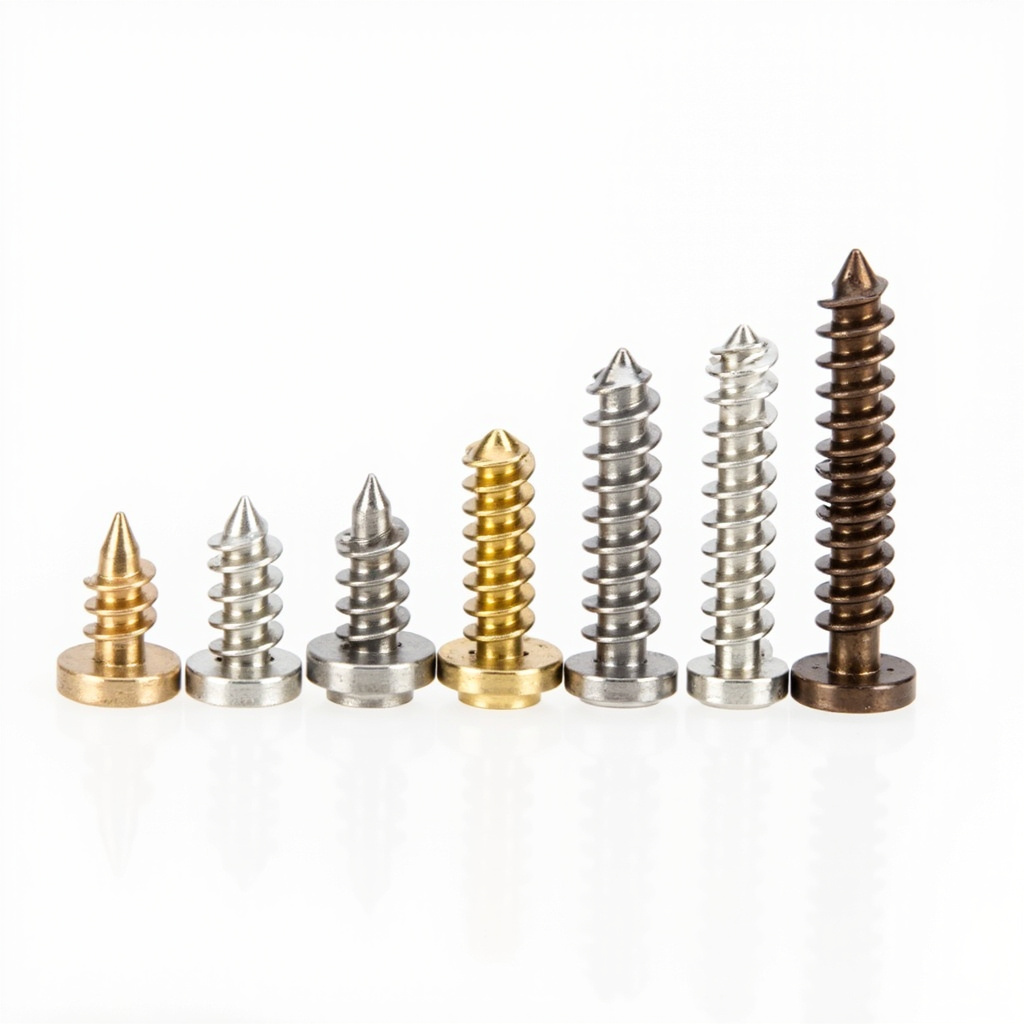
Complete guide to selecting the right screw for different materials. Wood screws, machine screws, concrete anchors, and plastic fasteners explained.
Matching Screw to Material
Using the correct screw for each material ensures secure fastening, prevents damage, and makes installation efficient. The wrong screw leads to stripped threads, weak joints, and failed assemblies. Every material has specific fastener requirements: wood requires screws that grip wood fibers, metal needs threads that engage with the base material, concrete requires anchors that expand or bond, and plastic needs careful thread design to avoid cracking. TradeGo supplies the right screws for every application, with technical guidance to ensure correct selection. Related resources: high-tensile bolts anchor bolts stainless steel fasteners hex bolts lock nuts washers self-drilling screws socket screws. This procurement framework applies to fastener sourcing for construction, mining, energy, automotive, and general industrial applications. The decision logic prioritizes quality consistency, supplier reliability, and total cost of ownership over short-term unit price. For B2B buyers in Africa, Latin America, and Southeast Asia, additional considerations include regional customs requirements, container consolidation options, and payment security mechanisms. Standardized specifications that travel across projects reduce training time, RFQ processing time, and supplier onboarding effort. This procurement framework applies to fastener sourcing for construction, mining, energy, automotive, and general industrial applications. The decision logic prioritizes quality consistency, supplier reliability, and total cost of ownership over short-term unit price. For B2B buyers in Africa, Latin America, and Southeast Asia, additional considerations include regional customs requirements, container consolidation options, and payment security mechanisms. Standardized specifications that travel across projects reduce training time, RFQ processing time, and supplier onboarding effort. This procurement framework applies to fastener sourcing for construction, mining, energy, automotive, and general industrial applications. The decision logic prioritizes quality consistency, supplier reliability, and total cost of ownership over short-term unit price. For B2B buyers in Africa, Latin America, and Southeast Asia, additional considerations include regional customs requirements, container consolidation options, and payment security mechanisms. Standardized specifications that travel across projects reduce training time, RFQ processing time, and supplier onboarding effort.
Wood Screws
Wood screws are designed for fastening wood to wood or wood to other materials: Thread Design: Coarse threads with sharp points. Threads grip wood fibers securely. Partially threaded versions available for when the unthreaded shank should pass through the first piece. Head Styles: - Flat head: Countersinks for flush surface - Round head: Appears above surface - Bugle head: Prevents tearing of drywall Sizes: Typically #6 to #14 (3.5mm to 6.3mm diameter) and 25mm to 150mm lengths. Materials: - Carbon steel: Indoor use, economical - Case-hardened steel: Hard shank prevents thread stripping - Stainless steel: Outdoor and marine environments - Brass: Decorative and electrical applications Pilot Holes: Essential for hard woods and to prevent splitting. Use slightly smaller diameter than the screw's core (not thread) diameter. For African woodworking and construction, coarse-thread wood screws in stainless steel are recommended for outdoor furniture and structural applications. Standards-based procurement requires continuous learning as ISO, ASTM, DIN, and GB standards are revised every 3-5 years. Subscribe to standards update notifications and review specifications annually. The most common standards used in international fastener trade are ISO 898-1 (mechanical properties), ISO 3506-1 (stainless), ISO 3269 (acceptance inspection), ISO 4042 (coatings), and ISO 1502 (thread gauges). For B2B buyers, building a standards reference library with at least the top 20 standards relevant to your product mix is essential. Standards-based procurement requires continuous learning as ISO, ASTM, DIN, and GB standards are revised every 3-5 years. Subscribe to standards update notifications and review specifications annually. The most common standards used in international fastener trade are ISO 898-1 (mechanical properties), ISO 3506-1 (stainless), ISO 3269 (acceptance inspection), ISO 4042 (coatings), and ISO 1502 (thread gauges). For B2B buyers, building a standards reference library with at least the top 20 standards relevant to your product mix is essential. Standards-based procurement requires continuous learning as ISO, ASTM, DIN, and GB standards are revised every 3-5 years. Subscribe to standards update notifications and review specifications annually. The most common standards used in international fastener trade are ISO 898-1 (mechanical properties), ISO 3506-1 (stainless), ISO 3269 (acceptance inspection), ISO 4042 (coatings), and ISO 1502 (thread gauges). For B2B buyers, building a standards reference library with at least the top 20 standards relevant to your product mix is essential.
Machine Screws and Self-Tapping Screws
Machine Screws: Threaded fasteners that require pre-tapped holes or nuts. Used for metal-to-metal or metal-to-plastic assemblies. Self-Tapping Screws: Cut their own threads when driven into metal. Two main types: Thread-Forming: Displaces material as they enter (like tappits). For use in materials with good ductility. Cannot be removed without damaging the hole. Thread-Cutting: Have cutting edges that remove material. Create a true thread. Can be removed and reinstalled. Better for harder materials and repeated assembly. Drilling Capacity: Self-drilling screws (TEK screws) combine drilling and fastening - no pre-drilling required for thin metal sheeting. Common Applications: - Sheet metal fabrication - HVAC ductwork - Electrical enclosures - Automotive repair - Steel framing connections For African construction, self-drilling screws are widely used for IBR roofing and steel framing. Specify appropriate length to ensure adequate thread engagement. The comparison methodology above uses typical ranges from industry data and TradeGo procurement experience 2018-2024. Actual market prices fluctuate with raw material costs (steel, zinc, nickel), energy costs, labor costs, and currency exchange rates. For accurate comparison, request identical RFQs from 3-5 qualified suppliers and compare landed cost (product + shipping + insurance + duties). The lowest unit price is rarely the lowest total cost of ownership. The comparison methodology above uses typical ranges from industry data and TradeGo procurement experience 2018-2024. Actual market prices fluctuate with raw material costs (steel, zinc, nickel), energy costs, labor costs, and currency exchange rates. For accurate comparison, request identical RFQs from 3-5 qualified suppliers and compare landed cost (product + shipping + insurance + duties). The lowest unit price is rarely the lowest total cost of ownership. The comparison methodology above uses typical ranges from industry data and TradeGo procurement experience 2018-2024. Actual market prices fluctuate with raw material costs (steel, zinc, nickel), energy costs, labor costs, and currency exchange rates. For accurate comparison, request identical RFQs from 3-5 qualified suppliers and compare landed cost (product + shipping + insurance + duties). The lowest unit price is rarely the lowest total cost of ownership.
Concrete and Masonry Anchors
Concrete anchors must grip base material that doesn't flex. Different anchoring principles: Expansion Anchors: sleeve anchors, wedge anchors, drop-in anchors. As bolt is tightened, the sleeve or wedge expands against the concrete walls of the hole. Adhesive Anchors: Epoxy or polyester resin bonds the anchor to the concrete. Good for near-edge installations and cracked concrete zones. Concrete Screws (Tapcons): Actually cut threads into concrete. Require pre-drilled holes. Easier removal than expansion anchors. Hammer-in Anchors: Plastic or metal anchors driven into predrilled holes. Simplest anchoring method for light loads. Key Selection Factors: - Load requirements (tension, shear, combined) - Concrete condition (solid, cracked, light-weight) - Edge distance and spacing - Environmental exposure - Required embedment depth Installation: Always use hammer drill with appropriate masonry bit for predrilling. Clean holes thoroughly - dust reduces anchor capacity by 30-50%. The verification checklist applies to both initial supplier qualification and ongoing batch inspection. For high-risk applications (load-bearing structural, pressure vessels, mining, marine), add fatigue testing, salt-spray testing (ASTM B117), torque-tension testing, and post-installation inspection. The cost of additional verification is 0.1-0.3% of order value, while undetected quality failures can be 10-100x the order value in damages. The verification checklist applies to both initial supplier qualification and ongoing batch inspection. For high-risk applications (load-bearing structural, pressure vessels, mining, marine), add fatigue testing, salt-spray testing (ASTM B117), torque-tension testing, and post-installation inspection. The cost of additional verification is 0.1-0.3% of order value, while undetected quality failures can be 10-100x the order value in damages. The verification checklist applies to both initial supplier qualification and ongoing batch inspection. For high-risk applications (load-bearing structural, pressure vessels, mining, marine), add fatigue testing, salt-spray testing (ASTM B117), torque-tension testing, and post-installation inspection. The cost of additional verification is 0.1-0.3% of order value, while undetected quality failures can be 10-100x the order value in damages.
Fasteners for Plastic
Plastic materials present unique fastening challenges: Thread Design: Plastic screws need careful thread design. Too coarse risks cracking, too fine reduces pull-out strength. Plastics Screws: Undercut root radius and controlled thread depth prevent stress concentration that leads to cracking. Self-Tapping for Plastic: Type A or Type B thread form depending on plastic hardness. Insert Nuts: For repeated assembly, brass or stainless inserts installed in the plastic provide durable threads. Bosses and Mating: Design plastic parts with appropriate receiving bosses. Boss diameter should be 2-3x screw diameter with adequate wall thickness. Tightening Torque: Plastic fasteners require lower torque than metal. Use torque-limiting screwdrivers to prevent over-tightening and cracking. African Applications: PVC electrical enclosures, plastic plumbing fixtures, automotive plastic components. Specify fasteners designed for plastic to avoid costly field failures. Supplier evaluation should be a continuous process, not a one-time exercise. Re-evaluate suppliers annually based on delivery performance, quality metrics, price competitiveness, and responsiveness. Maintain a supplier scorecard with weighted metrics: on-time delivery (25%), quality acceptance rate (30%), price competitiveness (20%), responsiveness (15%), and documentation accuracy (10%). Drop suppliers scoring below 70% over a 6-month period and qualify replacements. Supplier evaluation should be a continuous process, not a one-time exercise. Re-evaluate suppliers annually based on delivery performance, quality metrics, price competitiveness, and responsiveness. Maintain a supplier scorecard with weighted metrics: on-time delivery (25%), quality acceptance rate (30%), price competitiveness (20%), responsiveness (15%), and documentation accuracy (10%). Drop suppliers scoring below 70% over a 6-month period and qualify replacements. Supplier evaluation should be a continuous process, not a one-time exercise. Re-evaluate suppliers annually based on delivery performance, quality metrics, price competitiveness, and responsiveness. Maintain a supplier scorecard with weighted metrics: on-time delivery (25%), quality acceptance rate (30%), price competitiveness (20%), responsiveness (15%), and documentation accuracy (10%). Drop suppliers scoring below 70% over a 6-month period and qualify replacements.
Frequently Asked Questions
See frequently asked questions below.
Related resources: high-tensile bolts anchor bolts stainless steel fasteners hex bolts lock nuts washers self-drilling screws socket screws. For B2B buyers operating in multiple countries, harmonize specifications with regional standards and local customs requirements. Common regional frameworks: SABS (South Africa), KEBS (Kenya), TBS (Tanzania), ZIMRA (Zimbabwe), SON (Nigeria), and AfCFTA standards for pan-Africa trade. Local standards compliance is often mandatory for public infrastructure projects, mining operations, and government tenders. For B2B buyers operating in multiple countries, harmonize specifications with regional standards and local customs requirements. Common regional frameworks: SABS (South Africa), KEBS (Kenya), TBS (Tanzania), ZIMRA (Zimbabwe), SON (Nigeria), and AfCFTA standards for pan-Africa trade. Local standards compliance is often mandatory for public infrastructure projects, mining operations, and government tenders. For B2B buyers operating in multiple countries, harmonize specifications with regional standards and local customs requirements. Common regional frameworks: SABS (South Africa), KEBS (Kenya), TBS (Tanzania), ZIMRA (Zimbabwe), SON (Nigeria), and AfCFTA standards for pan-Africa trade. Local standards compliance is often mandatory for public infrastructure projects, mining operations, and government tenders.What's the difference between wood screws and drywall screws?
Drywall screws have fine threads for holding drywall to steel or wood studs. They are brittle and can snap under stress. Wood screws have coarse threads for wood-to-wood connections and are more ductile.
Can I use wood screws in metal?
No - wood screws are not designed for metal. Use machine screws or self-tapping screws for metal connections.
What size pilot hole for wood screws?
Match the hole to the screw's core diameter (before threads). For hard woods, use a slightly smaller hole. For soft woods, the full core diameter is fine.
How do I anchor into brick instead of concrete?
Use sleeve anchors or brick anchors specifically rated for masonry. Standard concrete anchors may not hold in brick. Check that your anchor is approved for the specific brick type.
What's the best screw for outdoor decking in Africa?
Stainless steel (A4/316) deck screws or hot-dip galvanized screws. Coarse thread for hardwoods. Spacing should account for wood movement with humidity changes.
Contact TradeGo for screw selection advice. Email: sales@tradego-fasteners.com
Request Quote