Complete guide to socket head cap screws (allen <a href="/products#bolts-nuts" class="text-primary-600 hover:text-primary-800 underline.
What Are Socket Head Cap Screws?
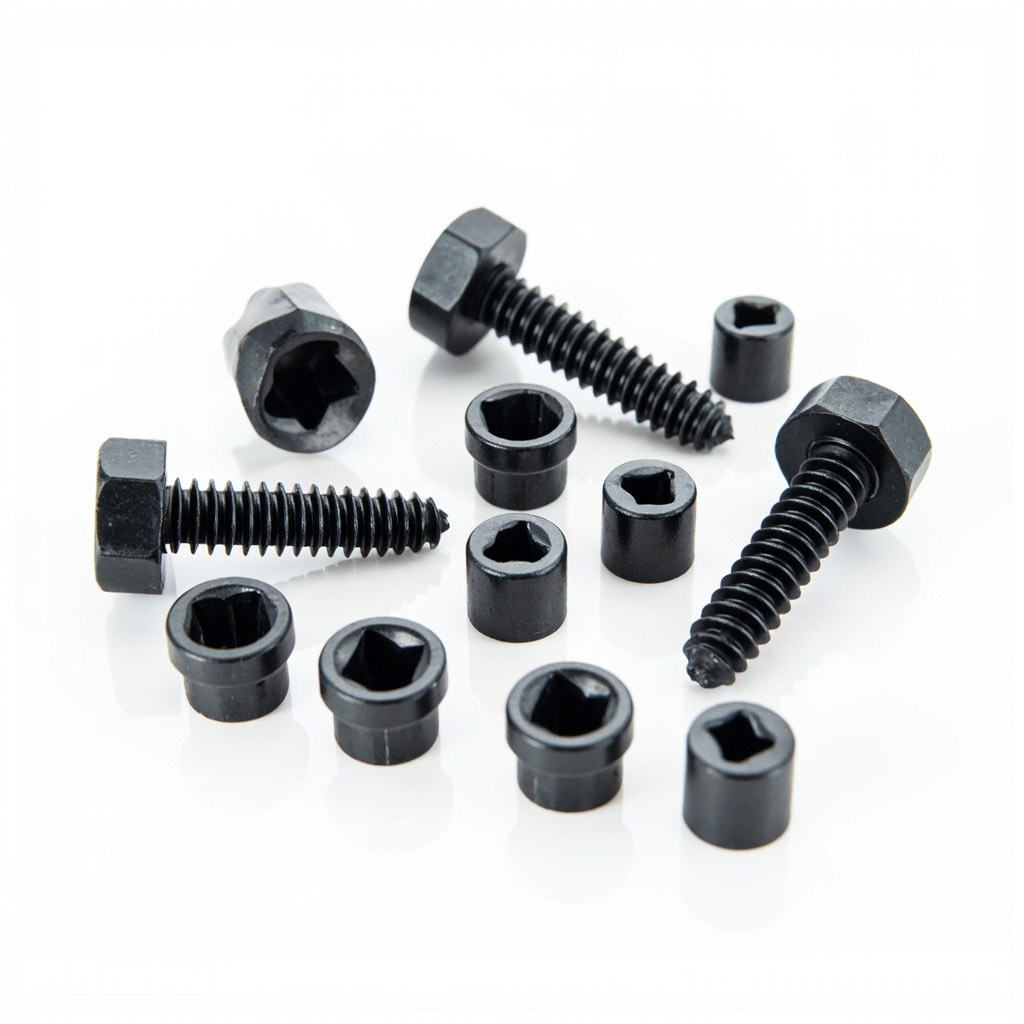
Socket head cap screws (commonly called 'allen bolts' or 'allen key bolts' in Africa) are precision machine screws with a cylindrical head featuring a recessed hex socket (allen key drive). They are designed for high-strength mechanical connections where a low-profile hex head is needed. The hex socket drive provides more contact area than a standard hex head of the same size, enabling higher torque transmission without rounding the drive. Socket head cap screws are the standard fastener for precision machinery, engines, and equipment where consistent, high-torque fastening is required. Related resources: high-tensile bolts anchor bolts stainless steel fasteners hex bolts lock nuts washers self-drilling screws socket screws. This procurement framework applies to fastener sourcing for construction, mining, energy, automotive, and general industrial applications. The decision logic prioritizes quality consistency, supplier reliability, and total cost of ownership over short-term unit price. For B2B buyers in Africa, Latin America, and Southeast Asia, additional considerations include regional customs requirements, container consolidation options, and payment security mechanisms. Standardized specifications that travel across projects reduce training time, RFQ processing time, and supplier onboarding effort. This procurement framework applies to fastener sourcing for construction, mining, energy, automotive, and general industrial applications. The decision logic prioritizes quality consistency, supplier reliability, and total cost of ownership over short-term unit price. For B2B buyers in Africa, Latin America, and Southeast Asia, additional considerations include regional customs requirements, container consolidation options, and payment security mechanisms. Standardized specifications that travel across projects reduce training time, RFQ processing time, and supplier onboarding effort. This procurement framework applies to fastener sourcing for construction, mining, energy, automotive, and general industrial applications. The decision logic prioritizes quality consistency, supplier reliability, and total cost of ownership over short-term unit price. For B2B buyers in Africa, Latin America, and Southeast Asia, additional considerations include regional customs requirements, container consolidation options, and payment security mechanisms. Standardized specifications that travel across projects reduce training time, RFQ processing time, and supplier onboarding effort.
Socket Screw Variants
Beyond standard socket head cap screws, several specialized variants exist: Socket head shoulder screws (stripper bolts) — have a shoulder (unthreaded section) that acts as a precise axle or pivot point; Socket set screws — no head, fully threaded with a hex socket on one end for locking components onto shafts; Socket button head screws — domed head with hex socket, decorative low profile; Socket flat head cap screws — countersunk head with hex socket for flush mounting; Low head socket cap screws — reduced head height for limited clearance applications. Standards-based procurement requires continuous learning as ISO, ASTM, DIN, and GB standards are revised every 3-5 years. Subscribe to standards update notifications and review specifications annually. The most common standards used in international fastener trade are ISO 898-1 (mechanical properties), ISO 3506-1 (stainless), ISO 3269 (acceptance inspection), ISO 4042 (coatings), and ISO 1502 (thread gauges). For B2B buyers, building a standards reference library with at least the top 20 standards relevant to your product mix is essential. Standards-based procurement requires continuous learning as ISO, ASTM, DIN, and GB standards are revised every 3-5 years. Subscribe to standards update notifications and review specifications annually. The most common standards used in international fastener trade are ISO 898-1 (mechanical properties), ISO 3506-1 (stainless), ISO 3269 (acceptance inspection), ISO 4042 (coatings), and ISO 1502 (thread gauges). For B2B buyers, building a standards reference library with at least the top 20 standards relevant to your product mix is essential. Standards-based procurement requires continuous learning as ISO, ASTM, DIN, and GB standards are revised every 3-5 years. Subscribe to standards update notifications and review specifications annually. The most common standards used in international fastener trade are ISO 898-1 (mechanical properties), ISO 3506-1 (stainless), ISO 3269 (acceptance inspection), ISO 4042 (coatings), and ISO 1502 (thread gauges). For B2B buyers, building a standards reference library with at least the top 20 standards relevant to your product mix is essential.
| Type | Head Height | Drive | Best Use |
|---|---|---|---|
| Socket Head Cap (SHCS) | 1.5×D | Hex socket | Standard high-strength joints |
| Socket Button Head | 0.75×D | Hex socket | Low profile decorative |
| Socket Flat Head | Flush | Hex socket | Flush mounting in precision work |
| Socket Shoulder Bolt | Shoulder×D | Hex socket | Pivot points, axles |
| Socket Set Screw | No head | Hex socket | Locking onto shafts |
| Low Head Cap Screw | 1.0×D | Hex socket | Limited clearance |
Sizes and Torque Specifications
Socket head cap screws range from M2 to M36 diameter. For African industrial applications, M4 to M16 are most common. The socket size (allen key size) is proportionally smaller than the bolt diameter, which allows for a more compact head. Torque capacity depends on the screw grade: Grade 12.9 (dark gray, highest strength) is standard for machinery requiring maximum clamping force; Grade 10.9 is intermediate; Grade 8.8 is for general applications. Always use a calibrated torque wrench and follow the equipment manufacturer's specifications. The comparison methodology above uses typical ranges from industry data and TradeGo procurement experience 2018-2024. Actual market prices fluctuate with raw material costs (steel, zinc, nickel), energy costs, labor costs, and currency exchange rates. For accurate comparison, request identical RFQs from 3-5 qualified suppliers and compare landed cost (product + shipping + insurance + duties). The lowest unit price is rarely the lowest total cost of ownership. The comparison methodology above uses typical ranges from industry data and TradeGo procurement experience 2018-2024. Actual market prices fluctuate with raw material costs (steel, zinc, nickel), energy costs, labor costs, and currency exchange rates. For accurate comparison, request identical RFQs from 3-5 qualified suppliers and compare landed cost (product + shipping + insurance + duties). The lowest unit price is rarely the lowest total cost of ownership. The comparison methodology above uses typical ranges from industry data and TradeGo procurement experience 2018-2024. Actual market prices fluctuate with raw material costs (steel, zinc, nickel), energy costs, labor costs, and currency exchange rates. For accurate comparison, request identical RFQs from 3-5 qualified suppliers and compare landed cost (product + shipping + insurance + duties). The lowest unit price is rarely the lowest total cost of ownership.
| Size | Socket Size (mm) | Torque (12.9 Grade) | Torque (10.9 Grade) |
|---|---|---|---|
| M4 | 3 | 4.5 N·m | 3.5 N·m |
| M5 | 4 | 9.5 N·m | 7.5 N·m |
| M6 | 5 | 16 N·m | 12.5 N·m |
| M8 | 6 | 38 N·m | 30 N·m |
| M10 | 8 | 75 N·m | 60 N·m |
| M12 | 10 | 130 N·m | 105 N·m |
| M16 | 14 | 320 N·m | 260 N·m |
| M20 | 17 | 630 N·m | 510 N·m |
Industrial Applications in Africa
Socket head cap screws are the fastener of choice in precision machinery and equipment across African industry: CNC machines and industrial motors — M6-M16 SHCS for motor mounts, bearing caps, and housing covers; Mining equipment — M10-M20 for high-stress connections in conveyors, crushers, and drill rigs; Water treatment pumps — M8-M12 for impeller retention, seal housing, and coupling connections; Generator sets — M6-M10 for control panel mounting and alternator assembly; Agricultural machinery — M8-M12 for gearbox covers, hitch points, and PTO connections; Solar tracking systems — M8-M12 for pivot joints and actuator mounting. The verification checklist applies to both initial supplier qualification and ongoing batch inspection. For high-risk applications (load-bearing structural, pressure vessels, mining, marine), add fatigue testing, salt-spray testing (ASTM B117), torque-tension testing, and post-installation inspection. The cost of additional verification is 0.1-0.3% of order value, while undetected quality failures can be 10-100x the order value in damages. The verification checklist applies to both initial supplier qualification and ongoing batch inspection. For high-risk applications (load-bearing structural, pressure vessels, mining, marine), add fatigue testing, salt-spray testing (ASTM B117), torque-tension testing, and post-installation inspection. The cost of additional verification is 0.1-0.3% of order value, while undetected quality failures can be 10-100x the order value in damages. The verification checklist applies to both initial supplier qualification and ongoing batch inspection. For high-risk applications (load-bearing structural, pressure vessels, mining, marine), add fatigue testing, salt-spray testing (ASTM B117), torque-tension testing, and post-installation inspection. The cost of additional verification is 0.1-0.3% of order value, while undetected quality failures can be 10-100x the order value in damages.
Installation: Proper Use of Allen Keys
Proper installation technique prevents damage and ensures full torque transmission: Always use a properly sized allen key — a loose fit rounds the socket and ruins both the screw and the tool; use ball-end hex keys for access-limited positions. Apply lubricant to the thread — machine screws should be installed with clean threads and light oil for consistent torque; dry threads can give 20-30% higher torque readings. Use a torque wrench for critical joints — hand tightening with an L-key cannot achieve consistent torque. For production assembly, use pneumatic or electric hex key drivers with torque control. Check for thread damage before installation — any burr or deformation in the female threads will cause problems. Supplier evaluation should be a continuous process, not a one-time exercise. Re-evaluate suppliers annually based on delivery performance, quality metrics, price competitiveness, and responsiveness. Maintain a supplier scorecard with weighted metrics: on-time delivery (25%), quality acceptance rate (30%), price competitiveness (20%), responsiveness (15%), and documentation accuracy (10%). Drop suppliers scoring below 70% over a 6-month period and qualify replacements. Supplier evaluation should be a continuous process, not a one-time exercise. Re-evaluate suppliers annually based on delivery performance, quality metrics, price competitiveness, and responsiveness. Maintain a supplier scorecard with weighted metrics: on-time delivery (25%), quality acceptance rate (30%), price competitiveness (20%), responsiveness (15%), and documentation accuracy (10%). Drop suppliers scoring below 70% over a 6-month period and qualify replacements. Supplier evaluation should be a continuous process, not a one-time exercise. Re-evaluate suppliers annually based on delivery performance, quality metrics, price competitiveness, and responsiveness. Maintain a supplier scorecard with weighted metrics: on-time delivery (25%), quality acceptance rate (30%), price competitiveness (20%), responsiveness (15%), and documentation accuracy (10%). Drop suppliers scoring below 70% over a 6-month period and qualify replacements.
Frequently Asked Questions
See frequently asked questions below.
Related resources: high-tensile bolts anchor bolts stainless steel fasteners hex bolts lock nuts washers self-drilling screws socket screws. For B2B buyers operating in multiple countries, harmonize specifications with regional standards and local customs requirements. Common regional frameworks: SABS (South Africa), KEBS (Kenya), TBS (Tanzania), ZIMRA (Zimbabwe), SON (Nigeria), and AfCFTA standards for pan-Africa trade. Local standards compliance is often mandatory for public infrastructure projects, mining operations, and government tenders. For B2B buyers operating in multiple countries, harmonize specifications with regional standards and local customs requirements. Common regional frameworks: SABS (South Africa), KEBS (Kenya), TBS (Tanzania), ZIMRA (Zimbabwe), SON (Nigeria), and AfCFTA standards for pan-Africa trade. Local standards compliance is often mandatory for public infrastructure projects, mining operations, and government tenders. For B2B buyers operating in multiple countries, harmonize specifications with regional standards and local customs requirements. Common regional frameworks: SABS (South Africa), KEBS (Kenya), TBS (Tanzania), ZIMRA (Zimbabwe), SON (Nigeria), and AfCFTA standards for pan-Africa trade. Local standards compliance is often mandatory for public infrastructure projects, mining operations, and government tenders.What's the difference between Grade 10.9 and Grade 12.9 socket head cap screws?
Both are high-strength alloy steel. Grade 12.9 has minimum tensile strength of 1200 MPa vs 1040 MPa for Grade 10.9, and yield strength of 1100 MPa vs 940 MPa. Grade 12.9 also has a dark gray phosphate coating as standard while 10.9 is typically zinc-plated. For critical high-stress machinery connections (engines, gearboxes, cranes), use Grade 12.9. For general industrial equipment, Grade 10.9 is adequate and more cost-effective.
Can socket head cap screws be used with nuts?
Yes, socket head cap screws can be used with nuts as an alternative to hex bolts. However, since the screw head is designed to bear directly on the joint material (not a nut), using a socket head cap screw with a nut is less efficient than using a proper hex bolt or machine screw with a nut. Socket head cap screws are designed for female thread engagement in a tapped hole.
Why do socket cap screws seize or strip during installation?
The most common causes of socket stripping are: incorrect allen key size causing cam-out and rounding; over-torquing beyond the screw's yield strength; cross-threading during initial engagement; corrosion or debris in the threads. Always use the correct size tool, apply lubricant, start threading by hand to verify alignment, and use a torque wrench for critical applications.
Need socket head cap screws for your machinery? Get a factory quote from TradeGo.
Get Quote