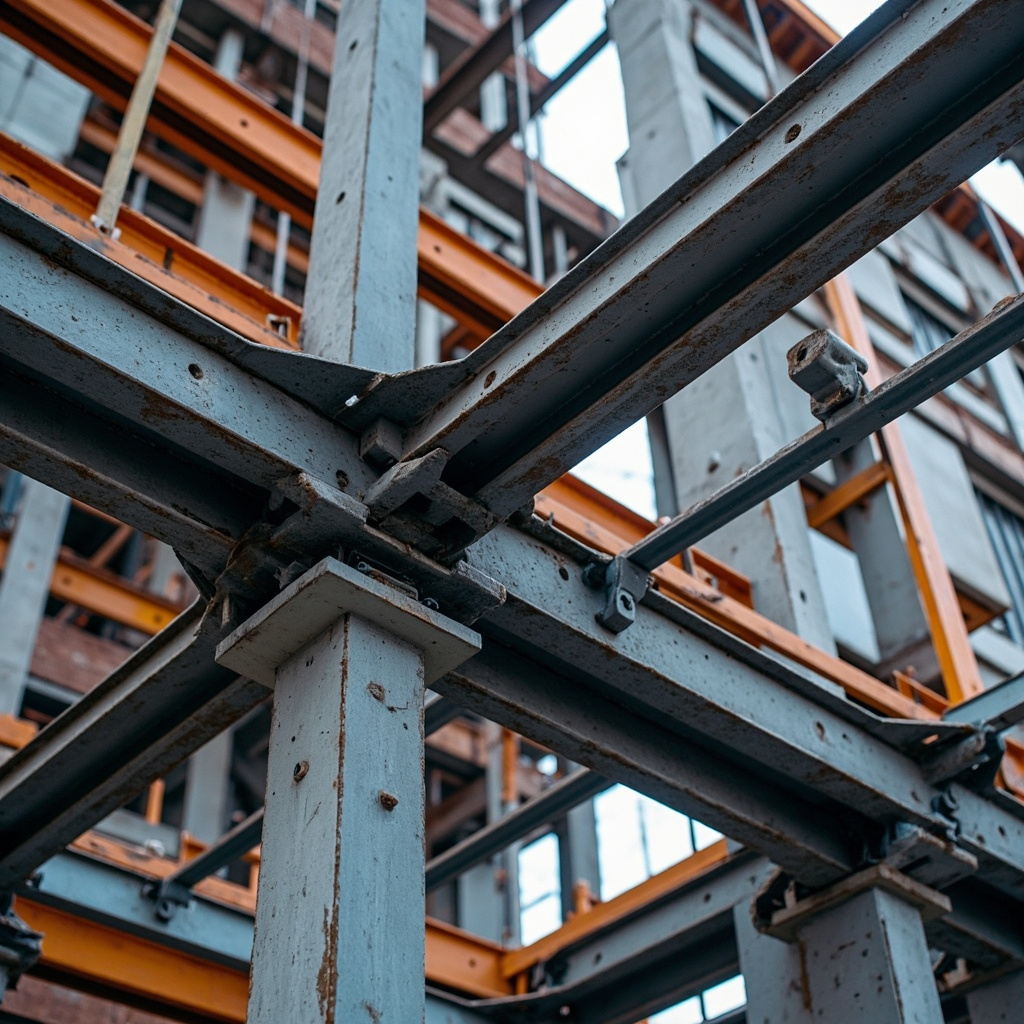
Guide to structural steel bolted connections: design, installation, and inspection for construction and mining structures.
Structural Fastener Fundamentals
Structural steel connections transfer forces between members in buildings, bridges, and industrial structures. Bolted connections must be designed to safely resist tension, compression, shear, and bending forces acting on the structure. Critical considerations: connection geometry affects force distribution, fastener strength must match member strength, and installation quality determines actual connection performance. TradeGo supplies structural-grade fasteners meeting international standards for African construction and mining projects. Related resources: high-tensile bolts anchor bolts stainless steel fasteners hex bolts lock nuts washers self-drilling screws socket screws. This procurement framework applies to fastener sourcing for construction, mining, energy, automotive, and general industrial applications. The decision logic prioritizes quality consistency, supplier reliability, and total cost of ownership over short-term unit price. For B2B buyers in Africa, Latin America, and Southeast Asia, additional considerations include regional customs requirements, container consolidation options, and payment security mechanisms. Standardized specifications that travel across projects reduce training time, RFQ processing time, and supplier onboarding effort. This procurement framework applies to fastener sourcing for construction, mining, energy, automotive, and general industrial applications. The decision logic prioritizes quality consistency, supplier reliability, and total cost of ownership over short-term unit price. For B2B buyers in Africa, Latin America, and Southeast Asia, additional considerations include regional customs requirements, container consolidation options, and payment security mechanisms. Standardized specifications that travel across projects reduce training time, RFQ processing time, and supplier onboarding effort. This procurement framework applies to fastener sourcing for construction, mining, energy, automotive, and general industrial applications. The decision logic prioritizes quality consistency, supplier reliability, and total cost of ownership over short-term unit price. For B2B buyers in Africa, Latin America, and Southeast Asia, additional considerations include regional customs requirements, container consolidation options, and payment security mechanisms. Standardized specifications that travel across projects reduce training time, RFQ processing time, and supplier onboarding effort.
Connection Types
Shear Connections: Transfer shear forces only. Beam ends can rotate - design assumes simply supported behavior. Common in ordinary structures. Moment Connections: Transfer shear AND bending moment. Restrains beam end rotation. Required for frames and structures where stiffness is critical. More complex design and fabrication. Tension Connections: Resist tensile forces. Used in bracing, hangers, and anchorage applications. Combined Connections: Resist multiple force types simultaneously. Most real connections fall into this category. Design standards: AISC (USA), SABS/SANS (South Africa), Eurocode 3 (Europe). Ensure fasteners and connection details meet applicable local codes. Standards-based procurement requires continuous learning as ISO, ASTM, DIN, and GB standards are revised every 3-5 years. Subscribe to standards update notifications and review specifications annually. The most common standards used in international fastener trade are ISO 898-1 (mechanical properties), ISO 3506-1 (stainless), ISO 3269 (acceptance inspection), ISO 4042 (coatings), and ISO 1502 (thread gauges). For B2B buyers, building a standards reference library with at least the top 20 standards relevant to your product mix is essential. Standards-based procurement requires continuous learning as ISO, ASTM, DIN, and GB standards are revised every 3-5 years. Subscribe to standards update notifications and review specifications annually. The most common standards used in international fastener trade are ISO 898-1 (mechanical properties), ISO 3506-1 (stainless), ISO 3269 (acceptance inspection), ISO 4042 (coatings), and ISO 1502 (thread gauges). For B2B buyers, building a standards reference library with at least the top 20 standards relevant to your product mix is essential. Standards-based procurement requires continuous learning as ISO, ASTM, DIN, and GB standards are revised every 3-5 years. Subscribe to standards update notifications and review specifications annually. The most common standards used in international fastener trade are ISO 898-1 (mechanical properties), ISO 3506-1 (stainless), ISO 3269 (acceptance inspection), ISO 4042 (coatings), and ISO 1502 (thread gauges). For B2B buyers, building a standards reference library with at least the top 20 standards relevant to your product mix is essential.
Connection Design Principles
Key design steps: 1. Determine design forces from structural analysis 2. Select connection type appropriate for force and member sizes 3. Calculate required fastener数量 and arrangement 4. Check bearing, tear-out, and net section strength 5. Verify connected material capacity 6. Specify fastener grade, coating, and installation requirements Fastener specification for structural connections: - ASTM A325 or A490 high-strength bolts (US standard) - SABS 155 (South African standard, equivalent to ISO 4014/4017) - Property class 8.8 or 10.9 for metric bolts Minimum edge distances and spacing per applicable standard. Generally: 1.5d from center to edge, 3d between fastener centers. The comparison methodology above uses typical ranges from industry data and TradeGo procurement experience 2018-2024. Actual market prices fluctuate with raw material costs (steel, zinc, nickel), energy costs, labor costs, and currency exchange rates. For accurate comparison, request identical RFQs from 3-5 qualified suppliers and compare landed cost (product + shipping + insurance + duties). The lowest unit price is rarely the lowest total cost of ownership. The comparison methodology above uses typical ranges from industry data and TradeGo procurement experience 2018-2024. Actual market prices fluctuate with raw material costs (steel, zinc, nickel), energy costs, labor costs, and currency exchange rates. For accurate comparison, request identical RFQs from 3-5 qualified suppliers and compare landed cost (product + shipping + insurance + duties). The lowest unit price is rarely the lowest total cost of ownership. The comparison methodology above uses typical ranges from industry data and TradeGo procurement experience 2018-2024. Actual market prices fluctuate with raw material costs (steel, zinc, nickel), energy costs, labor costs, and currency exchange rates. For accurate comparison, request identical RFQs from 3-5 qualified suppliers and compare landed cost (product + shipping + insurance + duties). The lowest unit price is rarely the lowest total cost of ownership.
Installation Requirements
Proper installation is critical for structural connection performance: Pre-Tensioning: Many structural connections require pre-tensioned bolts. Methods include: - Turn-of-nut: Rotate nut specific amount after snug-tight - Direct tension indicator: Use washers with protrusions that compress at target tension - Hydraulic tensioner: Apply tension directly with hydraulic tool Inspection Requirements: - Verify fastener grade matches specification - Inspect connection geometry before bolting - Verify pre-tension for required connections - Document inspection results Snug-Tight vs Pre-Tensioned: Some connections (like single shear connections) only require snug-tight installation. Critical connections typically require pre-tensioning. Do not reuse high-strength bolts after full pre-tensioning. The bolt has stretched and may not provide consistent tension on reuse. The verification checklist applies to both initial supplier qualification and ongoing batch inspection. For high-risk applications (load-bearing structural, pressure vessels, mining, marine), add fatigue testing, salt-spray testing (ASTM B117), torque-tension testing, and post-installation inspection. The cost of additional verification is 0.1-0.3% of order value, while undetected quality failures can be 10-100x the order value in damages. The verification checklist applies to both initial supplier qualification and ongoing batch inspection. For high-risk applications (load-bearing structural, pressure vessels, mining, marine), add fatigue testing, salt-spray testing (ASTM B117), torque-tension testing, and post-installation inspection. The cost of additional verification is 0.1-0.3% of order value, while undetected quality failures can be 10-100x the order value in damages. The verification checklist applies to both initial supplier qualification and ongoing batch inspection. For high-risk applications (load-bearing structural, pressure vessels, mining, marine), add fatigue testing, salt-spray testing (ASTM B117), torque-tension testing, and post-installation inspection. The cost of additional verification is 0.1-0.3% of order value, while undetected quality failures can be 10-100x the order value in damages.
Mining Structure Applications
Mining structures require special consideration: Dynamic Loading: Crushers, screens, and conveyors create vibration and dynamic forces. Connections must accommodate fatigue loading. Use pre-tensioned high-strength bolts. Corrosive Environment: Copper and cobalt processing creates acidic, chemically aggressive conditions. Use hot-dip galvanized or stainless steel fasteners. Inspect connections more frequently. Heavy Equipment Loads: Ground support, conveyor structures, and crusher installations carry extreme loads. Match fastener capacity to equipment specifications. Typical mining fastener applications: - Conveyor gallery structures: High-strength pre-tensioned bolts - Crusher foundations: Anchor bolts with适当 template for alignment - Screen decks: High-strength bolts with lock washers - Pipe supports: Clamp-type connections with adequate thickness For African mining projects, specify SABS-approved or equivalent structural fasteners to meet local code requirements. Supplier evaluation should be a continuous process, not a one-time exercise. Re-evaluate suppliers annually based on delivery performance, quality metrics, price competitiveness, and responsiveness. Maintain a supplier scorecard with weighted metrics: on-time delivery (25%), quality acceptance rate (30%), price competitiveness (20%), responsiveness (15%), and documentation accuracy (10%). Drop suppliers scoring below 70% over a 6-month period and qualify replacements. Supplier evaluation should be a continuous process, not a one-time exercise. Re-evaluate suppliers annually based on delivery performance, quality metrics, price competitiveness, and responsiveness. Maintain a supplier scorecard with weighted metrics: on-time delivery (25%), quality acceptance rate (30%), price competitiveness (20%), responsiveness (15%), and documentation accuracy (10%). Drop suppliers scoring below 70% over a 6-month period and qualify replacements. Supplier evaluation should be a continuous process, not a one-time exercise. Re-evaluate suppliers annually based on delivery performance, quality metrics, price competitiveness, and responsiveness. Maintain a supplier scorecard with weighted metrics: on-time delivery (25%), quality acceptance rate (30%), price competitiveness (20%), responsiveness (15%), and documentation accuracy (10%). Drop suppliers scoring below 70% over a 6-month period and qualify replacements.
Frequently Asked Questions
See frequently asked questions below.
Related resources: high-tensile bolts anchor bolts stainless steel fasteners hex bolts lock nuts washers self-drilling screws socket screws. For B2B buyers operating in multiple countries, harmonize specifications with regional standards and local customs requirements. Common regional frameworks: SABS (South Africa), KEBS (Kenya), TBS (Tanzania), ZIMRA (Zimbabwe), SON (Nigeria), and AfCFTA standards for pan-Africa trade. Local standards compliance is often mandatory for public infrastructure projects, mining operations, and government tenders. For B2B buyers operating in multiple countries, harmonize specifications with regional standards and local customs requirements. Common regional frameworks: SABS (South Africa), KEBS (Kenya), TBS (Tanzania), ZIMRA (Zimbabwe), SON (Nigeria), and AfCFTA standards for pan-Africa trade. Local standards compliance is often mandatory for public infrastructure projects, mining operations, and government tenders. For B2B buyers operating in multiple countries, harmonize specifications with regional standards and local customs requirements. Common regional frameworks: SABS (South Africa), KEBS (Kenya), TBS (Tanzania), ZIMRA (Zimbabwe), SON (Nigeria), and AfCFTA standards for pan-Africa trade. Local standards compliance is often mandatory for public infrastructure projects, mining operations, and government tenders.What's the difference between ASTM A325 and A490 bolts?
A325 bolts (minimum 825 MPa tensile strength) are most common for structural connections. A490 bolts (minimum 1035 MPa) are higher strength, used for larger diameters or when higher capacity needed. A490 should not be used in shear connections.
Can I use ordinary hex bolts for structural connections?
No. Structural connections require high-strength bolts (Grade 8.8+) with controlled pre-tension. Ordinary bolts (Grade 4.6) are for non-structural connections only.
What's the correct tightening sequence?
For multiple-bolt connections, tighten in a star pattern from center outward. This prevents uneven loading and warping of the connection.
Why do structural bolts sometimes need washers?
Washers serve multiple purposes: distribution of load over connected material, protection of coated surfaces, and in some cases, indicating proper pre-tensioning.
How do I know if a connection is pre-tensioned?
Specifications and drawings indicate pre-tensioning requirements. If not specified, check applicable code requirements. Critical structures typically require pre-tensioning.
Contact TradeGo for structural fastener solutions. Email: sales@tradego-fasteners.com
Request Quote