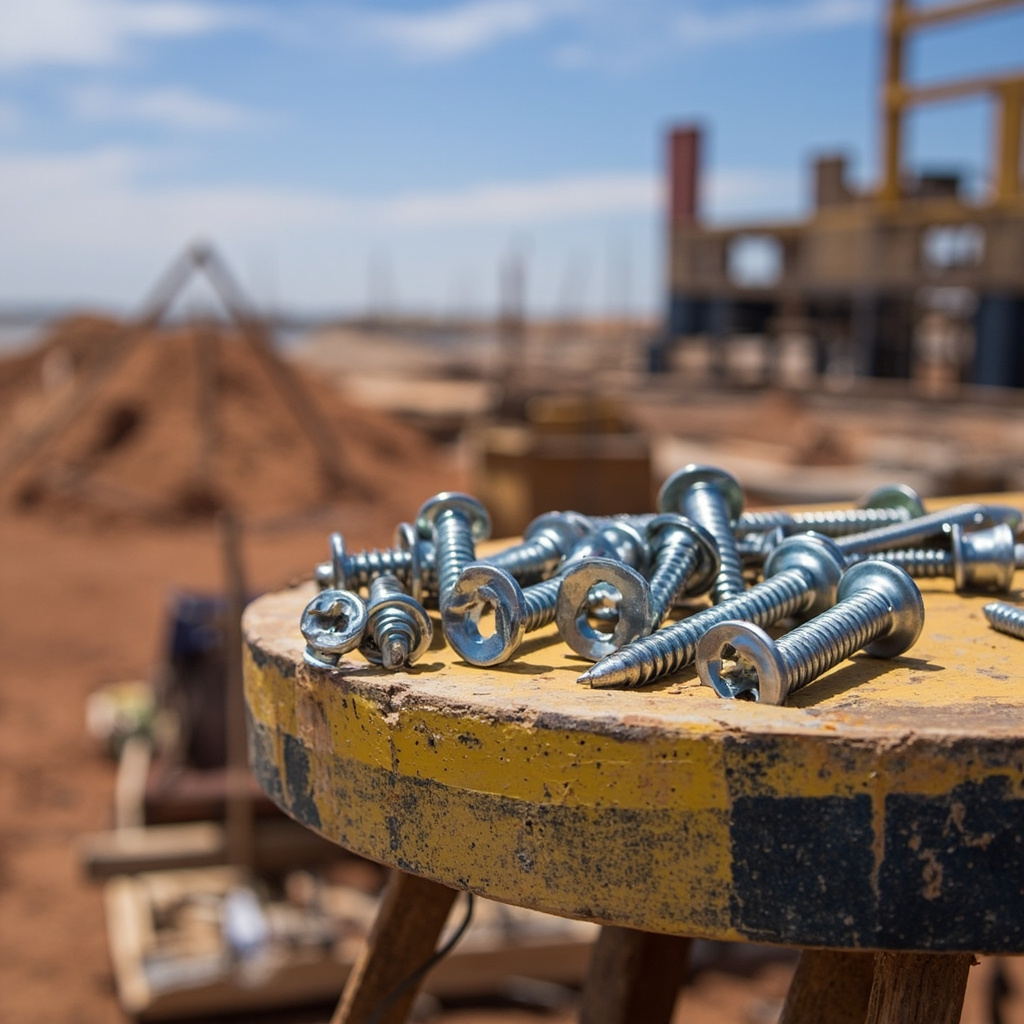
Complete Tunisia fastener export guide: compliance, shipping & market access for Mediterranean trade. Expert strategies for B2B fastener manufacturers exporting to Tunisia.
Understanding Tunisia's Fastener Import Regulations and Compliance
This Tunisia Mediterranean fastener export guide outlines critical regulatory barriers Chinese fastener manufacturers must resolve before shipping industrial bolts, nuts, studs and threaded components into Tunisian territory. Tunisia operates a formal pre-import verification framework managed by the Tunisian Foreign Trade Department, requiring importers to secure appropriate clearance documentation for all industrial metal fasteners prior to cargo arrival [1]. Unlike many West African markets, Tunisia does not impose blanket import bans on steel fasteners, but selective import licensing applies to high-tensile alloy steel grades used in infrastructure and energy projects. Procurement managers at Tunisian distribution firms consistently report port seizures occurring when exporters overlook standard certification paperwork, resulting in storage fees, inspection delays and potential cargo rejection. Mandatory product standards form the backbone of local compliance protocols. ISO 898-1 and ISO 898-2 remain the primary benchmark for carbon and alloy steel mechanical fasteners, outlining tensile strength requirements for Grade 8.8, 10.9 and 12.9 bolts [4]. While Tunisia does not enforce compulsory local product certification, large industrial buyers supplying automotive and construction projects demand full test reports aligned with these ISO specifications to satisfy downstream European clients. CE marking is not legally required for direct import into Tunisia, yet fastener stock destined for re-export to EU member states must carry valid CE conformity documentation. Surface treatment specifications represent another frequent point of dispute: hot-dip galvanized (HDG) fasteners are strongly preferred over basic electro-galvanized alternatives for coastal infrastructure around Sousse and Sfax, where high saline humidity accelerates surface rust. Electroplated zinc coatings often fail local buyer expectations for long-term outdoor service life, even if mechanical strength meets ISO benchmarks. Customs documentation requires rigorous consistency across every submitted document set. Exporters must provide commercial invoices with origin declarations, detailed packing lists, full set ocean bills of lading, and an official certificate of origin issued and chamber-attested in China [1]. Tunisian customs cross-reference product descriptions, HS codes, weights and values across all documents; even minor textual mismatches trigger extended manual inspection at port terminals. Quality inspection procedures at Port of Rades involve random sampling of containerized fastener shipments, focusing on dimensional accuracy, material grade verification and coating thickness checks. Exporters should compile a compliance checklist covering ISO test certificates, mill material certificates, coating inspection reports, and original origin paperwork before vessel departure. Restricted materials include fasteners manufactured with lead alloy additives above permitted thresholds, aligned with EU REACH guidelines adopted voluntarily by most Tunisian industrial zones.
Tunisia Mediterranean Ports and Shipping Infrastructure
The Mediterranean coastline of Tunisia delivers two primary maritime gateways for fastener imports, defining logistics strategy outlined within this Tunisia Mediterranean fastener export guide. Port of Rades, positioned approximately ten kilometres southeast of Tunis, functions as the country’s dominant container handling facility and receives over 85% of all containerized industrial hardware imports [2]. Operated by the national Office of Merchant Navy and Ports, Rades features dedicated stacking yards for 20ft and 40ft general cargo containers, regular weekly liner connections linking major Chinese export hubs including Ningbo, Shanghai and Shenzhen via Mediterranean transshipment hubs in Malta, Genoa and Marseille. Average sea freight transit times range between 25 and 35 days, with shipments originating from southern Chinese ports regularly hitting the faster end of this window at 25–30 days [14]. FCL shipments experience more predictable scheduling than LCL consolidated cargo, which adds 3–7 additional days for deconsolidation upon arrival. Fastener exporters prioritising reliability for recurring bulk orders should favour direct FCL bookings to avoid consolidation delays. Port of Gabès-Ghannouch serves southern Tunisia and acts as the preferred entry point for cargo bound for oil & gas operations near the Gulf of Gabès and industrial facilities in the Tataouine region. The port offers specialised bulk and breakbulk handling infrastructure suitable for large loose fastener consignments shipped without individual palletisation, though container service frequency remains lower compared to Rades. Freight rates to Gabès typically carry a 12–18% premium versus Rades, alongside longer vessel waiting windows, making it economical only for buyers operating exclusively in southern industrial clusters. Many logistics providers advise splitting regional distribution: route core container volumes to Rades for Tunis, Bizerte and Sousse markets, while dispatching dedicated breakbulk shipments to Gabès for southern clients. Port handling and clearance timelines represent a frequently underestimated cost factor. Following vessel discharge, standard customs formalities require 7–10 working days before cargo can leave bonded warehouses, assuming fully compliant documentation [10]. Missing certificates of origin or inconsistent invoicing can extend dwell time to three weeks or more, generating costly port storage charges. When selecting freight forwarders, exporters should prioritise agents maintaining permanent local representation at Rades with established relationships with customs inspectors familiar with metal hardware imports. Air freight remains viable only for emergency small-batch orders: transit time compresses to 5–7 days via Tunis-Carthage International Airport, yet airfreight pricing makes air shipments uneconomical for standard bulk fastener procurement. Seasonal congestion peaks between May and August as construction project activity rises, so exporters should build additional logistics lead time into quotations for summer delivery schedules.
Market Analysis: Tunisia's Industrial Fastener Demand Sectors
Tunisia’s industrial landscape creates segmented fastener demand, shaped by deep integration into European supply chains and sustained domestic infrastructure investment. Automotive manufacturing represents the single largest consumer of precision industrial fasteners, hosting roughly 300 automotive component firms generating approximately USD 2.5 billion in annual export revenue [25,26]. Tier 1 automotive suppliers operating within industrial zones around Bizerte and Tunis demand consistent batches of high-tensile Grade 10.9 and 12.9 bolts, flange nuts and self-locking fasteners conforming to ISO 898 specifications. Most local automotive manufacturers serve European OEMs, requiring strict traceability, batch test reports and consistent dimensional tolerances. For this customer group, exporters must avoid low-cost generic fastener ranges; procurement teams reject commodity-grade hardware that cannot match European-origin component quality benchmarks. Demand is also rising for lightweight aluminium alloy fasteners as local factories expand electric vehicle component assembly, aligned with national government EV targets to deploy 5,000 electric vehicles nationwide by 2026 [29]. Construction and infrastructure projects form the second major demand vertical. Ongoing residential real estate developments, coastal tourism resort builds and national highway expansion schemes consume massive volumes of structural bolts, anchor bolts, reinforcing bar fasteners and standard metric hardware. HDG structural fasteners are mandatory for coastal construction near Hammamet, Monastir and Sfax to counteract atmospheric salt corrosion. Many Tunisian civil engineering firms compare hot-dip galvanised fasteners against mechanically galvanized alternatives; while mechanical galvanisation carries a lower unit price, consultants increasingly specify HDG due to superior salt-spray performance under Tunisia’s Mediterranean climate. Oil and gas industry clients concentrated around Gabès require specialised high-temperature alloy fasteners such as ASTM A193 B7 studs paired with A194 2H nuts for pipeline and refinery maintenance work. These buyers prioritise material certification above price and typically place medium-sized recurring orders with stringent third-party inspection requirements before shipment. Agricultural equipment manufacturing relies on medium-strength carbon steel fasteners for tractors, irrigation infrastructure and farm machinery assemblies. Demand fluctuates seasonally, peaking in Q1 and Q2 ahead of planting cycles. Electronics manufacturing hubs primarily clustered in the Tunis Free Zone require miniature precision screws, spring washers and stainless steel fasteners for wiring harnesses and consumer component assemblies. Key industrial zones to prioritise for distributor outreach include the Bizerte Free Zone, Tunis Manouba Industrial Park, and Gabès Industrial Complex, home to the highest concentration of manufacturing importers. According to International Trade Centre statistics, Tunisia’s annual hardware and fastener import volume continues steady growth, with approximately 42% of imported industrial metal components sourced from non-European suppliers, creating clear market space for competitive Chinese manufacturers [3]. European suppliers currently hold dominant market share, yet elevated freight costs out of Italy, France and Spain create pricing opportunities for efficient Chinese fastener exporters offering reliable lead times and complete technical documentation packages.
Tariff Structure and Trade Agreement Benefits for Fasteners
Navigating Tunisia’s tariff rules and regional trade pacts directly impacts final landed costs, a critical negotiation variable shared within this Tunisia Mediterranean fastener export guide. Two major regional frameworks govern preferential import duties: the EU-Tunisia Association Agreement and the Agadir Agreement linking Tunisia, Morocco, Egypt and Jordan [6]. It is essential to clarify one common misconception: these agreements deliver tariff benefits primarily for goods originating within signatory nations. Fasteners manufactured in China do not automatically qualify for reduced preferential rates upon import into Tunisia, though Tunisian importers may leverage originating component rules if they conduct further assembly before re-exporting finished goods into the EU market. This dynamic shapes negotiation strategy: clearly explain to buyers that preferential tariffs apply only to locally value-added finished products, not imported raw fastener stock from Asia. Tunisia applies standard Most-Favoured-Nation (MFN) tariff rates on fasteners imported from China. Exact duty percentages depend on precise HS classification; industrial steel bolts, screws and nuts fall under HS Chapter 73, with base MFN duties ranging from 12% to 18% on the CIF cargo value, plus standard local VAT levied at 19%. Misclassification remains a costly risk. Many inexperienced exporters incorrectly assign broad HS codes for metal articles, triggering customs audits, duty reassessment and potential fines. Before issuing proforma invoices, confirm exact six-digit HS nomenclature with the Tunisian importer’s customs broker to align classification with Tunisian General Customs Directorate requirements [1]. Rules of origin criteria represent the gateway to securing any available preferential tariff treatment. Under the Pan-Euro-Mediterranean (PEM) Convention updated effective March 2025, origin cumulation provisions have been relaxed, but non-originating fully manufactured fasteners from China cannot satisfy sufficient processing thresholds [22]. If your Tunisian customer intends to integrate imported fasteners into finished assemblies for EU export, advise them to document all processing steps to claim originating status for final products. The EUR.1 movement certificate, widely used under the EU-Tunisia agreement, will not grant duty reductions for pure Chinese-manufactured fasteners entering Tunisia, eliminating one popular cost-saving tactic many new exporters incorrectly pursue. Exporters must separate commercial strategy based on end destination: fasteners intended purely for domestic Tunisian consumption will pay standard MFN duties, while fasteners imported for downstream manufacturing and EU re-export require separate documentation planning with the buyer’s logistics team. Structuring quotations to transparently separate unit product cost, sea freight, insurance and estimated duty charges helps Tunisian procurement managers accurately calculate landed pricing. Exporters should also remind partners that tariff regulations undergo periodic adjustments monitored by the Tunisian Foreign Trade Department, confirming prevailing rates 30 days prior to every large shipment to avoid unexpected landed cost increases.
Payment Terms and Financial Considerations for Tunisia Exports
Tunisia operates under active foreign exchange controls administered by the Central Bank of Tunisia (BCT), which dictates viable payment structures for all cross-border fastener transactions. For new trade partnerships, irrevocable letters of credit (LC) at sight represent the lowest-risk payment vehicle, aligning with guidance from trade finance specialists active across North Africa. Under BCT Circular 2025-13, short credit terms up to 120 days after shipment face minimal regulatory hurdles, while any credit period exceeding 120 days requires formal approval from the central bank [33]. This regulatory framework limits open account arrangements with unknown buyers; exporters should avoid unsecured OA terms during initial order cycles. Usance LCs of 60 or 90 days can be negotiated for established, creditworthy distributors, but include clauses requiring all documentary discrepancies to be resolved before payment release. Popular alternative payment structures include partial T/T arrangements, most commonly 30% advance payment before production commences and the remaining 70% remitted against copies of ocean transport documents. Exporters must recognise the 30% advance threshold aligns with informal central bank guidance; requests for higher prepayment percentages often trigger extended forex approval delays for Tunisian importers [31]. All cross-border payments are processed in hard currencies such as USD or EUR; direct settlement using Tunisian Dinar (TND) between foreign exporters and local firms is prohibited under exchange control regulations. Currency risk management therefore becomes essential for contracts spanning multiple months. Exchange volatility between EUR, USD and TND can erode buyer margins, leading many Tunisian distributors to request fixed currency pricing locked at order confirmation. Documentary requirements for LC processing demand absolute consistency. All shipping documents—commercial invoice, packing list, bill of lading, certificates of origin and ISO test reports—must precisely match descriptions specified within the LC text. Minor deviations, including variations in fastener grade terminology or metric sizing descriptions, enable banks to delay or refuse payment under UCP 600 rules. Many exporters engage specialist document auditors to review paperwork one week before vessel loading to eliminate discrepancy risks. Credit insurance offers an additional risk mitigation layer; specialist export credit agencies provide cover against buyer default, political risk and forex transfer delays common within regulated North African markets. When evaluating prospective buyers, verify the correspondent banking chain. LCs issued by smaller regional Tunisian banks often require confirmation via an international correspondent bank to eliminate settlement risk. Clearly outline payment milestones, document submission deadlines and bank charges allocation within sales contracts. Disputes frequently emerge when parties fail to define who absorbs LC opening fees, amendment charges and courier expenses for original document delivery. Transparent financial clauses strengthen trust with Tunisian importers, who regularly face administrative obstacles securing foreign exchange allocation for import orders.
Building Distribution Partnerships in Tunisia's fastener Market
Establishing sustainable sales volume within Tunisia’s fastener sector depends on selecting capable local distribution partners familiar with domestic customs rules, industrial client networks and Mediterranean climate application requirements. Prospective distributors fall into two clear categories: general hardware wholesalers supplying construction SMEs, and specialised industrial component traders serving automotive, energy and manufacturing clients. Specialised industrial distributors deliver higher average order values and consistent repeat demand, making them the priority target for Chinese manufacturers supplying Grade 8.8, 10.9 and alloy fastener ranges. When screening candidates, verify existing stock ranges, active customer portfolio, warehouse capacity in proximity to Port of Rades, and technical capacity to interpret ISO fastener specifications for end users. Exclusivity terms require careful negotiation. Granting nationwide exclusive rights can accelerate market penetration for new entrants, yet creates risk if the distributor lacks sufficient sales bandwidth. A balanced approach is territory-based exclusivity: award exclusive distribution for northern Tunisia (Tunis, Bizerte, Sousse) to one partner while opening southern Gabès and Tataouine territories to a separate distributor focused on energy sector clients. All distributor contracts must comply with Tunisia’s Commercial Code and Law 2009-69 governing commercial distribution activity [3]. Written agreements should outline minimum annual purchase volumes, product range coverage, pricing structures, marketing responsibilities and clear exit clauses, including notice periods for contract termination. Verbal partnership arrangements carry significant enforcement challenges within Tunisian commercial courts. After-sales support and technical training are decisive competitive advantages over European rival suppliers. Local distributors regularly encounter end-user technical questions regarding coating selection, torque specifications and corrosion performance in coastal environments. Suppliers should provide translated technical datasheets for every fastener grade and surface treatment, alongside regular virtual training sessions covering proper storage practices to prevent rust during warehouse holding. Warranty terms must be explicitly defined; standard industry practice covers manufacturing defects but excludes failures arising from improper installation, over-torquing or unsuitable operating environments. Tunisian buyers expect clear distinction between material manufacturing warranties and application-related risks. Channel development strategies should combine distributor-led industrial client visits with participation in regional trade exhibitions held in Tunis focused on construction, automotive and oilfield equipment. Digital marketing supporting local partners, including translated product catalogues and specification sheets, lowers the distributor’s customer outreach workload. Legal best practice requires all long-term distribution agreements to be drafted in dual English-French format and reviewed by local commercial legal counsel before signature. Many foreign suppliers overlook local regulatory requirements governing commission payments and cross-border remittances to distributors, creating unforeseen tax and compliance liabilities. Strong, well-structured partnerships allow fastener manufacturers to bypass fragmented small-scale direct end-user sales and build steady, scalable import volumes across Tunisia’s Mediterranean industrial market.
Need a quote for Tunisia Mediterranean fastener export guide? Contact TradeGo for factory pricing and SADC logistics.
Request Quote