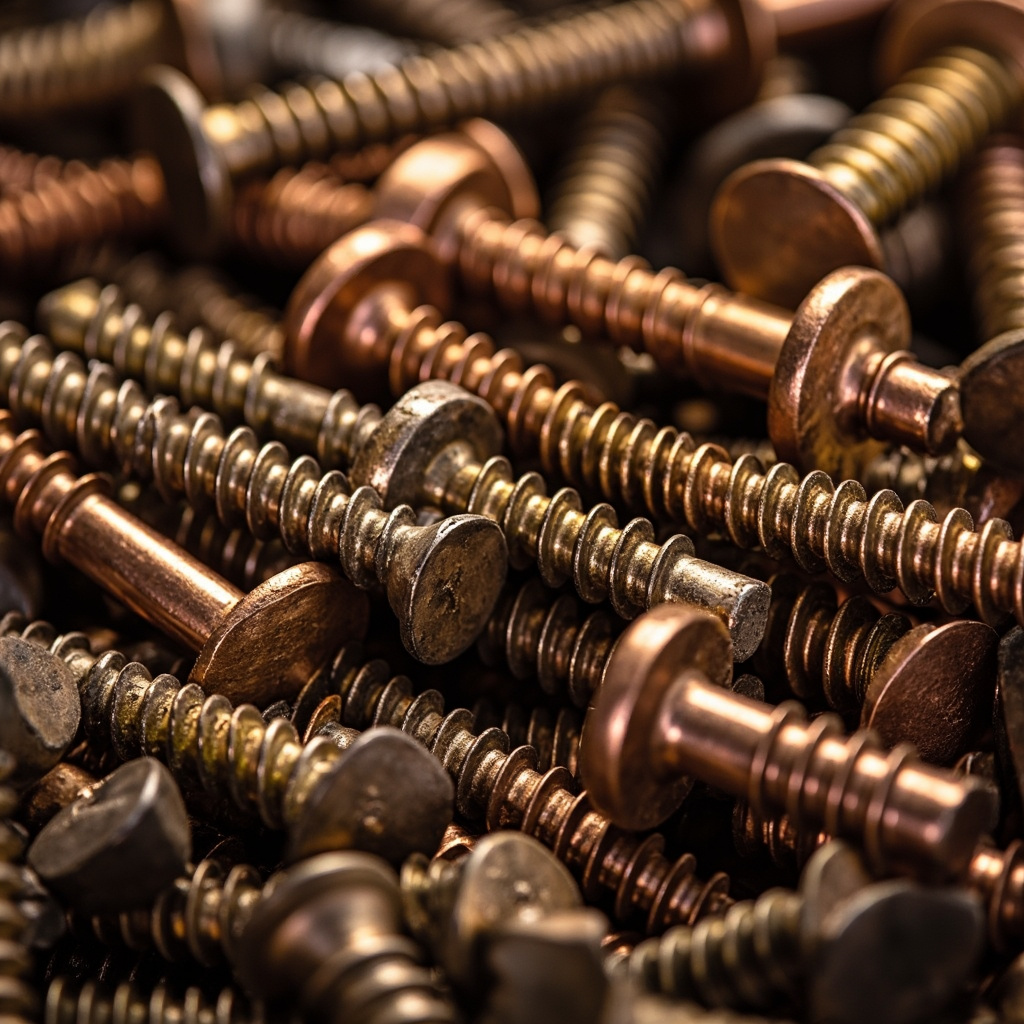
Expert copper mining fasteners grade selection guide for Zambian operations. Optimize corrosion resistance & durability in African mining conditions. Free consultation available.
Understanding Copper Mining Fasteners Requirements in Zambia
Zambia produces approximately 800,000 metric tons of refined copper annually, making it one of the world's largest producers and a critical hub for African mining operations [4]. This industrial scale demands fasteners that can withstand extreme operational stress while maintaining structural integrity in some of the world's most challenging subterranean environments. Copper mining fasteners grade selection begins with understanding that Zambian mines operate at depths exceeding 1,400 meters in regions like the Copperbelt, where temperatures exceed 45°C in surface operations while underground sections maintain consistently high humidity levels above 85%. The procurement manager must recognize that mining equipment in Zambia faces three distinct failure mechanisms that standard industrial fasteners cannot address. First, the continuous vibration from heavy machinery—particularly in conveyor systems transporting 500 tonnes per hour of ore—creates fatigue loads that degrade standard Grade 4.8 bolts within weeks. Second, the chemical composition of mine water in the Zambian Copperbelt contains elevated sulfate concentrations ranging from 2,000 to 5,000 mg/L, creating corrosive environments that attack unprotected steel within months [1]. Third, the thermal cycling between surface and underground operations causes differential expansion that loosens fasteners not designed for such dynamic loading conditions. Underground operations at mines such as Konkola and Mufulira present unique challenges including limited access for maintenance, requiring fasteners with extended service intervals that minimize intervention requirements. Open-pit operations face different stressors: dust infiltration into threaded connections abrades fastener surfaces while UV exposure accelerates coating degradation on surface equipment. These combined factors mean that fastener selection directly impacts maintenance budgets, with industry data indicating that premature fastener failures account for 15-20% of unplanned downtime in Zambian copper operations [4]. The lifecycle consideration extends beyond initial purchase decisions. A typical Zambian copper mine operates with a 25-30 year production horizon, requiring fastener inventory strategies that balance immediate availability against long-term consistency. Grade variations between suppliers—even within the same ISO classification—can create compatibility issues during maintenance cycles, making standardization a critical procurement policy decision.
Copper Mining Fasteners Grade Selection for High-Stress Applications
High-stress applications in copper extraction require fastener grades that deliver predictable mechanical properties under dynamic loading. Grade 8.8 bolts—manufactured to ISO 4014 standards with minimum tensile strength of 800 N/mm² and yield strength of 640 N/mm²—serve as the baseline for general mining equipment assembly [6]. However, the repetitive load cycling in conveyor systems, which experience constant tension variations between 15kN and 85kN on main drive pulleys, demands superior fatigue resistance that Grade 8.8 provides inconsistently. Grade 10.9 fasteners—yielding at 900 N/mm² with tensile strength exceeding 1,040 N/mm²—represent the optimal choice for primary extraction equipment including gyratory crushers processing 10,000 tonnes per day and drill rigs experiencing torque loads exceeding 450 Nm. The enhanced mechanical properties reduce the risk of bolt stretch and joint relaxation, critical factors when equipment access requires significant time investment in Zambian underground conditions. Procurement managers should note that Grade 10.9 bolts require corresponding high-strength nuts (typically Grade 10) to maintain proper preload relationships and prevent joint failure. For the most demanding applications—crusher main shaft assemblies and heavy-duty mill pinion connections—Grade 12.9 fasteners deliver tensile strengths above 1,220 N/mm². These premium fasteners resist yielding under shock loading that occurs during ore blockage events and equipment start-up sequences. However, Grade 12.9 selection requires careful consideration of thread engagement specifications: standard 1D engagement may prove insufficient, with 1.5D to 2D engagement lengths recommended for dynamic load applications to prevent thread stripping under cyclic loading [6]. Thread selection significantly impacts fastener performance in mining conditions. Fine thread fasteners (ISO 4762) offer superior clamping force retention in vibration environments due to their higher thread angle efficiency, while coarse threads provide faster assembly and better resistance to cross-threading during field maintenance—a practical consideration when equipment downtime carries hourly costs exceeding $500 in production losses. The procurement manager should standardize thread specifications across equipment categories to simplify inventory management while specifying grade variations based on actual load calculations rather than applying uniform premium grades throughout operations.
Corrosion Resistance for African Mining Environments
Zambian mining environments present corrosion challenges that extend beyond standard industrial applications. The combination of high humidity, elevated temperatures, and chemically active ore creates degradation mechanisms that can compromise fastener integrity within 12-18 months without appropriate protective measures [1]. Understanding these mechanisms enables procurement managers to select cost-effective coating systems rather than defaulting to premium stainless steel throughout operations. A4-80 (316 stainless steel) fasteners offer excellent general corrosion resistance due to their 2-3% molybdenum content, which protects against pitting in chloride-bearing environments. However, in Zambian mine water conditions with pH levels between 2.5 and 4.5 in acid mine drainage, even 316 stainless steel experiences measurable corrosion rates of 0.1-0.3 mm/year. For underground applications where fastener replacement requires significant labor investment, A4-80 provides acceptable service life in moderately corrosive zones but may prove insufficient in high-exposure locations such as pump housings and conveyor idler frames. Hot-dip galvanizing (HDG) provides superior barrier protection through a zinc coating thickness of 50-85 microns, with the additional benefit of sacrificial protection that continues protecting the underlying steel even after surface damage. For surface-level equipment and structural connections in open-pit operations, HDG fasteners deliver 20-30 year service life in Zambian atmospheric conditions. The procurement manager should specify batch galvanizing rather than continuous plating to ensure consistent coating厚度 and avoid the porosity issues that plague thinner zinc-electroplated alternatives. Zinc-electroplating (typically 8-12 microns) suits indoor or protected applications but proves inadequate for direct exposure to Zambian mining conditions. The thin coating degrades rapidly under UV exposure and provides minimal sacrificial protection when damaged. For applications requiring both corrosion resistance and aesthetic appearance—such as visible hardware on mobile equipment—specify zinc-nickel plating systems offering 10-15 micron thickness with improved corrosion resistance compared to standard zinc plating. Stress corrosion cracking represents a particular risk in high-humidity underground environments where tensile-stressed fasteners experience simultaneous chemical attack. This failure mode affects both carbon steel and stainless steel grades, making environmental assessment critical during fastener specification. The procurement manager should require material certifications confirming chemical composition to verify that carbon steel fasteners meet low-sulfur requirements (below 0.05%) that minimize susceptibility to hydrogen embrittlement and stress corrosion cracking.
Certified Standards for Copper Mining Fasteners in Zambia
Importing fasteners for Zambian mining operations requires navigating a layered regulatory environment that combines national requirements with regional and international standards. The Zambia Bureau of Standards (ZABS) mandates conformity assessment for mining hardware under Statutory Instrument No. 12, requiring documentation verification and, for safety-critical applications, physical testing by accredited laboratories [2]. Procurement managers must ensure suppliers provide ZABS-type approval certificates for fasteners intended in overhead load-bearing applications or human safety systems. ISO 4014 covers structural bolting with hexagon head bolts, specifying mechanical properties, dimensional tolerances, and testing requirements that form the baseline for mining fastener specifications. Grade identification per ISO 4014 must match actual material properties—the procurement manager should verify that supplier certifications include actual test reports rather than relying solely on batch marking. ISO 4017 expands coverage to hexagon flange bolts increasingly specified in modern mining equipment for their improved load distribution, while ISO 4762 covers socket head cap screws standard in precision machinery alignment applications [6]. For operations supplying across Southern African Development Community (SADC) member states, SABS certification provides broader market access while maintaining equivalent technical requirements. The South African Bureau of Standards has established testing protocols specifically addressing mining equipment requirements, with standards aligned to ISO specifications but including supplementary requirements for local environmental conditions [7]. Procurement managers should specify SABS-approved fasteners when supply chains extend beyond Zambian borders to minimize certification complications. Documentation requirements extend beyond product certification to include full traceability chains. The Zambia Revenue Authority (ZRA) requires commercial invoices detailing HS codes (7318.15 for screws and bolts) and Certificate of Origin documentation confirming manufacturing country of origin [3]. For fasteners destined for underground safety-critical applications, third-party inspection agencies operating in Zambia—including SGS and Bureau Veritas—provide verification services that include dimensional verification, mechanical testing, and coating thickness measurement. These inspections, though adding 3-5% to landed costs, provide documented evidence of conformity that protects operators from liability claims in the event of equipment failure.
Cost-Benefit Analysis of Premium Fastener Grades for Mining
Premium fastener grades command 40-60% price premiums over standard commercial alternatives, yet the total cost of ownership analysis consistently favors higher-specification products in Zambian mining applications. The procurement manager must evaluate not merely purchase price but the complete cost structure including installation labor, equipment downtime, and safety implications of fastener failures. Downtime costs in Zambian copper operations average $85,000-$120,000 per hour for primary production equipment, with secondary systems such as ventilation and material handling carrying proportionally significant but lower hourly losses [4]. A single conveyor fastener failure causing belt misalignment can result in 4-8 hours of downtime for diagnosis, repair, and safety verification—costs that immediately justify premium fastener investment even at five times the price of standard alternatives. The critical consideration is identifying which equipment categories justify premium grades versus those where standard fasteners provide adequate service life. Inventory management strategies should balance stockholding costs against emergency procurement premiums. Premium fasteners can require 6-10 week lead times from international manufacturers, making buffer stock necessary for critical equipment categories. A typical Zambian mine operation maintains 18-24 months of fastener inventory for Grade 10.9 and above specifications, balanced against 6-12 months for standard commercial grades. The carrying cost of this inventory—typically 20-30% annually including storage, insurance, and capital tie-up—must be weighed against the 200-400% premiums charged for emergency air freight procurement when standard stock runs out. Total cost of ownership calculations should incorporate installation factors. Premium fasteners often require precision torque control, which may necessitate investment in hydraulic torque wrenches and calibration equipment. However, proper preload documentation reduces future maintenance uncertainty and enables condition-based replacement rather than calendar-based preventive maintenance. The procurement manager should evaluate whether internal maintenance capabilities justify premium fastener specifications or whether simpler-to-install alternatives with slightly reduced performance characteristics may provide better overall value for operations with less sophisticated maintenance programs. Case studies from Zambian operations demonstrate measurable returns from fastener grade optimization. An analysis conducted by the Chamber of Mines of Zambia documented a 35% reduction in conveyor system downtime over 18 months following standardization from mixed Grade 8.8/10.9 installations to Grade 10.9 specified throughout [4]. The improvement attributed primarily to reduced variation in assembly practices and elimination of grade mismatches that previously caused premature failures at grade transition points.
Sourcing Copper Mining Fasteners for Zambian Operations 2026
Strategic sourcing for Zambian mining fastener supply requires balancing cost competitiveness against supply chain reliability and technical support capability. The primary import channels converge through South African infrastructure, with Durban port serving as the principal maritime entry point for containerized shipments from Asian manufacturers, while the Kasumbalesa border crossing with the Democratic Republic of Congo handles overland truck deliveries from regional suppliers [3]. Transit times from Asian manufacturers to Durban average 21-28 days by sea, with an additional 5-8 days required for customs clearance and inland transport to Zambian Copperbelt destinations. Supplier evaluation should extend beyond price comparisons to encompass technical capability. Manufacturers capable of producing fasteners to ISO 4014 and ISO 4017 specifications with documented mechanical properties provide risk mitigation that commodity suppliers cannot match. The procurement manager should request sample test reports demonstrating actual tensile and yield properties rather than accepting manufacturer declarations based solely on material grades. For Grade 10.9 and above specifications, supplier quality assurance programs should include batch-level hardness testing and dimensional verification that catches manufacturing variations before shipment. Custom fastener requirements present particular sourcing challenges for specialized mining equipment. Non-standard lengths, special coatings, and unique thread configurations require manufacturers with flexible production capabilities and willingness to produce smaller batch sizes. Chinese manufacturers serving African mining markets have developed capabilities specifically addressing these requirements, offering minimum order quantities as low as 500 pieces for custom specifications while maintaining pricing competitive with standard catalog items. The procurement manager should establish relationships with suppliers capable of rapid prototype development for equipment modifications or repairs requiring non-standard fasteners. Technical support services increasingly differentiate fastener suppliers in the African mining market. Manufacturers offering engineering consultation for fastener selection—reviewing joint configurations and load calculations to recommend optimal specifications—provide value beyond transactional supply relationships. These services prove particularly valuable during equipment upgrades or capacity expansions when existing documentation may not address new operational requirements. The procurement manager should evaluate whether suppliers provide documentation in English, the operational language of Zambian mining, and whether technical representatives can support site visits for application troubleshooting.
Need a quote for fasteners to Africa? Contact TradeGo for factory pricing and SADC logistics.
Request Quote