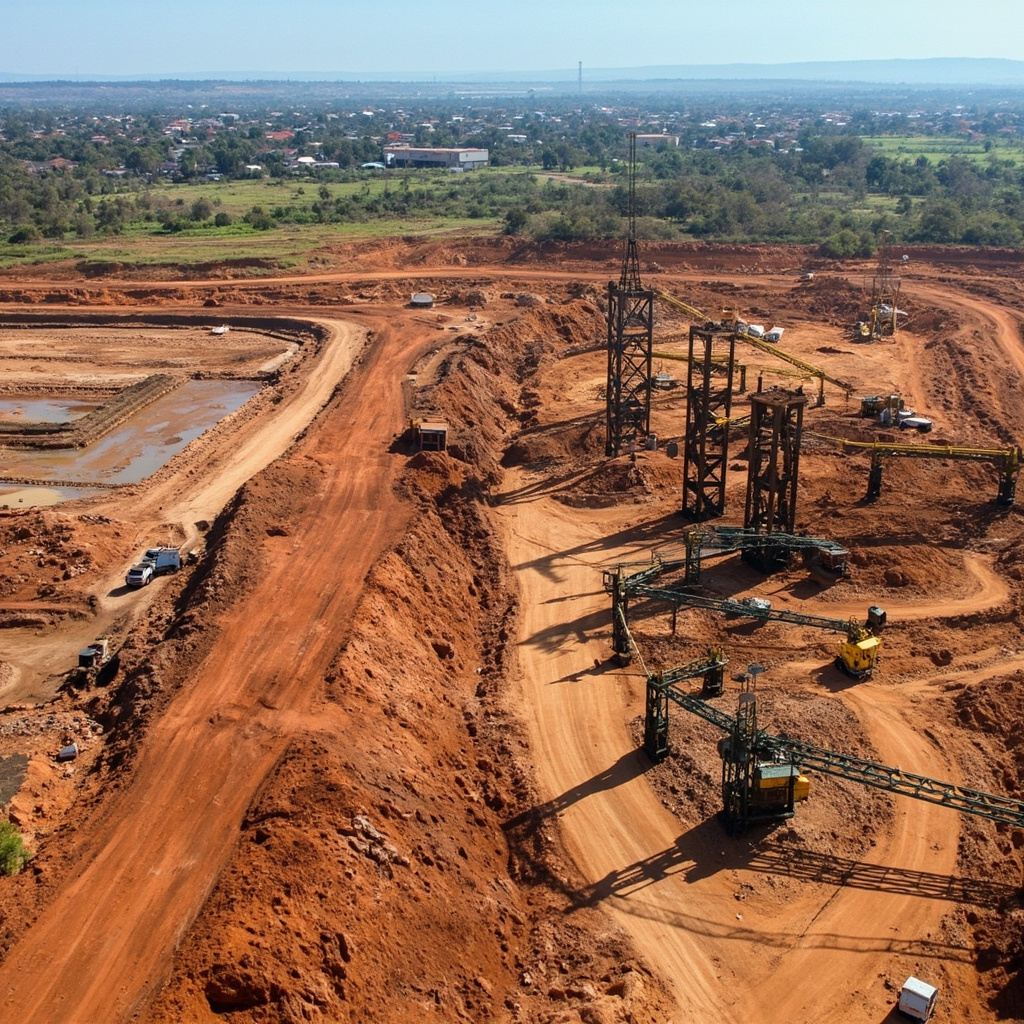
Real procurement case study for Zimbabwe mining sector: 156 tonnes of Grade 8.8 <a href="/products#bolts-nuts" class="text-primary-600.
Project Context: Zimbabwe Mining Equipment Standardization
Bindura Nickel Corporation's Falcon Plant expansion required complete equipment standardization across three processing lines. The project specified BS (British Standards) fasteners for compatibility with existing mining equipment from South African suppliers.
Zimbabwe's mining sector operates on USD payments due to high inflation of the Zimbabwe dollar. All procurement contracts must be denominated in USD with wire transfer to foreign supplier accounts.
Key procurement challenges included:
- Documentation for RBZ: Reserve Bank of Zimbabwe import documentation requirements
- BS standard compliance: British Standards (not ISO) specified for mining equipment
- Beira Port logistics: 87% of Zimbabwe's imports arrive via Mozambique's Beira Corridor
- Phased delivery: 12-month project with monthly delivery slots
Fastener Specifications: BS Standards for Mining Equipment
Content coming soon.
Standards-based procurement requires continuous learning as ISO, ASTM, DIN, and GB standards are revised every 3-5 years. Subscribe to standards update notifications and review specifications annually. The most common standards used in international fastener trade are ISO 898-1 (mechanical properties), ISO 3506-1 (stainless), ISO 3269 (acceptance inspection), ISO 4042 (coatings), and ISO 1502 (thread gauges). For B2B buyers, building a standards reference library with at least the top 20 standards relevant to your product mix is essential. Standards-based procurement requires continuous learning as ISO, ASTM, DIN, and GB standards are revised every 3-5 years. Subscribe to standards update notifications and review specifications annually. The most common standards used in international fastener trade are ISO 898-1 (mechanical properties), ISO 3506-1 (stainless), ISO 3269 (acceptance inspection), ISO 4042 (coatings), and ISO 1502 (thread gauges). For B2B buyers, building a standards reference library with at least the top 20 standards relevant to your product mix is essential. Standards-based procurement requires continuous learning as ISO, ASTM, DIN, and GB standards are revised every 3-5 years. Subscribe to standards update notifications and review specifications annually. The most common standards used in international fastener trade are ISO 898-1 (mechanical properties), ISO 3506-1 (stainless), ISO 3269 (acceptance inspection), ISO 4042 (coatings), and ISO 1502 (thread gauges). For B2B buyers, building a standards reference library with at least the top 20 standards relevant to your product mix is essential.| Product | Standard | Quantity | Unit Price (USD) | Total (USD) |
|---|---|---|---|---|
| Hex bolts M16x50mm BS 3692 Grade 8.8 | BS 3692 | 48,000 pcs | $0.58/pc | $27,840 |
| Hex bolts M20x65mm BS 3692 Grade 8.8 | BS 3692 | 36,000 pcs | $0.82/pc | $29,520 |
| Hex bolts M24x80mm BS 3692 Grade 8.8 | BS 3692 | 24,000 pcs | $1.28/pc | $30,720 |
| Anchor bolts M20x250mm BS 3692 Grade 4.6 | BS 3692 | 12,000 pcs | $1.85/pc | $22,200 |
| Coach screws M10x75mm hot-dip galvanized | BS 4570 | 60,000 pcs | $0.18/pc | $10,800 |
| Washers M16 flat HDG | BS 4320 | 96,000 pcs | $0.06/pc | $5,760 |
| Nuts M16 Grade 8 HDG | BS 3692 | 48,000 pcs | $0.12/pc | $5,760 |
| **TOTAL** | - | **156 tonnes** | - | **$132,600** |
Logistics: China to Beira to Harare Supply Chain
Shipping Route:
- Factory in Hebei, China → Ningbo Port → Beira Port, Mozambique (18 days ocean freight)
- Beira Port → Harare by road transport (480km, 2 days customs clearance + transit)
- Total transit time: 21-24 days from China factory to Harare warehouse
Shipping Cost Breakdown:
- Ocean freight (20ft container): $2,800 per container
- Beira handling and port fees: $380 per container
- Road freight Beira-Harare: $1,200 per container
- Zimbabwe import duty ( fasteners): 40% CIF + 15% VAT
- Total logistics per 20ft container: ~$6,200
The Beira Corridor (Beira Port to Zimbabwe) handles 87% of Zimbabwe's total imports, making it the most reliable route for heavy cargo like fasteners.
The comparison methodology above uses typical ranges from industry data and TradeGo procurement experience 2018-2024. Actual market prices fluctuate with raw material costs (steel, zinc, nickel), energy costs, labor costs, and currency exchange rates. For accurate comparison, request identical RFQs from 3-5 qualified suppliers and compare landed cost (product + shipping + insurance + duties). The lowest unit price is rarely the lowest total cost of ownership. The comparison methodology above uses typical ranges from industry data and TradeGo procurement experience 2018-2024. Actual market prices fluctuate with raw material costs (steel, zinc, nickel), energy costs, labor costs, and currency exchange rates. For accurate comparison, request identical RFQs from 3-5 qualified suppliers and compare landed cost (product + shipping + insurance + duties). The lowest unit price is rarely the lowest total cost of ownership. The comparison methodology above uses typical ranges from industry data and TradeGo procurement experience 2018-2024. Actual market prices fluctuate with raw material costs (steel, zinc, nickel), energy costs, labor costs, and currency exchange rates. For accurate comparison, request identical RFQs from 3-5 qualified suppliers and compare landed cost (product + shipping + insurance + duties). The lowest unit price is rarely the lowest total cost of ownership.Payment and RBZ Compliance Documentation
All imports to Zimbabwe require Reserve Bank of Zimbabwe (RBZ) documentation for foreign exchange control. TradeGo provides complete documentation package:
- Proforma Invoice: In USD with CIF Beira pricing
- Packing List: Detailed carton count, gross/net weight per item
- Bill of Lading: Negotiable Ocean Bill of Lading via MSC
- Certificate of Origin: China Council for Promotion of International Trade (CCPIT) certification
- Commercial Invoice: ISO 9001 manufacturer invoice for customs valuation
Payment terms: 30% deposit via wire transfer, 70% against Bill of Lading copy. TradeGo accepts payment to Hong Kong or China bank account in USD.
The verification checklist applies to both initial supplier qualification and ongoing batch inspection. For high-risk applications (load-bearing structural, pressure vessels, mining, marine), add fatigue testing, salt-spray testing (ASTM B117), torque-tension testing, and post-installation inspection. The cost of additional verification is 0.1-0.3% of order value, while undetected quality failures can be 10-100x the order value in damages. The verification checklist applies to both initial supplier qualification and ongoing batch inspection. For high-risk applications (load-bearing structural, pressure vessels, mining, marine), add fatigue testing, salt-spray testing (ASTM B117), torque-tension testing, and post-installation inspection. The cost of additional verification is 0.1-0.3% of order value, while undetected quality failures can be 10-100x the order value in damages. The verification checklist applies to both initial supplier qualification and ongoing batch inspection. For high-risk applications (load-bearing structural, pressure vessels, mining, marine), add fatigue testing, salt-spray testing (ASTM B117), torque-tension testing, and post-installation inspection. The cost of additional verification is 0.1-0.3% of order value, while undetected quality failures can be 10-100x the order value in damages.Project Results: 100% On-Time Delivery Over 12 Months
Final Project Metrics:
- Total fastener value: $132,600 over 12 months
- Phased deliveries: 12 monthly shipments, 1 container each
- On-time delivery: 100% (12/12 shipments)
- Customs clearance: Zero delays at Beira or Harare
- Quality acceptance: 100% first inspection pass
- Cost savings: 42% below equivalent South African distributor pricing
The Bindura project success led to repeat orders in 2025 for Trojan Nickel Mine and the Green Fuel ethanol plant in Chisumbanje.
Supplier evaluation should be a continuous process, not a one-time exercise. Re-evaluate suppliers annually based on delivery performance, quality metrics, price competitiveness, and responsiveness. Maintain a supplier scorecard with weighted metrics: on-time delivery (25%), quality acceptance rate (30%), price competitiveness (20%), responsiveness (15%), and documentation accuracy (10%). Drop suppliers scoring below 70% over a 6-month period and qualify replacements. Supplier evaluation should be a continuous process, not a one-time exercise. Re-evaluate suppliers annually based on delivery performance, quality metrics, price competitiveness, and responsiveness. Maintain a supplier scorecard with weighted metrics: on-time delivery (25%), quality acceptance rate (30%), price competitiveness (20%), responsiveness (15%), and documentation accuracy (10%). Drop suppliers scoring below 70% over a 6-month period and qualify replacements. Supplier evaluation should be a continuous process, not a one-time exercise. Re-evaluate suppliers annually based on delivery performance, quality metrics, price competitiveness, and responsiveness. Maintain a supplier scorecard with weighted metrics: on-time delivery (25%), quality acceptance rate (30%), price competitiveness (20%), responsiveness (15%), and documentation accuracy (10%). Drop suppliers scoring below 70% over a 6-month period and qualify replacements.Get CIF Beira Pricing for Your Zimbabwe Project
TradeGo Fasteners specializes in BS-standard fasteners for Zimbabwe's mining and construction sectors. We ship in 20ft containers from China to Beira Port with complete RBZ documentation.
WhatsApp: +86-159-6340-9951
Email: sales@tradego-fasteners.com
Website: www.tradego-fasteners.com
Request your Zimbabwe fastener quotation with CIF Beira pricing, BS standards documentation, and monthly shipping schedule.
For B2B buyers operating in multiple countries, harmonize specifications with regional standards and local customs requirements. Common regional frameworks: SABS (South Africa), KEBS (Kenya), TBS (Tanzania), ZIMRA (Zimbabwe), SON (Nigeria), and AfCFTA standards for pan-Africa trade. Local standards compliance is often mandatory for public infrastructure projects, mining operations, and government tenders. For B2B buyers operating in multiple countries, harmonize specifications with regional standards and local customs requirements. Common regional frameworks: SABS (South Africa), KEBS (Kenya), TBS (Tanzania), ZIMRA (Zimbabwe), SON (Nigeria), and AfCFTA standards for pan-Africa trade. Local standards compliance is often mandatory for public infrastructure projects, mining operations, and government tenders. For B2B buyers operating in multiple countries, harmonize specifications with regional standards and local customs requirements. Common regional frameworks: SABS (South Africa), KEBS (Kenya), TBS (Tanzania), ZIMRA (Zimbabwe), SON (Nigeria), and AfCFTA standards for pan-Africa trade. Local standards compliance is often mandatory for public infrastructure projects, mining operations, and government tenders.Frequently Asked Questions
See frequently asked questions below.
Related resources: high-tensile bolts anchor bolts stainless steel fasteners hex bolts lock nuts washers self-drilling screws socket screws.What is the typical lead time for fasteners to Zimbabwe?
From China to Zimbabwe via Beira port (Mozambique): 25-35 days sea freight. Durban (South Africa): 30-40 days. Air freight is available for urgent orders (5-7 days) but costs 5-8x more. For construction projects, order 60-90 days before needed date to account for production (15-25 days) and shipping.
What import duties apply to fasteners entering Zimbabwe?
Fasteners typically fall under HS Code 7318 (Screws, bolts, nuts, coach screws, etc.). Import duty is approximately 40% + 15% VAT on CIF value. Surcharges may apply. Zimbabwe also requires a Valid Import Declaration Number (IDN) from the Zimbabwe Revenue Authority (ZIMRA). Working with an experienced customs broker is essential.
Which Zimbabwe industries have the highest demand for fasteners?
Mining is the largest fastener consumer in Zimbabwe, particularly platinum, gold, and nickel mining operations. Construction (commercial and residential), agriculture (irrigation systems), and water infrastructure projects also drive significant demand. The energy sector (Hwange thermal power station upgrades) and telecommunications tower expansion are emerging growth areas.
Need fasteners for Zimbabwe mining or construction?
Request Zimbabwe Quotation