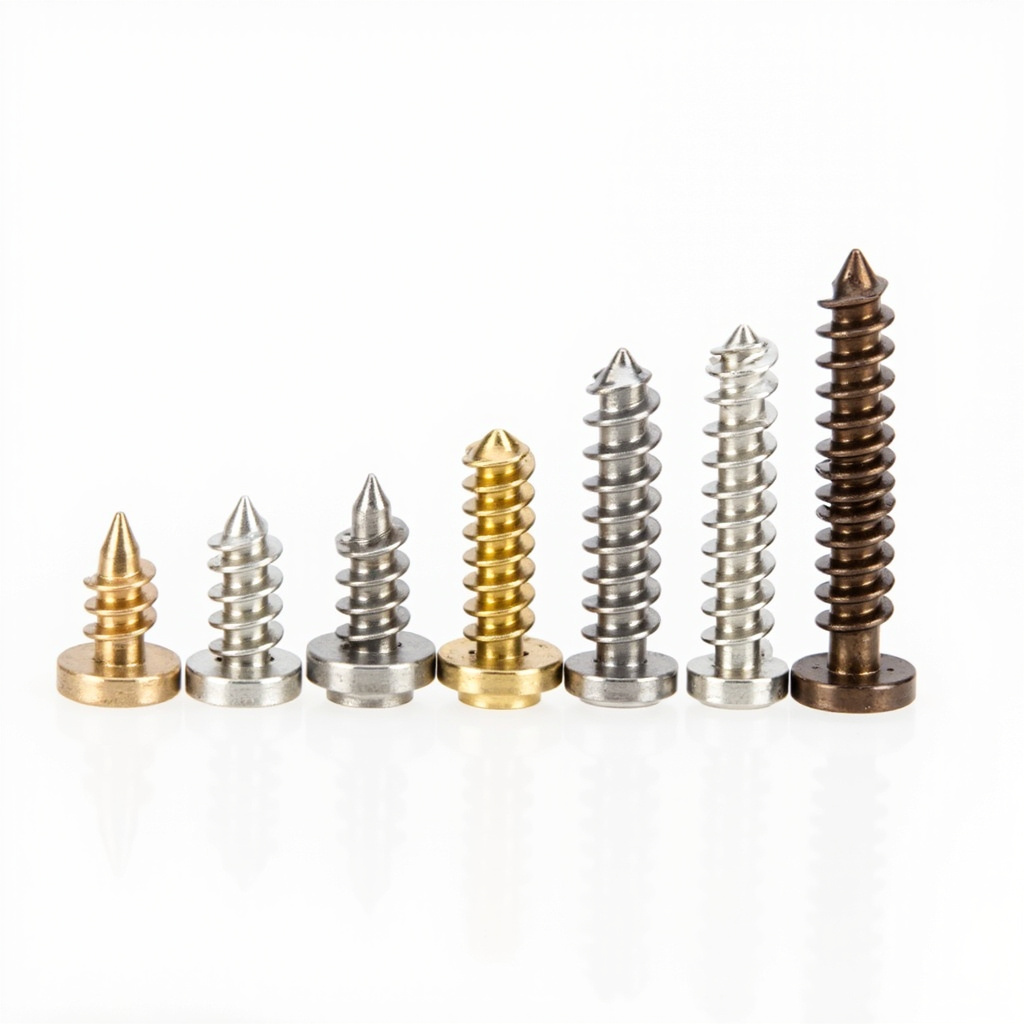
Screws for Different Materials: Wood, Metal, Concr. Guide complet de Screws for Different Materials: Wood, Metal, Concr - spécifications, applications et sélection de fournisseurs pour export B2B vers les marchés africains.
Adapter la vis au matériau
L'utilisation de la vis correcte pour chaque matériau assure une fixation sécurisée, prévient les dommages et rend l'installation efficace. Une vis inadaptée entraîne des filets abîmés, des assemblages faibles et des ruptures d'assemblage. Chaque matériau a des exigences spécifiques en matière de fixation : le bois exige des vis qui agrippent les fibres du bois, le métal nécessite des filets qui s'engagent dans le matériau de base, le béton requiert des ancrages qui se dilatent ou se lient, et le plastique a besoin d'une conception de filet soignée pour éviter la fissuration. TradeGo fournit les vis adaptées à chaque application, avec un accompagnement technique pour garantir une sélection correcte. Ressources associées : boulons à haute résistance boulons d'ancrage fixations en acier inoxydable boulons hexagonaux écrous de blocage rondelles vis autoperceuses vis à six pans creux. Ce cadre d'approvisionnement s'applique à l'achat de fixations pour la construction, les mines, l'énergie, l'automobile et les applications industrielles générales. La logique de décision privilégie la constance de la qualité, la fiabilité du fournisseur et le coût total de possession par rapport au prix unitaire à court terme. Pour les acheteurs B2B en Afrique, en Amérique latine et en Asie du Sud-Est, des considérations supplémentaires incluent les exigences douanières régionales, les options de groupage de conteneurs et les mécanismes de sécurité de paiement. Des spécifications standardisées transportables d'un projet à l'autre réduisent le temps de formation, le délai de traitement des appels d'offres et l'effort d'intégration des fournisseurs. Ce cadre d'approvisionnement s'applique à l'achat de fixations pour la construction, les mines, l'énergie, l'automobile et les applications industrielles générales. La logique de décision privilégie la constance de la qualité, la fiabilité du fournisseur et le coût total de possession par rapport au prix unitaire à court terme. Pour les acheteurs B2B en Afrique, en Amérique latine et en Asie du Sud-Est, des considérations supplémentaires incluent les exigences douanières régionales, les options de groupage de conteneurs et les mécanismes de sécurité de paiement. Des spécifications standardisées transportables d'un projet à l'autre réduisent le temps de formation, le délai de traitement des appels d'offres et l'effort d'intégration des fournisseurs. Ce cadre d'approvisionnement s'applique à l'achat de fixations pour la construction, les mines, l'énergie, l'automobile et les applications industrielles générales. La logique de décision privilégie la constance de la qualité, la fiabilité du fournisseur et le coût total de possession par rapport au prix unitaire à court terme. Pour les acheteurs B2B en Afrique, en Amérique latine et en Asie du Sud-Est, des considérations supplémentaires incluent les exigences douanières régionales, les options de groupage de conteneurs et les mécanismes de sécurité de paiement. Des spécifications standardisées transportables d'un projet à l'autre réduisent le temps de formation, le délai de traitement des appels d'offres et l'effort d'intégration des fournisseurs.
Vis à bois
Les vis à bois sont conçues pour fixer du bois sur du bois ou du bois sur d'autres matériaux : Conception du filet : filets grossiers à pointes acérées. Les filets agrippent solidement les fibres du bois. Des versions partiellement filetées sont disponibles lorsque la tige lisse doit traverser la première pièce. Types de tête : - Tête plate : fraisée pour surface affleurante - Tête ronde : visible au-dessus de la surface - Tête bombée (bugle) : empêche l'arrachement des plaques de plâtre Tailles : généralement #6 à #14 (3,5 mm à 6,3 mm de diamètre) et longueurs de 25 mm à 150 mm. Matériaux : - Acier au carbone : usage intérieur, économique - Acier cémenté : tige dure qui empêche l'arrachement du filet - Acier inoxydable : environnements extérieurs et marins - Laiton : applications décoratives et électriques Avant-trous : indispensables pour les bois durs et pour éviter les fissures. Utiliser un diamètre légèrement inférieur au diamètre du noyau de la vis (et non du filet). Pour la menuiserie et la construction en Afrique, les vis à bois à filet grossier en acier inoxydable sont recommandées pour le mobilier extérieur et les applications structurelles. L'approvisionnement basé sur les normes exige un apprentissage continu car les normes ISO, ASTM, DIN et GB sont révisées tous les 3 à 5 ans. Abonnez-vous aux notifications de mise à jour des normes et examinez les spécifications chaque année. Les normes les plus couramment utilisées dans le commerce international des fixations sont ISO 898-1 (propriétés mécaniques), ISO 3506-1 (inoxydables), ISO 3269 (contrôle de réception), ISO 4042 (revêtements) et ISO 1502 (calibres de filetage). Pour les acheteurs B2B, il est essentiel de constituer une bibliothèque de référence couvrant au moins les 20 normes les plus pertinentes par rapport à votre mix de produits. L'approvisionnement basé sur les normes exige un apprentissage continu car les normes ISO, ASTM, DIN et GB sont révisées tous les 3 à 5 ans. Abonnez-vous aux notifications de mise à jour des normes et examinez les spécifications chaque année. Les normes les plus couramment utilisées dans le commerce international des fixations sont ISO 898-1 (propriétés mécaniques), ISO 3506-1 (inoxydables), ISO 3269 (contrôle de réception), ISO 4042 (revêtements) et ISO 1502 (calibres de filetage). Pour les acheteurs B2B, il est essentiel de constituer une bibliothèque de référence couvrant au moins les 20 normes les plus pertinentes par rapport à votre mix de produits. L'approvisionnement basé sur les normes exige un apprentissage continu car les normes ISO, ASTM, DIN et GB sont révisées tous les 3 à 5 ans. Abonnez-vous aux notifications de mise à jour des normes et examinez les spécifications chaque année. Les normes les plus couramment utilisées dans le commerce international des fixations sont ISO 898-1 (propriétés mécaniques), ISO 3506-1 (inoxydables), ISO 3269 (contrôle de réception), ISO 4042 (revêtements) et ISO 1502 (calibres de filetage). Pour les acheteurs B2B, il est essentiel de constituer une bibliothèque de référence couvrant au moins les 20 normes les plus pertinentes par rapport à votre mix de produits.
Vis mécaniques et vis autotaraudeuses
Vis mécaniques : éléments filetés qui nécessitent des trous pré-taraudés ou des écrous. Utilisées pour les assemblages métal sur métal ou métal sur plastique. Vis autotaraudeuses : coupent leur propre filet lors du vissage dans le métal. Deux grands types : Par déformation : déplacent la matière en pénétrant (comme les tappits). Pour matériaux à bonne ductilité. Ne peuvent être retirées sans endommager le trou. Par coupe : disposent d'arêtes coupantes qui enlèvent de la matière. Créent un vrai filet. Peuvent être retirées et réinstallées. Mieux adaptées aux matériaux durs et aux assemblages répétés. Capacité de perçage : les vis autoperceuses (vis TEK) combinent le perçage et la fixation - aucun pré-perçage n'est requis pour les tôles fines. Applications courantes : - Fabrication de tôlerie - Conduits de climatisation (HVAC) - Boîtiers électriques - Réparation automobile - Assemblages de structures acier Pour la construction en Afrique, les vis autoperceuses sont largement utilisées pour les toitures IBR et les ossatures métalliques. Spécifiez la longueur appropriée pour garantir un engagement de filet suffisant. La méthodologie de comparaison ci-dessus utilise des plages typiques issues de données sectorielles et de l'expérience d'approvisionnement TradeGo 2018-2024. Les prix réels du marché fluctuent avec les coûts des matières premières (acier, zinc, nickel), les coûts énergétiques, les coûts de main-d'œuvre et les taux de change. Pour une comparaison précise, demandez des appels d'offres identiques à 3 à 5 fournisseurs qualifiés et comparez le coût rendu (produit + transport + assurance + droits). Le prix unitaire le plus bas est rarement le coût total de possession le plus bas. La méthodologie de comparaison ci-dessus utilise des plages typiques issues de données sectorielles et de l'expérience d'approvisionnement TradeGo 2018-2024. Les prix réels du marché fluctuent avec les coûts des matières premières (acier, zinc, nickel), les coûts énergétiques, les coûts de main-d'œuvre et les taux de change. Pour une comparaison précise, demandez des appels d'offres identiques à 3 à 5 fournisseurs qualifiés et comparez le coût rendu (produit + transport + assurance + droits). Le prix unitaire le plus bas est rarement le coût total de possession le plus bas. La méthodologie de comparaison ci-dessus utilise des plages typiques issues de données sectorielles et de l'expérience d'approvisionnement TradeGo 2018-2024. Les prix réels du marché fluctuent avec les coûts des matières premières (acier, zinc, nickel), les coûts énergétiques, les coûts de main-d'œuvre et les taux de change. Pour une comparaison précise, demandez des appels d'offres identiques à 3 à 5 fournisseurs qualifiés et comparez le coût rendu (produit + transport + assurance + droits). Le prix unitaire le plus bas est rarement le coût total de possession le plus bas.
Ancrages pour béton et maçonnerie
Les ancrages pour béton doivent mordre dans un matériau de base qui ne fléchit pas. Différents principes d'ancrage : Ancrages à expansion : chevilles à expansion, ancrages à coin, ancrages à chute. Lorsque le boulon est serré, la douille ou le cône s'expanse contre les parois béton du trou. Ancrages chimiques : résine époxy ou polyester qui lie l'ancrage au béton. Adaptés aux installations près des bords et aux zones de béton fissuré. Vis à béton (Tapcons) : taillent réellement un filet dans le béton. Nécessitent des trous pré-percés. Plus faciles à retirer que les ancrages à expansion. Ancrages à frapper : chevilles en plastique ou en métal enfoncées dans des trous pré-percés. Méthode d'ancrage la plus simple pour charges légères. Facteurs clés de sélection : - Exigences de charge (traction, cisaillement, combinée) - État du béton (massif, fissuré, léger) - Distance aux bords et entraxe - Exposition environnementale - Profondeur d'ancrage requise Installation : toujours utiliser un marteau-perforateur avec un foret à maçonnerie approprié pour le pré-perçage. Nettoyer soigneusement les trous - la poussière réduit la capacité de l'ancrage de 30 à 50 %. La checklist de vérification s'applique à la qualification initiale du fournisseur et au contrôle continu des lots. Pour les applications à haut risque (structure porteuse, récipients sous pression, mines, marine), ajoutez des essais de fatigue, des essais au brouillard salin (ASTM B117), des essais couple-tension et un contrôle post-installation. Le coût de la vérification supplémentaire représente 0,1 à 0,3 % de la valeur de la commande, tandis que des défauts qualité non détectés peuvent représenter 10 à 100 fois la valeur de la commande en dommages. La checklist de vérification s'applique à la qualification initiale du fournisseur et au contrôle continu des lots. Pour les applications à haut risque (structure porteuse, récipients sous pression, mines, marine), ajoutez des essais de fatigue, des essais au brouillard salin (ASTM B117), des essais couple-tension et un contrôle post-installation. Le coût de la vérification supplémentaire représente 0,1 à 0,3 % de la valeur de la commande, tandis que des défauts qualité non détectés peuvent représenter 10 à 100 fois la valeur de la commande en dommages. La checklist de vérification s'applique à la qualification initiale du fournisseur et au contrôle continu des lots. Pour les applications à haut risque (structure porteuse, récipients sous pression, mines, marine), ajoutez des essais de fatigue, des essais au brouillard salin (ASTM B117), des essais couple-tension et un contrôle post-installation. Le coût de la vérification supplémentaire représente 0,1 à 0,3 % de la valeur de la commande, tandis que des défauts qualité non détectés peuvent représenter 10 à 100 fois la valeur de la commande en dommages.
Fixations pour plastique
Les matériaux plastiques présentent des défis de fixation uniques : Conception du filet : les vis pour plastique nécessitent un dessin de filet minutieux. Un pas trop grossier risque de fissurer, un pas trop fin réduit la résistance à l'arrachement. Vis pour plastique : rayon de pied en contre-dépouille et profondeur de filet maîtrisée empêchent la concentration de contraintes qui provoque la fissuration. Vis autotaraudeuses pour plastique : forme de filet de type A ou type B selon la dureté du plastique. Écrous à insert : pour les assemblages répétés, des inserts en laiton ou en acier inoxydable installés dans le plastique offrent des filets durables. Bossages et appariement : concevoir les pièces plastiques avec des bossages récepteurs appropriés. Le diamètre du bossage doit être 2 à 3 fois le diamètre de la vis avec une épaisseur de paroi adéquate. Couple de serrage : les fixations pour plastique nécessitent un couple inférieur à celui du métal. Utiliser des tournevis à limiteur de couple pour éviter le serrage excessif et la fissuration. Applications en Afrique : boîtiers électriques en PVC, raccords de plomberie plastique, composants plastiques automobiles. Spécifiez des fixations conçues pour le plastique afin d'éviter des défaillances coûteuses sur site. L'évaluation des fournisseurs doit être un processus continu, et non un exercice ponctuel. Réévaluez les fournisseurs chaque année selon la performance de livraison, les indicateurs qualité, la compétitivité prix et la réactivité. Tenez un scorecard fournisseur avec des indicateurs pondérés : ponctualité de livraison (25 %), taux d'acceptation qualité (30 %), compétitivité prix (20 %), réactivité (15 %) et exactitude documentaire (10 %). Éliminez les fournisseurs dont le score est inférieur à 70 % sur 6 mois et qualifiez des remplaçants. L'évaluation des fournisseurs doit être un processus continu, et non un exercice ponctuel. Réévaluez les fournisseurs chaque année selon la performance de livraison, les indicateurs qualité, la compétitivité prix et la réactivité. Tenez un scorecard fournisseur avec des indicateurs pondérés : ponctualité de livraison (25 %), taux d'acceptation qualité (30 %), compétitivité prix (20 %), réactivité (15 %) et exactitude documentaire (10 %). Éliminez les fournisseurs dont le score est inférieur à 70 % sur 6 mois et qualifiez des remplaçants. L'évaluation des fournisseurs doit être un processus continu, et non un exercice ponctuel. Réévaluez les fournisseurs chaque année selon la performance de livraison, les indicateurs qualité, la compétitivité prix et la réactivité. Tenez un scorecard fournisseur avec des indicateurs pondérés : ponctualité de livraison (25 %), taux d'acceptation qualité (30 %), compétitivité prix (20 %), réactivité (15 %) et exactitude documentaire (10 %). Éliminez les fournisseurs dont le score est inférieur à 70 % sur 6 mois et qualifiez des remplaçants.
Foire aux questions
Consultez les questions fréquemment posées ci-dessous.
Ressources associées : boulons à haute résistance boulons d'ancrage fixations en acier inoxydable boulons hexagonaux écrous de blocage rondelles vis autoperceuses vis à six pans creux. Pour les acheteurs B2B opérant dans plusieurs pays, harmonisez les spécifications avec les normes régionales et les exigences douanières locales. Cadres régionaux courants : SABS (Afrique du Sud), KEBS (Kenya), TBS (Tanzanie), ZIMRA (Zimbabwe), SON (Nigeria) et normes AfCFTA pour le commerce panafricain. La conformité aux normes locales est souvent obligatoire pour les projets d'infrastructures publiques, les exploitations minières et les appels d'offres gouvernementaux. Pour les acheteurs B2B opérant dans plusieurs pays, harmonisez les spécifications avec les normes régionales et les exigences douanières locales. Cadres régionaux courants : SABS (Afrique du Sud), KEBS (Kenya), TBS (Tanzanie), ZIMRA (Zimbabwe), SON (Nigeria) et normes AfCFTA pour le commerce panafricain. La conformité aux normes locales est souvent obligatoire pour les projets d'infrastructures publiques, les exploitations minières et les appels d'offres gouvernementaux. Pour les acheteurs B2B opérant dans plusieurs pays, harmonisez les spécifications avec les normes régionales et les exigences douanières locales. Cadres régionaux courants : SABS (Afrique du Sud), KEBS (Kenya), TBS (Tanzanie), ZIMRA (Zimbabwe), SON (Nigeria) et normes AfCFTA pour le commerce panafricain. La conformité aux normes locales est souvent obligatoire pour les projets d'infrastructures publiques, les exploitations minières et les appels d'offres gouvernementaux.What's the difference between wood screws and drywall screws?
Drywall screws have fine threads for holding drywall to steel or wood studs. They are brittle and can snap under stress. Wood screws have coarse threads for wood-to-wood connections and are more ductile.
Can I use wood screws in metal?
No - wood screws are not designed for metal. Use machine screws or self-tapping screws for metal connections.
What size pilot hole for wood screws?
Match the hole to the screw's core diameter (before threads). For hard woods, use a slightly smaller hole. For soft woods, the full core diameter is fine.
How do I anchor into brick instead of concrete?
Use sleeve anchors or brick anchors specifically rated for masonry. Standard concrete anchors may not hold in brick. Check that your anchor is approved for the specific brick type.
What's the best screw for outdoor decking in Africa?
Stainless steel (A4/316) deck screws or hot-dip galvanized screws. Coarse thread for hardwoods. Spacing should account for wood movement with humidity changes.
Contactez TradeGo pour un conseil sur le choix des vis. E-mail : sales@tradego-fasteners.com
Request Quote