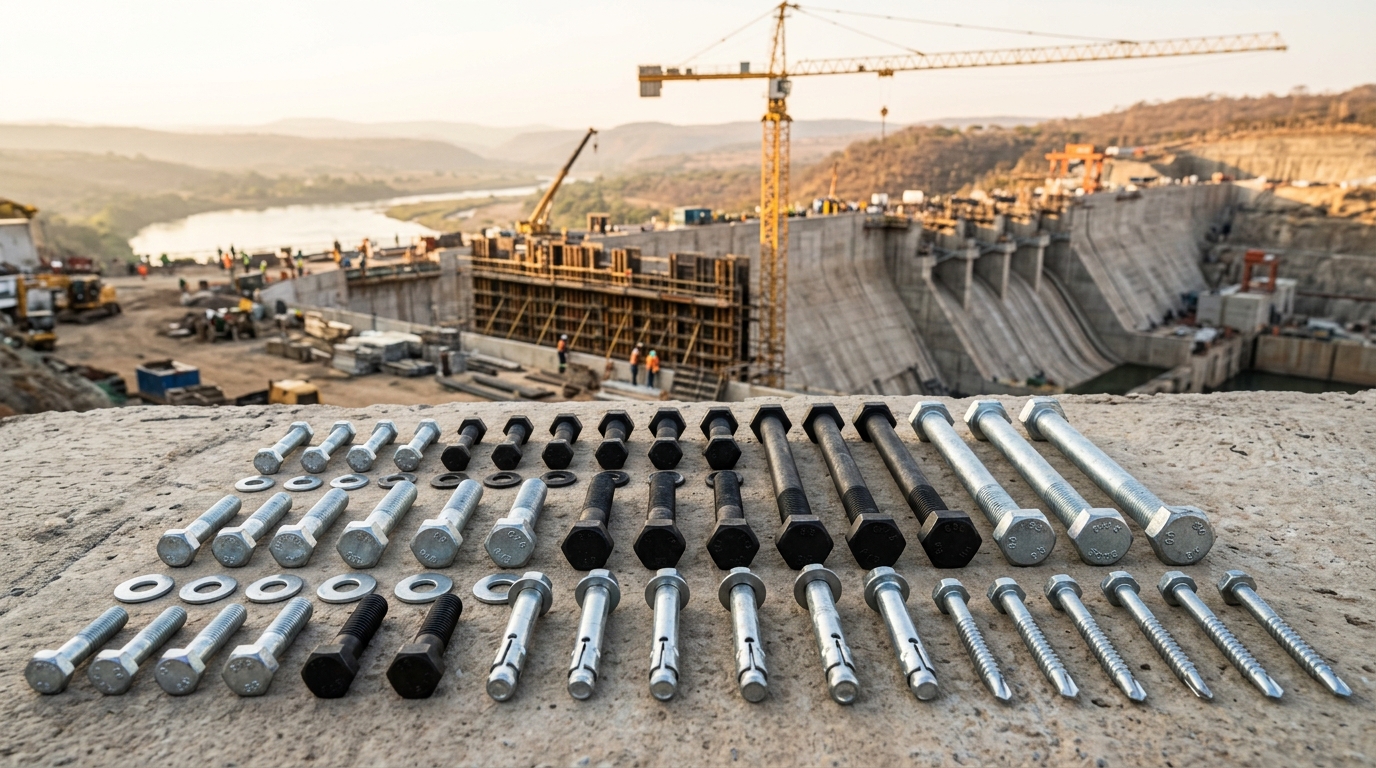
ボルト等級選定、耐食コーティング、サプライヤー評価、ISO 898-1 および SAZ コンプライアンス、AfCFTA 陸揚げコスト最適化、ベイラ回廊物流、構造化されたサプライヤー適格性評価を網羅する、2026 年ジンバブエの B2B ファスナー買い手向け実務ガイド。
ジンバブエの2026年インフラ浪潮:バイヤーりが知るべきこと
ジンバブエは2026年を迎えるにあたり、ハラレ・マスビング・ベイトブリッジ間高速道路のアップグレードやクンズヴィ・ダムの拡張を含む大規模な輸送・水利建設に焦点を当てたZiG46億ドルの国家インフラ予算を抱えています。同時に、国全体でリチウム鉱業サイトの開発が好調です。このパイプラインは、2026年を通じて前例のない継続的なファスナー需要を生み出し、プロジェクト仕様では2025年相比較して大幅に大量の高引張強度構造用ボルト、耐食性水利ねじ、重作業用鉱業固定具が求められています。全てのバイヤーは、準拠的中国メーカーから鋼製ファスナーを調達する際、AfCFTAの下で32パーセントの輸入関税削減の対象となり、これは恒久的な関税割引であり、陸上材料コストを大幅に削減し、調達業者や鉱業調達チームの入札利益率を向上させます。公共入札は第2四半期以降大幅に増加し、複数年建設フレームワークが開始されるに伴い、前年比で国家ファスナー総消費量が推定40パーセント増加する見込みです。 2026年初頭にサプライヤー能力を確保することで、今後数ヶ月で深刻化する複数の回避可能なリスクを軽減できます。ニアレストアフリカ諸国もインフラ注文を増加させる中、ベイラコラーードの港湾輻輳が悪化し、輸送リードタイムが延伸し、予期せぬ港湾・保管料が追加されます。世界的な鉄鋼原材料価格は毎月着実な上昇圧力に直面しており、メーカーの事前予約済み生産スロットが埋まると単位価格が引き上げられます。バイヤーがサプライヤー監査を遅らせると、最高の生産スロットが競合に奪われたり、基準をようやく満たす後発ミルに固定られたり、港湾遅延が変更不可能なプロジェクト期限と重なる際に緊急航空貨物割増料金を支払わざるを得なくなるリスクがあります。早期的容量予約はプロジェクトスケジュールを守り、2026年入札ラッシュ開始前に優先価格層を確保します。
2026年入札用のボルト等級と腐食コーティングの仕様指定
正しいファスナー等級を指定することは、2026年公共入札を獲得するためにすべてのジンバブエB2Bバイヤーがクリアしなければならない最初の技術的门です。等級8.8中引張ボルトは住宅建設、現場フレーミング、軽微な道路補助工事に適しています。等級10.9は高速道路桁、倉庫鉄骨フレーム、中規模鉱山サポートラック的主力等級でありハラレ・マスビング・ベイトブリッジ間アップグレードで最も要求される等級です。等級12.9高強度ファスナーはクンズヴィ・ダムの荷重支持的接点和橋梁主げたに義務付けられており、ダムや橋梁コンクリート基礎上のサイズ不足のアンカーボルトは技術審査で自動却下されます。屋根材および壁クラッドには、自己穿孔ねじが金属板に事前穴明けなしで穿孔し、入札コンプライアンスのデフォルトとなります。一方、自己タップねじは薄い二次パネルにのみ機能し、重いクラッド検査で失敗します。 正しい腐食コーティングの選択は2番目の技術的门であり、ジンバブエの湿潤熱帯気候は誤りの余地を残しません。溶融亜鉛めっきは橋梁、ダム、高速道路構造上で数十年間錆びることに耐える85〜120ミクロンの合金被膜を生成し、すべての2026年入札文書のデフォルト仕様です。亜鉛めっきは5〜12ミクロンの保護のみを提供し、傷つきやすく、雨天や道路沿いの環境で数ヶ月以内に表面錆が発生するため、完全に屋内乾燥建設部品にのみ許容されます。一般的なバイヤーミスには、初期コストを削るためのボルト等級のダウングレード、单个入札パッケージ内でのめっき種類の混合、自己穿孔ねじが指定されている場所への自己タップねじの代替、およびアンカーボルトの荷重認定書の省略が含まれます。これらのミスはすべて即座の入札失格、高額な手直し、プロジェクト承認の遅延につながるため、すべてのファスナー等級と coatingを公表された入札エンジニアリングスケジュールに直接整合させることは、バイヤーが回避可能なコンプライアンスリスクを解消する最も簡単な方法です。
中国ファスナーサプライヤーの評価:バイヤーのコンプライアンスチェックリスト
ジンバブエの2026年インフラ・鉱業入札向けの中国ファスナーサプライヤーの確認は、3つのコアコンプライアンスチェックから始まります。バイヤーは最初に有効なISO 9001工場証明書をを確認し、サプライヤーにミルの品質システムがSADC SQAM技術ベンチマークに整合していることを実証するよう依頼する必要があります。不完全な文書はPRAZ技術審査中に最も一般的な入札失格の原因です。2番目のチェックは文書です。すべてのバルク注文には各ボルト・ねじ等級の完全なミル試験証明書が-shipment同伴で発送され、物理的事前出荷サンプルは出荷少なくとも30日前にハラレまたはブラワヨに到着し、独立した引張・塩水噴霧試験を受ける必要があります。3番目のチェックはサプライヤーの財務健全性であり、バイヤーは最近の監査済み財務諸表または銀行推薦状を要求できます。キャッシュフローが脆弱な小規模ミルは契約途中で生産を停止し、ダムや高速道路建設スケジュールを狂わせる費用のかかる材料不足を作成することが頻繁です。 支払条件と契約条項は、ジンバブエのバイヤーがキャッシュフローを保護するか、または放棄するかの分かれ目です。最も安全な構造は注文確認時の30パーセントのデポジットであり、残りの70パーセントは船荷証券のコピーに対してのみリリースされ、前払い全額送金では決してありません。2026年プロジェクト用のすべての供給契約は、ベイラコラーード港湾輻輳を考慮した固定ドアツードアの輸送タイムライン、ハラレまたはブラワヨに貨物到着後30日以内の明確な品質クレームウィンドウ、欠陥ファスナーの無料交換規定、納期延误に対する日次財務ペナルティ、および基準未満の等級に対する責任をミルが負担することを明記した書面による保証を確立する必要があります。これらの赤旗に注意してください:第三者SGSまたはビューローベリタスの事前出荷検査を拒否するサプライヤー、30パーセントを超える前払いデポジットを要求するサプライヤー、完全なミル試験証明書の提供を拒否するサプライダー、または輸送遅延と品質クレームに関する曖昧な契約言語を使用するサプライヤー。これら.anyの сигналは、そのマイルが2026年の tender グレードの供給をサポート还没有資格付けられていることを示します。
必須コンプライアンス文書:ISO 898-1、ISO 1461、SAZ、SADC SQAM
2026年ジンバブエ建設・鉱業入札向けにファスナーを輸入するバイヤーは、税関通関前に厳密に整合した一連のグローバル・地域品質標準を義務付ける必要があります。等級8.8、10.9、12.9の高引張ボルトはすべて、引張強度、降伏限度、硬度試験記録をカバーするISO 898-1機械的特性的規則への完全準拠が必要です。溶融亜鉛めっき仕上の屋外ファスナーは、最小ミクロン厚度と均一な錆び防止を保証するためISO 1461被膜仕様書に従う必要があります。製品はまた、PRAZ入札資格の必須チェックであるSADC SQAM調和hardware標準との整合也需要し、一方、ジンバブエ標準局(SAZ)は到着時にすべてのファスナーバッチの検証を行う義務付けられています。各出荷にはバッチ番号、 Coating 等級、機械試験結果と一致する適合性証明書(CoC)が公式に必要です,以便在穆塔雷或贝itbridge边境口岸避免海关障碍。 調達チームは、SAZ職員による完全出荷押収のリスクがある偽造ミル試験証明書を識別することを学ぶ必要があります。偽造文書は多くの場合、一意の工場バッチシリアル番号なしに汎用ロゴを表示し、合金化学読値の不一致、または第三国ラボの連絡先詳細なしの帰属なき試験署名を示します。本物のMTCは各コンテナの生産ランを相互参照し、SGSまたはビューローベリタスの検証スタンプを含め、SAZクリアランスに提出されたCoCに直接ربط니다。未検証の偽造文書の受入は、長時間の国境拘留、建設タイムラインウィンドウの喪失、自動入札失格、差し迫った関税되며、すべてのコンプライアンス文書の相互検証をすべての2026年ファスナー輸入注文に必須のステップとします。
陸上コスト最適化:FOB、貨物、AfCFTA関税、ベイラコラーード
2026年に輸入ファスナーの総陸上コストを計算するには、ジンバブエのバイヤーが4つの予測可能な項目を加算する必要があります:FOB工場価格、海上コンテナ貨物、港湾取扱手数料、ハラレまたはブラワヨへの国内トラック輸送料金。中国からの標準40フィートFCL海上貨物は3,650〜4,500 USDで、ベイラまたはダーバンでの港湾サーチャージはコンテナあたり500〜1,000 USDが追加されます。ベイラからハラレへの国内輸送は6日かかり、コンテナあたり1,300〜1,500 USDです。一方、より長いダーバン〜ハラールートは11日の輸送日数が必要で、国内料金は1,700〜2,000 USDです。その上に、準拠的中国鋼製ファスナーの場合AfCFTAの下でSADC基準輸入関税が32パーセント削減され、この固定割引は最終陸上価格をトンあたり直接低下させ、バイヤーの入札利益率を向上させます。 具体的なベンチマークとして、等级10.9構造用ボルトの50トン大宗注文がベイラ経由でFCL発送された場合、より遅いダーバンルートより測定可能な節約が実現されます。AfCFTA救済前は輸入関税が出荷総額のほぼ12パーセント占めていたため、32パーセントの関税削減はこの関税負担をおよそ3分の1削減し、大型バイヤーにとっては各出荷で数千USDを削除します。注文量は出荷モードを左右します:50トンの等级10.9ボルト積載は、海上・港湾・国内輸送料金合わせて約6,200 USDの1隻の完全な40フィートFCLに収まり、トンあたり輸送コストは約124 USDになります。同じ50トンをLCL委託分に分割すると、集約・越境取扱手数料のため総輸送料金は9,100 USDを超えます。3つの実践的な最適化戦術は、断片的なLCL出荷と比較して陸上コストをほぼ11パーセント削減するのに役立ちます:四半期ファスナー注文を完全なコンテナに統合し、より高い国内トラックプレミアムを避けるためにベイラコラーードをダーバンより優先し、ピークシーズンサーチャージを回避するために生産の6週間前に海上貨物レートを固定します。関連物流参照:Beira Corridor Transit。 Durban Port Handling。
2026年サプライヤー容量を確保する30日間調達ワークフロー
コンプライアンス、サプライヤー評価、陸上コスト分析が完了したら、ジンバブエのバイヤーは2026年第2四半期の入札ラッシュがピークに達する前にサプライヤー容量を確保するための構造化された30日間調達ワークフローに移るべきです。ステップ1は、最低3つの事前認定中国ミルから書面による見積りを請求することで、各社はトンあたりFOB価格、ISO 9001証明書、完全なミル試験証明書サンプル、最近のアフリカまた豁SADCバイヤーの参照リストを提供します。ステップ2は、各ミルに注文する実際の等級の事前出荷サンプル(例:M20等級10.9六角ボルト)を要求し、サンプルをハラレ、ヨハネスブルグ、またはダーバンの独立したSGSまたはビューローベリタス研究所に送去し、引張・硬度・塩水噴霧試験を実施することです。PRAZ入札評価者が日益増加的に要求するバイヤー側監査証跡のために試験レポートをファイルに保持します。ステップ3は、選択したミラーの支払条件、輸送タイムライン、品質クレームウィンドウ、penalty 条項を、バイヤーの法務チームと合意した標準契約テンプレートに整合させること服務,以便在入札授予後,不再需要在时间压力下进行谈判。 ステップ4は、小さな初期試行注文(通常1〜2隻の40フィートFCLコンテナ)を配置して、バイヤーが複数年フレームワーク契約にコミットする前にミラーの実際の生産品質、包装、マーキング、定時出荷規律、アフターサービスクレーム処理を検証できるようにすることです。この低リスクパイロットは、越境ファスナー調達における最も価値のある保護措置です。ステップ5は、選択したミルとの四半期ビジネスレビューをスケジュールし、予測入札量を共有し、今後90〜180日間の生産スロットを確保することで、ピーク需要期間中の優先価格と専用容量を保証します。2026年3月前にこの5ステップワークフローを完了したバイヤーは、事前監査済みサプライヤー、固定貨物レート、準備完了在庫を持って第2四半期の入札波に参入し、一方、遅延したバイヤーは上昇する価格、認定ミル数の減少、輸送時間の長期化に直面し、すべての2026年公共事業・鉱業契約で入札利益率を圧縮します。参照:Supplier Qualification Checklist。
バイヤーフレームワーク:コンプライアンス、商業保護、能力コミットメント
これらすべての要素を引き出すと、2026年のジンバブエB2Bファスナーバイヤーにとって最も賢明な道は、反応的な单个入札購入から、3つの柱を中心に構築された積極的・サプライヤー認定フレームワークへとシフトすることです。最初の柱は技術的コンプライアンスです:すべての注文にISO 898-1機械的特性文書、ISO 1461溶融亜鉛めっき証明書、SADC SQAM整合ミル試験証明書、検証済み適合性証明書(CoC)付きで出荷するミラーのみを調達します。2番目の柱は商業保護です:30/70支払条件、固定ドアツードア輸送ウィンドウ、ハラレまたはブラワヨ到着後30日以内の品質クレームウィンドウ、納期延误に対する日次財務ペナルティを主張します。3番目の柱は能力コミットメントです:四半期需要をベイラ経由の完全FCL出荷に統合し、生産の6週間前に貨物レートを固定し、複数年フレームワーク契約にコミットする前に小さなパイロット注文を実行します。3つの柱すべてに継続的に準拠するバイヤーは、陸上コストをトンあたり8〜12パーセント低く抑え、初回提出でPRAZ技術審査に合格し、2026年インフラ・鉱業プロジェクトを狂わせる驚き遅延を回避します。 2026年調達パイプラインに対応 готовностиのジンバブエバイヤーにとって、 Practical next stepは、優先等級1〜3(例:M20等级10.9六角ボルト、M16等级8.8構造用ボルト、5.5mm自己穿孔ねじ)を対象とした完全な見積依頼パッケージを発注することで、各等級には完全なミル試験証明書、ISO 9001文書、AfCFTA準拠商業送り状、保証された30日品質クレームウィンドウが必要です。TradeGo Fastenersは、60metric以上のボルト・ねじ・アンカー等級にわたるエンドツーエンド調達、すべての出荷に対するISO 898-1およびISO 1461文書、オンデマンドでのSGS事前出荷検査、統合FCL出荷およびAfCFTA特典に整合した30/70支払構造を備えたベイラコラーード物流でジンバブエ調達チームをサポートします。バイヤーは、等級仕様、周年数量、目標配送日をTradeGo調達デスクに送信することで、48時間以内に合わせた2026年見積りを要求でき、専任アカウントマネージャーが工場直接価格、サンプル手配、輸送タイムライン、このガイドで参照された完全な契約テンプレートにて応答します。Request Quotation関連フレームワーク参照:AfCFTA Landed Cost Guide。
ジンバブエ ボルト・ねじ B2B調達ガイド 2026 — よくある質問
以下は、ジンバブエのボルト・ねじに関するB2B調達のよくある質問とその回答です。 問:ジンバブエのボルト・ねじ市場の主要な認証基準は何ですか? 答:ジンバブエの市場では主にISO、ASTM、南アフリカのSABS認証基準が採用されています。ジンバブエに輸出されるファスナー製品は、これらの国際的または地域の基準への適合が必要です。石油・ガス業界の顧客には、API 6AやA193 B7などの特殊な材料仕様への準拠も求められます。 問:ジンバブエのボルト製品の税則分類は何ですか? 答:ボルト、ねじ、ナットおよび類似のファスナーのHSコードは通常7307または7318項目に分類されます。具体的な分類は、製品タイプ(钢结构接続具、ワッシャ、リベットなど)、材質(炭素鋼、合金鋼ステンレス鋼)および表面処理状況に基づいて正確なコードが決定されます。 問:ジンバブエの輸入ファスナーに対する主な品質要件は何ですか? 答:ジンバブエの輸入ファスナーに対する品質要件は、主として以下の内容を含みます:材料の化学組成が規定に適合すること、力学的性能が基準を満たすこと(引張強度、降伏強度、伸び率)、寸法精度が公差要件を満たすこと、表面処理が防腐または特殊な作業条件のニーズに応えること。鉱業およびエネルギープロジェクトの場合、サプライヤーは通常、材料証明書(MTC)および第三者検査レポートの提供を求められます。 問:ジンバブエのボルト・ねじの主な応用業界は何ですか? 答:ジンバブエのファスナーの主な調達業界には、鉱業採掘(地下採掘設備接続具)、農業機械の製造と修理、エネルギーインフラ(変電所、送電線路)、建築鉄骨構造、および石油・ガス探査開発が含まれます。BXシリーズなどの特殊規格ファスナーは主に高圧バルブおよび配管接続システムに使用されます。 問:ジンバブエ市場の一般的な支払方法は何ですか? 答:B2B調達における一般的な支払方法には、T/T電信送金(手付金30%-50%、残高は出荷前に精算)、L/C信用状(大口注文の場合)、および実績のある既存顧客とのO/A掛け払いがあります。初回取引ではT/T方式を採用し、信頼関係を構築後に支払条件を調整することをお勧めします。 問:ジンバブエの輸入ファスナーにはH2S腐食環境の要件がありますか? 答:はい、ジンバブエの一部の鉱業プロジェクトおよび油田にはH2S腐食環境が存在します。この種の応用には、NACE MR0175基準に準拠した耐硫黄ファスナー製品を購入する必要があります。材料は通常、低硫黄含有量の合金鋼または特殊なステンレス鋼を使用し、注文時に作業環境のH2S濃度と温度パラメータを明確に标注する必要があります。 問:ジンバブエのファスナーサプライヤーの資格をどのように確認しますか? 答:サプライヤーの資格確認には以下の方法をお勧めします:ISO 9001品質管理システム認証の提供を求めること、生産能力と検査設備リストを確認すること以往的プロジェクト供給実績証明書の提供を求めること、第三者機関にサプライヤー監査を依頼すること。重要なプロジェクトについては、小口試作注文を行い、产品品質と供給能力を確認することをお勧めします。 問:ジンバブエのファスナー調達の典型的な納期はどの程度ですか? 答:中国からジンバブエへの標準規格製品の納期は通常25〜40日で、生産期間(7〜15日)と海上輸送期間(18〜25日)を含みます。非標準カスタマイズ製品または大口注文の場合、納期は45〜60日に延長の可能性があります。調達計画に十分な予備時間を確保し、プロジェクト現場での待機による損失を避けることをお勧めします。
ジンバブエの2026年インフラ入札に必要なボルト等級は何ですか?
ジンバブエの2026年インフラ入札では、強度区分 8.8 は住宅建築と補助道路工事、10.9 は高速道路梁、倉庫鉄骨構造、中規模鉱山サポートの主力等級、12.9 はクンズビ・ダム荷重継手と橋梁主桁に必須です。すべての高張力ボルトは ISO 898-1 機械的特性規格に適合し、出荷ごとに完全な工場試験証明書を同梱する必要があります。
2026年に中国から輸入するファスナーにかかる輸入関税はいくらですか?
AfCFTA の下では、準拠する中国製スチールファスナーを輸入するジンバブエの買い手は、SADC 基準輸入関税の 32% 削減を受けられ、関税負担を貨物価値の約 12% から約 8% に引き下げ、50 トン注文あたり数千 USD の節約になります。削減を受けるには、サプライヤーが AfCFTA 準拠の原産地証明書を発行し、買い手が有効な SADC 取引ライセンスを保持し、CoC 原本と工場試験証明書を併せて提示してベイラまたはダーバンで通関する必要があります。
ジンバブエへのファスナー輸入はフルコンテナ(FCL)とLCLのどちらを注文すべきですか?
10 トン以上のファスナー輸入では、コンソリデーションと国境通過手数料が LCL で倍増するため、FCL は常にトン当たりコストが低くなります。50 トンの 10.9 級ボルト注文をベイラ経由で FCL 発送すると、複合輸送で約 6,200 USD(トン当たり約 124 USD)、同じ 50 トンを LCL で分割すると総輸送費は 9,100 USD を超えます。四半期需要を FCL にまとめ、生産枠を 90〜180 日前予約するのが最善です。
ファスナーサプライヤーの工場試験証明書が本物であることをどう確認しますか?
本物の工場試験証明書には、コンテナの生産ロットと相互参照される固有のバッチシリアル番号、SGS または Bureau Veritas の検証スタンプ、第三者検査機関の連絡先メールまたは電話番号、そして注文等級に一致する化学的および機械的測定値が含まれます。偽証明書は通常、バッチ ID のない汎用ロゴ、欠落または未署名の試験署名、等級と一致しない化学組成を特徴とします。買い手は常に工場 QA メール(販売代理店ではなく)から直接 MTC の複製を請求し、SAZ 通関用に提出された CoC と相互照合する必要があります。
2026 年に中国からジンバブエへのファスナーの最良の輸送ルートは何ですか?
2026 年のファスナー輸入では、ベイラ回廊(モザンビーク)がジンバブエへの推奨輸送ルートです。ベイラからハラレへの内陸輸送は 6 日で 40 フィートコンテナあたり 1,300〜1,500 USD ですが、ダーバン(南アフリカ)経由は 11 日で 1,700〜2,000 USD かかります。両ルートともピーク月には港湾混雑に直面しますが、ダーバンは内陸輸送に加えて 7〜10 日の待機が定期的に発生し、ベイラは完全な AfCFTA 書類を提示すれば通常 2〜3 日で通関します。買い手は予測可能な配送枠のために 90 日前にベイラ回廊のスロットを予約する必要があります。
等级8.8/10.9/12.9ボルト、完全なISO 898-1文書、ISO 1461溶融亜鉛めっき証明書、SGS事前出荷検査、ベイラコラーードFCL出荷を対象とした 맞춘 2026年見積りを入手。
2026 見積りを依頼