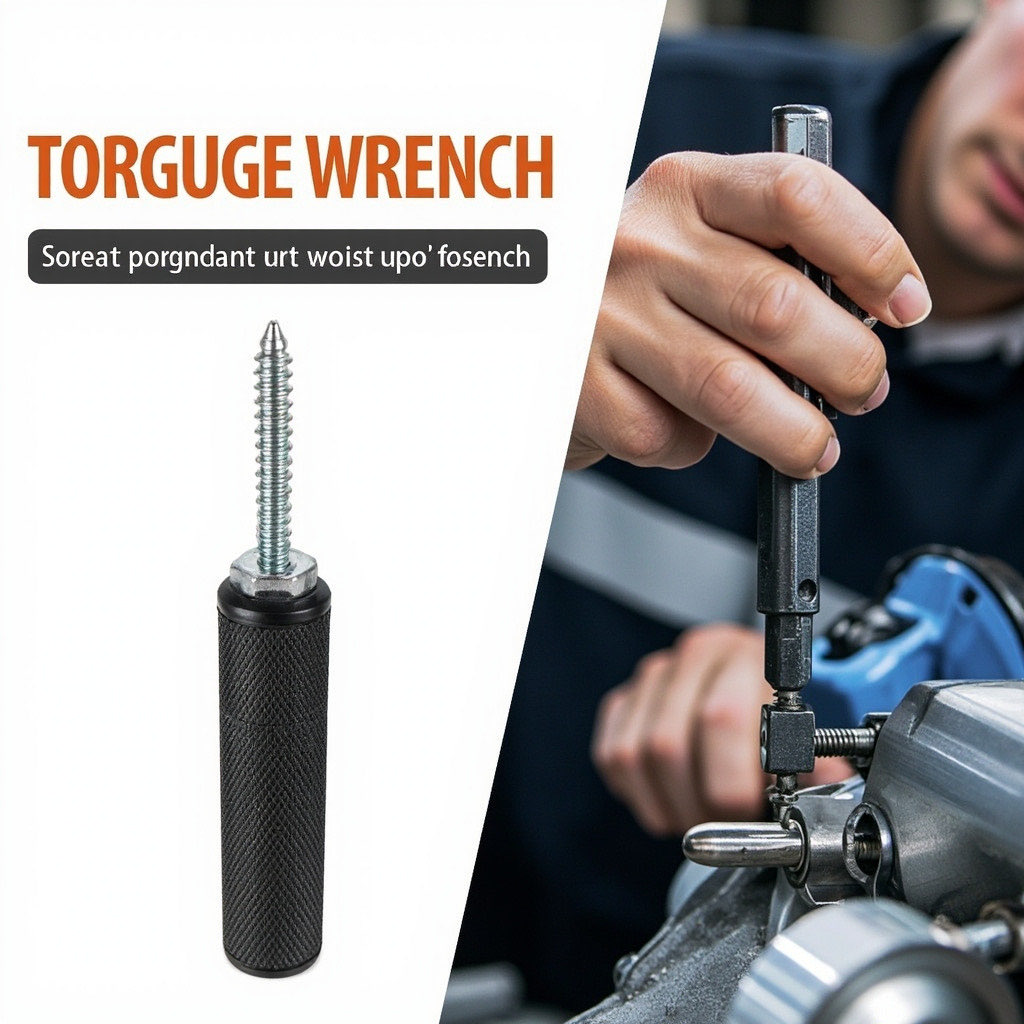
关键紧固件扭矩与张紧完整指南:扭矩扳手选择、张紧方法、润滑因素及结构和机械应用的法兰连接装配。
为什么扭矩控制至关重要
螺栓连接通过夹紧力(预紧力)实现其功能——夹紧力是将连接件固定在一起的压缩力。扭矩只是实现夹紧力的手段,而真正的目标是适当的预紧力。要获得正确的预紧力,需要理解施加扭矩、摩擦力与夹紧力之间的关系。研究表明,在典型装配条件下:约50%的施加扭矩用于克服螺纹摩擦;约35%用于克服螺母承压面(支承面)摩擦;约15%实际产生夹紧力(有用功)。这意味着30%的扭矩误差可能导致60%的夹紧力误差——解释了为什么“已正确扭矩”的连接件仍可能失效。对于关键的结构和机械连接件,扭矩控制至关重要。\n\n相关资源:高强度螺栓 锚栓 不锈钢紧固件 六角螺栓 锁紧螺母 垫圈 自钻螺钉 内六角螺钉。\n\n本采购框架适用于建筑、采矿、能源、汽车和通用工业应用的紧固件采购。决策逻辑优先考虑质量一致性、供应商可靠性及总拥有成本,而非短期单价。对于非洲、拉丁美洲和东南亚的B2B买家,还需考虑地区海关要求、集装箱整合方案及支付安全保障。\n\n跨项目标准化的产品规格能够减少培训时间、询价处理时间和供应商入职成本。
扭矩公式与K系数
基本扭矩公式:T = K × D × F,其中 T = 扭矩(N·m),K = 扭矩系数(无量纲),D = 公称螺栓直径(m),F = 夹紧力(N)。K因子(扭矩系数)至关重要,其取值随以下因素变化:润滑条件——裸钢(K≈0.20),轻油(K≈0.15),蜡/防卡剂(K≈0.12);表面状态——镀锌(K≈0.17),磷化/油(K≈0.14);材料组合——螺母面摩擦因螺栓类型和支承面而异。使用错误的K因子是扭矩误差最常见的来源。务必验证润滑条件与扭矩规格中使用的K因子相匹配。如果紧固件已润滑而规格假定为干燥,则会过度拧紧;如果干燥而规格指定为润滑,则会拧紧不足。基于标准的采购需要持续学习,因为ISO、ASTM、DIN和GB标准每3-5年修订一次。订阅标准更新通知并每年审查规格。在国际紧固件贸易中,最常用的标准是ISO 898-1(机械性能)、ISO 3506-1(不锈钢)、ISO 3269(验收检验)、ISO 4042(涂层)和ISO 1502(螺纹量规)。对于B2B采购商而言,建立包含至少20种与产品组合相关的主要标准的标准参考库至关重要。基于标准的采购需要持续学习,因为ISO、ASTM、DIN和GB标准每3-5年修订一次。订阅标准更新通知并每年审查规格。在国际紧固件贸易中,最常用的标准是ISO 898-1(机械性能)、ISO 3506-1(不锈钢)、ISO 3269(验收检验)、ISO 4042(涂层)和ISO 1502(螺纹量规)。对于B2B采购商而言,建立包含至少20种与产品组合相关的主要标准的标准参考库至关重要。
| Condition | K-Factor | Notes |
|---|---|---|
| Bare steel, dry threads | 0.20-0.22 | Most common for structural bolts |
| Light machine oil on threads | 0.15-0.17 | Standard lubricated condition |
| Wax or soap on threads | 0.12-0.14 | Often used in workshop |
| HDG (as-coated, no lubricant) | 0.17-0.20 | Varies with zinc thickness |
| Anti-seize compound | 0.10-0.12 | High-temperature applications |
| PTFE tape (thread seal) | 0.14-0.16 | For threaded connections only |
扭矩扳手类型及选型
不同类型的扭矩扳手具有不同的精度和应用范围:咔嗒式(偏转梁式)——最常见;当达到预设扭矩时发出可听见的咔嗒声;精度为读数的±4%;适用于一般生产和现场作业;需要定期校准。过载式(滑动式)——在预设扭矩时偏转并\"断开\";精度非常高(±3%);用于生产环境。指针式——模拟表盘显示扭矩;读数容易但较脆弱;精度为读数的±5%。电子/数字式——精度最高(±1-2%)并可记录数据;价格昂贵;是航空航天和关键汽车行业的必要设备。液压辅助式(扭矩倍增器)——适用于大型螺栓(M36及以上);手动难以达到所需扭矩;带扭矩表的液压扳手可提供一致的结果。对于施工工作,优质的咔嗒式扳手(CDI、Snap-on或同等产品)是标准选择。上文的比较方法使用了2018-2024年行业数据和TradeGo采购经验的典型范围。实际市场价格随原材料成本(钢材、锌、镍)、能源成本、劳动力成本和货币汇率而波动。为了进行准确比较,请向3-5家合格供应商请求相同的询价单,并比较到岸成本(产品+运费+保险+关税)。最低单价很少是最低的总体拥有成本。上文的比较方法使用了2018-2024年行业数据和TradeGo采购经验的典型范围。实际市场价格随原材料成本(钢材、锌、镍)、能源成本、劳动力成本和货币汇率而波动。为了进行准确比较,请向3-5家合格供应商请求相同的询价单,并比较到岸成本(产品+运费+保险+关税)。最低单价很少是最低的总体拥有成本。
法兰接头装配最佳实践
法兰连接(管道、压力容器、结构法兰)需要特定的装配程序:验证法兰对中——法兰在螺栓连接前必须平行且对中在公差范围内;错位会产生垫片应力并导致泄漏;必要时使用垫片。清洁所有表面——清除法兰面、螺纹和螺母承压面上的锈蚀、氧化皮、旧垫片材料、油脂和油污。安装垫片——根据工况条件使用正确类型的垫片和材料;不要使用超过其设计压缩量的垫片;在插入螺栓前正确放置垫片。润滑螺纹和承压面——将润滑剂涂抹在螺纹和螺母承压面上(不要涂在垫片上);这会极大地影响夹紧力的准确性。螺栓插入——首先用手将所有螺栓拧紧,然后按照指定的模式进行装配。扭矩顺序——采用交叉图案(星形图案)分多次进行,逐步增加到全扭矩;切勿在安装其他螺栓之前将一个螺栓完全拧紧。验证清单适用于初始供应商资质认证和持续批次检验。对于高风险应用(承重结构、压力容器、采矿、海事),需添加疲劳测试、盐雾测试(ASTM B117)、扭矩-张力测试以及安装后检验。额外验证的成本仅为订单价值的0.1-0.3%,而未检出的质量故障损失可能是订单价值的10-100倍。验证清单适用于初始供应商资质认证和持续批次检验。对于高风险应用(承重结构、压力容器、采矿、海事),需添加疲劳测试、盐雾测试(ASTM B117)、扭矩-张力测试以及安装后检验。额外验证的成本仅为订单价值的0.1-0.3%,而未检出的质量故障损失可能是订单价值的10-100倍。
验证螺栓预紧力:Skidmore-Wilhelm法和DTI法
对于关键结构连接,建议验证已实现的预紧力,这是确保结构安全性和完整性的重要步骤。Skidmore-Wilhelm液压拉伸器通过液压对螺栓施加张力,直接测量夹紧载荷;这是最准确的预紧力测量方法;广泛用于验证测试和校准工作。Skidmore-Wilhelm法对于确认现场是否达到指定预紧力值特别有价值。直接张力指示器(DTI)是一种带有凸起凸台的垫圈,当达到适当的预紧力时会发压缩变形;通过视觉和触觉方式提供明确的指示;常用于关键结构连接。DTI垫圈提供了一种经济有效的解决方案,无需专用设备即可验证预紧力。角度拉伸法在完成初紧后,将螺母再旋转一个计算出的额外角度(通常为90-180度)以达到预定张力;在某些条件下比扭矩法更一致,因为它不受摩擦系数变化的影响。在摩擦系数高度变化或难以控制的应用中,角度拉伸法是首选方法。螺栓张力测试通过在接头中安装带有应变片的仪器化螺栓来定期测试生产螺栓,以测量使用指定扭矩工艺实现的实际预紧力。应定期进行螺栓张力测试,以确保紧固过程的一致性。供应商评估应是一个持续不断的过程,而非一次性工作。应根据交货绩效、质量指标、价格竞争力和响应能力,每年对供应商进行重新评估。保持供应商记分卡,采用加权指标体系:准时交货率占25%、质量验收率占30%、价格竞争力占20%、响应能力占15%、文档准确性占10%。对于6个月内评分低于70%的供应商应予以淘汰,并及时确定替代供应商。一个健全的供应商评估计划有助于保持质量标准并降低紧固件故障风险。供应商评估应是一个持续不断的过程,而非一次性工作。应根据交货绩效、质量指标、价格竞争力和响应能力,每年对供应商进行重新评估。保持供应商记分卡,采用加权指标体系:准时交货率占25%、质量验收率占30%、价格竞争力占20%、响应能力占15%、文档准确性占10%。对于6个月内评分低于70%的供应商应予以淘汰,并及时确定替代供应商。
Frequently Asked Questions
See frequently asked questions below.
How often should I calibrate my torque wrench?
Torque wrenches should be calibrated at least annually, and more frequently for heavy use. For workshop use (daily), quarterly calibration is recommended. For field use, a calibration certificate should accompany the wrench and be verified annually. Any torque wrench that has been dropped or subjected to misuse should be re-calibrated immediately before further use. The calibration certificate must show the wrench was tested at multiple points across its range, not just at one setting.
Why do flange bolts sometimes leak despite proper torque?
Common causes of flange leakage despite proper torque: gasket damage — the gasket was damaged or previously over-compressed; incorrect gasket — wrong material or grade for the service conditions; flange surface damage — scratches, pitting, or corrosion on the flange face creates leakage paths; inadequate lubrication — if threads or bearing surfaces were not lubricated as assumed in the torque calculation, the actual preload was lower than calculated; thermal cycling — gasket relaxation under thermal cycling can reduce preload; pipe strain — external loads on the flange from pipe thermal expansion, gravity, or vibration can unload the joint.
What is the difference between 'snug tight' and 'full torque'?
Snug tight is the condition where the bolt is tightened to a relatively low preload just to draw the joint members into firm contact — typically achieved by a few impacts from an impact wrench or 2-3 hand turns of a wrench. The purpose is to hold the joint together while all bolts are installed before final torque. Snug tight is not a measured value; it is a feel-based condition. Full torque (or 'turn-of-nut' completion) is the final specified torque applied in a controlled pattern. The 'turn-of-nut' method uses snug tight + a calculated additional rotation to achieve preload, which is often more consistent than direct torque for large bolts.
需要按规格安装紧固件?获取TradeGo的专业指导。
联系我们