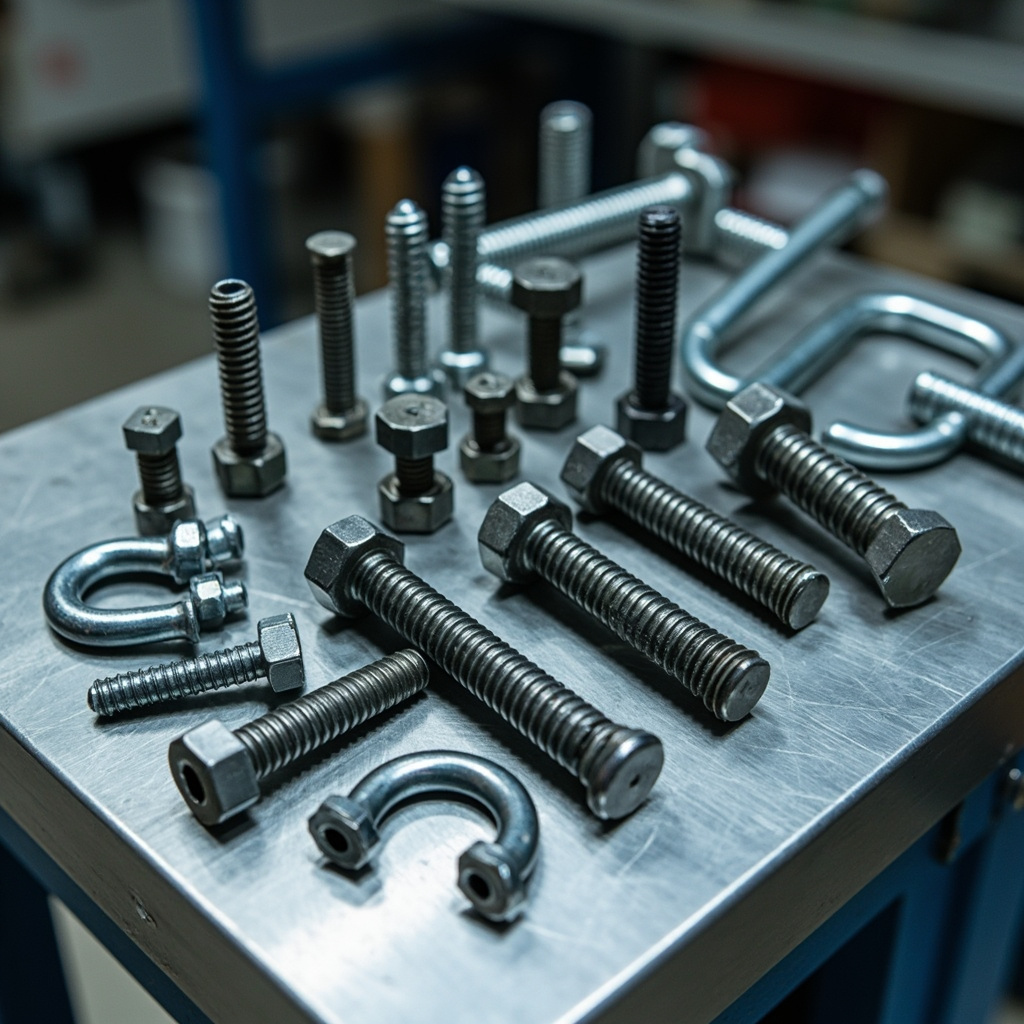
hex bolts, carriage <a href="/products#bolts-nuts" class="text-primary-600 hover:text-primary-800 underline underline-offset-2">bolts.
Hex Bolts: The Most Common Bolt Type
Hex bolts are the most widely used fastener in construction and general applications: DIN 933 / ISO 4017: Full thread hex bolt DIN 931 / ISO 4014: Partial thread hex bolt Key features: - Six-sided head for easy wrench engagement - Can be used with standard hex nuts - Wide range of grades (4.8 to 12.9) - Available in metric and imperial sizes Common applications: - General construction - Machinery assembly - Structural connections - Equipment mounting TradeGo hex bolts are manufactured to DIN 933/ISO 4017 with full traceability and quality documentation. Related resources: high-tensile bolts anchor bolts stainless steel fasteners hex bolts lock nuts washers self-drilling screws socket screws. This procurement framework applies to fastener sourcing for construction, mining, energy, automotive, and general industrial applications. The decision logic prioritizes quality consistency, supplier reliability, and total cost of ownership over short-term unit price. For B2B buyers in Africa, Latin America, and Southeast Asia, additional considerations include regional customs requirements, container consolidation options, and payment security mechanisms. Standardized specifications that travel across projects reduce training time, RFQ processing time, and supplier onboarding effort. This procurement framework applies to fastener sourcing for construction, mining, energy, automotive, and general industrial applications. The decision logic prioritizes quality consistency, supplier reliability, and total cost of ownership over short-term unit price. For B2B buyers in Africa, Latin America, and Southeast Asia, additional considerations include regional customs requirements, container consolidation options, and payment security mechanisms. Standardized specifications that travel across projects reduce training time, RFQ processing time, and supplier onboarding effort. This procurement framework applies to fastener sourcing for construction, mining, energy, automotive, and general industrial applications. The decision logic prioritizes quality consistency, supplier reliability, and total cost of ownership over short-term unit price. For B2B buyers in Africa, Latin America, and Southeast Asia, additional considerations include regional customs requirements, container consolidation options, and payment security mechanisms. Standardized specifications that travel across projects reduce training time, RFQ processing time, and supplier onboarding effort. This procurement framework applies to fastener sourcing for construction, mining, energy, automotive, and general industrial applications. The decision logic prioritizes quality consistency, supplier reliability, and total cost of ownership over short-term unit price. For B2B buyers in Africa, Latin America, and Southeast Asia, additional considerations include regional customs requirements, container consolidation options, and payment security mechanisms. Standardized specifications that travel across projects reduce training time, RFQ processing time, and supplier onboarding effort.
Carriage Bolts: Round Head Design
bolts (also called coach bolts) feature a round head with a square collar: DIN 603: Carriage bolt with round head and square collar Key features: - Round head provides smooth, finished appearance - Square collar prevents rotation during installation - Full thread or partial thread options - Typically used with hex nuts Common applications: - Wood frame construction - Furniture assembly - Playground equipment - Agricultural structures - Where smooth head is desired on one side TradeGo carriage bolts are zinc plated or hot-dip galvanized for outdoor use. Standards-based procurement requires continuous learning as ISO, ASTM, DIN, and GB standards are revised every 3-5 years. Subscribe to standards update notifications and review specifications annually. The most common standards used in international fastener trade are ISO 898-1 (mechanical properties), ISO 3506-1 (stainless), ISO 3269 (acceptance inspection), ISO 4042 (coatings), and ISO 1502 (thread gauges). For B2B buyers, building a standards reference library with at least the top 20 standards relevant to your product mix is essential. Standards-based procurement requires continuous learning as ISO, ASTM, DIN, and GB standards are revised every 3-5 years. Subscribe to standards update notifications and review specifications annually. The most common standards used in international fastener trade are ISO 898-1 (mechanical properties), ISO 3506-1 (stainless), ISO 3269 (acceptance inspection), ISO 4042 (coatings), and ISO 1502 (thread gauges). For B2B buyers, building a standards reference library with at least the top 20 standards relevant to your product mix is essential. Standards-based procurement requires continuous learning as ISO, ASTM, DIN, and GB standards are revised every 3-5 years. Subscribe to standards update notifications and review specifications annually. The most common standards used in international fastener trade are ISO 898-1 (mechanical properties), ISO 3506-1 (stainless), ISO 3269 (acceptance inspection), ISO 4042 (coatings), and ISO 1502 (thread gauges). For B2B buyers, building a standards reference library with at least the top 20 standards relevant to your product mix is essential. Standards-based procurement requires continuous learning as ISO, ASTM, DIN, and GB standards are revised every 3-5 years. Subscribe to standards update notifications and review specifications annually. The most common standards used in international fastener trade are ISO 898-1 (mechanical properties), ISO 3506-1 (stainless), ISO 3269 (acceptance inspection), ISO 4042 (coatings), and ISO 1502 (thread gauges). For B2B buyers, building a standards reference library with at least the top 20 standards relevant to your product mix is essential.
Eye Bolts: Lifting and Rigging Applications
bolts feature a loop (eye) at the head for attachment: DIN 580: Eye bolt (collar eye bolt) Eye bolts with continuous eye (forged) Key features: - Provides attachment point for lifting or tie-down - Various configurations: vertical lift, angular lift, shoulder eye - Load ratings clearly marked - Must be installed with matching hardware Common applications: - Lifting operations - Rigging and hoisting - Tie-down and cargo securement - Temporary attachments IMPORTANT: Always use matching nuts and washers. Never exceed rated working load limit. The comparison methodology above uses typical ranges from industry data and TradeGo procurement experience 2018-2024. Actual market prices fluctuate with raw material costs (steel, zinc, nickel), energy costs, labor costs, and currency exchange rates. For accurate comparison, request identical RFQs from 3-5 qualified suppliers and compare landed cost (product + shipping + insurance + duties). The lowest unit price is rarely the lowest total cost of ownership. The comparison methodology above uses typical ranges from industry data and TradeGo procurement experience 2018-2024. Actual market prices fluctuate with raw material costs (steel, zinc, nickel), energy costs, labor costs, and currency exchange rates. For accurate comparison, request identical RFQs from 3-5 qualified suppliers and compare landed cost (product + shipping + insurance + duties). The lowest unit price is rarely the lowest total cost of ownership. The comparison methodology above uses typical ranges from industry data and TradeGo procurement experience 2018-2024. Actual market prices fluctuate with raw material costs (steel, zinc, nickel), energy costs, labor costs, and currency exchange rates. For accurate comparison, request identical RFQs from 3-5 qualified suppliers and compare landed cost (product + shipping + insurance + duties). The lowest unit price is rarely the lowest total cost of ownership. The comparison methodology above uses typical ranges from industry data and TradeGo procurement experience 2018-2024. Actual market prices fluctuate with raw material costs (steel, zinc, nickel), energy costs, labor costs, and currency exchange rates. For accurate comparison, request identical RFQs from 3-5 qualified suppliers and compare landed cost (product + shipping + insurance + duties). The lowest unit price is rarely the lowest total cost of ownership.
U-Bolts: Pipe and Tube Clamping
bolts are U-shaped with threads on both legs: Standard U-bolts for round pipe/tube Special U-bolts for square profile Heavy duty U-bolts for structural applications Key features: - Designed to clamp around cylindrical objects - Two-hole plate (typically included) for flat surface mounting - Various coatings for corrosion resistance - Often used with rubber-lined to prevent damage Common applications: - Pipe and tube mounting - Exhaust system mounting - Marine applications - Automotive suspension - Structural support for tanks and vessels TradeGo U-bolts are available in carbon steel (zinc or HDG) and stainless steel. The verification checklist applies to both initial supplier qualification and ongoing batch inspection. For high-risk applications (load-bearing structural, pressure vessels, mining, marine), add fatigue testing, salt-spray testing (ASTM B117), torque-tension testing, and post-installation inspection. The cost of additional verification is 0.1-0.3% of order value, while undetected quality failures can be 10-100x the order value in damages. The verification checklist applies to both initial supplier qualification and ongoing batch inspection. For high-risk applications (load-bearing structural, pressure vessels, mining, marine), add fatigue testing, salt-spray testing (ASTM B117), torque-tension testing, and post-installation inspection. The cost of additional verification is 0.1-0.3% of order value, while undetected quality failures can be 10-100x the order value in damages. The verification checklist applies to both initial supplier qualification and ongoing batch inspection. For high-risk applications (load-bearing structural, pressure vessels, mining, marine), add fatigue testing, salt-spray testing (ASTM B117), torque-tension testing, and post-installation inspection. The cost of additional verification is 0.1-0.3% of order value, while undetected quality failures can be 10-100x the order value in damages. The verification checklist applies to both initial supplier qualification and ongoing batch inspection. For high-risk applications (load-bearing structural, pressure vessels, mining, marine), add fatigue testing, salt-spray testing (ASTM B117), torque-tension testing, and post-installation inspection. The cost of additional verification is 0.1-0.3% of order value, while undetected quality failures can be 10-100x the order value in damages.
Frequently Asked Questions
See frequently asked questions below.
Related resources: high-tensile bolts anchor bolts stainless steel fasteners hex bolts lock nuts washers self-drilling screws socket screws. Supplier evaluation should be a continuous process, not a one-time exercise. Re-evaluate suppliers annually based on delivery performance, quality metrics, price competitiveness, and responsiveness. Maintain a supplier scorecard with weighted metrics: on-time delivery (25%), quality acceptance rate (30%), price competitiveness (20%), responsiveness (15%), and documentation accuracy (10%). Drop suppliers scoring below 70% over a 6-month period and qualify replacements. Supplier evaluation should be a continuous process, not a one-time exercise. Re-evaluate suppliers annually based on delivery performance, quality metrics, price competitiveness, and responsiveness. Maintain a supplier scorecard with weighted metrics: on-time delivery (25%), quality acceptance rate (30%), price competitiveness (20%), responsiveness (15%), and documentation accuracy (10%). Drop suppliers scoring below 70% over a 6-month period and qualify replacements. Supplier evaluation should be a continuous process, not a one-time exercise. Re-evaluate suppliers annually based on delivery performance, quality metrics, price competitiveness, and responsiveness. Maintain a supplier scorecard with weighted metrics: on-time delivery (25%), quality acceptance rate (30%), price competitiveness (20%), responsiveness (15%), and documentation accuracy (10%). Drop suppliers scoring below 70% over a 6-month period and qualify replacements. Supplier evaluation should be a continuous process, not a one-time exercise. Re-evaluate suppliers annually based on delivery performance, quality metrics, price competitiveness, and responsiveness. Maintain a supplier scorecard with weighted metrics: on-time delivery (25%), quality acceptance rate (30%), price competitiveness (20%), responsiveness (15%), and documentation accuracy (10%). Drop suppliers scoring below 70% over a 6-month period and qualify replacements.What are the most common bolt types used in construction?
Hex bolts (hex head bolts) are the most common, accounting for 60% of construction fastener use. They provide high clamping force and are easy to install with standard wrenches. Carriage bolts are used in wood and timber construction where a smooth finished appearance is needed.
What's the difference between Grade 8.8 and Grade 10.9 bolts?
Grade 8.8 bolts have minimum tensile strength of 800 MPa, suitable for most construction applications. Grade 10.9 bolts have 1000 MPa tensile strength and are used for high-stress applications like bridge construction and heavy machinery. Always consult structural engineer specifications for your application.
When should I use stainless steel bolts instead of carbon steel?
Use stainless steel (A2/A4 or 304/316) in coastal environments, chemical plants, food processing facilities, and applications where corrosion resistance is critical. Stainless steel costs 3-5x more than carbon steel but provides superior corrosion resistance. For inland construction in dry environments, hot-dip galvanized carbon steel bolts are typically sufficient.
What bolt length do I need for my application?
General rule: bolt length should be 2-3x the diameter for proper engagement. For a M20 bolt, minimum embedment depth is 40-60mm. Always follow the manufacturer's specifications for your specific connection design.
Can bolts be reused after removal?
Bolts should typically not be reused in critical structural connections. Thread damage, bending, or coating wear during removal can significantly reduce bolt strength. For non-structural applications, inspect carefully and replace if any damage is visible.
Request Bolt Quote
Request Quote