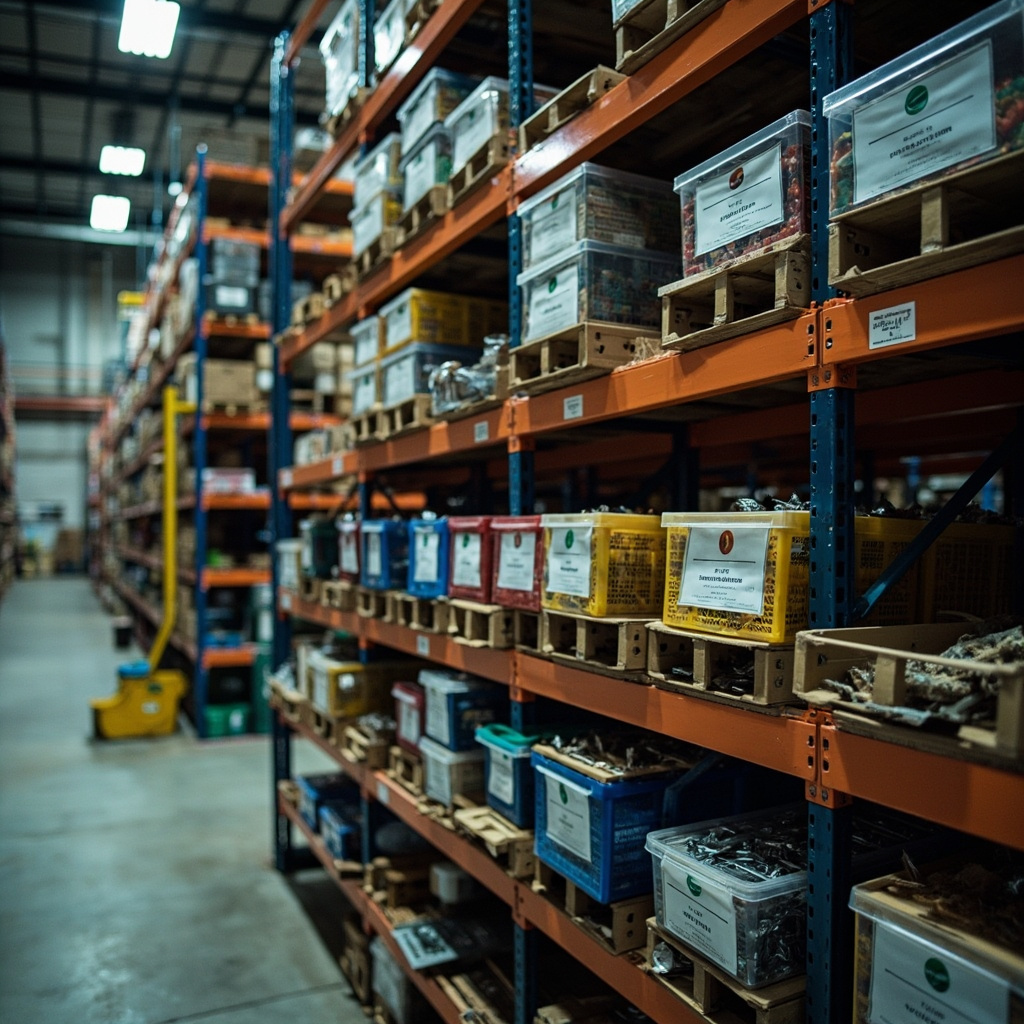
Proper fastener storage and handling prevents damage, corrosion, and loss. Guide for warehouses, workshops, and job sites.
Why Proper Storage Matters
Proper fastener storage protects your investment and ensures products arrive in usable condition. Damaged or corroded fasteners cause assembly delays, quality issues, and safety hazards. Common storage problems: moisture damage causing rust, physical damage from impacts or crushing, contamination from dust and debris, mix-ups from improper labeling, and theft or loss from poor inventory control. These problems are preventable with proper storage practices. TradeGo helps customers establish appropriate storage procedures for their specific environments. Related resources: high-tensile bolts anchor bolts stainless steel fasteners hex bolts lock nuts washers self-drilling screws socket screws. This procurement framework applies to fastener sourcing for construction, mining, energy, automotive, and general industrial applications. The decision logic prioritizes quality consistency, supplier reliability, and total cost of ownership over short-term unit price. For B2B buyers in Africa, Latin America, and Southeast Asia, additional considerations include regional customs requirements, container consolidation options, and payment security mechanisms. Standardized specifications that travel across projects reduce training time, RFQ processing time, and supplier onboarding effort. This procurement framework applies to fastener sourcing for construction, mining, energy, automotive, and general industrial applications. The decision logic prioritizes quality consistency, supplier reliability, and total cost of ownership over short-term unit price. For B2B buyers in Africa, Latin America, and Southeast Asia, additional considerations include regional customs requirements, container consolidation options, and payment security mechanisms. Standardized specifications that travel across projects reduce training time, RFQ processing time, and supplier onboarding effort. This procurement framework applies to fastener sourcing for construction, mining, energy, automotive, and general industrial applications. The decision logic prioritizes quality consistency, supplier reliability, and total cost of ownership over short-term unit price. For B2B buyers in Africa, Latin America, and Southeast Asia, additional considerations include regional customs requirements, container consolidation options, and payment security mechanisms. Standardized specifications that travel across projects reduce training time, RFQ processing time, and supplier onboarding effort.
Warehouse Storage Best Practices
Effective warehouse organization: Climate Control: Maintain moderate temperature (10-30°C) and relative humidity below 60%. In tropical African climates, dehumidification may be necessary. Use desiccants in storage areas. Raised Storage: Keep fasteners off concrete floors using pallets or shelving. Concrete transfers moisture and can accelerate corrosion. Original Packaging: Leave fasteners in manufacturer packaging until needed. Packaging provides corrosion protection and traceability. Segmentation by Type: Organize by fastener type, size, and material. Stainless steel should be stored separately from carbon steel to prevent galvanic confusion. First-In-First-Out: Use older stock before newer deliveries to prevent age-related degradation. Regular Inspections: Check for signs of corrosion, moisture damage, or packaging degradation. Address problems immediately. Documentation: Maintain inventory records including quantity, date received, and source. This enables quality追溯和 reorder planning. Standards-based procurement requires continuous learning as ISO, ASTM, DIN, and GB standards are revised every 3-5 years. Subscribe to standards update notifications and review specifications annually. The most common standards used in international fastener trade are ISO 898-1 (mechanical properties), ISO 3506-1 (stainless), ISO 3269 (acceptance inspection), ISO 4042 (coatings), and ISO 1502 (thread gauges). For B2B buyers, building a standards reference library with at least the top 20 standards relevant to your product mix is essential. Standards-based procurement requires continuous learning as ISO, ASTM, DIN, and GB standards are revised every 3-5 years. Subscribe to standards update notifications and review specifications annually. The most common standards used in international fastener trade are ISO 898-1 (mechanical properties), ISO 3506-1 (stainless), ISO 3269 (acceptance inspection), ISO 4042 (coatings), and ISO 1502 (thread gauges). For B2B buyers, building a standards reference library with at least the top 20 standards relevant to your product mix is essential. Standards-based procurement requires continuous learning as ISO, ASTM, DIN, and GB standards are revised every 3-5 years. Subscribe to standards update notifications and review specifications annually. The most common standards used in international fastener trade are ISO 898-1 (mechanical properties), ISO 3506-1 (stainless), ISO 3269 (acceptance inspection), ISO 4042 (coatings), and ISO 1502 (thread gauges). For B2B buyers, building a standards reference library with at least the top 20 standards relevant to your product mix is essential.
Handling Procedures
Proper handling prevents damage: Lift Correctly: Use proper lifting techniques for heavy boxes. Get help for loads over 25kg. No Floor Dragging: Never drag boxes across concrete or across other packages. Use hand trucks or pallet jacks. Protect Threads: Fasteners with precision threads (like lead screws or precision bolts) require extra care. Use protective caps or wraps. Clean Hands: Oil and sweat from hands accelerate corrosion. Wear gloves when handling coated or stainless fasteners. Tool Inspection: Check tools before use. Damaged wrenches or sockets can round fastener heads. Correct Torque: Use calibrated torque wrenches for critical applications. Under or over-tightening causes problems. Disposal of Damaged Stock: Don't mix damaged fasteners with good stock. Segregate and dispose of damaged items properly to prevent accidental use. The comparison methodology above uses typical ranges from industry data and TradeGo procurement experience 2018-2024. Actual market prices fluctuate with raw material costs (steel, zinc, nickel), energy costs, labor costs, and currency exchange rates. For accurate comparison, request identical RFQs from 3-5 qualified suppliers and compare landed cost (product + shipping + insurance + duties). The lowest unit price is rarely the lowest total cost of ownership. The comparison methodology above uses typical ranges from industry data and TradeGo procurement experience 2018-2024. Actual market prices fluctuate with raw material costs (steel, zinc, nickel), energy costs, labor costs, and currency exchange rates. For accurate comparison, request identical RFQs from 3-5 qualified suppliers and compare landed cost (product + shipping + insurance + duties). The lowest unit price is rarely the lowest total cost of ownership. The comparison methodology above uses typical ranges from industry data and TradeGo procurement experience 2018-2024. Actual market prices fluctuate with raw material costs (steel, zinc, nickel), energy costs, labor costs, and currency exchange rates. For accurate comparison, request identical RFQs from 3-5 qualified suppliers and compare landed cost (product + shipping + insurance + duties). The lowest unit price is rarely the lowest total cost of ownership.
Corrosion Prevention
Corrosion is the primary cause of fastener degradation: Humidity Control: Keep relative humidity below 60%. In humid climates, use dehumidifiers or desiccant packs. VCI Packaging: Vaport Corrosion Inhibitor papers or poly bags release protective molecules that inhibit corrosion. Effective for enclosed spaces. Coatings Inspection: Check for damage to zinc plating, galvanizing, or other coatings. Touch up minor damage with zinc-rich paint. Separate Materials: Don't store stainless and carbon steel in direct contact. Use cardboard or plastic dividers. Avoid Standing Water: Ensure storage areas have good drainage and no standing water. Regular Rotation: Use stock regularly to prevent items sitting for extended periods. For African coastal and mining environments, enhanced corrosion protection is essential. Use stainless steel or specialized coatings where possible. The verification checklist applies to both initial supplier qualification and ongoing batch inspection. For high-risk applications (load-bearing structural, pressure vessels, mining, marine), add fatigue testing, salt-spray testing (ASTM B117), torque-tension testing, and post-installation inspection. The cost of additional verification is 0.1-0.3% of order value, while undetected quality failures can be 10-100x the order value in damages. The verification checklist applies to both initial supplier qualification and ongoing batch inspection. For high-risk applications (load-bearing structural, pressure vessels, mining, marine), add fatigue testing, salt-spray testing (ASTM B117), torque-tension testing, and post-installation inspection. The cost of additional verification is 0.1-0.3% of order value, while undetected quality failures can be 10-100x the order value in damages. The verification checklist applies to both initial supplier qualification and ongoing batch inspection. For high-risk applications (load-bearing structural, pressure vessels, mining, marine), add fatigue testing, salt-spray testing (ASTM B117), torque-tension testing, and post-installation inspection. The cost of additional verification is 0.1-0.3% of order value, while undetected quality failures can be 10-100x the order value in damages.
Inventory Management
Effective inventory control prevents stockouts and overstocking: Minimum Stock Levels: Set reorder points based on usage rate. For fast-moving items like common hex bolts, maintain higher minimums. Stock Cards: Keep records for each fastener type showing quantity received, quantity issued, and balance. Regular Counts: Conduct cycle counts monthly. Full inventory annually. Secure Storage: Lock valuable fastener stock (stainless steel, specialty alloys) to prevent theft. Issue Controls: Require authorization for fastener issues. Track who takes what for cost allocation and theft prevention. Supplier Relationships: Maintain relationships with reliable suppliers for quick restocking. TradeGo offers fast turnaround on standard orders. Supplier evaluation should be a continuous process, not a one-time exercise. Re-evaluate suppliers annually based on delivery performance, quality metrics, price competitiveness, and responsiveness. Maintain a supplier scorecard with weighted metrics: on-time delivery (25%), quality acceptance rate (30%), price competitiveness (20%), responsiveness (15%), and documentation accuracy (10%). Drop suppliers scoring below 70% over a 6-month period and qualify replacements. Supplier evaluation should be a continuous process, not a one-time exercise. Re-evaluate suppliers annually based on delivery performance, quality metrics, price competitiveness, and responsiveness. Maintain a supplier scorecard with weighted metrics: on-time delivery (25%), quality acceptance rate (30%), price competitiveness (20%), responsiveness (15%), and documentation accuracy (10%). Drop suppliers scoring below 70% over a 6-month period and qualify replacements. Supplier evaluation should be a continuous process, not a one-time exercise. Re-evaluate suppliers annually based on delivery performance, quality metrics, price competitiveness, and responsiveness. Maintain a supplier scorecard with weighted metrics: on-time delivery (25%), quality acceptance rate (30%), price competitiveness (20%), responsiveness (15%), and documentation accuracy (10%). Drop suppliers scoring below 70% over a 6-month period and qualify replacements.
Frequently Asked Questions
See frequently asked questions below.
Related resources: high-tensile bolts anchor bolts stainless steel fasteners hex bolts lock nuts washers self-drilling screws socket screws. For B2B buyers operating in multiple countries, harmonize specifications with regional standards and local customs requirements. Common regional frameworks: SABS (South Africa), KEBS (Kenya), TBS (Tanzania), ZIMRA (Zimbabwe), SON (Nigeria), and AfCFTA standards for pan-Africa trade. Local standards compliance is often mandatory for public infrastructure projects, mining operations, and government tenders. For B2B buyers operating in multiple countries, harmonize specifications with regional standards and local customs requirements. Common regional frameworks: SABS (South Africa), KEBS (Kenya), TBS (Tanzania), ZIMRA (Zimbabwe), SON (Nigeria), and AfCFTA standards for pan-Africa trade. Local standards compliance is often mandatory for public infrastructure projects, mining operations, and government tenders. For B2B buyers operating in multiple countries, harmonize specifications with regional standards and local customs requirements. Common regional frameworks: SABS (South Africa), KEBS (Kenya), TBS (Tanzania), ZIMRA (Zimbabwe), SON (Nigeria), and AfCFTA standards for pan-Africa trade. Local standards compliance is often mandatory for public infrastructure projects, mining operations, and government tenders.How long can fasteners be stored?
Properly stored in original packaging in controlled conditions, most fasteners have an indefinite shelf life. Coated fasteners (zinc-plated, galvanized) may show gradual coating degradation over years but remain functional.
What's the best storage for stainless steel?
Store indoors in dry conditions. Stainless steel is corrosion-resistant but not immune to staining in humid or chloride-rich environments. Keep in original packaging until use.
Can I store different fastener types together?
Generally yes, but segregate by material to prevent galvanic concerns and by size to prevent mix-ups. Keep stainless separate from carbon steel.
How do I prevent thread damage during storage?
Keep fasteners in original packaging or use protective caps. Don't over-pack containers causing pressure on threads. Handle precision fasteners with extra care.
What causes white staining on zinc-plated fasteners?
White staining is typically zinc oxide or zinc hydroxide from moisture exposure. It doesn't significantly affect fastener performance. Heavy white buildup may indicate extended moisture exposure.
Contact TradeGo for fastener supplies and storage consultation. Email: sales@tradego-fasteners.com
Request Quote