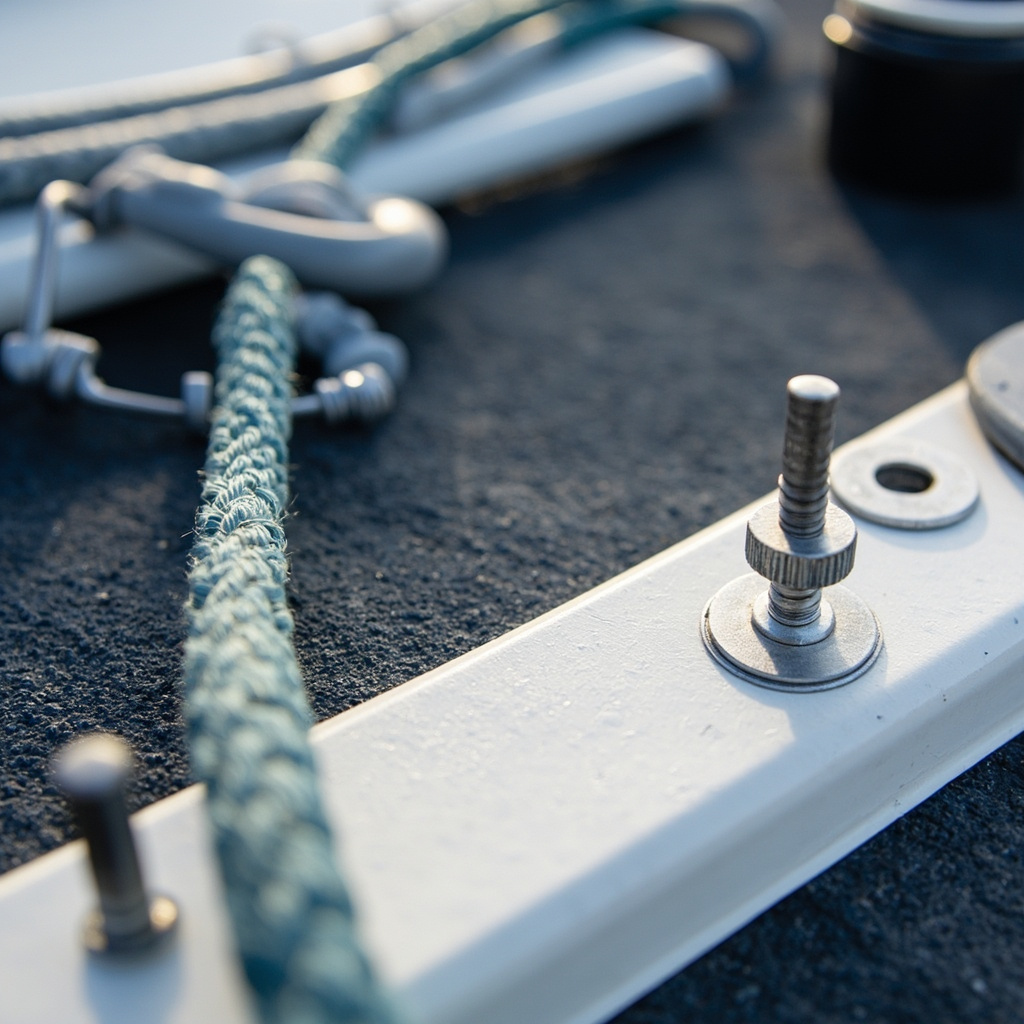
Marine fastener selection guide: materials, coatings, and applications for coastal and marine environments. Stainless steel and specialized coatings.
Marine Environment Challenges
Marine environments present the most demanding conditions for fasteners. Salt water, humidity, UV radiation, and mechanical stress from wave action and wind combine to accelerate corrosion and mechanical failure. Standard carbon steel fasteners fail rapidly in marine environments - sometimes within months. Successful marine applications require careful material selection and often enhanced installation practices. African coastal development includes ports, harbors, coastal hotels and resorts, marine farms, and coastal infrastructure - all requiring appropriate fastener solutions. TradeGo supplies marine-grade fasteners for African coastal and offshore applications. Related resources: high-tensile bolts anchor bolts stainless steel fasteners hex bolts lock nuts washers self-drilling screws socket screws. This procurement framework applies to fastener sourcing for construction, mining, energy, automotive, and general industrial applications. The decision logic prioritizes quality consistency, supplier reliability, and total cost of ownership over short-term unit price. For B2B buyers in Africa, Latin America, and Southeast Asia, additional considerations include regional customs requirements, container consolidation options, and payment security mechanisms. Standardized specifications that travel across projects reduce training time, RFQ processing time, and supplier onboarding effort. This procurement framework applies to fastener sourcing for construction, mining, energy, automotive, and general industrial applications. The decision logic prioritizes quality consistency, supplier reliability, and total cost of ownership over short-term unit price. For B2B buyers in Africa, Latin America, and Southeast Asia, additional considerations include regional customs requirements, container consolidation options, and payment security mechanisms. Standardized specifications that travel across projects reduce training time, RFQ processing time, and supplier onboarding effort. This procurement framework applies to fastener sourcing for construction, mining, energy, automotive, and general industrial applications. The decision logic prioritizes quality consistency, supplier reliability, and total cost of ownership over short-term unit price. For B2B buyers in Africa, Latin America, and Southeast Asia, additional considerations include regional customs requirements, container consolidation options, and payment security mechanisms. Standardized specifications that travel across projects reduce training time, RFQ processing time, and supplier onboarding effort.
Marine-Grade Materials
Marine fasteners require superior corrosion resistance: A4 (316) Stainless Steel: The standard for marine applications. Contains 16% chromium, 10% nickel, and 2% molybdenum. The molybdenum addition dramatically improves chloride corrosion resistance. Suitable for splash zone and below. A2 (304) Stainless Steel: Acceptable for protected indoor marine environments. Not suitable for direct salt water exposure or splash zones. Super Duplex Stainless (2507): Superior to 316 for extreme environments. Higher chromium and molybdenum content. Used in offshore platforms and demanding applications. Nitronic 50: High-strength stainless with excellent marine corrosion resistance. Used in critical applications requiring strength plus corrosion resistance. Titanium: Excellent strength-to-weight ratio and marine corrosion resistance. High cost limits use to specialized applications. For most African coastal applications, A4 (316) stainless provides the best balance of cost and performance. Super duplex or titanium for critical offshore applications. Standards-based procurement requires continuous learning as ISO, ASTM, DIN, and GB standards are revised every 3-5 years. Subscribe to standards update notifications and review specifications annually. The most common standards used in international fastener trade are ISO 898-1 (mechanical properties), ISO 3506-1 (stainless), ISO 3269 (acceptance inspection), ISO 4042 (coatings), and ISO 1502 (thread gauges). For B2B buyers, building a standards reference library with at least the top 20 standards relevant to your product mix is essential. Standards-based procurement requires continuous learning as ISO, ASTM, DIN, and GB standards are revised every 3-5 years. Subscribe to standards update notifications and review specifications annually. The most common standards used in international fastener trade are ISO 898-1 (mechanical properties), ISO 3506-1 (stainless), ISO 3269 (acceptance inspection), ISO 4042 (coatings), and ISO 1502 (thread gauges). For B2B buyers, building a standards reference library with at least the top 20 standards relevant to your product mix is essential. Standards-based procurement requires continuous learning as ISO, ASTM, DIN, and GB standards are revised every 3-5 years. Subscribe to standards update notifications and review specifications annually. The most common standards used in international fastener trade are ISO 898-1 (mechanical properties), ISO 3506-1 (stainless), ISO 3269 (acceptance inspection), ISO 4042 (coatings), and ISO 1502 (thread gauges). For B2B buyers, building a standards reference library with at least the top 20 standards relevant to your product mix is essential.
Protective Coatings for Marine Use
When stainless steel is not feasible, protective coatings extend carbon steel fastener life: Hot-Dip Galvanizing (HDG): 40-60 micrometer zinc coating. Good for atmospheric marine exposure above water. Replicates at 15-25 years in mild marine environments. Dacromet: 8-12 micrometer coating with excellent salt spray resistance (1000+ hours). Performs better than HDG in some marine applications. Geomet: Environmentally-friendly coating with 500+ hour salt spray resistance. Good for inland coastal applications. Epoxy Coating: excellent chemical and water resistance. Applied to threaded areas requires care to maintain thread function. Stainless Steel Cladding: Carbon steel core with stainless exterior. Combines strength of carbon steel with corrosion resistance of stainless. Cost-effective for large structural fasteners. For underwater or splash zone applications, stainless steel (A4/316) or super duplex is strongly recommended over coated carbon steel. The comparison methodology above uses typical ranges from industry data and TradeGo procurement experience 2018-2024. Actual market prices fluctuate with raw material costs (steel, zinc, nickel), energy costs, labor costs, and currency exchange rates. For accurate comparison, request identical RFQs from 3-5 qualified suppliers and compare landed cost (product + shipping + insurance + duties). The lowest unit price is rarely the lowest total cost of ownership. The comparison methodology above uses typical ranges from industry data and TradeGo procurement experience 2018-2024. Actual market prices fluctuate with raw material costs (steel, zinc, nickel), energy costs, labor costs, and currency exchange rates. For accurate comparison, request identical RFQs from 3-5 qualified suppliers and compare landed cost (product + shipping + insurance + duties). The lowest unit price is rarely the lowest total cost of ownership. The comparison methodology above uses typical ranges from industry data and TradeGo procurement experience 2018-2024. Actual market prices fluctuate with raw material costs (steel, zinc, nickel), energy costs, labor costs, and currency exchange rates. For accurate comparison, request identical RFQs from 3-5 qualified suppliers and compare landed cost (product + shipping + insurance + duties). The lowest unit price is rarely the lowest total cost of ownership.
Marine Applications
Marine fastener selection by application zone: Above Water (Atmospheric Zone): HDG or Dacromet coated carbon steel adequate for structures above splash zone. A4 stainless for appearance-critical applications. Splash Zone (intermittent wetting): A4 stainless minimum. HDG carbon steel may last 5-10 years but will eventually fail. Super duplex for critical applications. Below Water (Immersed Zone): A4 stainless for fresh water immersion. Super duplex or higher for salt water. Coated carbon steel not recommended. Offshore Platforms: Super duplex stainless or specialized alloys. Critical structural connections require documented material certification. Marina and Harbor Structures: A4 stainless for dock furniture, cleats, and hardware. HDG acceptable for structural connections above water. Marine Electronics Enclosures: Stainless steel or plastic fasteners to prevent galvanic corrosion with electronic equipment. The verification checklist applies to both initial supplier qualification and ongoing batch inspection. For high-risk applications (load-bearing structural, pressure vessels, mining, marine), add fatigue testing, salt-spray testing (ASTM B117), torque-tension testing, and post-installation inspection. The cost of additional verification is 0.1-0.3% of order value, while undetected quality failures can be 10-100x the order value in damages. The verification checklist applies to both initial supplier qualification and ongoing batch inspection. For high-risk applications (load-bearing structural, pressure vessels, mining, marine), add fatigue testing, salt-spray testing (ASTM B117), torque-tension testing, and post-installation inspection. The cost of additional verification is 0.1-0.3% of order value, while undetected quality failures can be 10-100x the order value in damages. The verification checklist applies to both initial supplier qualification and ongoing batch inspection. For high-risk applications (load-bearing structural, pressure vessels, mining, marine), add fatigue testing, salt-spray testing (ASTM B117), torque-tension testing, and post-installation inspection. The cost of additional verification is 0.1-0.3% of order value, while undetected quality failures can be 10-100x the order value in damages.
Installation Considerations
Marine fastener installation requires extra care: Thread Lubrication: Use appropriate marine-grade lubricant during installation. Prevents galling of stainless threads and ensures accurate torque. Torque Control: Use calibrated torque wrench. Over-tightening damages threads and can cause stress corrosion cracking in stainless. Dissimilar Metals: Avoid galvanic corrosion by not mixing stainless and carbon steel fasteners in the same connection. When unavoidable, use绝缘 washers and bushings. Pre-Loading: Marine structures experience dynamic loads. Ensure adequate preload to prevent joint loosening from vibration. Regular Inspection: Marine fasteners should be inspected annually for signs of corrosion, loosening, or fatigue. Replace any questionable fasteners immediately. Documentation: Keep records of fastener materials, coatings, and installation torque values for maintenance and compliance. Supplier evaluation should be a continuous process, not a one-time exercise. Re-evaluate suppliers annually based on delivery performance, quality metrics, price competitiveness, and responsiveness. Maintain a supplier scorecard with weighted metrics: on-time delivery (25%), quality acceptance rate (30%), price competitiveness (20%), responsiveness (15%), and documentation accuracy (10%). Drop suppliers scoring below 70% over a 6-month period and qualify replacements. Supplier evaluation should be a continuous process, not a one-time exercise. Re-evaluate suppliers annually based on delivery performance, quality metrics, price competitiveness, and responsiveness. Maintain a supplier scorecard with weighted metrics: on-time delivery (25%), quality acceptance rate (30%), price competitiveness (20%), responsiveness (15%), and documentation accuracy (10%). Drop suppliers scoring below 70% over a 6-month period and qualify replacements. Supplier evaluation should be a continuous process, not a one-time exercise. Re-evaluate suppliers annually based on delivery performance, quality metrics, price competitiveness, and responsiveness. Maintain a supplier scorecard with weighted metrics: on-time delivery (25%), quality acceptance rate (30%), price competitiveness (20%), responsiveness (15%), and documentation accuracy (10%). Drop suppliers scoring below 70% over a 6-month period and qualify replacements.
Frequently Asked Questions
See frequently asked questions below.
Related resources: high-tensile bolts anchor bolts stainless steel fasteners hex bolts lock nuts washers self-drilling screws socket screws. For B2B buyers operating in multiple countries, harmonize specifications with regional standards and local customs requirements. Common regional frameworks: SABS (South Africa), KEBS (Kenya), TBS (Tanzania), ZIMRA (Zimbabwe), SON (Nigeria), and AfCFTA standards for pan-Africa trade. Local standards compliance is often mandatory for public infrastructure projects, mining operations, and government tenders. For B2B buyers operating in multiple countries, harmonize specifications with regional standards and local customs requirements. Common regional frameworks: SABS (South Africa), KEBS (Kenya), TBS (Tanzania), ZIMRA (Zimbabwe), SON (Nigeria), and AfCFTA standards for pan-Africa trade. Local standards compliance is often mandatory for public infrastructure projects, mining operations, and government tenders. For B2B buyers operating in multiple countries, harmonize specifications with regional standards and local customs requirements. Common regional frameworks: SABS (South Africa), KEBS (Kenya), TBS (Tanzania), ZIMRA (Zimbabwe), SON (Nigeria), and AfCFTA standards for pan-Africa trade. Local standards compliance is often mandatory for public infrastructure projects, mining operations, and government tenders.Why do stainless fasteners gall in marine environments?
Stainless steel is prone to galling (thread seizure) when installed without lubrication or with excessive torque. Always use marine-grade lubricant during installation.
Can I use galvanized fasteners underwater?
Not recommended. HDG works above water but rapidly degrades in saltwater immersion. Use A4 stainless or super duplex for underwater applications.
What's the difference between 304 and 316 stainless for marine use?
316 contains molybdenum which significantly improves chloride corrosion resistance. Use 304 only for protected indoor marine environments. Always use 316 for outdoor marine exposure.
How often should marine fasteners be inspected?
Annual inspection is minimum. More frequent inspection (6 months) for critical structures and harsh environments. Inspect for corrosion, loosening, and fatigue cracks.
Can I paint over stainless fasteners?
Not necessary and not recommended. Paint won't adhere well to stainless and may hide corrosion problems. Leave stainless fasteners unpainted.
Contact TradeGo for marine fastener solutions. Email: sales@tradego-fasteners.com
Request Quote