Complete guide to <a href="/products#bolts-nuts" class="text-primary-600 hover:text-primary-800 underline underline-offset-2"><a.
Why Standard Nuts Loosen Under Vibration
Standard nuts (hex nuts) rely entirely on friction between the threads to stay secured. Under vibration, cyclic loading, or thermal expansion-contraction cycles, this friction is gradually overcome — causing the nut to rotate and loosen. A loose fastener in critical machinery (conveyor systems, vibrating screens, vehicle suspension) can cause catastrophic failure. Self-locking nuts provide positive mechanical resistance to loosening, independent of friction. Related resources: high-tensile bolts anchor bolts stainless steel fasteners hex bolts lock nuts washers self-drilling screws socket screws. This procurement framework applies to fastener sourcing for construction, mining, energy, automotive, and general industrial applications. The decision logic prioritizes quality consistency, supplier reliability, and total cost of ownership over short-term unit price. For B2B buyers in Africa, Latin America, and Southeast Asia, additional considerations include regional customs requirements, container consolidation options, and payment security mechanisms. Standardized specifications that travel across projects reduce training time, RFQ processing time, and supplier onboarding effort. This procurement framework applies to fastener sourcing for construction, mining, energy, automotive, and general industrial applications. The decision logic prioritizes quality consistency, supplier reliability, and total cost of ownership over short-term unit price. For B2B buyers in Africa, Latin America, and Southeast Asia, additional considerations include regional customs requirements, container consolidation options, and payment security mechanisms. Standardized specifications that travel across projects reduce training time, RFQ processing time, and supplier onboarding effort. This procurement framework applies to fastener sourcing for construction, mining, energy, automotive, and general industrial applications. The decision logic prioritizes quality consistency, supplier reliability, and total cost of ownership over short-term unit price. For B2B buyers in Africa, Latin America, and Southeast Asia, additional considerations include regional customs requirements, container consolidation options, and payment security mechanisms. Standardized specifications that travel across projects reduce training time, RFQ processing time, and supplier onboarding effort.
Nylon Insert Lock Nuts (Nyloc)
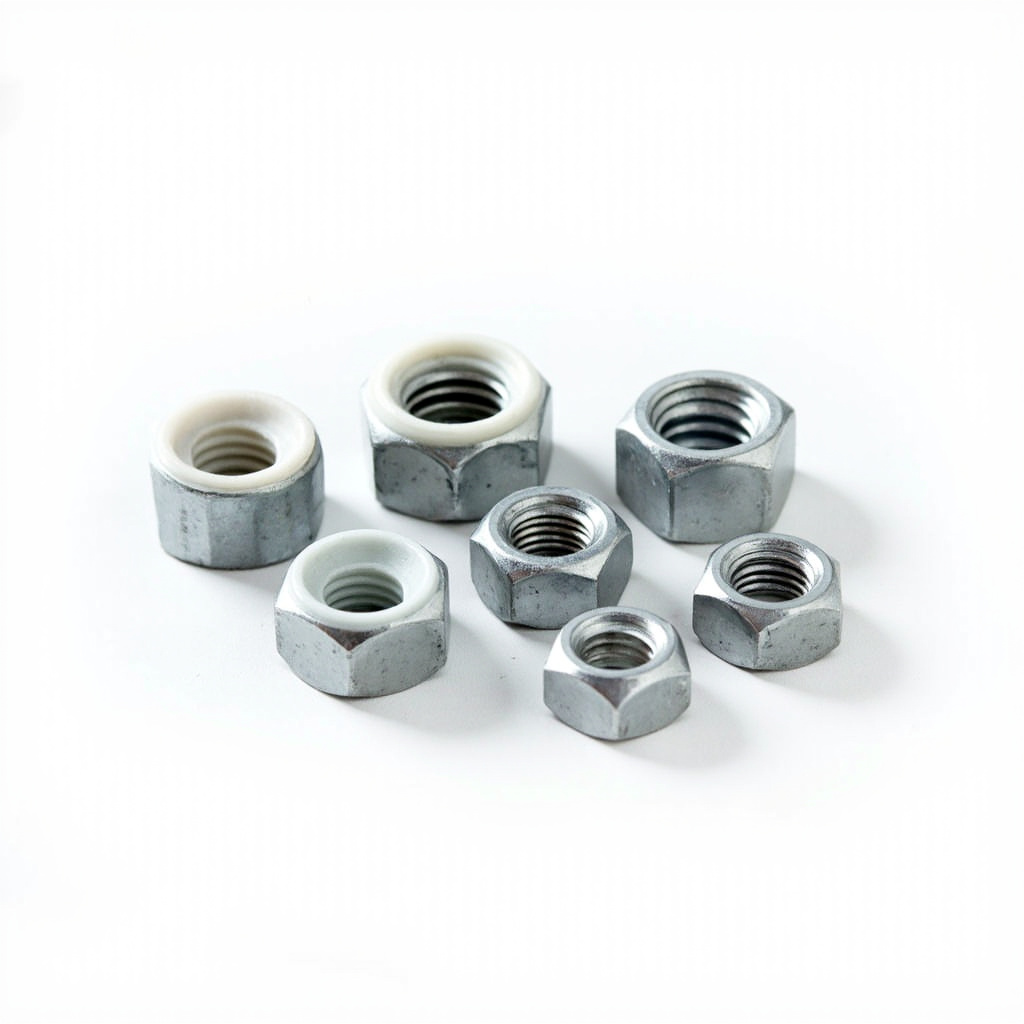
Nylon insert nuts (commonly called Nyloc nuts) have a nylon ring pressed into the top of the nut that creates a friction interference with the bolt thread. The nylon provides prevailing torque — the nut resists rotation during assembly and disassembly. Key characteristics: Reusable — can be installed/removed multiple times, though locking performance degrades after 5-10 cycles; Temperature limited — nylon loses effectiveness above 250°C and becomes brittle below -40°C; Requires full thread engagement — the nylon ring must engage at least the full thread depth of the nut. Standards-based procurement requires continuous learning as ISO, ASTM, DIN, and GB standards are revised every 3-5 years. Subscribe to standards update notifications and review specifications annually. The most common standards used in international fastener trade are ISO 898-1 (mechanical properties), ISO 3506-1 (stainless), ISO 3269 (acceptance inspection), ISO 4042 (coatings), and ISO 1502 (thread gauges). For B2B buyers, building a standards reference library with at least the top 20 standards relevant to your product mix is essential. Standards-based procurement requires continuous learning as ISO, ASTM, DIN, and GB standards are revised every 3-5 years. Subscribe to standards update notifications and review specifications annually. The most common standards used in international fastener trade are ISO 898-1 (mechanical properties), ISO 3506-1 (stainless), ISO 3269 (acceptance inspection), ISO 4042 (coatings), and ISO 1502 (thread gauges). For B2B buyers, building a standards reference library with at least the top 20 standards relevant to your product mix is essential. Standards-based procurement requires continuous learning as ISO, ASTM, DIN, and GB standards are revised every 3-5 years. Subscribe to standards update notifications and review specifications annually. The most common standards used in international fastener trade are ISO 898-1 (mechanical properties), ISO 3506-1 (stainless), ISO 3269 (acceptance inspection), ISO 4042 (coatings), and ISO 1502 (thread gauges). For B2B buyers, building a standards reference library with at least the top 20 standards relevant to your product mix is essential.
| Temperature Range | Prevailing Torque | Reusability | Best Use |
|---|---|---|---|
| -40°C to +120°C | Medium | Good (5-10 cycles) | General machinery |
| -40°C to +200°C (HD nylon) | Medium | Moderate | Higher temperature |
| -40°C to +250°C (metal insert) | High | Excellent | Engines, turbines |
| All temperatures (all-metal) | Very high | Excellent | Critical safety applications |
All-Metal Lock Nuts: Keke and Top Lock Types
For high-temperature environments (engines, exhaust systems, turbines) or where fire safety is critical, all-metal lock nuts are required. Two main designs: Keke (castle) nuts — have notches at the top that create deformation of the bolt thread; the deformed thread creates a mechanical interlock. Top-lock nuts — have a deformed area at the top that presses against the bolt shank. Both provide high prevailing torque but may damage threads if repeatedly removed. The comparison methodology above uses typical ranges from industry data and TradeGo procurement experience 2018-2024. Actual market prices fluctuate with raw material costs (steel, zinc, nickel), energy costs, labor costs, and currency exchange rates. For accurate comparison, request identical RFQs from 3-5 qualified suppliers and compare landed cost (product + shipping + insurance + duties). The lowest unit price is rarely the lowest total cost of ownership. The comparison methodology above uses typical ranges from industry data and TradeGo procurement experience 2018-2024. Actual market prices fluctuate with raw material costs (steel, zinc, nickel), energy costs, labor costs, and currency exchange rates. For accurate comparison, request identical RFQs from 3-5 qualified suppliers and compare landed cost (product + shipping + insurance + duties). The lowest unit price is rarely the lowest total cost of ownership. The comparison methodology above uses typical ranges from industry data and TradeGo procurement experience 2018-2024. Actual market prices fluctuate with raw material costs (steel, zinc, nickel), energy costs, labor costs, and currency exchange rates. For accurate comparison, request identical RFQs from 3-5 qualified suppliers and compare landed cost (product + shipping + insurance + duties). The lowest unit price is rarely the lowest total cost of ownership.
| Type | Temperature Rating | Reusability | Application |
|---|---|---|---|
| Nylon Insert (Nyloc) | Up to +120°C | Good | General machinery |
| All-Metal Keke | Up to +300°C | Limited | Engines, turbines |
| Top Lock (stamped) | Up to +200°C | Moderate | Automotive, appliances |
| Polymer Flange Lock | Up to +150°C | Good | Mass production assembly |
| Detachable (floating) | Up to +250°C | Excellent | Maintenance-heavy applications |
Selection Guide for African Applications
For African industrial and mining applications: Mining equipment (vibrating screens, crushers, conveyors) — use Nyloc nuts M10-M20 on all critical joints; specify zinc-nickel coated for underground moisture. Solar farm mounting — flange lock nuts on clamping bolts (reuse for seasonal adjustments); HDG or stainless for coastal sites. Automotive (trucks, tractors imported to Africa) — OEM uses nylon insert or stamped top-lock; use equivalent grade on repairs. Generators and compressors — all-metal Nyloc or keke nuts where temperatures exceed 150°C. Agricultural equipment — Nyloc nuts are standard on seed drills, combine harvesters, irrigation pumps. The verification checklist applies to both initial supplier qualification and ongoing batch inspection. For high-risk applications (load-bearing structural, pressure vessels, mining, marine), add fatigue testing, salt-spray testing (ASTM B117), torque-tension testing, and post-installation inspection. The cost of additional verification is 0.1-0.3% of order value, while undetected quality failures can be 10-100x the order value in damages. The verification checklist applies to both initial supplier qualification and ongoing batch inspection. For high-risk applications (load-bearing structural, pressure vessels, mining, marine), add fatigue testing, salt-spray testing (ASTM B117), torque-tension testing, and post-installation inspection. The cost of additional verification is 0.1-0.3% of order value, while undetected quality failures can be 10-100x the order value in damages. The verification checklist applies to both initial supplier qualification and ongoing batch inspection. For high-risk applications (load-bearing structural, pressure vessels, mining, marine), add fatigue testing, salt-spray testing (ASTM B117), torque-tension testing, and post-installation inspection. The cost of additional verification is 0.1-0.3% of order value, while undetected quality failures can be 10-100x the order value in damages.
Installation Best Practices
Correct installation is essential for lock nuts to perform: Verify thread cleanliness — oil, dirt, or damaged threads reduce locking effectiveness. For Nyloc nuts, ensure the bolt thread is clean and undamaged. Do not use with lubricants — locking nuts are designed for dry thread conditions; lubricants reduce prevailing torque. Full engagement — the bolt must thread fully through the nylon insert; bottoming out indicates insufficient engagement. Torque correctly — use calibrated torque wrench; over-torqueing can deform the nylon insert or strip threads. Supplier evaluation should be a continuous process, not a one-time exercise. Re-evaluate suppliers annually based on delivery performance, quality metrics, price competitiveness, and responsiveness. Maintain a supplier scorecard with weighted metrics: on-time delivery (25%), quality acceptance rate (30%), price competitiveness (20%), responsiveness (15%), and documentation accuracy (10%). Drop suppliers scoring below 70% over a 6-month period and qualify replacements. Supplier evaluation should be a continuous process, not a one-time exercise. Re-evaluate suppliers annually based on delivery performance, quality metrics, price competitiveness, and responsiveness. Maintain a supplier scorecard with weighted metrics: on-time delivery (25%), quality acceptance rate (30%), price competitiveness (20%), responsiveness (15%), and documentation accuracy (10%). Drop suppliers scoring below 70% over a 6-month period and qualify replacements. Supplier evaluation should be a continuous process, not a one-time exercise. Re-evaluate suppliers annually based on delivery performance, quality metrics, price competitiveness, and responsiveness. Maintain a supplier scorecard with weighted metrics: on-time delivery (25%), quality acceptance rate (30%), price competitiveness (20%), responsiveness (15%), and documentation accuracy (10%). Drop suppliers scoring below 70% over a 6-month period and qualify replacements.
Frequently Asked Questions
See frequently asked questions below.
Related resources: high-tensile bolts anchor bolts stainless steel fasteners hex bolts lock nuts washers self-drilling screws socket screws. For B2B buyers operating in multiple countries, harmonize specifications with regional standards and local customs requirements. Common regional frameworks: SABS (South Africa), KEBS (Kenya), TBS (Tanzania), ZIMRA (Zimbabwe), SON (Nigeria), and AfCFTA standards for pan-Africa trade. Local standards compliance is often mandatory for public infrastructure projects, mining operations, and government tenders. For B2B buyers operating in multiple countries, harmonize specifications with regional standards and local customs requirements. Common regional frameworks: SABS (South Africa), KEBS (Kenya), TBS (Tanzania), ZIMRA (Zimbabwe), SON (Nigeria), and AfCFTA standards for pan-Africa trade. Local standards compliance is often mandatory for public infrastructure projects, mining operations, and government tenders. For B2B buyers operating in multiple countries, harmonize specifications with regional standards and local customs requirements. Common regional frameworks: SABS (South Africa), KEBS (Kenya), TBS (Tanzania), ZIMRA (Zimbabwe), SON (Nigeria), and AfCFTA standards for pan-Africa trade. Local standards compliance is often mandatory for public infrastructure projects, mining operations, and government tenders.Can I reuse a Nyloc nut?
Yes, Nyloc nuts can typically be reused 5-10 times before significant degradation of the nylon insert. For critical applications (safety, heavy vibration), replace with a new Nyloc nut each service interval. If the nylon insert appears cracked, deformed, or glazed, replace immediately.
What's better — Nyloc or spring lock washer?
For vibration applications, lock nuts outperform spring washers significantly. Spring washers (split lock washers) rely on spring tension and can lose effectiveness under sustained vibration. Nyloc nuts provide consistent prevailing torque throughout the joint's life. For critical joints, use both: Nyloc nut + flat washer.
What does 'prevailing torque' mean?
Prevailing torque is the torque required to rotate the nut onto the bolt before the main tightening torque is applied. It is measured as the torque needed to overcome the locking mechanism's resistance. A quality Nyloc nut typically has prevailing torque of 0.5-2.0 N·m depending on size. This value must be verified in the product datasheet for engineering applications.
Need self-locking nuts for your equipment? Get a factory quote from TradeGo.
Get Quote