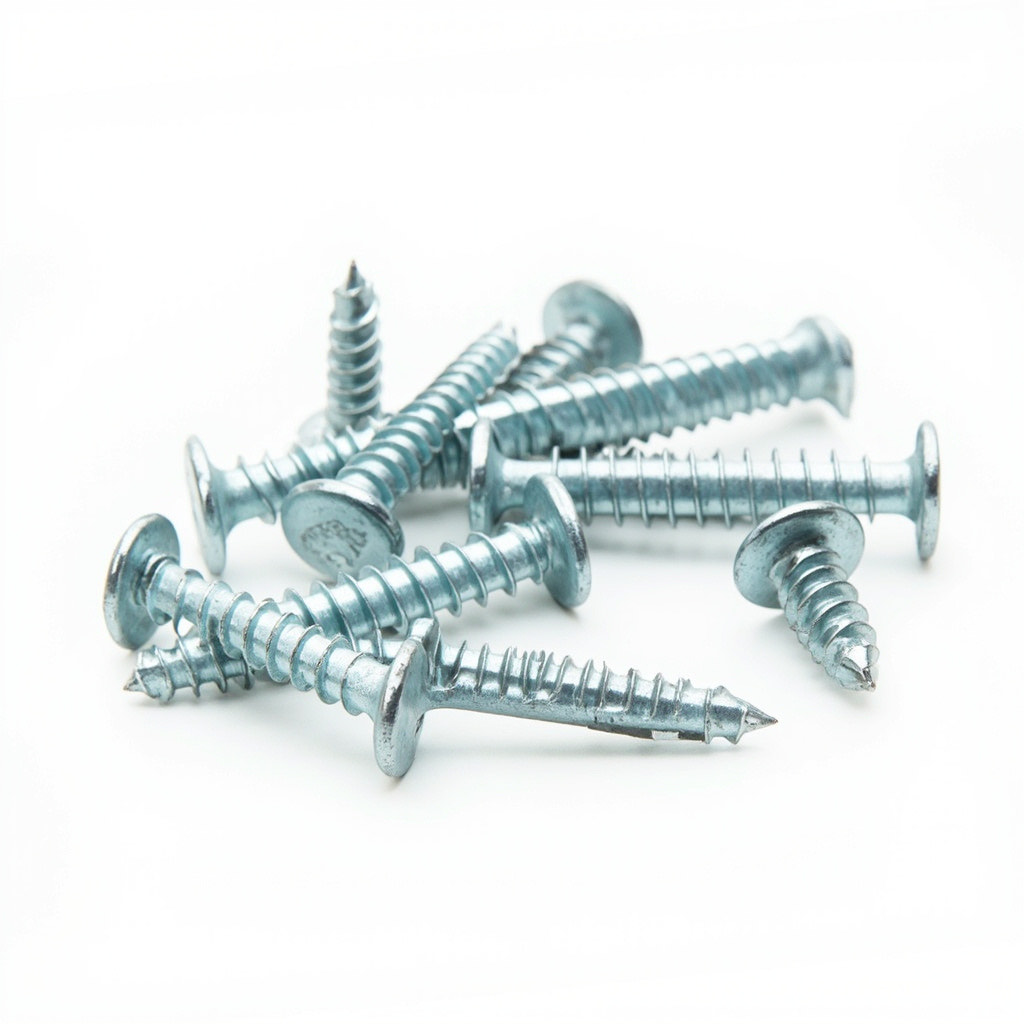
Complete guide to self-tapping and sheet metal screws: thread-forming vs thread-cutting types, drill point screws, and selection for roofing, cladding, and g...
Thread-Forming vs Thread-Cutting: Two Distinct Types
Self-tapping screws come in two fundamentally different types that are often confused: Thread-forming screws (Type AB, B, BP) — displace the material as they are driven in; the sheet metal flows around the thread. Only suitable for use in ductile materials (soft steel, aluminum, plastic). Cannot be removed and reinstalled in the same hole without stripping. Thread-cutting screws (Type C, D, F, T) — have a sharp cutting edge that removes material as they are driven; they create a true machine thread. Can be removed and reinstalled. Suitable for all materials including brittle and hard materials. For African sheet metal work, Type AB (thread-forming) is common for thin steel; Type F or drill point (self-drilling) is preferred for thicker materials. Related resources: high-tensile bolts anchor bolts stainless steel fasteners hex bolts lock nuts washers self-drilling screws socket screws. This procurement framework applies to fastener sourcing for construction, mining, energy, automotive, and general industrial applications. The decision logic prioritizes quality consistency, supplier reliability, and total cost of ownership over short-term unit price. For B2B buyers in Africa, Latin America, and Southeast Asia, additional considerations include regional customs requirements, container consolidation options, and payment security mechanisms. Standardized specifications that travel across projects reduce training time, RFQ processing time, and supplier onboarding effort. This procurement framework applies to fastener sourcing for construction, mining, energy, automotive, and general industrial applications. The decision logic prioritizes quality consistency, supplier reliability, and total cost of ownership over short-term unit price. For B2B buyers in Africa, Latin America, and Southeast Asia, additional considerations include regional customs requirements, container consolidation options, and payment security mechanisms. Standardized specifications that travel across projects reduce training time, RFQ processing time, and supplier onboarding effort. This procurement framework applies to fastener sourcing for construction, mining, energy, automotive, and general industrial applications. The decision logic prioritizes quality consistency, supplier reliability, and total cost of ownership over short-term unit price. For B2B buyers in Africa, Latin America, and Southeast Asia, additional considerations include regional customs requirements, container consolidation options, and payment security mechanisms. Standardized specifications that travel across projects reduce training time, RFQ processing time, and supplier onboarding effort.
Self-Drilling Screws (Drill Point / TEK Screws)
Self-drilling screws (commonly called TEK screws in Africa after the Teks brand) combine a drill point (mini drill bit tip) with self-tapping threads. They eliminate the need for pre-drilling entirely — the drill point bores its own hole and the threads tap it simultaneously. Drill point screws are designated by number: #3 drill point — drills up to 4.5mm steel; #4 drill point — drills up to 6.0mm steel; #5 drill point — drills up to 8.0mm steel; #6 drill point — drills up to 12.5mm steel. For African roofing and cladding, #3 and #4 are most common; #5 and #6 are used for structural steel connections. Standards-based procurement requires continuous learning as ISO, ASTM, DIN, and GB standards are revised every 3-5 years. Subscribe to standards update notifications and review specifications annually. The most common standards used in international fastener trade are ISO 898-1 (mechanical properties), ISO 3506-1 (stainless), ISO 3269 (acceptance inspection), ISO 4042 (coatings), and ISO 1502 (thread gauges). For B2B buyers, building a standards reference library with at least the top 20 standards relevant to your product mix is essential. Standards-based procurement requires continuous learning as ISO, ASTM, DIN, and GB standards are revised every 3-5 years. Subscribe to standards update notifications and review specifications annually. The most common standards used in international fastener trade are ISO 898-1 (mechanical properties), ISO 3506-1 (stainless), ISO 3269 (acceptance inspection), ISO 4042 (coatings), and ISO 1502 (thread gauges). For B2B buyers, building a standards reference library with at least the top 20 standards relevant to your product mix is essential. Standards-based procurement requires continuous learning as ISO, ASTM, DIN, and GB standards are revised every 3-5 years. Subscribe to standards update notifications and review specifications annually. The most common standards used in international fastener trade are ISO 898-1 (mechanical properties), ISO 3506-1 (stainless), ISO 3269 (acceptance inspection), ISO 4042 (coatings), and ISO 1502 (thread gauges). For B2B buyers, building a standards reference library with at least the top 20 standards relevant to your product mix is essential.
| Drill Point | Steel Capacity | Typical Application |
|---|---|---|
| #2 (light) | 1.5mm | Thin cladding, plastics |
| #3 (standard) | 4.5mm | Roofing, cladding, light steel |
| #4 (heavy) | 6.0mm | Structural steel, thick plates |
| #5 (extra heavy) | 8.0mm | Thick structural steel |
| #6 (ultra heavy) | 12.5mm | Heavy structural, grating |
Head Types for Sheet Metal Screws
Sheet metal screws come in multiple head types for different appearance and functional requirements: Hex head with bonded washer (most common for roofing) — large bearing surface with EPDM rubber washer for sealing; provides highest torque resistance. Bugle head ( Phillips/Sq Drive) — designed to sit flush in thin sheet; countersinks without tearing. Pan head — mushroom shape for general sheet metal. Flat head (countersunk) — for flush mounting. Binding head — used in electrical and appliance applications. For African roofing, always use hex head with bonded EPDM washer — the washer provides both sealing (prevents water ingress) and a wide bearing surface to prevent pull-through. The comparison methodology above uses typical ranges from industry data and TradeGo procurement experience 2018-2024. Actual market prices fluctuate with raw material costs (steel, zinc, nickel), energy costs, labor costs, and currency exchange rates. For accurate comparison, request identical RFQs from 3-5 qualified suppliers and compare landed cost (product + shipping + insurance + duties). The lowest unit price is rarely the lowest total cost of ownership. The comparison methodology above uses typical ranges from industry data and TradeGo procurement experience 2018-2024. Actual market prices fluctuate with raw material costs (steel, zinc, nickel), energy costs, labor costs, and currency exchange rates. For accurate comparison, request identical RFQs from 3-5 qualified suppliers and compare landed cost (product + shipping + insurance + duties). The lowest unit price is rarely the lowest total cost of ownership. The comparison methodology above uses typical ranges from industry data and TradeGo procurement experience 2018-2024. Actual market prices fluctuate with raw material costs (steel, zinc, nickel), energy costs, labor costs, and currency exchange rates. For accurate comparison, request identical RFQs from 3-5 qualified suppliers and compare landed cost (product + shipping + insurance + duties). The lowest unit price is rarely the lowest total cost of ownership.
Coatings and Color Matching for African Projects
Coating selection for sheet metal screws in Africa: Zinc-plated — for indoor and dry environments; least expensive but shortest life outdoors. Zinc-nickel — superior corrosion resistance to standard zinc; used in coastal and industrial environments. Polymer-coated (e.g., Ruspert, Magni) — excellent corrosion resistance with color matching; standard for pre-painted roofing and cladding; 500+ hours salt spray resistance. For color-matched roofing and cladding, the screw coating must be the same color as the sheeting — this requires polymer coating in the correct RAL color. Always verify the coating is compatible with the roofing material (some coatings react with zinc-coated steel sheeting). The verification checklist applies to both initial supplier qualification and ongoing batch inspection. For high-risk applications (load-bearing structural, pressure vessels, mining, marine), add fatigue testing, salt-spray testing (ASTM B117), torque-tension testing, and post-installation inspection. The cost of additional verification is 0.1-0.3% of order value, while undetected quality failures can be 10-100x the order value in damages. The verification checklist applies to both initial supplier qualification and ongoing batch inspection. For high-risk applications (load-bearing structural, pressure vessels, mining, marine), add fatigue testing, salt-spray testing (ASTM B117), torque-tension testing, and post-installation inspection. The cost of additional verification is 0.1-0.3% of order value, while undetected quality failures can be 10-100x the order value in damages. The verification checklist applies to both initial supplier qualification and ongoing batch inspection. For high-risk applications (load-bearing structural, pressure vessels, mining, marine), add fatigue testing, salt-spray testing (ASTM B117), torque-tension testing, and post-installation inspection. The cost of additional verification is 0.1-0.3% of order value, while undetected quality failures can be 10-100x the order value in damages.
Applications in African Construction
Self-tapping screws are the workhorse fastener for sheet metal across Africa: IBR and corrugated roofing — #3 drill point, hex head with EPDM washer, color-matched; UPVC roofing and cladding — specialized UPVC-compatible screws to prevent chemical reaction; Structural steel cladding — #4 drill point for 1.2-3.0mm steel framing; Solar panel mounting rails — M6/M8 self-tapping into steel purlins; HVAC ductwork — #2 drill point, pan head for joining duct sections; Electrical cable trays — self-tapping screws for joining tray sections; Water tank installation — stainless steel screws with EPDM for water tank mounting brackets. Supplier evaluation should be a continuous process, not a one-time exercise. Re-evaluate suppliers annually based on delivery performance, quality metrics, price competitiveness, and responsiveness. Maintain a supplier scorecard with weighted metrics: on-time delivery (25%), quality acceptance rate (30%), price competitiveness (20%), responsiveness (15%), and documentation accuracy (10%). Drop suppliers scoring below 70% over a 6-month period and qualify replacements. Supplier evaluation should be a continuous process, not a one-time exercise. Re-evaluate suppliers annually based on delivery performance, quality metrics, price competitiveness, and responsiveness. Maintain a supplier scorecard with weighted metrics: on-time delivery (25%), quality acceptance rate (30%), price competitiveness (20%), responsiveness (15%), and documentation accuracy (10%). Drop suppliers scoring below 70% over a 6-month period and qualify replacements. Supplier evaluation should be a continuous process, not a one-time exercise. Re-evaluate suppliers annually based on delivery performance, quality metrics, price competitiveness, and responsiveness. Maintain a supplier scorecard with weighted metrics: on-time delivery (25%), quality acceptance rate (30%), price competitiveness (20%), responsiveness (15%), and documentation accuracy (10%). Drop suppliers scoring below 70% over a 6-month period and qualify replacements.
Frequently Asked Questions
See frequently asked questions below.
Related resources: high-tensile bolts anchor bolts stainless steel fasteners hex bolts lock nuts washers self-drilling screws socket screws. For B2B buyers operating in multiple countries, harmonize specifications with regional standards and local customs requirements. Common regional frameworks: SABS (South Africa), KEBS (Kenya), TBS (Tanzania), ZIMRA (Zimbabwe), SON (Nigeria), and AfCFTA standards for pan-Africa trade. Local standards compliance is often mandatory for public infrastructure projects, mining operations, and government tenders. For B2B buyers operating in multiple countries, harmonize specifications with regional standards and local customs requirements. Common regional frameworks: SABS (South Africa), KEBS (Kenya), TBS (Tanzania), ZIMRA (Zimbabwe), SON (Nigeria), and AfCFTA standards for pan-Africa trade. Local standards compliance is often mandatory for public infrastructure projects, mining operations, and government tenders. For B2B buyers operating in multiple countries, harmonize specifications with regional standards and local customs requirements. Common regional frameworks: SABS (South Africa), KEBS (Kenya), TBS (Tanzania), ZIMRA (Zimbabwe), SON (Nigeria), and AfCFTA standards for pan-Africa trade. Local standards compliance is often mandatory for public infrastructure projects, mining operations, and government tenders.What's the difference between TEK screws and self-drilling screws?
TEK is a brand name for self-drilling screws (originally from Textron). All TEK screws are self-drilling, but 'self-drilling' is the generic term. TEK screws come in different drill point sizes (#3, #4, #5, #6). When buying TEK screws, always specify the drill point number — a #3 TEK cannot drill through the same thickness as a #5.
Why do roofing screws leak despite having washers?
The most common causes of leaking roofing screws: incorrect screw driven at an angle — the EPDM washer is compressed unevenly and leaks; over-driven screw — the washer is crushed and displaced; under-driven screw — the washer is not compressed enough and gaps remain; wrong washer material for the temperature range (EPDM hardens in cold); using carbon steel screws on aluminum roofing causing galvanic reaction that corrodes the screw and creates a leak path. Always use stainless steel screws with aluminum and coated steel roofing in coastal areas.
Can self-tapping screws be used in wood?
Yes, but wood screws are generally better for wood. Self-tapping sheet metal screws can be driven into wood for light-duty fastening (e.g., attaching sheet metal to wooden battens), but their threads are designed for sheet metal, not wood fiber engagement. For wood-to-wood or wood-to-metal connections where significant withdrawal resistance is needed, use proper wood screws or structural screws instead.
Need self-tapping screws for your roofing or cladding project? Get a factory quote from TradeGo.
Get Quote