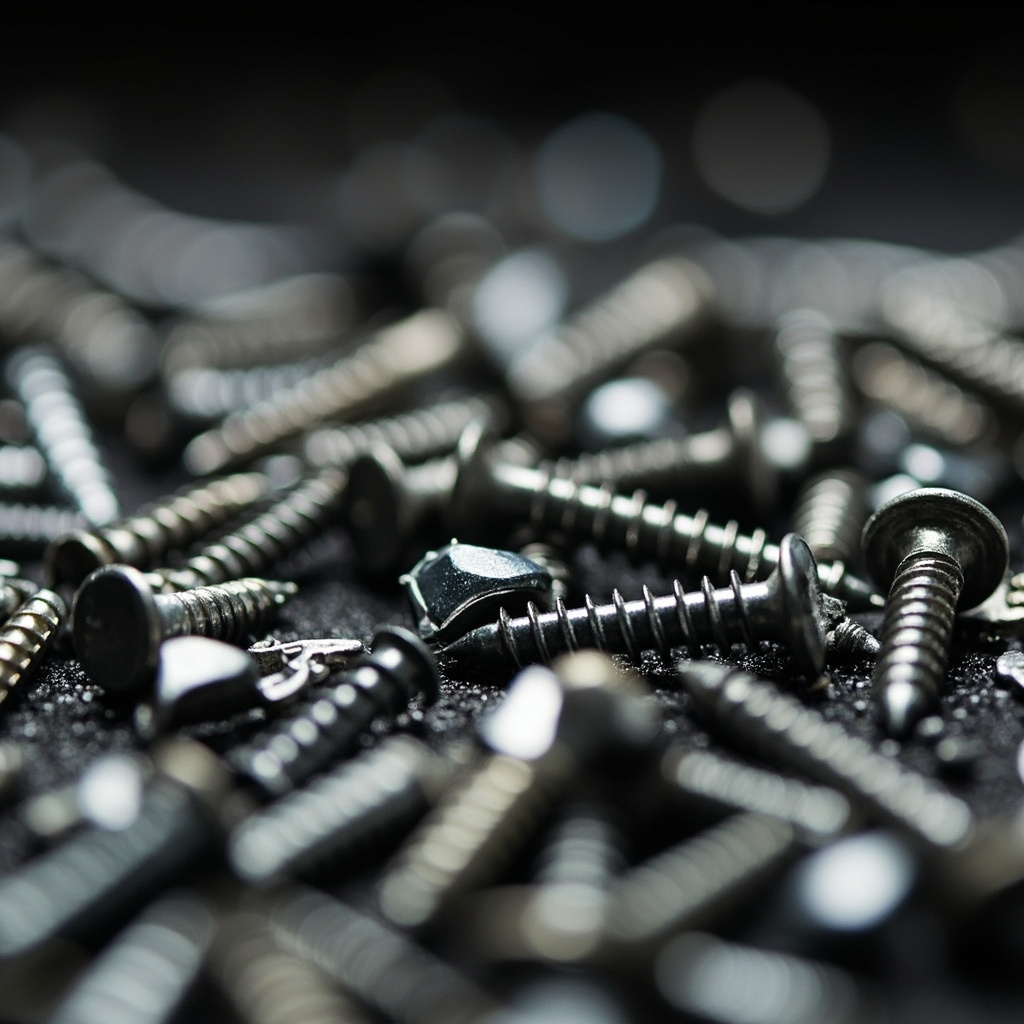
Complete guide to self tapping screws: 304 stainless, galvanized, pan head, drill tail, <a href="/products#<a href="/products#washers".
What Are Self Tapping Screws?
Self tapping screws(also called thread-forming or thread-cutting screws) create their own mating thread in the母材 as they are installed—no pre-drilling or tapping required. There are two main types: Thread-forming screws (Type AB, Type B, Type BF) displace母材 material as they enter, creating threads in ductile materials like sheet metal, plastics, and thin aluminum. These require a pilot hole but form a tight thread lock. Thread-cutting screws (Type C, Type D, Type F) actually cut threads using a fluted tip that clears chips, making them ideal for harder母材 or through multiple layers. Our comprehensive range includes cross head (Phillips/pozidriv) pan head washer/a>head and hex headself-tapping screws/a>in both 304/316 stainless steeland carbon steel zinc plated Related resources: high-tensile bolts anchor bolts stainless steel fasteners hex bolts lock nuts washers self-drilling screws socket screws.
304 Stainless vs Carbon Steel Self Tapping Screws
304 stainless steelself tapping screwsprovide excellent corrosion resistance for outdoor, marine, and chemical environments. The addition of 18% chromium creates a passive oxide layer that self-repairs in oxygenated environments. For coastal construction, swimming pools, or chemical plant applications, specify 316 stainless which adds 2-3% molybdenum specifically to combat chloride attack. Carbon steel self tapping screwswith zinc plating (typically 5-8 microns) are suitable for indoor applications or temporary structures where cost is the primary driver. HDG (hot-dip galvanized) carbon steel offers improved outdoor life at moderate cost. Always match the screw material to the母材 to prevent galvanic corrosion—stainless screws with aluminum母材, or zinc-plated screws with steel.
Pan Head vs Washer Head Self Tapping Screws
Pan headself tapping screws have a low rounded head with a large bearing surface, making them ideal for attaching thin sheet metal or plastic components where a flush fit is needed. The washer/a>head(also called EPDM face screw or bonded seal screw) features an integrated rubber washers/a>" class="text-primary-600 hover:text-primary-800 underline underline-offset-2">washer/a>(typically EPDM) that creates a weatherproof seal at the screw head—critical for metal roofing, wall cladding, and exterior insulation board applications. Anti slip washer/a>headscrews have a serrated washers/a>" class="text-primary-600 hover:text-primary-800 underline underline-offset-2">washers/a>-600 hover:text-primary-800 underline underline-offset-2">washer/a>face twashers/a>es into the母材 surface to prevent loosening from vibration. Hex head self tapping screws(also called hex washers/a>600 hover:text-primary-800 underline underline-offset-2">washers/a>" class="text-primary-600 hover:text-primary-8washers/a>ass="text-primary-600 hover:text-primary-800 underline underline-offset-2">washers/a>="/products#washers class="text-primary-600 hover:text-primary-800 underline underline-offset-2">washers/a>ass="text-primary-600 hover:text-primary-800 underline underline-offset-2">washer/a>erline underline-offset-2">washers/a>ass="text-primary-600 hover:text-primary-800 underline underline-offset-2">washers/a>="/products#washers class="text-primary-600 hover:text-primary-800 underline underline-offset-2">washers/a>ass="text-primary-600 hover:text-primary-800 underline underline-offset-2">washer/a>/a> head) accept standard hex wrenches for high-torque installation and are common in roofing and siding applications.
Self Tapping Screws for Exterior Wall Insulation and Color Steel Roof
For exterior wall insulationsystems (EIFS, ETICS), specialized long self tapping screwswith large plastic disc washers/a>" class="text-primary-600 hover:text-primary-800 underline underline-offset-2">washers/a>(insulation retainers) are used to attach insulation boards to the substrate. The plastic disc (typically 50-60mm diameter) distributes load across the insulation without creating a thermal bridge. washers/a>ary-600 hover:text-primary-800 underline underline-offset-2">Drill tail screws<washers/a> href="/products#self-drilling-screws" class="text-primary-600 hover:text-primary-800 underline underline-offset-2">self drilling screws/a>with extended drill flute) are designed for color steel roofand wall panel installations where the screw must penetrate through both the color steel sheet and any underlying insulation or purlin. The extended drill point (available in #2, #3, #4 drill capacities) ensures clean penetration without damaging the panel coating. EPDM bonded washers/a>" class="text-primary-600 hover:text-primary-800 underline underline-offset-2">washers/a>ass="text-primary-600 hover:text-primary-800 underline underline-offset-2">washers/a>="/products#washers class="text-primary-600 hover:text-primary-800 underline underline-offset-2">washers/a>ass="text-primary-600 hover:text-primary-800 underline underline-offset-2">washers/a>/a> are essential for weather sealing in both applications.
Self Locking and High Strength Self Tapping Screws
Self locking tapping screwsfeature a serrated thread or flange design that provides additional resistance to loosening from vibration. The hex head self lockingvariant combines the high-torque drive capability of hex with locking thread features—common in automotive underbody panels and structural framing. High strength carbon steelself tapping screws in Grade 8.8 or 10.9 equivalent are used where the screw itself must withstand high shear and tensile loads—not just fasten two pieces together but also carry structural load. These are common in solar panel mounting rails and industrial equipment brackets where the fastener/a>is a structural element, not just a connector.
Self Tapping Screw Selection Guide
Content coming soon.
| Type | Drive | Head | Material | Best Application |
|---|---|---|---|---|
| Type AB (Fine-Coarse) | Phillips/Pozi | Pan/Flat/Oval | CS ZP, SS 304/316 | Sheet metal, plastics |
| Type B (Coarse) | Phillips/Pozi | Pan/Truss | CS ZP, SS 304/316 | General purpose, dry wall |
| Self Drilling #2 | Hex/Phillips | Washer Head | CS ZP, SS 410 | Roofing, cladding, steel up to 2.3mm |
| Self Drilling #3 | Hex/Phillips | Washer Head | CS ZP, SS 410 | Roofing, cladding, steel up to 4.0mm |
| Self Drilling #4 | Hex/Phillips | Washer Head | CS ZP, SS 410 | Thick steel, structural connections |
| Insulation Screw | Phillips | Large Plastic Disc | CS ZP, SS 304 | Exterior insulation boards |
Frequently Asked Questions
See frequently asked questions below.
Related resources: high-tensile bolts anchor bolts stainless steel fasteners hex bolts lock nuts washers self-drilling screws socket screws.What is the difference between self tapping and self drilling screws?
Self tapping screws require a pre-drilled pilot hole; the screw only forms threads. Self drilling screws have a built-in drill tip that creates the pilot hole AND forms threads in one step.
What EPDM washer size for color steel roofing screws?
Standard EPDM washer for roofing is 15mm ID × 4mm thick × 35mm OD for M6 screws. For larger screws or insulation applications, 50-60mm OD washers are used.
Get Self Tapping Screw Factory Prices
Request Quote