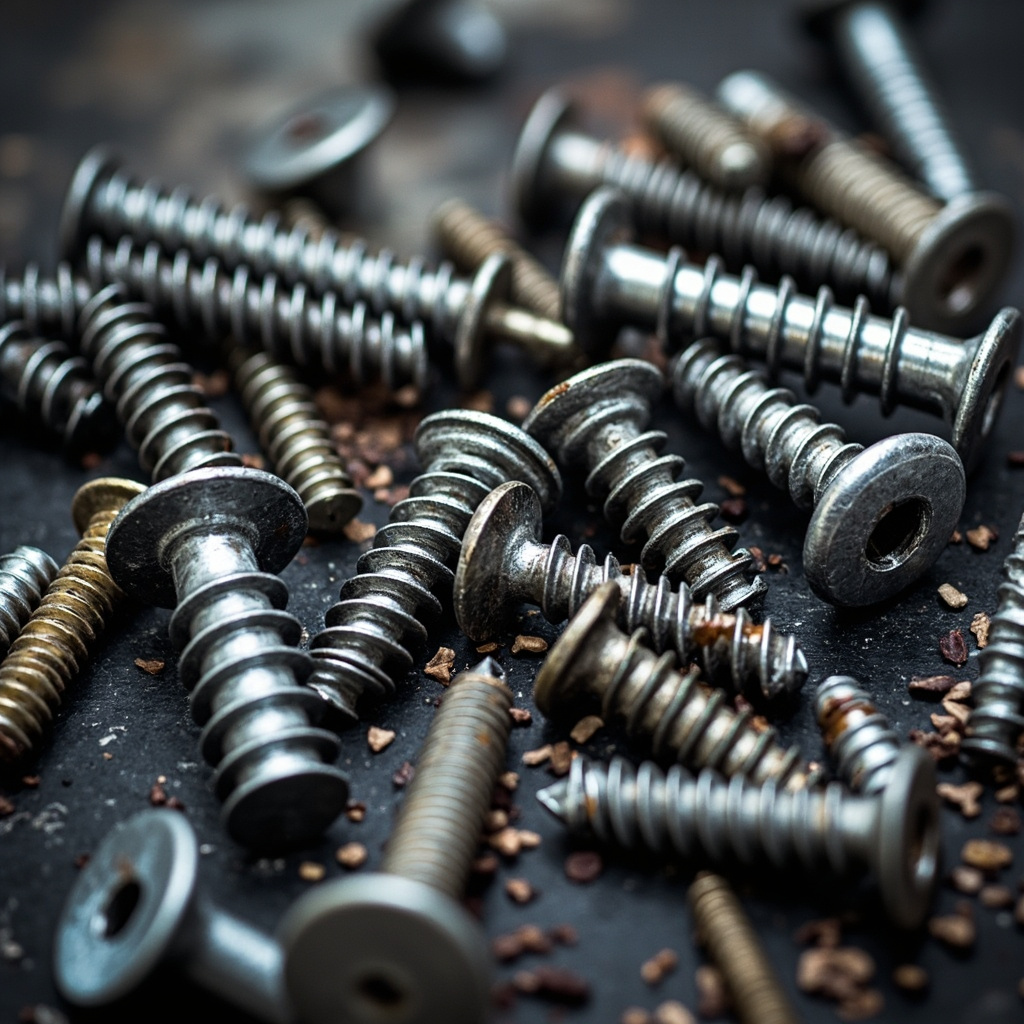
Deep procurement guide for Mozambique LNG fasteners: 13.1 MTPA Afungi project, Maputo port 32Mt throughput, ASTM A320 L7/L43 cryogenic bolting, ISO 3506 A4-80.
Section 1: The $20B Mozambique LNG Opportunity and Why Fastener Selection Will Define EPC Success
Mozambique's LNG sector is no longer a forecast. TotalEnergies' Mozambique LNG project at Afungi, Cabo Delgado, has reached roughly 40% completion as of early 2026, with full project activities restarted on January 29, 2026 after the force majeure lifted in November 2025. The plant is sized for 13.1 million tonnes per annum (MTPA) of LNG, and the first cargo is now expected in 2029. TotalEnergies leads a consortium that includes ENH (Empresa Nacional de Hidrocarbonetos), Mitsui, ONGC, Bharat Petroleum, Oil India, and PTTEP. The project's EPC phase alone involves more than 30,000 tonnes of structural and piping fasteners across cryogenic, process, marine, and structural applications, sourced predominantly from South African, Chinese, and Indian manufacturers. For a B2B buyer — whether a procurement manager at a Tier-1 EPC contractor (Saipem, McDermott, Chiyoda, KBR), a maintenance lead at ENH, or an import distributor in Matola or Maputo — the question is not whether fasteners will be purchased, but whether they will arrive on time, in the right grade, and certified to the standards that Afungi's QA/QC team will physically verify. The wrong B7 stud on a low-temperature LNG pipe flange does not just fail a torque test; it becomes a brittle-fracture liability that can halt a $20B project. This guide maps the engineering requirements, supply-chain reality, and commercial pitfalls of sourcing fasteners for the Mozambique LNG corridor in 2026 — from the DP World terminal in Maputo to the Afungi construction site roughly 1,800 km north. Related resources: high-tensile bolts anchor bolts stainless steel fasteners hex bolts lock nuts washers self-drilling screws socket screws.
Section 2: Why ASTM A193 B7 Is the Wrong Default for LNG — and What to Specify Instead
A widespread mistake in early-stage LNG procurement is specifying ASTM A193 B7 studs across the board because B7 is the "default" high-temperature alloy stud for refineries and power plants. The problem: LNG service operates at approximately -162°C (-259°F). ASTM A193 B7's standard lower service limit is -45°C (-50°F). Going below that without supplementary Charpy V-notch impact testing at -101°C produces a stud that, in the field, can fail by brittle cleavage fracture with no plastic deformation — the textbook cause of LNG storage and piping leaks. The correct specification map for Mozambique LNG: - **Cryogenic bolting (LNG storage tanks, primary liquefaction piping, cold box internals, vaporizers):** ASTM A320 Grade L7 (quenched and tempered alloy steel, mandatory Charpy V-notch impact testing at -101°C) or L7M. For lower temperatures down to LNG itself (-162°C), specify L43 (austenitic stainless, 304/316 chemistry) per ASME B16.5 flange classes. - **General process piping, non-cryogenic (vapor return lines, amine systems, regeneration columns):** ASTM A193 B7 with supplementary S5 impact testing at -45°C is acceptable. B7 is also correct for ASME B16.5 Class 150# through Class 2500# flanges in hydrocarbon service above 0°C. - **Marine and splash-zone bolting (jetty, manifold, FSO mooring):** ASTM A193 B8M (316 stainless, Class 1) or B8M Class 2 for higher strength. Also accept ISO 3506 A4-80 (the metric equivalent of 316) with 16.0–18.5% Cr, 10.0–14.0% Ni, 2.0–3.0% Mo, C ≤ 0.08% per ISO 3506-1. The molybdenum content is non-negotiable: it prevents pitting and crevice corrosion in Mozambique's warm, salt-laden coastal air. - **PTFE- or Xylan-coated bolting (subsea tie-in connectors, methanol injection skids, chemical injection quills):** Specify A193 B7 base stud with PTFE/Xylan 1424 or 1052 topcoat. The coating is not a corrosion workaround; it is the controlled-galling and controlled-makeup system that lets the EPC crew torque up in 35°C salt-spray without seizing. Procurement note: when an RFQ says "B7 or equivalent for LNG," that is a red flag. The correct response is to push back with the temperature map and request a sub-classification. The fastener supplier who knows the difference between L7, L7M, and L43 — and can mill-test to ASTM A370 — saves the EPC a year of field rejection.
Section 3: Maputo Port in 2026 — The Bottleneck No One Talks About
The Port of Maputo, operated by MPDC (Portos de Maputo) with DP World running the container terminal, set a historic throughput record in 2025: **32.0 million tonnes** of cargo, up 3.4% year-on-year from 30.9 Mt in 2024. Rail volumes into the port grew 17% in the same window, from 9.7 Mt to 11.7 Mt, reflecting the deliberate strategy of moving bulk cargo off the EN1 highway and onto the Ressano Garcia and Limpopo rail corridors. For fastener importers, this matters because the **Afungi site is roughly 1,800 km north by road** via the N1 through Xai-Xai, Inhambane, Maxixe, Vilankulo, and Inhassoro — a 3-day truck convoy through territory with limited fuel, intermittent mobile coverage, and security protocols after the Cabo Delgado insurgency (now largely contained as of 2025 but still a Tier-2 risk zone). DP World broke ground on May 1, 2025 on a **$165 million container terminal expansion** that will double capacity from 255,000 TEUs to 530,000 TEUs, extend the quay from 308 m to 650 m, and deepen the berth from 12 m to 16 m — enough to handle post-Panamax vessels of up to 366 m LOA. The concession runs through 2058. The expansion directly benefits fastener importers: palletized, containerized shipments of M8–M36 hex bolts, stud bolts, and structural anchors in 20- and 40-foot containers can now be staged at Maputo for onward barge movement to the Matola oil terminal or rail transfer to the Limpopo line. Operational risks to plan around: - **2025 customs enforcement tightening**: Mozambique now mandates 8-digit HS codes for clearance. Fastener HS code **73.18** (screws, bolts, nuts, coach screws, screw hooks, rivets, cotters, cotter pins, washers and similar articles of iron or steel) covers the category. Threaded articles not elsewhere specified fall under **7318.29.00**. Misclassification — common when Chinese mills code a "stud bolt" as 7307 (tubes) instead of 7318 — will trigger shipment suspension. - **CIF-based duty**: Mozambique calculates customs duty on CIF value. General duty rates range 0–20%, with consumer goods at 20%. Most industrial fasteners land in the 7.5% bracket (the rate applied to 7318.29.00 under EU and SADC agreements). VAT 16% is applied on top, plus a 2.5% Tax on Sustainable Commerce (TSA). - **SADC origin optimization**: As a SADC member, Mozambique grants preferential duty reductions of 0–25% versus MFN rates for goods meeting SADC Rules of Origin and accompanied by a SADC Certificate of Origin. South African mills that hold SADC origin automatically qualify; Chinese mills do not, but South African warehouses and consolidators (Cozens, Trident, Robor) can re-issue with origin documentation if the Chinese mill is the actual production source and the SA warehouse performs "substantial transformation" (re-packaging alone does not qualify; re-machining, thread-rolling, or zinc-flake coating does).
Section 4: Sourcing from China — What the Afungi QA Team Will Check
Chinese fastener exports into SADC and Mozambique LNG-adjacent projects run on three certification tracks. Knowing which one the EPC accepts upfront saves three to six months of approval cycle. 1. **Mill Test Certificate (MTC) to EN 10204 3.1**: Issued by the mill's quality department, independent of production. Required for all pressure-containing and load-bearing bolting. The MTC must show heat number, chemical analysis (C, Mn, Si, S, P, Cr, Mo, Ni, V for alloy grades), mechanical properties (tensile, yield, elongation, hardness), and for cryogenic grades, Charpy impact energy at the specified test temperature. Chinese mills such as LISI, Fortune, Tongcheng, and QFC routinely provide 3.1 certificates; small trading houses do not. 2. **Third-party inspection (TPI) report to ISO 17020**: Saipem, McDermott, Chiyoda, and KBR each maintain approved Third-Party Inspector lists. For Mozambique LNG, the most-cited TPIs are SGS, Bureau Veritas, TÜV Rheinland, and Intertek. The TPI agent visits the mill before shipment, witnesses heat-treatment, performs dimensional sampling, and issues a release note. Without TPI, the cargo will not be unloaded at Matola. 3. **Project-specific approvals**: Some EPCs require a Project Quality Plan (PQP) review and a Manufacturer Quality Plan (MQP) submittal that documents the entire production flow from wire rod to finished fastener. This is a 60–90 day engineering review; lead time is the killer, not price. The China-to-Maputo freight flow typically follows one of three lanes: (a) Shanghai/Ningbo → Singapore → Maputo (24–28 days sea), (b) Shenzhen → Durban → road/rail to Maputo via Golela border (30+ days but consolidates with South African inventory), or (c) Shanghai → Dar es Salaam → road to Mozambique (rare, only for urgent spares). Incoterms that work for the project are FOB Shanghai (EPC arranges ocean freight, often through a project forwarder with LNG-sector expertise) and CIF Maputo (supplier handles ocean + insurance to port, buyer handles duty and inland). DDP Matola is rare because most Chinese mills cannot navigate Mozambican customs without a local agent.
Section 5: Total Cost of Ownership — Why the Cheapest Quote Fails
A 2024 internal review of fastener rejection rates on SADC energy projects found that quotes landing 8–15% below the median typically fail at one of three checkpoints: (1) Charpy impact values not actually tested, only certified on paper; (2) dimensional tolerances out of ISO 4759-1 Product Grade A limits despite the certificate saying "A"; (3) zinc-flake coating thickness below the specified 8–12 µm because the actual deposit was 5 µm. The cost of a single rejected lot — demurrage at Maputo, back-shipment, project schedule slip — is consistently 4–8x the savings on the original quote. The right sourcing model for Mozambique LNG fasteners is the one TotalEnergies' Tier-1 EPCs already use: pre-qualified Chinese mill + South African consolidator with SADC origin + local Matola/Maputo clearing agent. The price is 5–10% above the cheapest quote. The on-time-in-full rate, in field data, runs 95–98% versus 70–80% for direct-from-mill shipments. That gap is the entire profit margin of the project. For EPCs and procurement managers evaluating suppliers now, three immediate actions: 1. **Lock the grade map before RFQ issuance.** Do not let a B7 default leak into cryogenic SKUs. Specify A320 L7/L7M for low-temp and B8M (A4-80) for marine, with B7 only for non-cryogenic flanges. 2. **Insist on witnessed Charpy testing at the mill** for any lot bound for cryogenic service, even if the order is small. The TPI's job is to physically witness the test, not accept a paper certificate. 3. **Stage at Maputo, not Durban.** Maputo's 2025 rail and container capacity upgrades mean a Maputo-cleared shipment can be at the Afungi laydown yard in 7–10 days. Durban adds 4–6 days of cross-border road movement and breaks the SADC origin chain. Related resources: high-tensile bolts anchor bolts stainless steel fasteners hex bolts lock nuts washers self-drilling screws socket screws.
Frequently Asked Questions
Common questions from EPC procurement managers and fastener importers sourcing for the Mozambique LNG corridor.
Need a quote for Mozambique LNG fasteners? Contact TradeGo for TotalEnergies/ENH-approved A320 L7, A193 B7, and A4-80 marine bolting with SADC origin documentation and Maputo customs clearance.
Request Quote