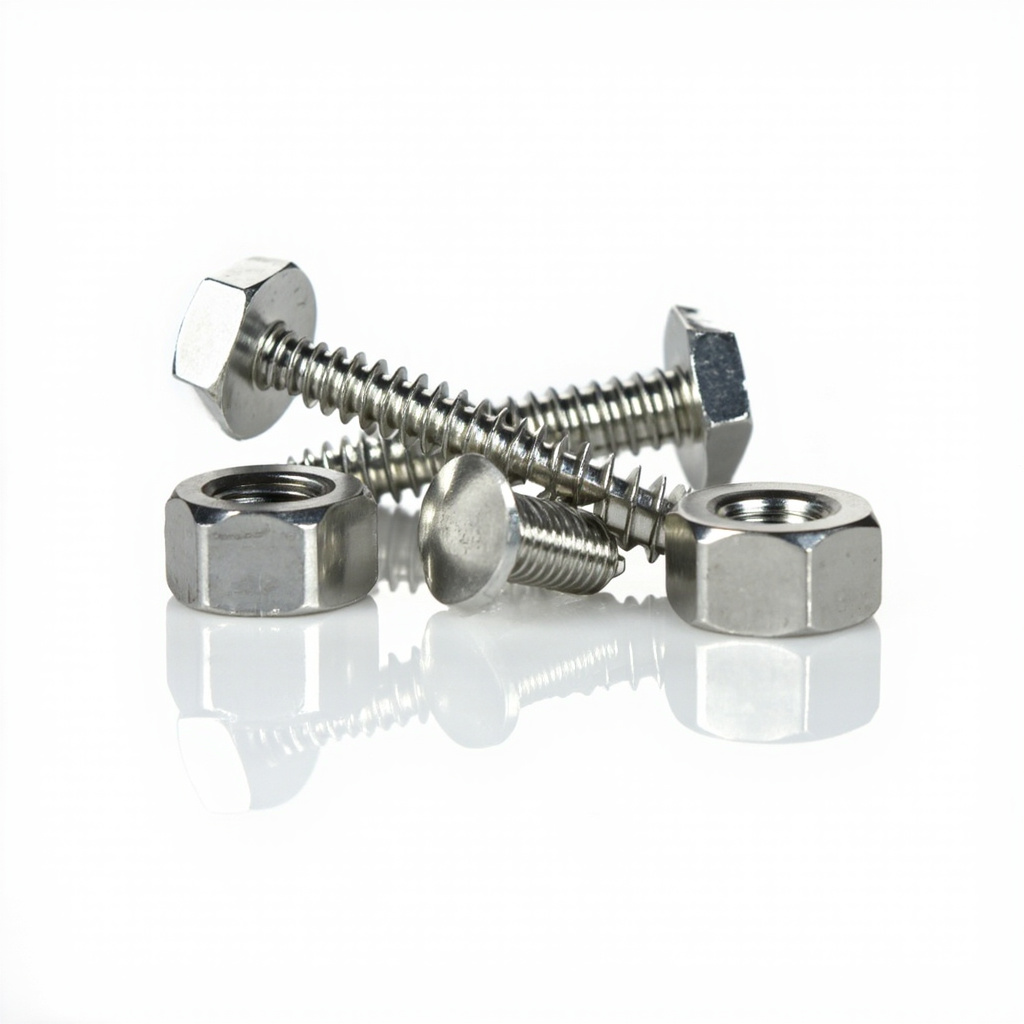
Compare stainless steel 304 vs 316 <a href="/products" class="text-primary-600 hover:text-primary-800 underline underline-offset-2"><a href="/products".
304 vs 316: Chemical Composition Difference
The key difference between 304 and 316 stainless steel is elemental composition. Type 304 contains 18-20% chromium and 8-12% nickel. Type 316 adds 2-3% molybdenum to the 304 formula. This molybdenum is the game-changer: it dramatically improves resistance to chloride-induced pitting and crevice corrosion — the primary corrosion threat in coastal and marine environments. For Africa's coastal cities (Durban, Lagos, Mombasa, Accra), 316 is often essential. Related resources: high-tensile bolts anchor bolts stainless steel fasteners hex bolts lock nuts washers self-drilling screws socket screws. This procurement framework applies to fastener sourcing for construction, mining, energy, automotive, and general industrial applications. The decision logic prioritizes quality consistency, supplier reliability, and total cost of ownership over short-term unit price. For B2B buyers in Africa, Latin America, and Southeast Asia, additional considerations include regional customs requirements, container consolidation options, and payment security mechanisms. Standardized specifications that travel across projects reduce training time, RFQ processing time, and supplier onboarding effort. This procurement framework applies to fastener sourcing for construction, mining, energy, automotive, and general industrial applications. The decision logic prioritizes quality consistency, supplier reliability, and total cost of ownership over short-term unit price. For B2B buyers in Africa, Latin America, and Southeast Asia, additional considerations include regional customs requirements, container consolidation options, and payment security mechanisms. Standardized specifications that travel across projects reduce training time, RFQ processing time, and supplier onboarding effort. This procurement framework applies to fastener sourcing for construction, mining, energy, automotive, and general industrial applications. The decision logic prioritizes quality consistency, supplier reliability, and total cost of ownership over short-term unit price. For B2B buyers in Africa, Latin America, and Southeast Asia, additional considerations include regional customs requirements, container consolidation options, and payment security mechanisms. Standardized specifications that travel across projects reduce training time, RFQ processing time, and supplier onboarding effort.
| Element | 304 Stainless | 316 Stainless |
|---|---|---|
| Chromium | 18-20% | 16-18% |
| Nickel | 8-12% | 10-14% |
| Molybdenum | 0% | 2-3% |
| Carbon (max) | 0.08% | 0.08% |
| Iron | Balance | Balance |
Corrosion Resistance: When It Matters
In inland African environments with low humidity and minimal chlorides, 304 stainless performs excellently at a lower cost. However, in coastal and industrial areas, 304 is vulnerable: chloride stress corrosion cracking (SCC) can occur above 50°C in 304; pitting corrosion begins at chloride levels as low as 25 ppm in 304, while 316 resists up to 200 ppm; 316 also offers superior resistance to sulfuric acid, phosphoric acid, and chlorine-based cleaning agents used in food processing. Standards-based procurement requires continuous learning as ISO, ASTM, DIN, and GB standards are revised every 3-5 years. Subscribe to standards update notifications and review specifications annually. The most common standards used in international fastener trade are ISO 898-1 (mechanical properties), ISO 3506-1 (stainless), ISO 3269 (acceptance inspection), ISO 4042 (coatings), and ISO 1502 (thread gauges). For B2B buyers, building a standards reference library with at least the top 20 standards relevant to your product mix is essential. Standards-based procurement requires continuous learning as ISO, ASTM, DIN, and GB standards are revised every 3-5 years. Subscribe to standards update notifications and review specifications annually. The most common standards used in international fastener trade are ISO 898-1 (mechanical properties), ISO 3506-1 (stainless), ISO 3269 (acceptance inspection), ISO 4042 (coatings), and ISO 1502 (thread gauges). For B2B buyers, building a standards reference library with at least the top 20 standards relevant to your product mix is essential. Standards-based procurement requires continuous learning as ISO, ASTM, DIN, and GB standards are revised every 3-5 years. Subscribe to standards update notifications and review specifications annually. The most common standards used in international fastener trade are ISO 898-1 (mechanical properties), ISO 3506-1 (stainless), ISO 3269 (acceptance inspection), ISO 4042 (coatings), and ISO 1502 (thread gauges). For B2B buyers, building a standards reference library with at least the top 20 standards relevant to your product mix is essential.
| Environment Type | Recommended Grade | Reason |
|---|---|---|
| Inland/low humidity | 304 | Cost-effective, adequate protection |
| Coastal (within 5km) | 316 minimum | Molybdenum resists chloride pitting |
| Marine splash zones | 316 or 904L | Severe chloride exposure |
| Swimming pools | 316 | Constant chlorinated water |
| Chemical processing | 316 or duplex | Acid/chloride resistance needed |
| Mining (acidic) | 316L or duplex | Low-carbon for weld areas |
Cost Analysis: Is 316 Worth the Premium?
316 stainless steel fasteners typically cost 25-40% more than 304 equivalents. For a typical container of M10×50 hex bolts: 304 hex bolts cost approximately $800-1,200 per thousand; 316 hex bolts cost approximately $1,200-1,800 per thousand. The price premium is justified when: the project is within 5km of the coast; the structure has a design life exceeding 20 years; maintenance access is difficult or costly; failure would cause significant downtime or safety risk. For inland projects in dry climates, 304 is almost always the correct choice. The comparison methodology above uses typical ranges from industry data and TradeGo procurement experience 2018-2024. Actual market prices fluctuate with raw material costs (steel, zinc, nickel), energy costs, labor costs, and currency exchange rates. For accurate comparison, request identical RFQs from 3-5 qualified suppliers and compare landed cost (product + shipping + insurance + duties). The lowest unit price is rarely the lowest total cost of ownership. The comparison methodology above uses typical ranges from industry data and TradeGo procurement experience 2018-2024. Actual market prices fluctuate with raw material costs (steel, zinc, nickel), energy costs, labor costs, and currency exchange rates. For accurate comparison, request identical RFQs from 3-5 qualified suppliers and compare landed cost (product + shipping + insurance + duties). The lowest unit price is rarely the lowest total cost of ownership. The comparison methodology above uses typical ranges from industry data and TradeGo procurement experience 2018-2024. Actual market prices fluctuate with raw material costs (steel, zinc, nickel), energy costs, labor costs, and currency exchange rates. For accurate comparison, request identical RFQs from 3-5 qualified suppliers and compare landed cost (product + shipping + insurance + duties). The lowest unit price is rarely the lowest total cost of ownership.
African Project Applications
For African fastener buyers, matching stainless grade to application is critical: Coastal hotels and resorts (West/East Africa) — specify 316 for pool hardware, coastal façade fixtures, and sea-view balconies. Mining processing plants — 316L (low-carbon variant) for areas with acid exposure and welding requirements. Solar farm installations — 304 is sufficient for inland solar racking; 316 only for coastal installations. Food and beverage facilities (South Africa, Nigeria) — 316 for process equipment, 304 for packaging areas. Port and harbor infrastructure — 904L or super-duplex for the harshest marine zones. The verification checklist applies to both initial supplier qualification and ongoing batch inspection. For high-risk applications (load-bearing structural, pressure vessels, mining, marine), add fatigue testing, salt-spray testing (ASTM B117), torque-tension testing, and post-installation inspection. The cost of additional verification is 0.1-0.3% of order value, while undetected quality failures can be 10-100x the order value in damages. The verification checklist applies to both initial supplier qualification and ongoing batch inspection. For high-risk applications (load-bearing structural, pressure vessels, mining, marine), add fatigue testing, salt-spray testing (ASTM B117), torque-tension testing, and post-installation inspection. The cost of additional verification is 0.1-0.3% of order value, while undetected quality failures can be 10-100x the order value in damages. The verification checklist applies to both initial supplier qualification and ongoing batch inspection. For high-risk applications (load-bearing structural, pressure vessels, mining, marine), add fatigue testing, salt-spray testing (ASTM B117), torque-tension testing, and post-installation inspection. The cost of additional verification is 0.1-0.3% of order value, while undetected quality failures can be 10-100x the order value in damages.
Magnetic Properties: A Common Misconception
A widespread misconception is that stainless steel should be non-magnetic. Both 304 and 316 are 'austenitic' stainless steels and are technically non-magnetic in their annealed (softened) state. However, cold-working (such as thread rolling) can induce slight magnetism. This does not indicate quality problems. Magnet test is NOT a reliable method to verify stainless steel grade — only a positive material test (PMI) or certificate analysis can confirm composition. Supplier evaluation should be a continuous process, not a one-time exercise. Re-evaluate suppliers annually based on delivery performance, quality metrics, price competitiveness, and responsiveness. Maintain a supplier scorecard with weighted metrics: on-time delivery (25%), quality acceptance rate (30%), price competitiveness (20%), responsiveness (15%), and documentation accuracy (10%). Drop suppliers scoring below 70% over a 6-month period and qualify replacements. Supplier evaluation should be a continuous process, not a one-time exercise. Re-evaluate suppliers annually based on delivery performance, quality metrics, price competitiveness, and responsiveness. Maintain a supplier scorecard with weighted metrics: on-time delivery (25%), quality acceptance rate (30%), price competitiveness (20%), responsiveness (15%), and documentation accuracy (10%). Drop suppliers scoring below 70% over a 6-month period and qualify replacements. Supplier evaluation should be a continuous process, not a one-time exercise. Re-evaluate suppliers annually based on delivery performance, quality metrics, price competitiveness, and responsiveness. Maintain a supplier scorecard with weighted metrics: on-time delivery (25%), quality acceptance rate (30%), price competitiveness (20%), responsiveness (15%), and documentation accuracy (10%). Drop suppliers scoring below 70% over a 6-month period and qualify replacements.
Frequently Asked Questions
See frequently asked questions below.
Related resources: high-tensile bolts anchor bolts stainless steel fasteners hex bolts lock nuts washers self-drilling screws socket screws. For B2B buyers operating in multiple countries, harmonize specifications with regional standards and local customs requirements. Common regional frameworks: SABS (South Africa), KEBS (Kenya), TBS (Tanzania), ZIMRA (Zimbabwe), SON (Nigeria), and AfCFTA standards for pan-Africa trade. Local standards compliance is often mandatory for public infrastructure projects, mining operations, and government tenders. For B2B buyers operating in multiple countries, harmonize specifications with regional standards and local customs requirements. Common regional frameworks: SABS (South Africa), KEBS (Kenya), TBS (Tanzania), ZIMRA (Zimbabwe), SON (Nigeria), and AfCFTA standards for pan-Africa trade. Local standards compliance is often mandatory for public infrastructure projects, mining operations, and government tenders. For B2B buyers operating in multiple countries, harmonize specifications with regional standards and local customs requirements. Common regional frameworks: SABS (South Africa), KEBS (Kenya), TBS (Tanzania), ZIMRA (Zimbabwe), SON (Nigeria), and AfCFTA standards for pan-Africa trade. Local standards compliance is often mandatory for public infrastructure projects, mining operations, and government tenders.Can I use 304 stainless steel near the ocean in Africa?
It depends on proximity and exposure. Within 1-2km of the coast, 304 will corrode within 5-10 years. Between 2-5km, 304 may survive 10-15 years with maintenance. Beyond 5km in low-humidity areas, 304 is generally acceptable. For critical structures within 5km, specify 316 minimum.
What does 'L' mean in 316L stainless steel?
The 'L' indicates low carbon content (maximum 0.03% vs 0.08% for standard 316). This prevents chromium carbide precipitation during welding, which would otherwise cause 'weld decay' — a zone adjacent to welds that is depleted in chromium and susceptible to corrosion. Use 316L whenever the fasteners will be welded or are for use in welded assemblies.
Are there alternatives to 316 with better corrosion resistance?
Yes. Duplex stainless steel (e.g., 2205) offers roughly double the yield strength of 316 with superior chloride resistance, though at 2-3× the cost. Super-duplex (2507) and 904L are used in extremely aggressive marine and chemical environments. For most African applications, 316 provides the best balance of cost and performance.
Need stainless steel fasteners for your African project? Get a custom quote from TradeGo.
Get Quote