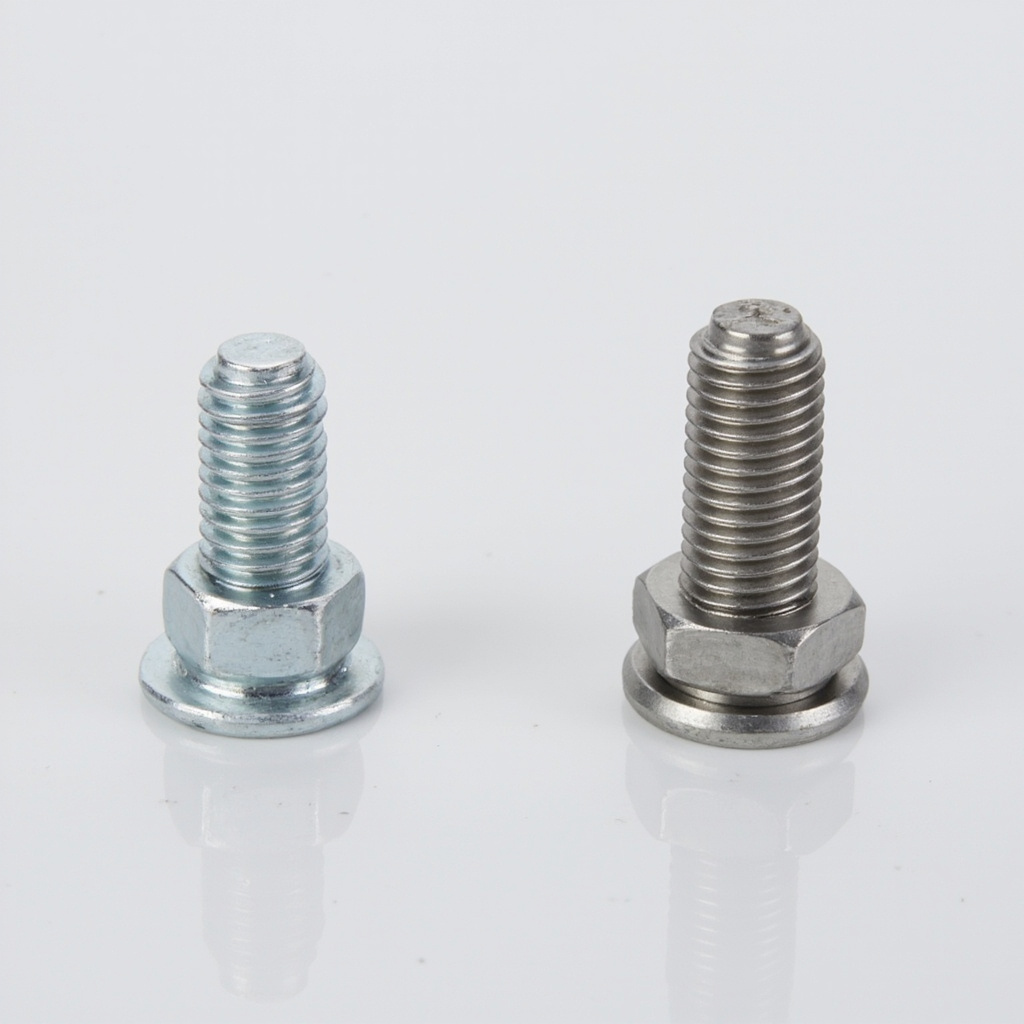
Definitive guide to choosing between galvanized and stainless steel <a href="/products" class="text-primary-600 hover:text-primary-800 underline.
The Wrong Choice Costs 10x More
Selecting the wrong corrosion protection for fasteners has compounding costs. Using zinc-plated screws in a coastal environment means replacement within 2-3 years — at 5-8x the original fastener cost when you factor in labor, downtime, and potential structural damage. Conversely, specifying 316 stainless steel for dry indoor applications wastes 6-8x budget with no performance benefit. This guide provides a systematic decision framework so you specify right the first time. Related resources: high-tensile bolts anchor bolts stainless steel fasteners hex bolts lock nuts washers self-drilling screws socket screws. This procurement framework applies to fastener sourcing for construction, mining, energy, automotive, and general industrial applications. The decision logic prioritizes quality consistency, supplier reliability, and total cost of ownership over short-term unit price. For B2B buyers in Africa, Latin America, and Southeast Asia, additional considerations include regional customs requirements, container consolidation options, and payment security mechanisms. Standardized specifications that travel across projects reduce training time, RFQ processing time, and supplier onboarding effort. This procurement framework applies to fastener sourcing for construction, mining, energy, automotive, and general industrial applications. The decision logic prioritizes quality consistency, supplier reliability, and total cost of ownership over short-term unit price. For B2B buyers in Africa, Latin America, and Southeast Asia, additional considerations include regional customs requirements, container consolidation options, and payment security mechanisms. Standardized specifications that travel across projects reduce training time, RFQ processing time, and supplier onboarding effort. This procurement framework applies to fastener sourcing for construction, mining, energy, automotive, and general industrial applications. The decision logic prioritizes quality consistency, supplier reliability, and total cost of ownership over short-term unit price. For B2B buyers in Africa, Latin America, and Southeast Asia, additional considerations include regional customs requirements, container consolidation options, and payment security mechanisms. Standardized specifications that travel across projects reduce training time, RFQ processing time, and supplier onboarding effort.
Galvanized Fasteners: Types & Performance
Galvanizing applies a zinc coating that sacrifices itself to protect the base steel. Three main methods exist, each with different zinc thickness and performance characteristics. Standards-based procurement requires continuous learning as ISO, ASTM, DIN, and GB standards are revised every 3-5 years. Subscribe to standards update notifications and review specifications annually. The most common standards used in international fastener trade are ISO 898-1 (mechanical properties), ISO 3506-1 (stainless), ISO 3269 (acceptance inspection), ISO 4042 (coatings), and ISO 1502 (thread gauges). For B2B buyers, building a standards reference library with at least the top 20 standards relevant to your product mix is essential. Standards-based procurement requires continuous learning as ISO, ASTM, DIN, and GB standards are revised every 3-5 years. Subscribe to standards update notifications and review specifications annually. The most common standards used in international fastener trade are ISO 898-1 (mechanical properties), ISO 3506-1 (stainless), ISO 3269 (acceptance inspection), ISO 4042 (coatings), and ISO 1502 (thread gauges). For B2B buyers, building a standards reference library with at least the top 20 standards relevant to your product mix is essential. Standards-based procurement requires continuous learning as ISO, ASTM, DIN, and GB standards are revised every 3-5 years. Subscribe to standards update notifications and review specifications annually. The most common standards used in international fastener trade are ISO 898-1 (mechanical properties), ISO 3506-1 (stainless), ISO 3269 (acceptance inspection), ISO 4042 (coatings), and ISO 1502 (thread gauges). For B2B buyers, building a standards reference library with at least the top 20 standards relevant to your product mix is essential.
| Method | Zinc Thickness | Salt Spray | Cost Index | Best For |
|---|---|---|---|---|
| Electro-galvanized | 5-15 μm (Z12-Z27) | 24-72 hrs | 1.0x | Dry indoor only |
| Mechanically galvanized | 15-75 μm (Z60-Z600) | 200-800 hrs | 1.5-2x | Coastal / outdoor |
| Hot-dip galvanized | 45-85 μm (Z275-Z600) | 400-1000 hrs | 1.8-2.5x | Heavy outdoor / marine-adjacent |
Stainless Steel Fasteners: Grades & Performance
Stainless steel fasteners form a self-healing chromium oxide layer that provides inherent corrosion resistance without any coating. The three common grades for fasteners each serve different environments. The comparison methodology above uses typical ranges from industry data and TradeGo procurement experience 2018-2024. Actual market prices fluctuate with raw material costs (steel, zinc, nickel), energy costs, labor costs, and currency exchange rates. For accurate comparison, request identical RFQs from 3-5 qualified suppliers and compare landed cost (product + shipping + insurance + duties). The lowest unit price is rarely the lowest total cost of ownership. The comparison methodology above uses typical ranges from industry data and TradeGo procurement experience 2018-2024. Actual market prices fluctuate with raw material costs (steel, zinc, nickel), energy costs, labor costs, and currency exchange rates. For accurate comparison, request identical RFQs from 3-5 qualified suppliers and compare landed cost (product + shipping + insurance + duties). The lowest unit price is rarely the lowest total cost of ownership. The comparison methodology above uses typical ranges from industry data and TradeGo procurement experience 2018-2024. Actual market prices fluctuate with raw material costs (steel, zinc, nickel), energy costs, labor costs, and currency exchange rates. For accurate comparison, request identical RFQs from 3-5 qualified suppliers and compare landed cost (product + shipping + insurance + duties). The lowest unit price is rarely the lowest total cost of ownership.
| Grade | Chromium | Nickel | Salt Spray | Cost Index | Best For |
|---|---|---|---|---|---|
| A2 (304) | 18% | 8% | 500+ hrs | 4-5x | General outdoor, food processing |
| A4 (316) | 16% | 10% + 2% Mo | 1500+ hrs | 6-8x | Marine, chemical, coastal |
| A5 (316L) | 16% | 10% + 2% Mo (low C) | 2000+ hrs | 7-9x | Welded structures, extreme marine |
Head-to-Head Comparison
When galvanized and stainless go toe-to-toe, the trade-offs are clear. Galvanized wins on cost and mechanical strength. Stainless wins on longevity and zero maintenance. The verification checklist applies to both initial supplier qualification and ongoing batch inspection. For high-risk applications (load-bearing structural, pressure vessels, mining, marine), add fatigue testing, salt-spray testing (ASTM B117), torque-tension testing, and post-installation inspection. The cost of additional verification is 0.1-0.3% of order value, while undetected quality failures can be 10-100x the order value in damages. The verification checklist applies to both initial supplier qualification and ongoing batch inspection. For high-risk applications (load-bearing structural, pressure vessels, mining, marine), add fatigue testing, salt-spray testing (ASTM B117), torque-tension testing, and post-installation inspection. The cost of additional verification is 0.1-0.3% of order value, while undetected quality failures can be 10-100x the order value in damages. The verification checklist applies to both initial supplier qualification and ongoing batch inspection. For high-risk applications (load-bearing structural, pressure vessels, mining, marine), add fatigue testing, salt-spray testing (ASTM B117), torque-tension testing, and post-installation inspection. The cost of additional verification is 0.1-0.3% of order value, while undetected quality failures can be 10-100x the order value in damages.
| Factor | Galvanized | Stainless Steel (304) | Stainless Steel (316) |
|---|---|---|---|
| Cost per 1000 pcs (M8×40) | $45-85 | $180-250 | $280-400 |
| Expected life (inland) | 15-25 years | 50+ years | 50+ years |
| Expected life (coastal) | 5-8 years | 20-30 years | 40+ years |
| Expected life (marine) | 1-3 years | 8-15 years | 30+ years |
| Tensile strength (8.8 equiv) | 800 MPa | 700 MPa (A2-70) | 700 MPa (A4-70) |
| Hydrogen embrittlement risk | Low (HDG) | None | None |
| Magnetic | Yes | Slightly | Slightly |
| Installation damage | Coating can chip | Self-healing | Self-healing |
Decision Framework: 4 Questions to the Right Choice
Question 1: What is the environment? Dry indoor → electro-galvanized. Damp indoor/outdoor → hot-dip galvanized. Coastal (<5km from sea) → 316 stainless. Marine/immersion → 316L stainless minimum. Question 2: What is the service life requirement? <10 years → galvanized is fine. 10-25 years → hot-dip galvanized or 304 stainless. 25+ years → 316 stainless. Question 3: Is structural integrity critical? If bolt failure risks life/safety → stainless with periodic inspection. Galvanized bolts can fail suddenly when zinc is consumed. Question 4: What is the budget reality? If 316 is over budget → mechanical galvanizing (Z600) at 2x cost gives 80% of 304 performance at 40% of the price. Supplier evaluation should be a continuous process, not a one-time exercise. Re-evaluate suppliers annually based on delivery performance, quality metrics, price competitiveness, and responsiveness. Maintain a supplier scorecard with weighted metrics: on-time delivery (25%), quality acceptance rate (30%), price competitiveness (20%), responsiveness (15%), and documentation accuracy (10%). Drop suppliers scoring below 70% over a 6-month period and qualify replacements. Supplier evaluation should be a continuous process, not a one-time exercise. Re-evaluate suppliers annually based on delivery performance, quality metrics, price competitiveness, and responsiveness. Maintain a supplier scorecard with weighted metrics: on-time delivery (25%), quality acceptance rate (30%), price competitiveness (20%), responsiveness (15%), and documentation accuracy (10%). Drop suppliers scoring below 70% over a 6-month period and qualify replacements. Supplier evaluation should be a continuous process, not a one-time exercise. Re-evaluate suppliers annually based on delivery performance, quality metrics, price competitiveness, and responsiveness. Maintain a supplier scorecard with weighted metrics: on-time delivery (25%), quality acceptance rate (30%), price competitiveness (20%), responsiveness (15%), and documentation accuracy (10%). Drop suppliers scoring below 70% over a 6-month period and qualify replacements.
5 Critical Mistakes That Cause Premature Failure
Mistake 1: Mixing galvanized and stainless in the same assembly — galvanic corrosion accelerates zinc loss at contact points. Never pair a galvanized bolt with a stainless nut or vice versa. Mistake 2: Specifying electro-galvanized for outdoor use — the thin zinc layer (5-15μm) lasts only months in rain exposure. Always use hot-dip for outdoor. Mistake 3: Installing galvanized bolts into wet concrete — the alkaline environment accelerates zinc dissolution. Use stainless or epoxy-coated for concrete embedment. Mistake 4: Assuming all stainless is equal — 304 suffers pitting corrosion in chloride environments. Coastal projects MUST use 316 minimum. Mistake 5: Damaging the zinc coating during installation — overtightening with impact wrenches can chip the galvanized layer at threads, creating corrosion initiation points. For B2B buyers operating in multiple countries, harmonize specifications with regional standards and local customs requirements. Common regional frameworks: SABS (South Africa), KEBS (Kenya), TBS (Tanzania), ZIMRA (Zimbabwe), SON (Nigeria), and AfCFTA standards for pan-Africa trade. Local standards compliance is often mandatory for public infrastructure projects, mining operations, and government tenders. For B2B buyers operating in multiple countries, harmonize specifications with regional standards and local customs requirements. Common regional frameworks: SABS (South Africa), KEBS (Kenya), TBS (Tanzania), ZIMRA (Zimbabwe), SON (Nigeria), and AfCFTA standards for pan-Africa trade. Local standards compliance is often mandatory for public infrastructure projects, mining operations, and government tenders. For B2B buyers operating in multiple countries, harmonize specifications with regional standards and local customs requirements. Common regional frameworks: SABS (South Africa), KEBS (Kenya), TBS (Tanzania), ZIMRA (Zimbabwe), SON (Nigeria), and AfCFTA standards for pan-Africa trade. Local standards compliance is often mandatory for public infrastructure projects, mining operations, and government tenders.
Bimetallic Corrosion: The Hidden Killer
When two dissimilar metals are in electrical contact in the presence of moisture, galvanic corrosion occurs. The less noble metal (zinc/steel) corrodes sacrificially while the more noble metal (stainless/copper) is protected. This is devastating when galvanized fasteners contact stainless steel or copper components. For more information, also see our guides on [corrosion resistance](/en/industry/fastener-corrosion-resistance-guide), [coating comparison](/en/industry/zinc-plated-vs-black-phosphate-screws), [roofing applications](/en/industry/roofing-screws-epdm-washer-guide).
| Contact Pair | Risk Level | Acceleration Factor | Mitigation |
|---|---|---|---|
| Galvanized + Stainless | 🔴 High | 5-10x | Insulating washers + sleeve |
| Galvanized + Copper | 🔴 Very High | 10-20x | Never combine |
| Galvanized + Aluminum | 🟡 Medium | 2-3x | Acceptable with isolation |
| 304 Stainless + 316 Stainless | 🟢 Low | 1x | Safe to combine |
| Galvanized + Galvanized | 🟢 None | 1x | Same metal — safe |
Frequently Asked Questions
See frequently asked questions below.
Related resources: high-tensile bolts anchor bolts stainless steel fasteners hex bolts lock nuts washers self-drilling screws socket screws.Can I paint over galvanized fasteners?
Yes, but proper surface preparation is essential. Use a zinc chromate or etching primer designed for galvanized surfaces. Standard primers will peel within months due to zinc's self-healing properties preventing adhesion.
Why do stainless bolts sometimes rust?
Surface contamination (iron particles from manufacturing or installation) can create rust spots on stainless steel. This is not the stainless itself corroding — it's embedded iron rusting. Clean with passivation solution (nitric acid) or specialized stainless cleaner.
Is hot-dip galvanizing safe for high-strength bolts?
For Grade 8.8 and below: yes. For Grade 10.9: proceed with caution — HDG temperatures (450°C) can affect heat treatment. For Grade 12.9: never hot-dip galvanize — use mechanical galvanizing instead.
How do I specify the right galvanizing thickness?
Use the ISO 10684 standard designations: Z275 (275g/m², ~40μm) for general outdoor, Z600 (600g/m², ~85μm) for coastal/marine-adjacent. Always specify by zinc weight (g/m²), not just 'galvanized'.
Need help selecting the right corrosion protection? TradeGo's technical team advises on every project.
Get Technical Advice