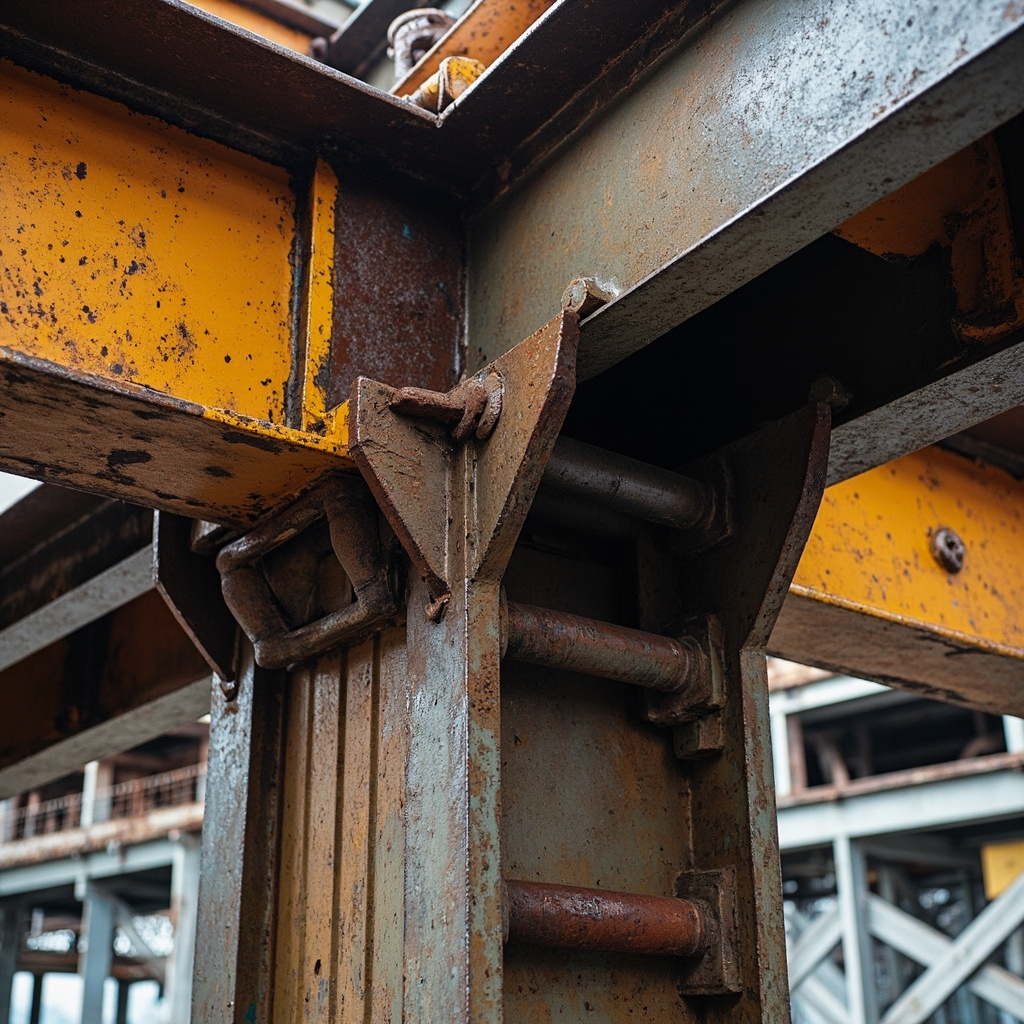
Complete guide to structural steel connection <a href="/products" class="text-primary-600 hover:text-primary-800 underline underline-offset-2"><a.
Types of Structural Steel Connections
Structural steel connections are classified by their load transfer mechanism: Shear connections — transfer only shear force (no moment); the beam end is free to rotate; design assumption: pinned connection; common in simple construction (warehouses, low-rise frames). Moment connections — transfer both shear force and bending moment; the beam end is restrained against rotation; more complex and expensive; used where structural stability requires continuity. Bracing connections — transfer tension or compression forces along diagonal members; used in braced frames for lateral stability; relatively simple design. Base plate connections — transfer loads from column to concrete foundation; anchor bolts (J-bolts or anchor rods) embedded in concrete; the critical interface between structure and foundation. Each connection type has different fastener requirements and design assumptions. Related resources: high-tensile bolts anchor bolts stainless steel fasteners hex bolts lock nuts washers self-drilling screws socket screws. This procurement framework applies to fastener sourcing for construction, mining, energy, automotive, and general industrial applications. The decision logic prioritizes quality consistency, supplier reliability, and total cost of ownership over short-term unit price. For B2B buyers in Africa, Latin America, and Southeast Asia, additional considerations include regional customs requirements, container consolidation options, and payment security mechanisms. Standardized specifications that travel across projects reduce training time, RFQ processing time, and supplier onboarding effort. This procurement framework applies to fastener sourcing for construction, mining, energy, automotive, and general industrial applications. The decision logic prioritizes quality consistency, supplier reliability, and total cost of ownership over short-term unit price. For B2B buyers in Africa, Latin America, and Southeast Asia, additional considerations include regional customs requirements, container consolidation options, and payment security mechanisms. Standardized specifications that travel across projects reduce training time, RFQ processing time, and supplier onboarding effort.
Bolted Splice and End-Plate Connections
Bolted connections in structural steel take several forms: Flange splice (web splice) — connecting two beam ends with flange plates and web plates; uses high-strength hex bolts in bearing-type connections; typically M20 or M24 Grade 8.8 or 10.9. Fin plate connection — a thin end plate welded to one member and bolted to the other; simple to fabricate and erect; uses Grade 8.8 bolts in single shear. End plate (shear end plate) — a plate welded to the beam end, bolted to the connecting member; can be extended for moment resistance if thick enough. Bolted bracket connections — angles or plates bolted to the beam web or flange for shear transfer; common in industrial buildings for crane runway connections. All structural bolting must use structural bolts (ISO 4014/4017, ASTM A325, or equivalent) with proper preload, not ordinary hex bolts. Standards-based procurement requires continuous learning as ISO, ASTM, DIN, and GB standards are revised every 3-5 years. Subscribe to standards update notifications and review specifications annually. The most common standards used in international fastener trade are ISO 898-1 (mechanical properties), ISO 3506-1 (stainless), ISO 3269 (acceptance inspection), ISO 4042 (coatings), and ISO 1502 (thread gauges). For B2B buyers, building a standards reference library with at least the top 20 standards relevant to your product mix is essential. Standards-based procurement requires continuous learning as ISO, ASTM, DIN, and GB standards are revised every 3-5 years. Subscribe to standards update notifications and review specifications annually. The most common standards used in international fastener trade are ISO 898-1 (mechanical properties), ISO 3506-1 (stainless), ISO 3269 (acceptance inspection), ISO 4042 (coatings), and ISO 1502 (thread gauges). For B2B buyers, building a standards reference library with at least the top 20 standards relevant to your product mix is essential.
Preload Requirements for Structural Connections
Structural connections rely on preload (clamp force) to function correctly: In shear connections (bearing-type), preload is not critical — the bolts carry load in bearing; bolts are typically installed to 'snug tight' followed by a partial turn. In friction-type connections (slip-critical), preload is critical — the preload creates friction between the connected plates; bolts are tensioned to 50-75% of proof load; the joint must not slip under design load. For bearing-type shear connections in African construction, the Turn-of-Nut method is most common: Step 1 — snug-tighten all bolts (from center outward, star pattern); Step 2 — mark the nut position; Step 3 — rotate each nut 1/2 turn (for bolts < M24) or 3/4 turn (for bolts M24 and larger). For slip-critical connections, specify Direct Tension Indicators (DTI washers) or calibrated torque wrench to verify preload. The comparison methodology above uses typical ranges from industry data and TradeGo procurement experience 2018-2024. Actual market prices fluctuate with raw material costs (steel, zinc, nickel), energy costs, labor costs, and currency exchange rates. For accurate comparison, request identical RFQs from 3-5 qualified suppliers and compare landed cost (product + shipping + insurance + duties). The lowest unit price is rarely the lowest total cost of ownership. The comparison methodology above uses typical ranges from industry data and TradeGo procurement experience 2018-2024. Actual market prices fluctuate with raw material costs (steel, zinc, nickel), energy costs, labor costs, and currency exchange rates. For accurate comparison, request identical RFQs from 3-5 qualified suppliers and compare landed cost (product + shipping + insurance + duties). The lowest unit price is rarely the lowest total cost of ownership.
Column Base Plate Connections
Column base plates transfer the entire building load to the concrete foundation: Anchor rods (J-bolts, L-bolts) — typically M20 to M36 depending on column size and load; embedded in concrete during pour; must be positioned accurately to match the base plate hole pattern; templates are used during concrete pour. Base plate grouting — after column erection, the space between the plate and concrete is grouted with non-shrink grout; anchor nuts are tightened after grout curing. Anchor rod projection — anchor rods must extend sufficient distance above the concrete surface to accommodate the base plate, washer, and nut; typically 3-5 thread pitches above the nut. Hold-down bolts vs base plates — some designs use embedded plate with welded studs rather than projecting anchor rods; this requires different installation procedure. The verification checklist applies to both initial supplier qualification and ongoing batch inspection. For high-risk applications (load-bearing structural, pressure vessels, mining, marine), add fatigue testing, salt-spray testing (ASTM B117), torque-tension testing, and post-installation inspection. The cost of additional verification is 0.1-0.3% of order value, while undetected quality failures can be 10-100x the order value in damages. The verification checklist applies to both initial supplier qualification and ongoing batch inspection. For high-risk applications (load-bearing structural, pressure vessels, mining, marine), add fatigue testing, salt-spray testing (ASTM B117), torque-tension testing, and post-installation inspection. The cost of additional verification is 0.1-0.3% of order value, while undetected quality failures can be 10-100x the order value in damages.
Specifications for African Structural Steel Construction
For structural steel projects in Africa, the following fastener specifications apply: South African projects — SANS 2001-C2 (structural steelwork erection) and SANS 1431 (high-strength structural bolts) govern; SABS-certified bolts required for main structural connections. East/West African projects — often follow a combination of BS 5950 (UK) or AISC (US) standards for design; ISO 4014/4017 for bolt specifications; material certificates (MTRs) required. Tanzania/Kenya — local standards (KS, TZ Standards) may apply for government projects; international standards accepted for private projects. For all structural connections, verify: bolt grade matches the structural engineer's specification; washers are appropriate for the bolt type and coating; structural bolts are marked with grade (8.8, 10.9) and manufacturer mark; certificates of conformity are available. Supplier evaluation should be a continuous process, not a one-time exercise. Re-evaluate suppliers annually based on delivery performance, quality metrics, price competitiveness, and responsiveness. Maintain a supplier scorecard with weighted metrics: on-time delivery (25%), quality acceptance rate (30%), price competitiveness (20%), responsiveness (15%), and documentation accuracy (10%). Drop suppliers scoring below 70% over a 6-month period and qualify replacements. Supplier evaluation should be a continuous process, not a one-time exercise. Re-evaluate suppliers annually based on delivery performance, quality metrics, price competitiveness, and responsiveness. Maintain a supplier scorecard with weighted metrics: on-time delivery (25%), quality acceptance rate (30%), price competitiveness (20%), responsiveness (15%), and documentation accuracy (10%). Drop suppliers scoring below 70% over a 6-month period and qualify replacements.
Frequently Asked Questions
See frequently asked questions below.
Related resources: high-tensile bolts anchor bolts stainless steel fasteners hex bolts lock nuts washers self-drilling screws socket screws. For B2B buyers operating in multiple countries, harmonize specifications with regional standards and local customs requirements. Common regional frameworks: SABS (South Africa), KEBS (Kenya), TBS (Tanzania), ZIMRA (Zimbabwe), SON (Nigeria), and AfCFTA standards for pan-Africa trade. Local standards compliance is often mandatory for public infrastructure projects, mining operations, and government tenders. For B2B buyers operating in multiple countries, harmonize specifications with regional standards and local customs requirements. Common regional frameworks: SABS (South Africa), KEBS (Kenya), TBS (Tanzania), ZIMRA (Zimbabwe), SON (Nigeria), and AfCFTA standards for pan-Africa trade. Local standards compliance is often mandatory for public infrastructure projects, mining operations, and government tenders.What is the difference between a bearing-type and a friction-type (slip-critical) connection?
In a bearing-type connection, the bolts carry the applied load by bearing against the connected plates — the bolt itself is in shear. The preload (clamp force) doesn't matter as much; the bolt just needs to be snug-tight. In a friction-type (slip-critical) connection, the applied load is transferred by friction between the connected plates, created by the bolt's preload. If the preload is insufficient, the joint slips — causing failure. Slip-critical connections require higher preload (verified by DTI washers or calibrated wrench), and the connected surfaces must be free of paint and mill scale (cleaned to bare metal) to achieve the specified coefficient of friction.
Why do structural bolts have washers under both the head and the nut?
Under the bolt head — distributes the load from the bolt head onto the connected plate, preventing localized bearing stress that could deform the plate; hardened washers are used with high-strength bolts to prevent embedding. Under the nut — serves the same purpose on the other side of the joint; the nut bearing surface is smaller than the head, so the washer is even more important here. For structural connections using high-strength bolts (Grade 8.8, 10.9), hardened washers (to HRC 38-45) are specified for both positions. Using standard (soft) washers with high-strength bolts can cause the washer to deform and lose preload.
What is the maximum bolt spacing in a structural connection?
Bolt spacing is governed by the structural design code (BS 5950, AISC, SANS, etc.) and the design loads. General guidelines: Minimum spacing — not less than 2.5× bolt diameter (to prevent edge splitting); Maximum spacing in tension — not more than 14× t (thinner connected plate) or 200mm; Maximum spacing in compression — not more than 24× t or 300mm; Edge distance — minimum edge distance varies from 1.5D to 2.0D depending on edge condition (sheared, rolled, etc.) and loading direction. Always follow the structural engineer's connection design — these are general guidelines only.
Need structural steel connection fasteners for your project? Get a factory quote from TradeGo.
Get Quote