Complete guide to <a href="/products#threaded-rods" class="text-primary-600 hover:text-primary-800 underline underline-offset-2"><a.
What Is Threaded Rod?
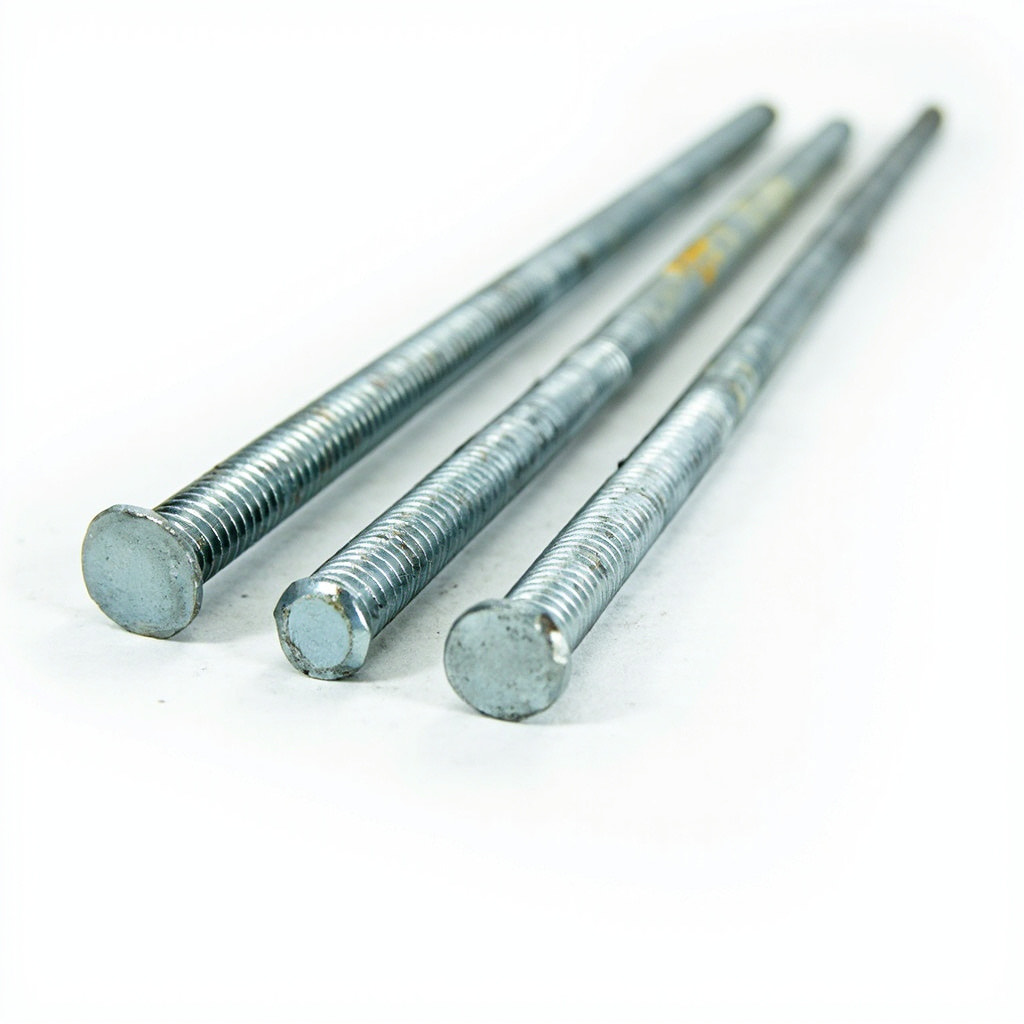
Threaded rod (also called studding or all-thread) is a rod with continuous external threads along its entire length. Unlike conventional bolts, there is no head — both ends can receive nuts, washers, or threaded components. Standard lengths are 1 meter or 3 meters, with diameters from M6 to M42. Threaded rod is the backbone of industrial installations: structural connections, pipe and duct hanging systems, machinery adjustment and leveling, anchor rods for concrete embedding, and custom bolt fabrication. Related resources: high-tensile bolts anchor bolts stainless steel fasteners hex bolts lock nuts washers self-drilling screws socket screws. This procurement framework applies to fastener sourcing for construction, mining, energy, automotive, and general industrial applications. The decision logic prioritizes quality consistency, supplier reliability, and total cost of ownership over short-term unit price. For B2B buyers in Africa, Latin America, and Southeast Asia, additional considerations include regional customs requirements, container consolidation options, and payment security mechanisms. Standardized specifications that travel across projects reduce training time, RFQ processing time, and supplier onboarding effort. This procurement framework applies to fastener sourcing for construction, mining, energy, automotive, and general industrial applications. The decision logic prioritizes quality consistency, supplier reliability, and total cost of ownership over short-term unit price. For B2B buyers in Africa, Latin America, and Southeast Asia, additional considerations include regional customs requirements, container consolidation options, and payment security mechanisms. Standardized specifications that travel across projects reduce training time, RFQ processing time, and supplier onboarding effort. This procurement framework applies to fastener sourcing for construction, mining, energy, automotive, and general industrial applications. The decision logic prioritizes quality consistency, supplier reliability, and total cost of ownership over short-term unit price. For B2B buyers in Africa, Latin America, and Southeast Asia, additional considerations include regional customs requirements, container consolidation options, and payment security mechanisms. Standardized specifications that travel across projects reduce training time, RFQ processing time, and supplier onboarding effort.
Sizes and Material Grades
Threaded rod is available in metric (M6 to M42) and imperial (1/4" to 2") sizes. The most common sizes for African industrial applications are M10, M12, M16, and M20. Material and strength grades mirror standard bolts: Grade 4.8 (mild steel) for light-duty suspension; Grade 8.8 (medium carbon, quenched-tempered) for structural and mechanical use; Grade 10.9 (alloy steel) for high-stress structural connections; Grade 304/316 stainless for corrosion-sensitive applications. Zinc-plated and hot-dip galvanized coatings are standard for indoor and outdoor applications respectively. Standards-based procurement requires continuous learning as ISO, ASTM, DIN, and GB standards are revised every 3-5 years. Subscribe to standards update notifications and review specifications annually. The most common standards used in international fastener trade are ISO 898-1 (mechanical properties), ISO 3506-1 (stainless), ISO 3269 (acceptance inspection), ISO 4042 (coatings), and ISO 1502 (thread gauges). For B2B buyers, building a standards reference library with at least the top 20 standards relevant to your product mix is essential. Standards-based procurement requires continuous learning as ISO, ASTM, DIN, and GB standards are revised every 3-5 years. Subscribe to standards update notifications and review specifications annually. The most common standards used in international fastener trade are ISO 898-1 (mechanical properties), ISO 3506-1 (stainless), ISO 3269 (acceptance inspection), ISO 4042 (coatings), and ISO 1502 (thread gauges). For B2B buyers, building a standards reference library with at least the top 20 standards relevant to your product mix is essential. Standards-based procurement requires continuous learning as ISO, ASTM, DIN, and GB standards are revised every 3-5 years. Subscribe to standards update notifications and review specifications annually. The most common standards used in international fastener trade are ISO 898-1 (mechanical properties), ISO 3506-1 (stainless), ISO 3269 (acceptance inspection), ISO 4042 (coatings), and ISO 1502 (thread gauges). For B2B buyers, building a standards reference library with at least the top 20 standards relevant to your product mix is essential.
| Size | Thread Pitch | Load Capacity (8.8 Grade) | Common Application |
|---|---|---|---|
| M6 | 1.0mm | 500 kg | Light fixtures, signage |
| M8 | 1.25mm | 800 kg | Pipe hanging, HVAC |
| M10 | 1.5mm | 1,200 kg | Structural connections |
| M12 | 1.75mm | 1,800 kg | Heavy pipe, machinery bases |
| M16 | 2.0mm | 3,000 kg | Structural connections, anchor rods |
| M20 | 2.5mm | 4,800 kg | Heavy structural, marine |
| M24 | 3.0mm | 7,000 kg | Heavy machinery, bridge |
| M30 | 3.5mm | 11,000 kg | Structural engineering |
Common Applications in African Projects
Threaded rod is ubiquitous in African construction and industrial projects: Pipe and duct hanging — M10 or M12 threaded rod with channel brackets supports sprinkler systems, water pipes, and electrical conduit in commercial buildings; Structural steel connections — M16/M20 threaded rods with anchor plate embedment act as anchor bolts for column base plates; Suspended ceiling systems — M6/M8 threaded rod with turnbuckle for height adjustment in office and retail; Concrete formwork — M12/M16 used as tension members in formwork撑杆; Solar panel mounting — M12 galvanized threaded rod as ground anchor with concrete pour. The comparison methodology above uses typical ranges from industry data and TradeGo procurement experience 2018-2024. Actual market prices fluctuate with raw material costs (steel, zinc, nickel), energy costs, labor costs, and currency exchange rates. For accurate comparison, request identical RFQs from 3-5 qualified suppliers and compare landed cost (product + shipping + insurance + duties). The lowest unit price is rarely the lowest total cost of ownership. The comparison methodology above uses typical ranges from industry data and TradeGo procurement experience 2018-2024. Actual market prices fluctuate with raw material costs (steel, zinc, nickel), energy costs, labor costs, and currency exchange rates. For accurate comparison, request identical RFQs from 3-5 qualified suppliers and compare landed cost (product + shipping + insurance + duties). The lowest unit price is rarely the lowest total cost of ownership. The comparison methodology above uses typical ranges from industry data and TradeGo procurement experience 2018-2024. Actual market prices fluctuate with raw material costs (steel, zinc, nickel), energy costs, labor costs, and currency exchange rates. For accurate comparison, request identical RFQs from 3-5 qualified suppliers and compare landed cost (product + shipping + insurance + duties). The lowest unit price is rarely the lowest total cost of ownership.
Cutting and Threading Threaded Rod
Threaded rod is typically supplied in 1m or 3m lengths and cut to size on-site. Cutting methods: Hacksaw — for small diameter (M6-M12), use a fine-tooth blade; power hacksaw for production cutting; Angle grinder — fastest method for M12 and larger, use a cut-off wheel; Bandsaw — cleanest cut for precision work and large quantities. Threading: Threaded rod can be extended with couplings (器) and additional threading; for custom lengths, thread the cut end using a die on a pillar drill; always chamfer the cut end before threading to start the die correctly. The verification checklist applies to both initial supplier qualification and ongoing batch inspection. For high-risk applications (load-bearing structural, pressure vessels, mining, marine), add fatigue testing, salt-spray testing (ASTM B117), torque-tension testing, and post-installation inspection. The cost of additional verification is 0.1-0.3% of order value, while undetected quality failures can be 10-100x the order value in damages. The verification checklist applies to both initial supplier qualification and ongoing batch inspection. For high-risk applications (load-bearing structural, pressure vessels, mining, marine), add fatigue testing, salt-spray testing (ASTM B117), torque-tension testing, and post-installation inspection. The cost of additional verification is 0.1-0.3% of order value, while undetected quality failures can be 10-100x the order value in damages. The verification checklist applies to both initial supplier qualification and ongoing batch inspection. For high-risk applications (load-bearing structural, pressure vessels, mining, marine), add fatigue testing, salt-spray testing (ASTM B117), torque-tension testing, and post-installation inspection. The cost of additional verification is 0.1-0.3% of order value, while undetected quality failures can be 10-100x the order value in damages.
Installation Best Practices
Proper installation prevents failure in critical applications: Use matching nuts on both sides — ensure nuts are the same grade as the threaded rod; never use a nut with lower strength rating. For suspended loads, use a clevis end (clevis eye) with a cotter pin instead of bending the rod; bent rod creates stress concentrations. For long vertical runs, provide lateral bracing to prevent buckling; threaded rod has no column strength without support. Apply thread locker (Loctite) for vibrating environments — standard nuts can back off under dynamic loads. Always use flat washers under nuts to protect the bearing surface. Supplier evaluation should be a continuous process, not a one-time exercise. Re-evaluate suppliers annually based on delivery performance, quality metrics, price competitiveness, and responsiveness. Maintain a supplier scorecard with weighted metrics: on-time delivery (25%), quality acceptance rate (30%), price competitiveness (20%), responsiveness (15%), and documentation accuracy (10%). Drop suppliers scoring below 70% over a 6-month period and qualify replacements. Supplier evaluation should be a continuous process, not a one-time exercise. Re-evaluate suppliers annually based on delivery performance, quality metrics, price competitiveness, and responsiveness. Maintain a supplier scorecard with weighted metrics: on-time delivery (25%), quality acceptance rate (30%), price competitiveness (20%), responsiveness (15%), and documentation accuracy (10%). Drop suppliers scoring below 70% over a 6-month period and qualify replacements. Supplier evaluation should be a continuous process, not a one-time exercise. Re-evaluate suppliers annually based on delivery performance, quality metrics, price competitiveness, and responsiveness. Maintain a supplier scorecard with weighted metrics: on-time delivery (25%), quality acceptance rate (30%), price competitiveness (20%), responsiveness (15%), and documentation accuracy (10%). Drop suppliers scoring below 70% over a 6-month period and qualify replacements.
Frequently Asked Questions
See frequently asked questions below.
Related resources: high-tensile bolts anchor bolts stainless steel fasteners hex bolts lock nuts washers self-drilling screws socket screws. For B2B buyers operating in multiple countries, harmonize specifications with regional standards and local customs requirements. Common regional frameworks: SABS (South Africa), KEBS (Kenya), TBS (Tanzania), ZIMRA (Zimbabwe), SON (Nigeria), and AfCFTA standards for pan-Africa trade. Local standards compliance is often mandatory for public infrastructure projects, mining operations, and government tenders. For B2B buyers operating in multiple countries, harmonize specifications with regional standards and local customs requirements. Common regional frameworks: SABS (South Africa), KEBS (Kenya), TBS (Tanzania), ZIMRA (Zimbabwe), SON (Nigeria), and AfCFTA standards for pan-Africa trade. Local standards compliance is often mandatory for public infrastructure projects, mining operations, and government tenders. For B2B buyers operating in multiple countries, harmonize specifications with regional standards and local customs requirements. Common regional frameworks: SABS (South Africa), KEBS (Kenya), TBS (Tanzania), ZIMRA (Zimbabwe), SON (Nigeria), and AfCFTA standards for pan-Africa trade. Local standards compliance is often mandatory for public infrastructure projects, mining operations, and government tenders.Can threaded rod be used as an anchor bolt?
Yes, M16 or M20 threaded rod embedded in concrete (following anchor bolt embedment rules) functions as a cast-in-place anchor. For post-installed anchors, epoxy-bonded threaded rod (using injectable mortar) is a standard solution for equipment bases and structural connections in existing concrete.
What's the difference between fully threaded and partially threaded rod?
Threaded rod (studding) by definition is fully threaded along its length. What is sometimes called 'partially threaded rod' is actually a double-ended bolt (stud) — a bar with threading on both ends and a plain shank in the middle. For most industrial applications (pipe hanging, structural connections), fully threaded rod is correct.
How do I determine the correct length of threaded rod for a connection?
General rule: for a nut-and-washer connection, add the following to the grip length (distance between bearing surfaces): 1x the rod diameter for washer, 1x the rod diameter for nut, plus 2-3 threads of extra length beyond the nut. For critical structural connections, use a calibrated tension indicator or verification method to confirm proper preload.
Need threaded rod for your project? Get a factory quote from TradeGo.
Get Quote