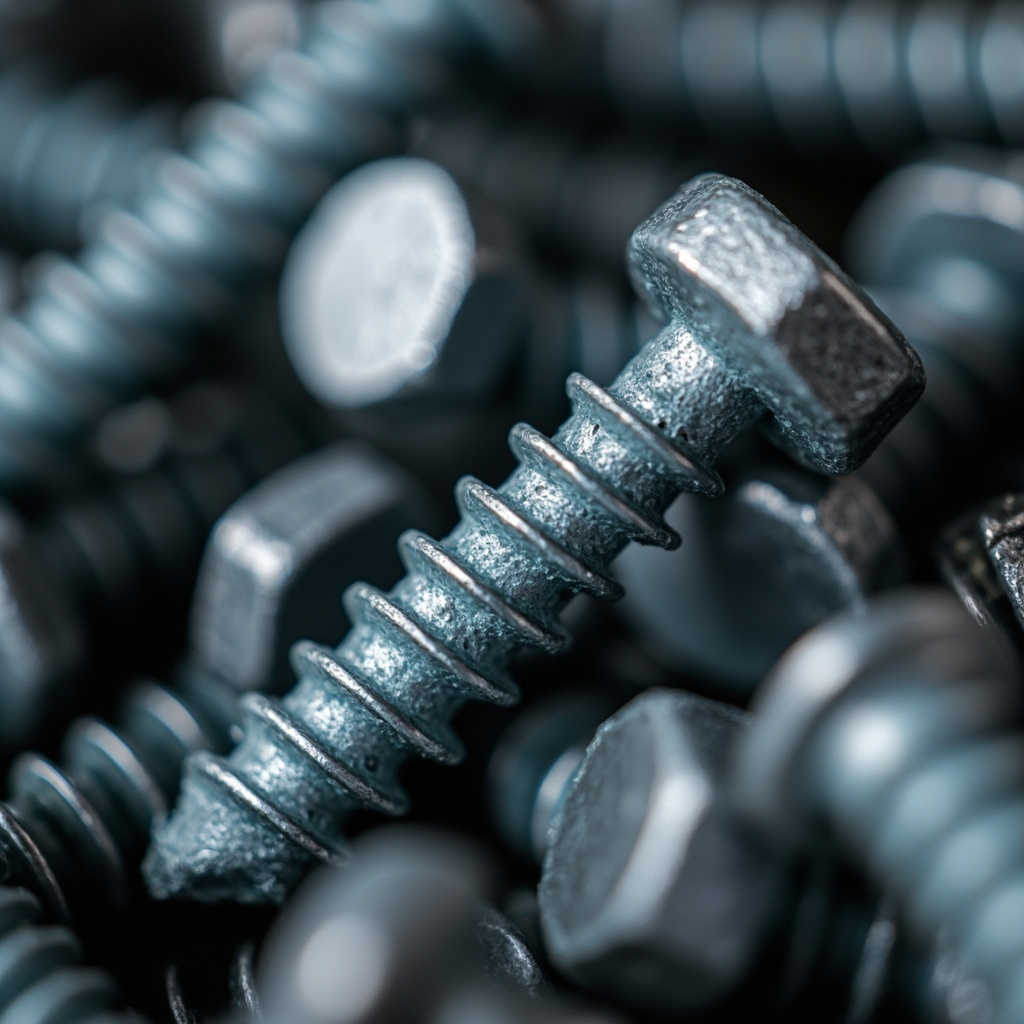
Understand the critical differences between zinc plated and hot-dip galvanized <a href="/products" class="text-primary-600 hover:text-primary-800.
Coating Processes: Electroplating vs Hot-Dip Galvanizing
The fundamental difference between zinc plated and galvanized fasteners/a>lies in how the zinc coating is applied. Zinc plating (electroplating) uses an electrochemical process where the fastener/a>is immersed in a zinc salt solution while an electrical current deposits a thin, uniform layer of zinc onto the steel surface. This process typically produces coatings of 3-15 microns (0.003-0.015mm) thickness. The result is a bright, smooth finish suitable for indoor applications and mild environments. Hot-dip galvanizing, by contrast, involves passing cleaned steel through a bath of molten zinc at approximately 450°C. The zinc metallurgically bonds to the steel, forming multiple zinc-iron alloy layers. This creates a much thicker coating — typically 45-85 microns (0.045-0.085mm) — that is significantly more durable and provides longer-lasting corrosion protection. The hot-dip process is ideal for outdoor applications, harsh climates, and environments with high humidity or salt exposure. Related resources: high-tensile bolts anchor bolts stainless steel fasteners hex bolts lock nuts washers self-drilling screws socket screws. This procurement framework applies to fastener sourcing for construction, mining, energy, automotive, and general industrial applications. The decision logic prioritizes quality consistency, supplier reliability, and total cost of ownership over short-term unit price. For B2B buyers in Africa, Latin America, and Southeast Asia, additional considerations include regional customs requirements, container consolidation options, and payment security mechanisms. Standardized specifications that travel across projects reduce training time, RFQ processing time, and supplier onboarding effort.
| Property | Zinc Plated | Hot-Dip Galvanized |
|---|---|---|
| Coating Process | Electroplating | Immersion in molten zinc |
| Coating Thickness | 3-15 μm | 45-85 μm |
| Salt Spray Resistance | 24-72 hours | 500-1000+ hours |
| Appearance | Bright, smooth | Matte, spangled |
| Cost Premium | Baseline | +40-60% |
| Typical Applications | Indoor, mild climate | Outdoor, harsh environments |
Corrosion Resistance: When Each Option Excels
For construction and mining projects in Africa, the choice between zinc plated and hot-dip galvanized fasteners/a>depends heavily on environmental conditions. In dry indoor environments or controlled climate settings, zinc plated fasteners/a>provide adequate corrosion protection at the lowest cost. However, for outdoor applications in Africa's diverse climates — from the humid tropics of West Africa to the coastal regions of East Africa — hot-dip galvanized fasteners/a>are the clear choice. Zinc plated fasteners/a>typically provide 24-72 hours of salt spray resistance before white corrosion products appear. In contrast, hot-dip galvanized fasteners/a>can withstand 500-1000+ hours of salt spray exposure. This makes galvanized fasteners/a>essential for projects near the coast (Durban, Beira, Dar es Salaam, Mombasa), in high-humidity areas, or anywhere that fasteners/a>will be exposed to regular moisture. For mining applications in Southern Africa, where equipment operates in dusty, variable conditions with occasional water exposure, hot-dip galvanized fasteners/a>provide the durability needed to minimize maintenance and replacement costs. Standards-based procurement requires continuous learning as ISO, ASTM, DIN, and GB standards are revised every 3-5 years. Subscribe to standards update notifications and review specifications annually. The most common standards used in international fastener trade are ISO 898-1 (mechanical properties), ISO 3506-1 (stainless), ISO 3269 (acceptance inspection), ISO 4042 (coatings), and ISO 1502 (thread gauges). For B2B buyers, building a standards reference library with at least the top 20 standards relevant to your product mix is essential.
Cost Analysis: Total Cost of Ownership
While zinc plated fasteners/a>cost 40-60% less than hot-dip galvanized equivalents, the true cost comparison must consider total cost of ownership. Zinc plated fasteners/a>in outdoor African conditions typically require replacement within 2-3 years. Hot-dip galvanized fasteners/a> with their 15-25 year service life in similar conditions, rarely need replacement. For a large-scale construction project using 10,000 fasteners/a> the initial cost difference is approximately $500-1,000 (if galvanized fasteners/a>cost $3 vs $2 each). However, when factoring in labor costs for replacement — often 5-10x the fastener/a>cost due to access difficulties — the economics shift dramatically. A project that requires fastener/a>replacement after 3 years at $5,000-10,000 in labor saves significantly by specifying hot-dip galvanized fasteners/a>from the start. For mining operations in Zimbabwe, Zambia, and South Africa, where equipment maintenance budgets are critical and downtime is expensive, hot-dip galvanized fasteners/a>are the standard specification for any outdoor or moisture-exposed application. The comparison methodology above uses typical ranges from industry data and TradeGo procurement experience 2018-2024. Actual market prices fluctuate with raw material costs (steel, zinc, nickel), energy costs, labor costs, and currency exchange rates. For accurate comparison, request identical RFQs from 3-5 qualified suppliers and compare landed cost (product + shipping + insurance + duties). The lowest unit price is rarely the lowest total cost of ownership.
Application Guidelines for African Projects
Use zinc plated fasteners/a>for: - Indoor electrical enclosures and control panels - Dry storage facilities - Offices and commercial buildings with climate control - Temporary structures - Budget-sensitive projects with short design life Use hot-dip galvanized fasteners/a>for: - Structural steel connections in buildings and bridges - Mining equipment and conveyor systems - Outdoor electrical infrastructure and utility poles - Coastal and marine environments - Water and wastewater treatment facilities - Solar panel mounting systems - Telecommunication towers - Any application with direct weather exposure For Zimbabwe and Southern Africa projects specifically, the Zambia Bureau of Standards (ZABS) and South African National Standards (SANS) both recommend hot-dip galvanizing for any structural fastener/a>used in outdoor or damp environments. The verification checklist applies to both initial supplier qualification and ongoing batch inspection. For high-risk applications (load-bearing structural, pressure vessels, mining, marine), add fatigue testing, salt-spray testing (ASTM B117), torque-tension testing, and post-installation inspection. The cost of additional verification is 0.1-0.3% of order value, while undetected quality failures can be 10-100x the order value in damages.
Frequently Asked Questions
See frequently asked questions below.
Related resources: high-tensile bolts anchor bolts stainless steel fasteners hex bolts lock nuts washers self-drilling screws socket screws. Supplier evaluation should be a continuous process, not a one-time exercise. Re-evaluate suppliers annually based on delivery performance, quality metrics, price competitiveness, and responsiveness. Maintain a supplier scorecard with weighted metrics: on-time delivery (25%), quality acceptance rate (30%), price competitiveness (20%), responsiveness (15%), and documentation accuracy (10%). Drop suppliers scoring below 70% over a 6-month period and qualify replacements.Can zinc plated fasteners be used outdoors in Africa?
Zinc plated fasteners are suitable for short-term outdoor use or in mild climates. For permanent outdoor applications in Africa's diverse environments — especially humid tropical, coastal, or high-rainfall areas — hot-dip galvanized fasteners are strongly recommended to prevent premature corrosion and failure.
What's the price difference between zinc plated and galvanized?
Hot-dip galvanized fasteners typically cost 40-60% more than zinc plated equivalents. However, when considering service life and replacement costs, galvanized fasteners often have a lower total cost of ownership, especially in challenging environments.
Can I weld hot-dip galvanized steel?
Yes, but the zinc coating must be removed in the weld area before welding to prevent toxic zinc fumes. After welding, the area should be repaired with a zinc-rich cold galvanizing compound or zinc spray. For structural applications requiring welding, consider specifying plain steel with field galvanizing after fabrication.
Which is better for Zimbabwe mining applications?
For Zimbabwe mining applications, hot-dip galvanized fasteners are the standard recommendation. The combination of dust, variable moisture, and the need to minimize maintenance downtime makes the extra investment in galvanized fasteners essential for long-term project economics.
Need help choosing the right fastener finish for your project? Contact TradeGo for expert guidance and competitive bulk pricing on both zinc plated and hot-dip galvanized fasteners.
Get Quote