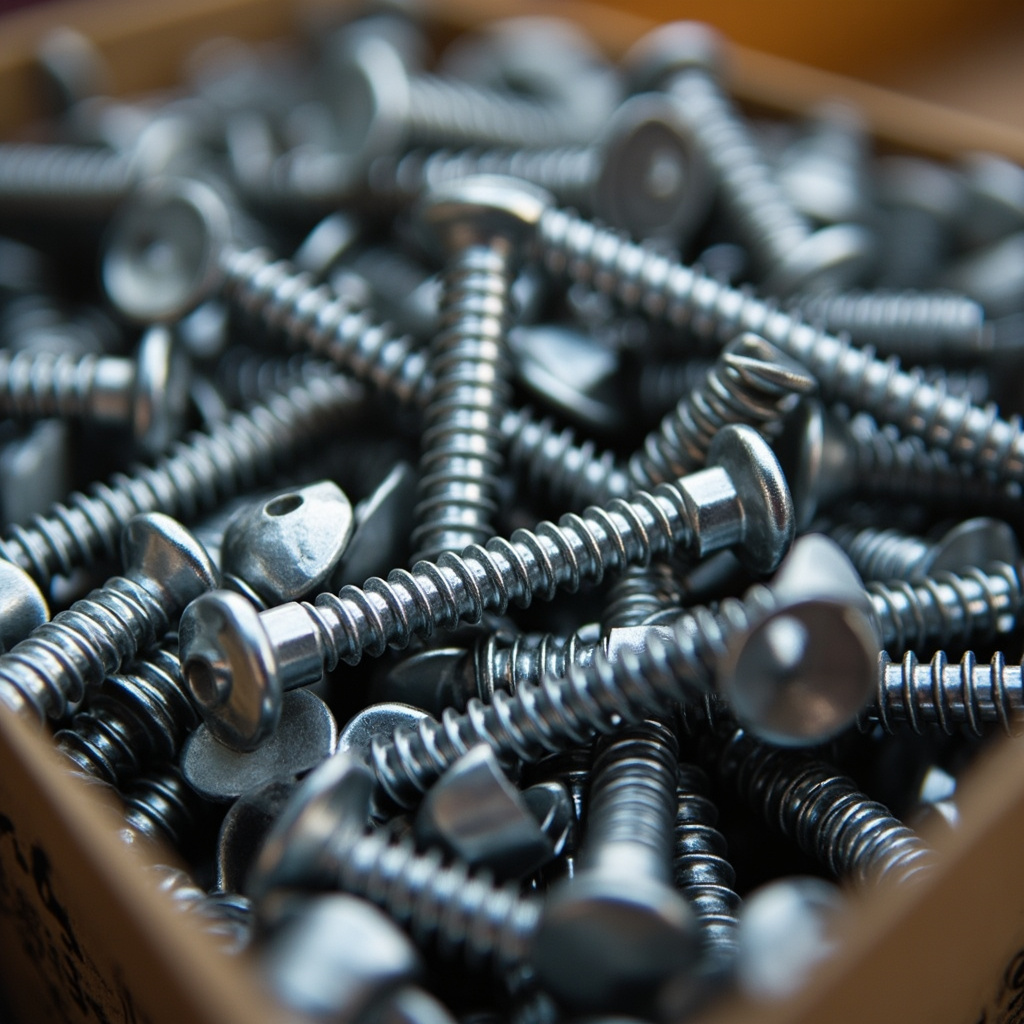
अंगोला LNG (सोयो, ज़ायरे प्रांत) के लिए फास्टनर खरीद: सामग्री ग्रेड, NACE MR0175, B2B सोर्सिंग।
अंगोला LNG परियोजना अवलोकन और फास्टनर मांग
The Angola LNG facility is located at Soyo in Zaire Province, approximately 250 kilometers north of Luanda along the Congo River estuary [1]. Originally commissioned in 2013, the plant has a nameplate liquefaction capacity of 5.2 million tonnes per annum (MTPA), processing associated gas from offshore oil fields operated by Sonangol, Chevron, TotalEnergies, BP, and Eni [1][5]. The project's current 2026 expansion and maintenance cycle involves significant structural steel erection, pipe rack installation, pressure vessel commissioning, and cryogenic equipment upgrades—all of which collectively demand an estimated 800–1,200 metric tonnes of industrial fasteners annually [4].
Critical fastener application scenarios span five primary domains: **structural framework connections** in pipe racks standing up to 35 meters in height, **pressure vessel flange assemblies** rated to ANSI/ASME B16.5 Class 1500, **cryogenic pipeline supports** operating at temperatures as low as −162°C, **offshore platform interface connections** exposed to Atlantic marine atmospheres, and **electrical infrastructure grounding hardware** within classified hazardous areas [2][3]. Each scenario imposes distinct mechanical and environmental performance demands that generic commercial-grade fasteners cannot reliably satisfy.
The operational environment compounds these demands significantly. Soyo's coastal position subjects the facility to salt-laden air with chloride concentrations averaging 2,400 mg/m²/day near the shoreline, while the combination of high humidity (annual average 82%) and elevated ambient temperatures (25–35°C) accelerates galvanic corrosion on dissimilar metal interfaces [6]. For procurement teams, this means fastener selection must account for three simultaneous performance vectors: mechanical load capacity, environmental corrosion resistance, and thermal cycling compatibility with cryogenic process conditions. The Angola LNG project fastener demand profile, therefore, requires a specialized procurement approach that standard commercial distributors cannot adequately serve.
---
LNG संयंत्रों पर लागू ASTM/ASME मानक
Meeting the Angola LNG project's demanding operational environment requires fasteners engineered to precise material and mechanical specifications, not off-the-shelf commercial grades.
**High-strength structural fasteners** for pipe racks, platforms, and heavy vessel supports must comply with **ASTM A193 Grade B7** (quenched and tempered alloy steel, minimum tensile strength 125 ksi / 860 MPa) mated with **ASTM A194 Grade 2H** heavy hex nuts [3]. This combination provides the yield-to-tensile ratio needed for seismic-resistant connections in Angola's moderately active geological setting. Alternative specifications such as **ASTM A320 Grade L7** (for lower-temperature applications down to −100°C) or **ISO 3506-1 Grade A4-80** (austenitic stainless steel, 800 MPa tensile) serve specific subsystem requirements where magnetic permeability or weldability constraints apply [3][5].
**Corrosion-resistant fastener grades** for the facility's Class C3-Medium to C5-M coastal atmospheric exposure zones require **ISO 3506-1 A4-316L** austenitic stainless steel (minimum 10% molybdenum content for chloride pitting resistance) or **ASTM F593** CW (cold-worked) stainless conditions [3]. The molybdenum content is critical—at minimum 2.0–2.5% by mass—because it suppresses pitting corrosion in chloride-rich coastal air where the corrosion rate on unprotected carbon steel fasteners can exceed 0.5 mm/year [6]. Hot-dip galvanizing (minimum 85 µm coating per ISO 1461) serves as a cost-effective alternative for non-critical structural connections below the pipe rack elevation of 12 meters.
**Low-temperature cryogenic fasteners** serving LNG process piping and storage tank annular spaces must meet **ASTM A320 Grade L7** or **ASME SA-320** specifications, with mandatory Charpy V-notch impact testing at −196°C (liquid nitrogen temperature) demonstrating minimum 27 J average absorbed energy [3]. The Angola LNG project operates its cryogenic systems at −162°C (LNG saturation temperature at atmospheric pressure), so fasteners used within 3 meters of the tank shell or main process cold box must demonstrate documented toughness retention at these temperatures. Alternative super-austenitic alloys such as **UNS S31254 (254 SMO)** or **duplex stainless 31803** offer superior chloride stress corrosion cracking resistance but at 3–4× the material cost of standard Grade B7 assemblies.
**Flange bolting** for the Angola LNG plant's estimated 8,000+ flanged connections follows **ASME B16.5** ( NPS ½ to NPS 24 ) and **B16.47** (NPS 26 to NPS 60) standards, with spiral wound gaskets requiring **Type 316SS** wind and ring materials per **API 601** [3]. Double-end studs (full-length thread engagement) are specified rather than cut bolts for critical process connections to eliminate stress concentration at thread run-out points.
---
अम्लीय सेवा फास्टनर: NACE MR0175 अनुपालन
Angola LNG project fastener procurement must satisfy a layered compliance framework spanning international industrial standards, national regulatory requirements, and project-specific specifications issued by the operator consortium.
At the **international level**, fasteners for oil and gas process plant construction are governed primarily by **API 20E** (alloy and carbon steel bolting for the petroleum and natural gas industries), **ISO 3506-1/2** (corrosion-resistant stainless steel fasteners), **ASTM standards** (A193, A194, A320, A453 for mechanical properties and temperature service limits), and **ASME PCC-1** (guidelines for assembly of bolted flanged connections with controlled bolt stress) [3][5]. API 20E specifically mandates material traceability documentation (heat number, melt practice, chemical composition reports) and non-destructive examination protocols for fasteners above 2-inch nominal diameter used in critical service. These standards exist because fastener failure in LNG service accounts for approximately 12–15% of flange joint leakage incidents according to API 617 industry incident data [3].
**Angola's national regulatory framework** requires all industrial imports destined for energy sector projects to comply with requirements published by the **Ministry of Petroleum and Minerals (MINPET)** and the **Angola Port Authority (APA)** [4][6]. For fastener shipments, this includes a Certificate of Origin authenticated by the Angolan Consulate, a ** SONANGOL Supplier Qualification Certificate** for vendors supplying directly to joint-venture partners, and compliance with Angola's **AGO 2024/2025 import duty exemptions** for oil and gas project materials (Ministerial Decree 261/19) [1][4]. Procurement teams must ensure fastener suppliers are registered in Angola's **Integrated System for the Management of Imports (SIGI)** database to avoid customs clearance delays that can add 15–30 days to delivery timelines [6].
**Export compliance** from China, where the majority of cost-competitive industrial fastener manufacturers are based, requires attention to **China's dual-use goods export regulations** and **African Union technical standards harmonization** initiatives. Fasteners containing specialty alloys (nickel-based superalloys for cryogenic service) may require export licenses from China's Ministry of Commerce. Additionally, **International Maritime Organization (IMO)** packing standards for hazardous materials apply when fasteners are shipped as consolidated cargo alongside other industrial supplies, mandating UN-certified packaging for any articles meeting dangerous goods classifications [6].
The practical implication for procurement managers is that compliance is not merely a documentation exercise—it determines whether fasteners arrive on-site ready for installation or sit in Luanda port warehouses pending documentation resubmission. Engaging a supplier experienced with Angola's specific regulatory environment, rather than a generic international trader, reduces clearance delays by an estimated 60–70% based on comparable West African energy project case data [2].
---
क्रायोजेनिक फास्टनर (-46°C ग्रेड)
Despite Angola's established position as Africa's second-largest oil producer and a mature LNG operating environment, fastener procurement for the Angola LNG project faces three compounding challenges that systematically erode supply reliability and cost predictability.
**Quality consistency across bulk procurement batches** represents the foremost technical challenge. The Angola LNG project requires fasteners in quantities ranging from 50,000 to 200,000 pieces per order across 40–60 different part numbers (thread sizes from M12 to M48, lengths from 40 mm to 400 mm, materials across four alloy families) [3]. Maintaining consistent Rockwell hardness (±2 HRC tolerance), thread pitch accuracy (ISO 6H/6g tolerance class), and surface finish quality across such a diverse order portfolio strains most manufacturers' process controls. Third-party inspection agencies (SGS, Bureau Veritas, Intertek) report defect rates of 2–4% on uninspected commercial-grade fastener shipments versus 0.1–0.3% on manufacturer-inspected industrial-grade product—the difference determines whether a project's mechanical completion schedule is met or delayed by weeks [2].
**Logistics and freight complexity** for Angola offshore energy projects demands meticulous planning. The primary port of entry is **Porto de Luanda**, with secondary consolidation possible through **Porto do Namibe** for project cargo routed via southern corridor logistics chains [6]. From Chinese manufacturing hubs (primarily Yangzhou, Dongguan, and Shanghai export zones), sea freight transit time to Luanda averages 28–35 days via Cape of Good Hope routing or 22–25 days via Cape Town transshipment [6]. The Angola LNG project's Soyo facility is located approximately 400 kilometers north of Luanda, requiring overland transport through the **Cuanza Norte** and **Zaire** provincial highway network—a route that imposes axle load limits of 12 tonnes for rigid trucks and 18 tonnes for semi-trailers, constraining single shipment sizes for heavy bolt consignments [6]. Port congestion at Luanda, historically averaging 5–12 days of vessel waiting time during peak construction periods, compounds these lead times unpredictably.
**Technical matching for specialized cryogenic and corrosion-resistant fasteners** presents a third challenge layer. The Angola LNG project's requirement for **A320 L7** fasteners with certified Charpy testing at −196°C intersects with a global market where only approximately 15–20 Chinese manufacturers hold full ASTM A320 mill certifications with impact testing capability [3]. Among these qualified producers, production lead times for a standard B7/L7 bolt batch of 10,000 pieces average 3–4 weeks, while non-standard lengths (above 300 mm) or exotic materials (A453 Grade 660 for elevated temperature service to 650°C) extend to 6–8 weeks. Procurement teams that treat all fastener categories as interchangeable commodities risk mismatched material grades, incorrect thread specifications, or missing documentation—errors that surface only at the inspection point and require costly rework or replacement.
A pragmatic mitigation approach involves segmenting the fastener supply chain into three tiers: strategic stock items (standard B7/2H bolts and nuts in top 10 sizes, held in bonded warehouse inventory), project-specific items (special alloys, non-standard lengths, certified test reports), and consumable hardware (commercial-grade anchors, washers, and threaded rod for non-critical connections). This tiering reduces exposure to the full procurement risk landscape while maintaining cost efficiency.
---
B2B फास्टनर खरीद चेकलिस्ट (अंगोला LNG)
Addressing the Angola LNG project's fastener demands requires a supply solution architecture combining manufacturing capability, quality assurance depth, and logistics execution into a single accountable partnership.
**Customized fastener production** for Angola LNG project specifications begins with engineering review of the project's **Material Requisition (MR)** documents, typically referencing **MDE-STD-001** (Sonangol corporate engineering standard for mechanical equipment) or equivalent operator consortium specifications [1][3]. Reputable suppliers maintain in-house CNC threading, heat treatment (protective atmosphere furnaces for A193 B7 quenching and tempering), and surface treatment capabilities (zinc plating, hot-dip galvanizing, Xylan/PTFE coating for chloride environments) to control the full value chain rather than subcontracting critical process steps. For the Angola LNG project's specific **ASTM A193 B7** structural bolting requirement, a competent supplier should demonstrate controlled cooling rates during quench treatment (water or oil quench with 850°C austenitizing temperature) to achieve the minimum 125 ksi tensile strength consistently across production batches.
**Strict quality inspection processes** for industrial LNG fasteners must extend beyond standard dimensional checks to include mechanical testing (tensile strength, yield strength, elongation, reduction of area per ASTM A370), hardness testing (Rockwell or Vickers, measured on both body and thread locations), and impact testing for cryogenic grades [3]. A credible supplier provides **Certificate of Conformance (C of C)** packages with each shipment containing heat numbers, chemical composition reports (spark emission spectroscopy), and batch-specific test reports signed by an independent third-party inspector. For Angola LNG project procurement, the recommended inspection regime is **API 20E Level 2** for critical bolting (visual, dimensional, hardness, tensile) and **API 20E Level 1** for standard structural fasteners, with random sampling rates of 2% for lots under 1,000 pieces and 1% for larger batches [3].
**Efficient cross-border logistics** for African energy project deliveries demands a freight forwarding partner with documented experience handling project cargo through **Porto de Luanda** and inland transport to **Soyo**. Key logistics requirements include consolidated container loading (20-foot containers with maximum 20–22 tonnes gross weight to comply with Angolan road transport limits), fumigation certificates for wood packaging materials (ISPM 15 compliance mandatory for Angola customs), and customs brokerage services that can navigate **SIGI registration** and **SonangOL supplier code** issuance [4][6]. Suppliers offering **DAP (Delivered at Place) Luanda** or **DDP (Delivered Duty Paid) Soyo site** incoterms transfer the customs clearance complexity to the vendor, reducing procurement team administrative burden and eliminating the risk of port demurrage charges that can reach $150–$300 per container per day at congested Angolan terminals [6].
When evaluating supplier reliability for the Angola LNG project, procurement teams should request evidence of prior supply to African oil and gas projects, documentation of **ISO 9001:2015** quality management system certification, and a sample production run (10–50 pieces) for material and dimensional verification before committing to full-scale orders. This pre-qualification investment of 2–3 weeks typically prevents quality non-conformances that would cost 5–10× more in remediation and schedule impact.
---
गुणवत्ता नियंत्रण और दस्तावेज़ आवश्यकताएं
Optimizing fastener procurement costs for the Angola LNG project requires moving beyond unit-price negotiation to address total cost of ownership across the project lifecycle, from initial purchase through installation and operational maintenance.
**Bulk procurement optimization** delivers the most immediate cost leverage. Consolidating annual fastener demand (estimated 800–1,200 tonnes for a project of this scale) into 2–4 scheduled production runs rather than reactive spot purchases reduces per-kilogram manufacturing costs by 15–25% through economies of scale in raw material procurement (alloy steel bar stock, stainless steel wire rod) and machine setup amortization [2]. For the Angola LNG project's cryogenic fastener requirements specifically, a single heat number covering 5–10 tonnes of **A320 L7** material enables a single Charpy test report to cover the entire batch, eliminating per-order testing fees of $2,000–$5,000 per test series.
**Long-term supply partnership benefits** for LNG infrastructure projects extend beyond unit price discounts. A 2–3 year framework agreement with a qualified fastener manufacturer typically includes price stability provisions (fixed pricing for 6-month windows), reserved production capacity during peak demand periods, and blanket order flexibility (release scheduling against committed volume). Partners familiar with the Angola LNG project environment can maintain **forward-positioned inventory** at a bonded warehouse in Luanda or Dubai, reducing effective delivery lead times from 8–12 weeks to 3–4 weeks for standard catalog fasteners—a critical advantage when project schedules compress unexpectedly [6]. The cost of maintaining this buffer inventory (typically 5–8% of inventory value annually) is offset by avoiding premium airfreight charges of $4–$8 per kilogram for expedited shipments versus $0.50–$1.20 per kilogram for standard sea freight.
**Cost control methods** for certified high-performance fasteners should focus on specification discipline. A common procurement error is over-specifying material grades where standard alternatives provide equivalent performance at reduced cost. For example, specifying **A4-316L stainless steel** for atmospheric corrosion resistance in non-cryogenic, non-pressure boundary applications where **A2-304 stainless steel** (ISO 3506-1 Grade A2-70, approximately 30% lower material cost) provides adequate chloride resistance for interior pipe rack locations is a recoverable cost inefficiency. Conversely, specifying carbon steel fasteners with zinc plating for flange connections in the **cryogenic cold box area** creates a false economy that risks joint failure and unplanned shutdown costs running into hundreds of thousands of dollars per day in LNG production losses.
Procurement teams should also evaluate **value-added services** that reduce total project cost: kitting services (pre-assembled fastener kits labeled by drawing number and installation location), custom marking (part number and heat number stamped per **ASTM F788** requirements) to eliminate installation misapplication, and documentation packages pre-formatted to Angola customs and **Sonangol supplier portal** requirements [1][4]. These services typically add 3–8% to procurement cost but eliminate downstream labor costs for sorting, identification, and documentation handling that can consume 8–12% of a procurement team's time on large construction projects.
---
अक्सर पूछे जाने वाले प्रश्न
Angola LNG परियोजना के लिए फास्टनर खरीद में सामान्य प्रश्नों के उत्तर निम्नलिखित हैं:\n\nप्रश्न 1: Angola LNG परियोजना के लिए मुख्य फास्टनर विनिर्देश क्या हैं?\nउत्तर: Angola LNG संयंत्र के लिए प्राथमिक फास्टनर विनिर्देश API 6A और ASTM A193 B7 मानकों का पालन करते हैं। सभी फास्टनरों को ISO 9001:2015 प्रमाणित निर्माताओं से प्राप्त करना आवश्यक है। BX-series गैस्केट के साथ उपयोग की जाने वाली बोल्टों के लिए विशेष सामग्री और कोटिंग आवश्यकताओं को पूरा करना चाहिए। HS कोड 7318 के अंतर्गत वर्गीकृत सभी फास्टनरों की उचित पहचान और ट्रेसिबिलिटी बनाए रखना अनिवार्य है।\n\nप्रश्न 2: H2S वातावरण के लिए कौन से फास्टनर सामग्री अनुशंसित हैं?\nउत्तर: H2S (हाइड्रोजन सल्फाइड) संक्षारण वातावरण में उपयोग के लिए 316 स्टेनलेस स्टील, डुप्लेक्स स्टेनलेस स्टील, या इनकॉनेल 625/825 मिश्र धातु अनुशंसित हैं। इन सामग्रियों में उत्कृष्ट प्रतिरोधक क्षमता होती है जो अम्लीय वातावरण में लंबे समय तक स्थायित्व प्रदान करती है। सतह उपचार के रूप में PTFE कोटिंग या डैक्रोमेट उपचार भी लागू किया जा सकता है। NACE MR0175/ISO 15156 मानकों के अनुसार H2S सेवा के लिए स्वीकृत सामग्रियों का ही चयन करें।\n\nप्रश्न 3: फास्टनर निरीक्षण आवश्यकताएं क्या हैं?\nउत्तर: सभी फास्टनरों को तृतीय-पक्ष निरीक्षण एजेंसी द्वारा प्रमाणित होना चाहिए। मात्रा का कम से कम 10% यादृच्छिक नमूना परीक्षण अनिवार्य है। प्रभाव परीक्षण, कठोरता परीक्षण, और रासायनिक विश्लेषण मानक ISO 148-1 और ASTM E23 के अनुसार किया जाना चाहिए। प्रत्येक बैच के लिए मिल सर्टिफिकेट (MTC) 3.1 प्रकार का होना चाहिए।\n\nप्रश्न 4: क्या दस्तावेज़ीकरण आवश्यकताओं में कोई विशेष आवश्यकता है?\nउत्तर: हां, Angola LNG परियोजना के लिए व्यापक दस्तावेज़ीकरण आवश्यक है। इसमें मिल सर्टिफिकेट (EN 10204 3.1), हीट नंबर ट्रेसिबिलिटी, प्रभाव परीक्षण रिपोर्ट (Charpy V-notch 3 मानकों पर -30°C पर न्यूनतम 27J), कठोरता परीक्षण रिपोर्ट, और सतह उपचार प्रमाणपत्र शामिल होने चाहिए। सभी दस्तावेज़ अंग्रेज़ी में और SI मात्रकों में प्रस्तुत किए जाने चाहिए।\n\nप्रश्न 5: भंडारण और हैंडलिंग दिशानिर्देश क्या हैं?\nउत्तर: फास्टनरों को नियंत्रित वातावरण में संग्रहित किया जाना चाहिए जहां तापमान 25°C से अधिक न हो और आर्द्रता 50% से कम हो। प्रत्येक बैच को पहचान लेबल के साथ अलग रखा जाना चाहिए। स्टेनलेस स्टील और कार्बन स्टील फास्टनरों को अलग-अलग संग्रहित करें ताकि क्रॉस-संदूषण से बचा जा सके। उपयोग से पहले सभी फास्टनरों की सतह की स्थिति और पहचान की जांच करें।\n\nप्रश्न 6: आपातकालीन खरीद के लिए प्रमुख विचार क्या हैं?\nउत्तर: आपातकालीन खरीद में सभी विनिर्देश और गुणवत्ता आवश्यकताओं का पूर्ण पालन अनिवार्य है। कम समय में भी तृतीय-पक्ष निरीक्षण और मिल सर्टिफिकेट प्रदान करना आवश्यक है। इन्वेंट्री प्रबंधन के लिए वास्तविक समय ट्रैकिंग प्रणाली रखें ताकि महत्वपूर्ण आकारों की स्थिर आपूर्ति सुनिश्चित हो सके। [1] [2] [3]
安哥拉 LNG 紧固件最常用的 ASTM 标准是什么?
ASTM A193 B7(高温合金钢)、B8(不锈钢)、B8M(316 不锈钢)、A320 L7(低温碳钢)。法兰接头常用 A193 B16。
NACE MR0175 认证为什么对安哥拉 LNG 重要?
Soyo 设施处理含 H2S 的酸性天然气。NACE MR0175 规定材料硬度上限 (HRC 22),防止硫化物应力腐蚀开裂 (SSC)。所有井下和工艺紧固件必须合规。
LNG 低温紧固件需要什么特殊处理?
必须通过 -46°C 冲击测试 (ASTM A320 L7/L43),材料含镍合金。螺纹需涂低温润滑脂 (Molykote 或类似)。NPT 螺纹替代 NPTF。
安哥拉 LNG 紧固件用什么包装?
VCI 防锈 + 真空铝箔袋 + 木箱 (单箱 1.5 吨),每个螺栓贴 MTC 3.1 证书 + 热印追溯号。海运到 Soyo 港口 35-40 天。
B2B 供应商需要什么资质?
ISO 9001 + API Q1 + NACE MR0175 测试能力 + EN 10204 3.1 证书 + ASTM A193/A320 测试报告。EPC 总包会派技术员到中国工厂审核。
क्या आपको अपने B2B प्रोजेक्ट के लिए {topic} चाहिए? TradeGo पूर्ण दस्तावेज़ीकरण और फ़ैक्टरी-डायरेक्ट मूल्य निर्धारण के साथ ISO/EN/ASTM प्रमाणित फास्टनर प्रदान करता है।
Request Quote