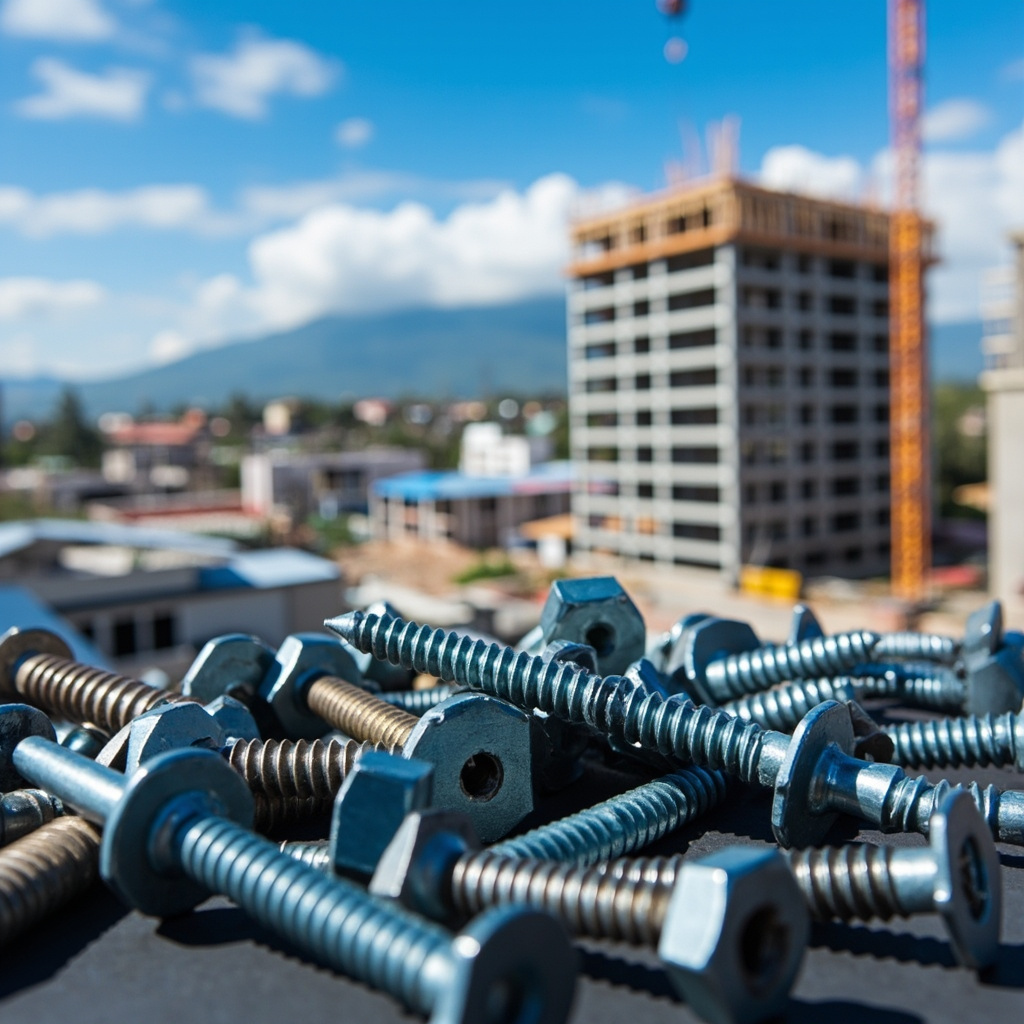
रवांडा निर्माण फास्टनर मानक: ISO 898-1, EN 14399, RSB, MININFRA, EAC किगाली में B2B सोर्सिंग के लिए।
रवांडा निर्माण फास्टनर मानकों का अवलोकन
रवांडा में उपयोग किए जाने वाले निर्माण फास्टनर राष्ट्रीय законодательство, रवांडा मानक बोर्ड (RSB) द्वारा प्रकाशित तकनीकी मानकों, अवसंरचना मंत्रालय (MININFRA) द्वारा प्रशासित भवन नियमों, और पूर्वी अफ्रीकी समुदाय (EAC) के तहत क्षेत्रीय सामंजस्य प्रयासों के संयोजन के माध्यम से विनियमित होते हैं।[1][2][3]
रवांडा मानक बोर्ड राष्ट्रीय मानक प्राधिकरण के रूप में कार्य करता है जो औद्योगिक उत्पादों, जिसमें निर्माण सामग्री भी शामिल है, के लिए तकनीकी विशिष्टताओं को विकसित करने, अपनाने और लागू करने के लिए जिम्मेदार है।[1] कई यांत्रिक फास्टनर आवश्यकताएं अंतरराष्ट्रीय रूप से मान्यता प्राप्त ISO और EN मानकों के साथ संरेखित हैं, न कि अद्वितीय घरेलू विशिष्टताओं के साथ, जो अंतरराष्ट्रीय EPC ठेकेदारों के लिए स्रोतिंग को सरल बनाता है।
प्रमुख सार्वजनिक अवसंरचना परियोजनाओं में सड़कें, पुल, औद्योगिक सुविधाएं, अस्पताल, स्कूल और किफायती आवास विकास शामिल हैं जो आमतौर पर अंतरराष्ट्रीय रूप से स्वीकृत संरचनात्मक फास्टनर मानकों को निर्दिष्ट करते हैं जैसे:
यांत्रिक गुणों के लिए ISO 898-1 कार्बन स्टील बोल्ट
ISO 898-2 नटों के लिए
हेक्साबोल्ट के लिए ISO 4014 और ISO 4017
हेक्स नट के लिए ISO 4032
वाशर के लिए ISO 7089 और ISO 7090
स्टेनलेस स्टील फास्टनर के लिए ISO 3506
उच्च-शक्ति संरचनात्मक बोल्टिंग के लिए EN 14399
ASTM A325/A490 (लीगेसी परियोजनाएं)
ASTM F3125 संरचनात्मक बोल्ट
मान्यता प्राप्त अंतरराष्ट्रीय मानकों का उपयोग करने से गुणवत्ता सत्यापन सरल हो जाता है क्योंकि निरीक्षक निर्माता प्रमाणपत्रों की तुलना वैश्विक रूप से स्वीकृत प्रदर्शन मानदंडों के साथ सीधे कर सकते हैं।
खरीद प्रबंधकों के लिए, अनुपालन पूरे आपूर्ति श्रृंखला में मायने रखता है। गैर-अनुपालन फास्टनर दृश्य निरीक्षण से गुजर सकते हैं लेकिन परियोजना स्वीकृति के दौरान तन्यता परीक्षण, कठोरता सत्यापन, या कोटिंग मोटाई माप में विफल हो सकते हैं। ऐसी विफलताएं कमीशनिंग में देरी कर सकती हैं और महत्वपूर्ण प्रतिस्थापन लागत पैदा कर सकती हैं।
रवांडा का निर्माण क्षेत्र लचीले अवसंरचना और शहरीकरण पर जोर देने वाले राष्ट्रीय विकास कार्यक्रमों के साथ बढ़ा है। सरकारी परियोजनाएं तेजी से प्रलेखित गुणवत्ता आश्वासन, मिल प्रमाणपत्र, ट्रेसिबिलिटी और कारखाना निरीक्षण रिपोर्ट की मांग करती हैं।[2]
खरीद दृष्टिकोण से, खरीदारों को सत्यापित करना चाहिए:
ISO 9001-प्रमाणित विनिर्माण
सामग्री प्रमाणपत्र (जहां निर्दिष्ट EN 10204 3.1)
यांत्रिक परीक्षण रिपोर्ट
कोटिंग परीक्षण रिकॉर्ड
आयामी निरीक्षण रिपोर्ट
बैच ट्रेसिबिलिटी
पूर्वी अफ्रीकी परिवहन स्थितियों के लिए उपयुक्त पैकिंग
ये दस्तावेज़ सीमा शुल्क निकासी और परियोजना वितरण के दौरान निरीक्षण जोखिमों को काफी कम करते हैं।[1][4]
रवांडा निर्माण फास्टनर मानकों के लिए प्रमुख प्रमाणित सामग्री
सामग्री चयन रवांडा निर्माण फास्टनर मानकों का सबसे महत्वपूर्ण पहलू है क्योंकि पर्यावरणीय स्थितियां शहरी निर्माण, पहाड़ी क्षेत्रों, कृषि क्षेत्रों और मौसमी वर्षा के संपर्क में रहने वाले अवसंरचना के बीच काफी भिन्न होती हैं।
सबसे सामान्य स्वीकृत सामग्रियों में शामिल हैं:
कार्बन स्टील
मध्यम कार्बन मिश्र धातु स्टील
बोरॉन स्टील
स्टेनलेस स्टील A2 (304)
स्टेनलेस स्टील A4 (316)
कार्बन स्टील सामान्य संरचनात्मक निर्माण के लिए प्रमुख विकल्प बना हुआ है क्योंकि यह उत्कृष्ट शक्ति-से-लागत प्रदर्शन प्रदान करता है। विशिष्ट संपत्ति श्रेणियों में शामिल हैं:
क्लास 4.8
क्लास 5.8
क्लास 8.8
क्लास 10.9
क्लास 12.9
संरचनात्मक इस्पात कनेक्शनों के लिए, ग्रेड 8.8 पसंदीदा व्यावसायिक समाधान बना हुआ है क्योंकि यह शक्ति, उपलब्धता और स्थापना विश्वसनीयता को संतुलित करता है।
संक्षारण सुरक्षा भी समान रूप से महत्वपूर्ण है।
खरीद प्रबंधक अक्सर जिंक-प्लेटेड फास्टनर की तुलना हॉट-डिप गैल्वनाइज्ड (HDG) विकल्पों से करते हैं।
इलेक्ट्रो-जिंक प्लेटिंग प्रदान करता है:
कम लागत
बेहतर दिखावट
उपयुक्त इनडोर अनुप्रयोग
पतली कोटिंग (आमतौर पर 5-25 μm)
हॉट-डिप गैल्वनाइजिंग प्रदान करता है:
कोटिंग मोटाई सामान्यतः 50 μm से अधिक
श्रेष्ठ संक्षारण प्रतिरोध
लंबी आउटडोर सेवा अवधि
पुलों और उपयोगिता अवसंरचना के लिए बेहतर सुरक्षा
यद्यपि HDG फास्टनर शुरू में अधिक महंगे होते हैं, खुले वातावरण में जीवनकाल रखरखाव लागत काफी कम होती है। दशकों तक काम करने के लिए अपेक्षित सरकारी वित्त पोषित अवसंरचना के लिए, HDG को आमतौर पर इलेक्ट्रोप्लेटेड उत्पादों पर प्राथमिकता दी जाती है।
जहां क्लोराइड एक्सपोजर या आक्रामक औद्योगिक वातावरण मौजूद है, वहां स्टेनलेस स्टील A4 फास्टनर गैल्वनाइज्ड कार्बन स्टील की तुलना में बेहतर प्रदर्शन करते हैं, उच्च खरीद लागत के बावजूद।
सामग्री सत्यापन में आमतौर पर शामिल होता है:
रासायनिक संरचना विश्लेषण
तन्यता परीक्षण
उपज शक्ति परीक्षण
कठोरता परीक्षण
जहां निर्दिष्ट हो प्रभाव परीक्षण
कोटिंग आसंजन सत्यापन
नमक स्प्रे संक्षारण परीक्षण
रवांडा को निर्यात करने वाले निर्माताओं को हर विनिर्माण बैच के लिए पूर्ण उत्पादन रिकॉर्ड बनाए रखने चाहिए। बैच ट्रेसिबिलिटी किसी भी क्षेत्रीय प्रदर्शन समस्या उत्पन्न होने पर त्वरित जांच को सक्षम बनाती है।
अंतरराष्ट्रीय खरीदार तेजी से EN 10204 निरीक्षण प्रमाणपत्रों की मांग करते हैं, विशेषकर बहुपक्षीय विकास एजेंसियों द्वारा वित्तपोषित अवसंरचना के लिए। ऐसे प्रलेखन प्रदर्शित करते हैं कि कच्चे माल और तैयार उत्पाद शिपमेंट से पहले निर्दिष्ट यांत्रिक और रासायनिक आवश्यकताओं को पूरा करते हैं।[1][3][5]
रवांडा निर्माण फास्टनरों के लिए आयामी और प्रदर्शन विशिष्टताएं
आयामी सटीकता संरचनात्मक सुरक्षा के लिए मौलिक है क्योंकि गलत तरीके से निर्मित फास्टनर असमान भार वितरण, अपर्याप्त प्रीलोड, या स्थापना कठिनाइयां पैदा कर सकते हैं।
रवांडा में निर्माण परियोजनाएं आमतौर पर मीट्रिक फास्टनर निर्दिष्ट करती हैं जिनमें शामिल हैं:
M6
M8
M10
M12
M16
M20
M24
M30
M36
थ्रेड टॉलरेंस आमतौर पर आयातित बोल्ट, नट, वाशर और संरचनात्मक इस्पात घटकों के बीच संगतता सुनिश्चित करने के लिए ISO मीट्रिक मानकों का पालन करते हैं।
प्रदर्शन आवश्यकताओं में आमतौर पर शामिल होते हैं:
तन्य शक्ति
विशिष्ट बोल्ट संपत्ति श्रेणियों में शामिल हैं:
संपत्ति श्रेणीन्यूनतम तन्य शक्ति4.8400 MPa5.8500 MPa8.8800 MPa10.91040 MPa12.91220 MPa
अनावश्यक रूप से उच्च-शक्ति फास्टनर का चयन करने से वास्तव में प्रदर्शन में सुधार किए बिना परियोजना लागत बढ़ सकती है। खरीद प्रबंधकों को उच्च ग्रेड हमेशा बेहतर होते हैं यह मानने के बजाय इंजीनियरिंग गणनाओं के अनुसार खरीदना चाहिए।
प्रीलोड स्थिरता एक और महत्वपूर्ण आवश्यकता है।
उच्च-शक्ति घर्षण-ग्रिप कनेक्शन सरल बियरिंग के बजाय उचित बोल्ट तनाव पर निर्भर करते हैं। इसलिए, थ्रेड पिच, शैंक व्यास और नट एंगेजमेंट पर आयामी टॉलरेंस सीधे संरचनात्मक विश्वसनीयता को प्रभावित करते हैं।
एंकर बोल्टों को विशेष ध्यान की आवश्यकता है।
सामान्य एंकर बोल्टों का चयन करने के बजाय, इंजीनियर अक्सर निर्दिष्ट करते हैं:
ASTM F1554 ग्रेड 36
ASTM F1554 ग्रेड 55
ASTM F1554 ग्रेड 105
फैब्रिकेटेड लो-ग्रेड विकल्पों की तुलना में, ASTM F1554 प्रमाणित यांत्रिक गुण और कंक्रीट फाउंडेशन के लिए अनुमान योग्य प्रदर्शन प्रदान करता है।
मौसम प्रतिरोध भी समान रूप से महत्वपूर्ण है।
बाहरी फास्टनरों को लंबे समय तक UV एक्सपोजर, मौसमी वर्षा और बदलती आर्द्रता स्थितियों के तहत कोटिंग अखंडता बनाए रखनी चाहिए। इसलिए, कई गुणवत्ता निरीक्षण प्रक्रियाओं का हिस्सा कोटिंग मोटाई माप, आसंजन परीक्षण और संक्षारण प्रतिरोध मूल्यांकन शामिल हैं।
कारखाना गुणवत्ता नियंत्रण में शामिल होना चाहिए:
थ्रेड गेज निरीक्षण
टॉर्क परीक्षण
प्रूफ लोड परीक्षण
आयामी नमूनाकरण
सतह फिनिश निरीक्षण
कोटिंग मोटाई माप
पैकिंग सत्यापन
ये निरीक्षण निर्माण स्थलों पर स्थापना समस्याओं को कम करते हैं और अस्वीकृत शिपमेंट के कारण महंगी परियोजना देरी को कम करते हैं।[1][3]
रवांडाई निर्माण फास्टनर आयात के लिए अनुपालन प्रमाणन
रवांडा में प्रवेश करने वाले निर्माण फास्टनर आयातों के साथ लागू मानकों के अनुरूप अनुरूपता प्रदर्शित करने वाले पूर्ण तकनीकी दस्तावेजीकरण होना चाहिए।
सामान्य दस्तावेजीकरण में शामिल है:
वाणिज्यिक चालान
पैकिंग सूची
बिल ऑफ लैंडिंग
उत्पत्ति का प्रमाणपत्र
सामग्री प्रमाणपत्र
मिल परीक्षण रिपोर्ट
यांत्रिक परीक्षण रिपोर्ट
निरीक्षण प्रमाणपत्र
उत्पाद विशिष्टताएं
रवांडा राजस्व प्राधिकरण सीमा शुल्क प्रक्रियाओं की देखरेख करता है जबकि तकनीकी अनुरूपता में लागू आयात आवश्यकताओं के तहत सत्यापन शामिल हो सकता है।[4]
कई सरकारी और दाता-वित्त पोषित परियोजनाएं शिपमेंट से पहले स्वतंत्र तृतीय-पक्ष निरीक्षण की भी मांग करती हैं।
शिपमेंट-पूर्व निरीक्षण में शामिल हो सकते हैं:
मात्रा सत्यापन
उत्पाद पहचान
यांत्रिक परीक्षण समीक्षा
पैकिंग निरीक्षण
कंटेनर लोडिंग पर्यवेक्षण
खरीद प्रबंधकों को उत्पादन पूरा होने से पहले सभी प्रमाणपत्रों की डिजिटल प्रतियां अनुरोध करनी चाहिए, न कि शिपमेंट तक इंतजार करना।
यह दस्तावेज़ीकरण असंगतताओं को निर्यात समयसूची में देरी किए बिना हल करने के लिए पर्याप्त समय देता है।
ट्रेसिबिलिटी तेजी से महत्वपूर्ण हो गई है।
प्रत्येक उत्पादन बैच इसके माध्यम से ट्रेस करने योग्य होना चाहिए:
हीट नंबर
उत्पादन तिथि
बैच कोड
निरीक्षण रिकॉर्ड
पैकिंग पहचान
यह जानकारी वारंटी जांच को सरल बनाती है और गुणवत्ता प्रबंधन प्रणालियों का समर्थन करती है।
अनुपालन दस्तावेजीकरण प्रदान करने में विफलता के परिणामस्वरूप हो सकते हैं:
सीमा शुल्क देरी
अतिरिक्त निरीक्षण
परियोजना अस्वीकृति
बढ़ी हुई भंडारण लागत
प्रतिस्थापन खरीद
अनुबंध दंड
बड़ी अवसंरचना अनुबंधों के लिए, विलंबित फास्टनर डिलीवरी संरचनात्मक इस्पात इरेक्शन समयसूची को प्रभावित कर सकती है, जिससे खुद फास्टनरों के मूल्य से काफी अधिक downstream लागत पैदा होती है।
अनुभवी निर्यातक इसलिए प्रमाणन को अंतिम प्रशासनिक कार्य के रूप में मानने के बजाय उत्पादन योजना में अनुपालन प्रबंधन को एकीकृत करते हैं।
अफ्रीकी निर्यात दस्तावेजीकरण से परिचित निर्माताओं के साथ काम करने से महत्वपूर्ण रूप से रसद जोखिम कम होते हैं और परियोजना निष्पादन विश्वसनीयता में सुधार होता है।[1][4][6]
रवांडा निर्माण मानकों को पूरा करने वाले सामान्य फास्टनर प्रकार
रवांडा भर की निर्माण परियोजनाएं संरचनात्मक आवश्यकताओं के अनुसार विभिन्न फास्टनर श्रेणियों का उपयोग करती हैं।
सामान्य स्वीकृत उत्पादों में शामिल हैं:
संरचनात्मक बोल्ट
उपयोग किए जाते हैं:
इस्पात भवन
गोदाम
औद्योगिक संयंत्र
ट्रांसमिशन टावर
पुल
सामान्य ग्रेड में HDG कोटिंग के साथ प्रॉपर्टी क्लास 8.8 और 10.9 शामिल हैं जो आउटडोर अनुप्रयोगों के लिए हैं।
एंकर बोल्ट
व्यापक रूप से उपयोग किए जाते हैं:
कंक्रीट फाउंडेशन
उपकरण स्थापना
पावर सबस्टेशन
औद्योगिक मशीनरी
जल उपचार संयंत्र
ASTM F1554 प्रमाणित एंकर बोल्ट फैब्रिकेटेड गैर-प्रमाणित विकल्पों की तुलना में अनुमान योग्य शक्ति प्रदान करते हैं।
थ्रेडेड रॉड
उपयुक्त:
HVAC सिस्टम
पाइप सपोर्ट
लटकती छतें
औद्योगिक स्थापनाएं
प्रॉपर्टी क्लास 4.8, 5.8 और 8.8 आमतौर पर निर्दिष्ट होते हैं।
सेल्फ-ड्रिलिंग स्क्रू
उपयोग किए जाते हैं:
छत
इस्पात क्लैडिंग
सैंडविच पैनल
वाणिज्यिक भवन
EPDM सीलिंग वाशर मौसम प्रतिरोध में सुधार करते हैं और रिसाव को कम करते हैं।
स्टेनलेस स्टील फास्टनर
पसंद किए जाते हैं:
खाद्य प्रसंस्करण सुविधाएं
जल अवसंरचना
रासायनिक संयंत्र
तटीय या संक्षारक वातावरण
यद्यपि खरीद लागत अधिक है, सेवा जीवन पर रखरखाव लागत काफी कम रहती है।
खरीद प्रबंधकों को ऐसे उत्पाद खरीदने से बचना चाहिए जिनमें:
ग्रेड मार्किंग
यांत्रिक प्रमाणपत्र
कोटिंग सत्यापन
ट्रेसिबिलिटी
मानकीकृत आयाम
अनमार्क्ड फास्टनर अक्सर परियोजना निरीक्षण के दौरान सत्यापित नहीं किए जा सकते, जो अनावश्यक अनुपालन जोखिम पैदा करते हैं।
सरकारी एजेंसियों या अंतरराष्ट्रीय संगठनों द्वारा वित्तपोषित सार्वजनिक अवसंरचना के लिए, लागत-प्रभावी अप्रमाणित विकल्पों की तुलना में ऑडिटेड निर्माताओं से प्रमाणित उत्पाद जीवनकाल मूल्य और परियोजना स्वीकृति में लगातार बेहतर प्रदर्शन करते हैं।[2][5][6]
ट्रेडेगो रवांडा निर्माण फास्टनर मानकों को कैसे पूरा करता है
ट्रेडेगो रवांडा सहित अफ्रीकी निर्माण बाजारों की गुणवत्ता अपेक्षाओं को पूरा करने के लिए डिज़ाइन किए गए निर्यात-उन्मुख फास्टनर का निर्माण करता है।
उत्पादन योग्य इस्पात आपूर्तिकर्ताओं से सावधानीपूर्वक नियंत्रित कच्चे माल खरीद के साथ शुरू होता है। आने वाली सामग्रियां विनिर्माण में प्रवेश करने से पहले रासायनिक संरचना सत्यापन से गुजरती हैं।
उत्पादन के दौरान, गुणवत्ता नियंत्रण में शामिल है:
वायर निरीक्षण
कोल्ड फॉर्मिंग निरीक्षण
हीट ट्रीटमेंट मॉनिटरिंग
थ्रेड रोलिंग सत्यापन
सतह उपचार निरीक्षण
अंतिम आयामी निरीक्षण
यांत्रिक प्रदर्शन परीक्षण
परीक्षण क्षमताओं में शामिल है:
तन्य शक्ति
कठोरता
टॉर्क
प्रूफ लोड
कोटिंग मोटाई
नमक स्प्रे संक्षारण प्रतिरोध
रवांडा निर्माण परियोजनाओं के लिए, ट्रेडेगो निम्नलिखित के अनुरूप उत्पाद बना सकता है:
ISO मानक
EN मानक
ASTM विशिष्टताएं
DIN मानक
उपलब्ध निर्यात उत्पादों में शामिल हैं:
हेक्स बोल्ट
हेवी हेक्स बोल्ट
संरचनात्मक बोल्ट
एंकर बोल्ट
थ्रेडेड रॉड
हेक्स नट
फ्लैट वाशर
स्प्रिंग वाशर
सेल्फ-ड्रिलिंग स्क्रू
रूफिंग स्क्रू
अवसंरचना खरीदारों के लिए, पूर्ण दस्तावेज़ीकरण पैकेज में शामिल हो सकते हैं:
मिल परीक्षण प्रमाणपत्र
सामग्री प्रमाणपत्र
यांत्रिक परीक्षण रिपोर्ट
निरीक्षण रिपोर्ट
पैकिंग सत्यापन
बैच ट्रेसिबिलिटी
उत्पत्ति का प्रमाणपत्र
पैकिंग अफ्रीका को लंबी दूरी के समुद्री परिवहन के लिए अनुकूलित है, जिससे शिपिंग और आंतरिक रसद के दौरान संक्षारण जोखिम कम होता है।
ट्रेडेगो EPC ठेकेदारों की आवश्यकताओं के लिए कस्टम विनिर्माण का भी समर्थन करता है:
गैर-मानक आयाम
विशेष कोटिंग
परियोजना-विशिष्ट पैकिंग
OEM ब्रांडिंग
मिश्रित कंटेनर लोडिंग
यह एकीकृत विनिर्माण और दस्तावेज़ीकरण दृष्टिकोण खरीद प्रबंधकों को निरीक्षण देरी को कम करने, परियोजना अनुपालन में सुधार करने और रवांडा के विस्तारशील निर्माण क्षेत्र में विश्वसनीय स्थापना प्रदर्शन सुनिश्चित करने में मदद करता है।
अक्सर पूछे जाने वाले प्रश्न
प्रश्न: रवांडा निर्माण फास्टनरों के मुख्य नियामक आवश्यकताएं क्या हैं? उत्तर: रवांडा निर्माण फास्टनर रवांडा मानक ब्यूरो (RSB) द्वारा विनियमित होते हैं। सभी निर्माण फास्टनर ISO मानकों या समकक्ष रवांडा राष्ट्रीय मानकों का अनुपालन करने चाहिए। मुख्य विनियम संदर्भ RSB/Z 001-2018 "निर्माण के लिए धातु फास्टनरों की सामान्य तकनीकी आवश्यकताएं" [1] है। आयातित फास्टनरों को भी RSB का उत्पाद प्रमाणन प्रमाणपत्र प्राप्त करना आवश्यक है, और "व्यापार और निवेश सुविधा अधिनियम" के प्रासंगिक प्रावधानों का अनुपालन करना चाहिए। प्रश्न: H2S वातावरण में उपयोग किए जाने वाले बोल्ट सामग्री की विशेष आवश्यकताएं क्या हैं? उत्तर: H2S संक्षारक वातावरण में, सल्फाइड स्ट्रेस क्रैकिंग प्रतिरोधी सामग्री का चयन करना चाहिए। ASTM A193 B7 ग्रेड बोल्ट सामान्य विकल्प है, जिसकी सामग्री टेम्पर्ड क्रोमियम-मोलिब्डेनम मिश्र धातु इस्पात है। अधिक कठोर वातावरण के लिए, ASTM A193 B7M ग्रेड या स्टेनलेस स्टील ग्रेड (जैसे 304/316) का उपयोग करने की सिफारिश की जाती है। सभी सामग्रियों को H2S संगतता परीक्षण रिपोर्ट प्रदान करनी होगी, जो NACE MR0175 मानक आवश्यकताओं [2] का अनुपालन करती हो। प्रश्न: उच्च-शक्ति संरचनात्मक बोल्ट ग्रेड का चयन कैसे करें? उत्तर: उच्च-शक्ति संरचनात्मक बोल्ट ISO 898-1 मानक के अनुसार 8.8, 10.9 और 12.9 ग्रेड में विभाजित हैं। 8.8 ग्रेड सामान्य भवन संरचनाओं के लिए उपयुक्त है; 10.9 ग्रेड गगनचुंबी इमारतों और पुलों के लिए अनुशंसित है; 12.9 ग्रेड विशेष भारी शुल्क अनुप्रयोगों के लिए उपयोग किया जाता है। चयन करते समय डिज़ाइन भार, सुरक्षा गुणांक और कनेक्टेड प्लेट की मोटाई पर विचार करना आवश्यक है। 10.9 ग्रेड बोल्ट की तन्य शक्ति 1040 MPa से कम नहीं होती, और फ्लो शक्ति 940 MPa से कम नहीं होती [3]। प्रश्न: रवांडा निर्माण फास्टनरों के लिए HS कोड और शुल्क के बारे में विनियम क्या हैं? उत्तर: निर्माण फास्टनरों का HS कोड मुख्य रूप से 7318 श्रेणी में आता है। विशिष्ट उप-विभाजनों में शामिल हैं: साधारण इस्पात बोल्ट और नट (7318.12), पेच और स्टड (7318.14), वॉशर (7318.21) और रिवेट (7318.23)। आयात शुल्क उत्पाद प्रकार और उत्पत्ति देश के अनुसार भिन्न होता है, लागू दर 10% से 25% के बीच है। चीनी उत्पाद "अफ्रीकी विकास और अवसर अधिनियम" (AGOA) के तहत संविदा शुल्क उपचार प्राप्त कर सकते हैं। प्रश्न: तेल और गैस क्षेत्र वेलहेड उपकरण के लिए फास्टनरों की विशेष आवश्यकताएं क्या हैं? उत्तर: वेलहेड उपकरण फास्टनर API 6A या API 6D मानकों का अनुपालन करने चाहिए। BX सीरीज रिंग गास्केट वेलहेड सीलिंग के लिए महत्वपूर्ण घटक हैं, जो API 6A Annex B में निर्दिष्ट विशेष मिश्र धातु सामग्री से निर्मित होते हैं। फ्लैंज कनेक्शन बोल्ट को API 6A PSP आवश्यकताओं के अनुरूप उच्च-शक्ति बोल्ट का उपयोग करना चाहिए। सामग्री को कठोर इम्पैक्ट टफनेस परीक्षण से गुजरना होगा, कार्य तापमान सीमा आमतौर पर -29°C से +121°C है। जब H2S आंशिक दबाव 0.05 psi से अधिक हो, तो विशेष क्षरण प्रतिरोधी मिश्र धातु सामग्री का उपयोग आवश्यक है। प्रश्न: निर्माण फास्टनरों की खरीद में कौन से गुणवत्ता दस्तावेजों का ऑडिट करना आवश्यक है? उत्तर: आवश्यक गुणवत्ता दस्तावेजों में शामिल हैं: सामग्री गुणवत्ता प्रमाणपत्र (MTC) जिसमें रासायनिक संरचना और यांत्रिक गुण दिखाए गए हों; हीट ट्रीटमेंट रिपोर्ट; हार्डनेस परीक्षण रिपोर्ट; आयाम निरीक्षण रिपोर्ट; सतह उपचार (जैसे जिंक चढ़ाना, डैक्रोमेट) योग्यता प्रमाणपत्र। API प्रमाणित उत्पादों के लिए, API 6A प्रमाणपत्र और डिज़ाइन सत्यापन रिपोर्ट भी प्रदान करनी होगी। सभी दस्तावेज़ विशिष्ट बैच नंबर और उत्पादन तिथि के अनुसरण योग्य होने चाहिए।
Tradego manufactures export-oriented fasteners designed to satisfy the quality expectations of African construction markets, including Rwanda.
Production begins with carefully controlled raw material procurement from qualified steel suppliers. Incoming materials undergo chemical composition verification before entering manufacturing. Throughout production, quality control includes: Wire inspection Cold forming inspection Heat treatment monitoring Thread rolling verification Surface treatment inspection Final dimensional inspection Mechanical performance testing Testing capabilities include: Tensile strength Hardness Torque Proof load Coating thickness Salt spray corrosion resistance For Rwanda construction projects, Tradego can manufacture products conforming to: ISO standards EN standards ASTM specifications DIN standards Available export products include: Hex bolts Heavy hex bolts Structural bolts Anchor bolts Threaded rods Hex nuts Flat washers Spring washers Self-drilling screws Roofing screws For infrastructure buyers, complete documentation packages can include: Mill test certificates Material certificates Mechanical test reports Inspection reports Packing verification Batch traceability Certificate of origin Packaging is optimized for long-distance ocean transport to East Africa, reducing corrosion risk during shipping and inland logistics. Tradego also supports custom manufacturing for EPC contractors requiring: Non-standard dimensions Special coatings Project-specific packaging OEM branding Mixed container loading This integrated manufacturing and documentation approach helps procurement managers reduce inspection delays, improve project compliance, and ensure reliable installation performance throughout Rwanda's expanding construction sector.
What are the mandatory standards for construction fasteners in Rwanda?
Rwanda enforces national construction requirements through the Rwanda Standards Board while aligning many specifications with internationally recognized ISO and East African Community standards. Certified mechanical properties, corrosion resistance, material quality, and traceable manufacturing documentation are expected for structural construction applications.[1][3]
Do imported construction fasteners need certification for Rwanda?
Yes. Imported construction fasteners should include appropriate compliance documentation, such as material certificates, inspection reports, and relevant quality records. Customs and project owners may require verification before products are accepted for distribution or construction use.[1][4]
Which fastener materials are approved for Rwandan construction?
High-quality carbon steel, alloy steel, and stainless steel are commonly accepted for construction projects. Material selection depends on structural loading, environmental exposure, corrosion resistance requirements, and applicable engineering specifications.[1][3]
Are there size specifications for Rwanda building fasteners?
Yes. Rwanda commonly uses standardized metric fasteners following ISO dimensional standards. Standard bolt sizes from M6 to M36 are widely specified for residential, commercial, industrial, and infrastructure projects, ensuring compatibility across construction systems.[1][3] How can buyers ensure fasteners comply with Rwanda construction standards? Procurement managers should source from manufacturers operating certified quality management systems, verify mechanical testing reports, request complete inspection documentation, confirm batch traceability, and perform pre-shipment quality inspections before export. This significantly reduces customs delays and project compliance risks.[1][4]
क्या आपको अपने B2B प्रोजेक्ट के लिए {topic} चाहिए? TradeGo ISO/EN/ASTM प्रमाणित फास्टनर पूर्ण दस्तावेजीकरण और कारखाना-प्रत्यक्ष मूल्य पर आपूर्ति करता है।
Request Quote