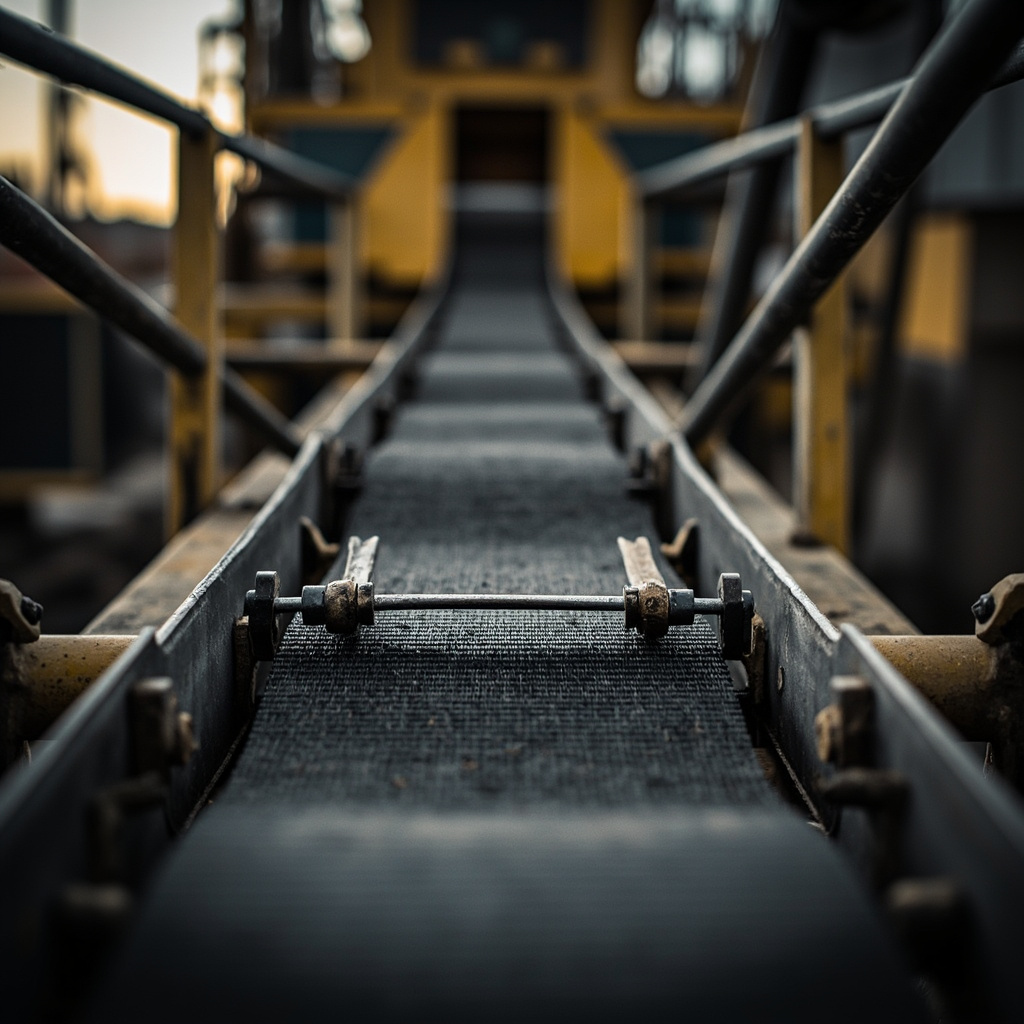
Guia completo de fixadores para correias transportadoras.
Por que usar fixadores mecânicos de correia em vez de vulcanização?
A emenda de correias transportadoras é feita por vulcanização (colagem a quente/frio) ou fixadores mecânicos. Os fixadores mecânicos (emendas de correia) oferecem: Velocidade — instalação em 30-60 minutos contra horas para vulcanização; Sem equipamentos especiais — a vulcanização requer prensas térmicas e operadores qualificados; Capacidade de reparo em campo — pode ser feita no local sem mover a correia; Fácil remoção da correia — para acesso à manutenção; Custo menor — sem necessidade de equipamentos de aquecimento ou adesivos. Para operações de mineração africanas onde o tempo de inatividade da correia é extremamente caro, os fixadores mecânicos são a escolha padrão para emendas em campo e reparos de emergência. Para emendas permanentes de alta resistência em correias de longa distância, a vulcanização é preferível, mas os fixadores mecânicos são usados em 60-70% das emendas em operações de mineração típicas. Recursos relacionados: parafusos de alta resistência chumbadores fixadores de aço inoxidável parafusos sextavados porcas autotravantes arruelas parafusos autoperfurantes parafusos com soquete. Esta estrutura de aquisição aplica-se ao fornecimento de fixadores para construção, mineração, energia, automotiva e aplicações industriais gerais. A lógica de decisão prioriza a consistência da qualidade, confiabilidade do fornecedor e custo total de propriedade em relação ao preço unitário de curto prazo. Para compradores B2B na África, América Latina e Sudeste Asiático, considerações adicionais incluem requisitos alfandegários regionais, opções de consolidação de contêineres e mecanismos de segurança de pagamento. Especificações padronizadas que funcionam em vários projetos reduzem o tempo de treinamento, o tempo de processamento de RFQ e o esforço de integração do fornecedor.
Tipos de fixadores mecânicos de correia
As duas categorias principais de fixadores mecânicos para correias são: Fixadores articulados — fixadores de clipe ou grampo individuais que articulam no ponto de emenda; permitem que a correia flexione naturalmente sobre as polias; podem ser abertos para remoção da correia sem corte; ideais para correias reversíveis e polias pequenas. Fixadores de placa sólida (rígidos) — placas metálicas conectadas que cobrem a emenda; maior resistência do que os articulados; exigem corte da correia para remoção; usados em correias de longa distância e alta tensão. Dentro dessas categorias, os fixadores são dimensionados de acordo com a espessura da correia e o diâmetro da polia — sempre consulte a tabela de dimensionamento do fabricante. A aquisição baseada em normas exige aprendizado contínuo, pois as normas ISO, ASTM, DIN e GB são revisadas a cada 3-5 anos. Inscreva-se para receber notificações de atualização de normas e revise as especificações anualmente. As normas mais comuns usadas no comércio internacional de fixadores são ISO 898-1 (propriedades mecânicas), ISO 3506-1 (inoxidável), ISO 3269 (inspeção de aceitação), ISO 4042 (revestimentos) e ISO 1502 (calibradores de rosca). Para compradores B2B, construir uma biblioteca de referência de normas com pelo menos as 20 principais normas relevantes para o seu mix de produtos é essencial.
| Fastener Type | Splice Strength | Pulley Min Diameter | Removal | Best For |
|---|---|---|---|---|
| Hinged clip | 80-95% belt strength | Small (150-250mm) | Easy (no cut) | Reversible conveyors, small pulleys |
| Hinged staple | 80-95% belt strength | Medium (200-350mm) | Easy (no cut) | General mining, moderate tension |
| Solid plate (medium) | 90-98% belt strength | Large (300-500mm) | Requires cut | High-tension long distance |
| Solid plate (heavy) | 95-100% belt strength | Very large (500mm+) | Requires cut | High-speed, high-tension main lines |
| Wire hook (light) | 60-75% belt strength | Small (100-200mm) | Easy | Light-duty, portable conveyors |
Selecionando o fixador ideal para cada tipo de correia
A construção da correia determina qual tipo de fixador é adequado: Correias têxteis (carcaça de tecido) — use fixadores articulados ou de grampo dimensionados conforme a espessura e número de lonas; uso geral em mineração. Correias com cabos de aço — requerem emendas especializadas de cabo de aço (conectadas com barras de emenda de aço); maior resistência, mas instalação mais complexa. Correias de trama sólida — use fixadores articulados ou de placa resistente; projetados para aplicações de mineração pesada. Correias transportadoras PVC/PVG — use fixadores articulados de serviço leve com barras de fixação lisas (não penetrantes); a construção de trama sólida permite a penetração do fixador sem delaminação. Para mineração na África, correias de cabo de aço e têxteis são as mais comuns; sempre verifique a compatibilidade do fixador com o tipo de correia antes de pedir. A metodologia de comparação acima usa faixas típicas de dados da indústria e experiência de aquisição da TradeGo 2018-2024. Os preços de mercado atuais flutuam com os custos de matéria-prima (aço, zinco, níquel), energia, mão de obra e taxas de câmbio. Para uma comparação precisa, solicite RFQs idênticas a 3-5 fornecedores qualificados e compare o custo total de entrega (produto + frete + seguro + impostos). O menor preço unitário raramente é o menor custo total de propriedade.
Ferramentas e equipamentos de instalação
A emenda mecânica de correias requer ferramentas específicas: Cortador de correia — para cortar a correia no esquadro; crítico para o alinhamento correto da emenda; pode ser manual ou pneumático. Ferramentas de punção (para articulados/grampos) — punções de slot único para fixadores de grampo ou de múltiplos slots para fixadores de clipe; operadas por catraca ou impacto pneumático. Tensionador/chave de parafuso — para apertar os parafusos de conexão em emendas de placa sólida; torquímetro calibrado para aplicações críticas. Ferramenta de escarear — para remover camadas de cobertura de borracha e expor a carcaça para o engate adequado do fixador; essencial para correias de borracha espessas. Grampo de correia — para manter a correia esticada e em posição durante a emenda; evita que a correia recue. Para operações de mineração na África, as marcas Flexco e Minet Lacing são as mais amplamente disponíveis e suportadas. A lista de verificação de verificação aplica-se tanto à qualificação inicial do fornecedor quanto à inspeção contínua de lotes. Para aplicações de alto risco (estrutural de suporte de carga, vasos de pressão, mineração, marítima), adicione testes de fadiga, testes de névoa salina (ASTM B117), testes de torque-tensão e inspeção pós-instalação. O custo da verificação adicional é de 0,1-0,3% do valor do pedido, enquanto falhas de qualidade não detectadas podem resultar em danos de 10-100x o valor do pedido.
Melhores práticas de instalação
A instalação correta é crítica para a longevidade da emenda: Corte a correia no esquadro — um corte diagonal reduz a resistência da emenda em até 50%; use um trilho guia e um cortador de correia afiado. Combine o tamanho do fixador com a espessura da correia — se for muito pequeno, os fixadores soltam; se for muito grande, eles não fecham corretamente. Alterne os fixadores — alterne as etapas da emenda (parte superior e inferior) para evitar degraus na junta. Aplique a tensão correta — o aperto excessivo dos parafusos pode deformar a emenda; o aperto insuficiente permite movimento e falha prematura. Para fixadores articulados, verifique se o pino da dobradiça está totalmente inserido e fixado. Após a instalação, opere a correia em velocidade e carga reduzidas nas primeiras 24 horas para permitir que a emenda se assente. A avaliação do fornecedor deve ser um processo contínuo, não um exercício único. Reavalie os fornecedores anualmente com base no desempenho de entrega, métricas de qualidade, competitividade de preços e capacidade de resposta. Mantenha um scorecard de fornecedores com métricas ponderadas: entrega no prazo (25%), taxa de aceitação de qualidade (30%), competitividade de preços (20%), capacidade de resposta (15%) e precisão da documentação (10%). Elimine fornecedores com pontuação abaixo de 70% em um período de 6 meses e qualifique substitutos.
Perguntas frequentes
Veja as perguntas frequentes abaixo.
Recursos relacionados: parafusos de alta resistência à tração parafusos de ancoragem fixadores de aço inoxidável parafusos sextavados porcas de travamento arruelas parafusos auto-perfurantes parafusos de soquete. Para compradores B2B que operam em múltiplos países, harmonize especificações com normas regionais e requisitos alfandegários locais. Frameworks regionais comuns: SABS (África do Sul), KEBS (Quênia), TBS (Tanzânia), ZIMRA (Zimbábue), SON (Nigéria) e normas AfCFTA para comércio pan-africano. Conformidade com normas locais é frequentemente obrigatória para projetos de infraestrutura pública, operações de mineração e licitações governamentais. Para compradores B2B que operam em múltiplos países, harmonize especificações com normas regionais e requisitos alfandegários locais. Frameworks regionais comuns: SABS (África do Sul), KEBS (Quênia), TBS (Tanzânia), ZIMRA (Zimbábue), SON (Nigéria) e normas AfCFTA para comércio pan-africano. Conformidade com normas locais é frequentemente obrigatória para projetos de infraestrutura pública, operações de mineração e licitações governamentais. Para compradores B2B que operam em múltiplos países, harmonize especificações com normas regionais e requisitos alfandegários locais. Frameworks regionais comuns: SABS (África do Sul), KEBS (Quênia), TBS (Tanzânia), ZIMRA (Zimbábue), SON (Nigéria) e normas AfCFTA para comércio pan-africano. Conformidade com normas locais é frequentemente obrigatória para projetos de infraestrutura pública, operações de mineração e licitações governamentais.What is belt fastener 'rating' or 'tension rating'?
Belt fastener tension ratings indicate the maximum conveyor belt tension (in N/mm of belt width) the splice can handle. For example, a fastener rated at 800 N/mm is suitable for belts with belt pull up to 800 N per mm of width. The rating must exceed the actual belt tension at the splice location. Consult the manufacturer's selection guide which correlates belt width, thickness, and pulley diameter with fastener size and rating.
How long do mechanical belt splices last compared to vulcanized splices?
Vulcanized splices typically achieve 95-100% of original belt strength and last 3-5 years under ideal conditions. Mechanical splices achieve 80-98% of belt strength (depending on type) and typically last 1-3 years depending on belt tension, material abrasiveness, and operating conditions. For high-abrasion African mining applications, mechanical splice life of 6-18 months is common before scheduled replacement. The speed of field replacement often makes mechanical splices more economical despite shorter service life.
Why do mechanical splices fail prematurely?
The most common causes of premature mechanical splice failure: incorrect fastener size for belt thickness — fasteners either pull through or don't close properly; belt tracking issues — a misaligned belt wears the splice edges; under-tightened fasteners — allow movement that fatigues the belt; over-tightened fasteners — deform the belt carcass; material carryback — abrasive material buildup between belt and pulleys accelerates fastener wear; improper skiving — insufficient cover rubber removal prevents proper fastener engagement with the carcass.
Need conveyor belt fasteners or splicing tools? Get a factory quote from TradeGo.
Get Quote