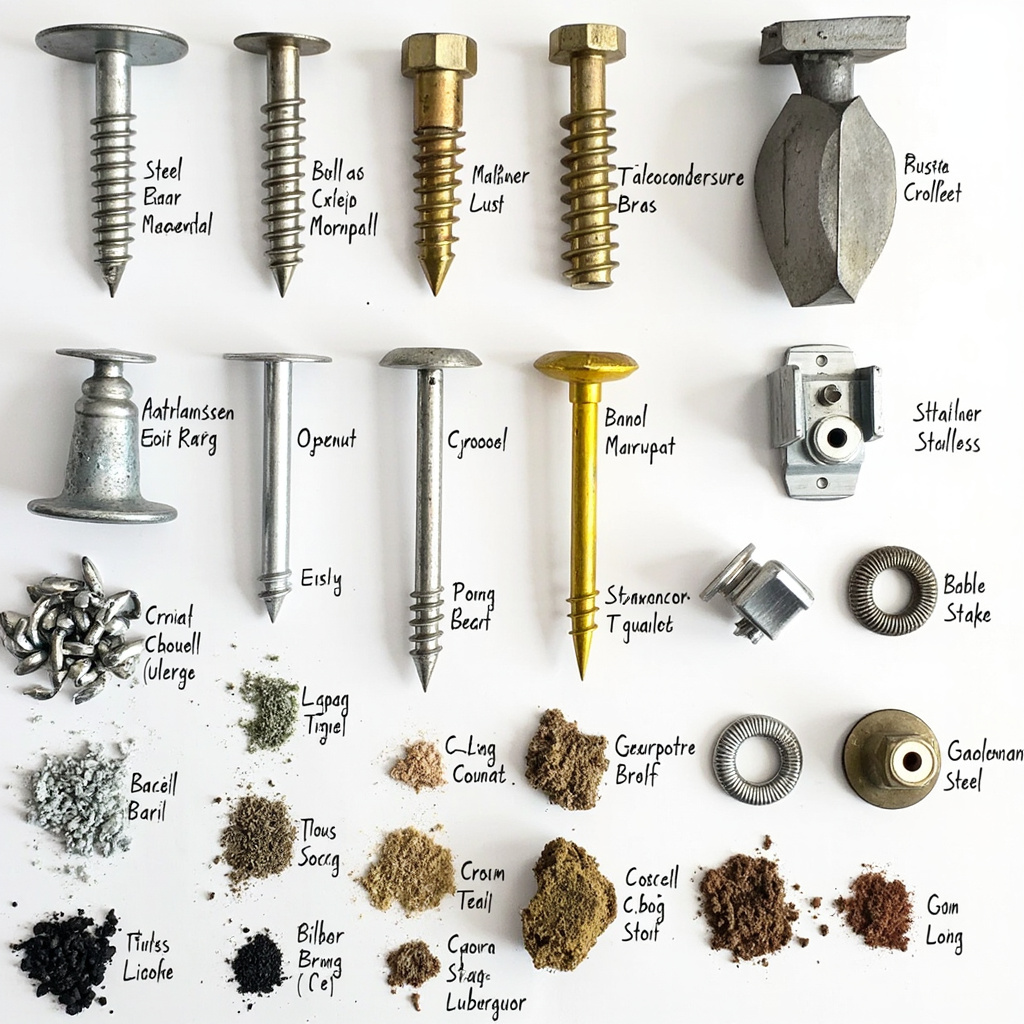
紧固件材料完整指南:碳钢、不锈钢、合金钢和特殊合金。了解如何为您的应用选择合适的材料。
紧固件材料概述
选择正确的紧固件材料对于实现可靠、持久的连接至关重要。错误的材料可能导致早期失效、腐蚀或安全隐患。
碳钢紧固件
碳钢是最常见的紧固件材料,以经济的价格提供良好的强度。碳钢紧固件适用于室内应用和不以腐蚀为主要关注点的环境。
不锈钢紧固件
不锈钢紧固件具有优异的耐腐蚀性,使其成为户外、海洋和化学侵蚀环境的必备品。
合金钢和特殊紧固件
合金钢紧固件用于需要非常高强度或碳钢紧固件无法提供足够性能的应用。
非洲应用材料选择
非洲建筑和采矿环境为紧固件材料提出了独特的挑战:高温潮湿、采矿业化学暴露、温度极端、偏远地区和维护资源限制。
常见问题
See frequently asked questions below.
Can I use stainless steel fasteners with carbon steel parts?
Yes, but be aware of galvanic corrosion when dissimilar metals are joined in presence of moisture. The less noble metal (carbon steel) will corrode faster. Using stainless steel throughout the connection is preferred for critical applications.
What's the difference between 304 and 316 stainless?
316 contains molybdenum which significantly improves chloride corrosion resistance. For marine/coastal applications, 316 is essential. For inland applications, 304 provides excellent corrosion resistance at lower cost.
How do I know if a fastener is strong enough?
Check the grade marking. Higher grades (8.8, 10.9, 12.9 for carbon steel) indicate higher strength. For critical applications, consult a structural engineer.
Can I mix fastener grades in the same assembly?
It's generally acceptable if all fasteners meet or exceed the minimum strength requirement. However, for critical structural applications, use consistent grades throughout.
What's the best coating for outdoor African conditions?
Hot-dip galvanizing provides excellent long-term protection for most outdoor applications. In highly corrosive environments (coastal, mining), stainless steel or specialized coatings like Dacromet are recommended.
联系TradeGo获取紧固件材料咨询服务。
询价