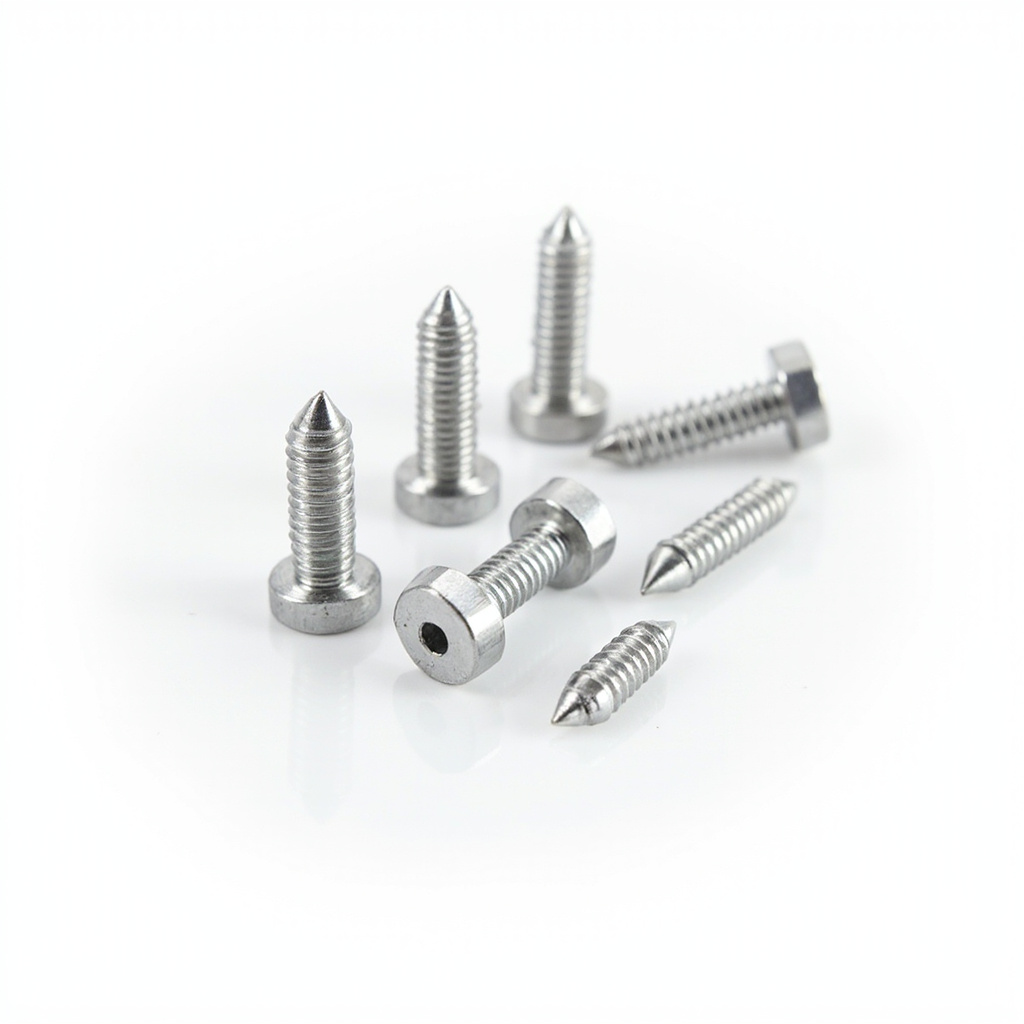
止动螺钉和定位销完整指南:类型、头型、材料及轴套、齿轮固定和机械装配精密对准的应用。
固定螺钉类型与头部样式
固定螺钉(又称无头螺钉)是一种无头螺钉,在一端或两端带有内六角插座,用于将部件固定在轴上或孔内。它们抵靠在轴表面以防止旋转或轴向移动。关键类型包括:杯头型(cup point)——最常见的类型;端部呈杯形,抵靠在轴上;提供良好的保持力且不会损坏轴表面;适用于软轴。平头型(flat point)——提供线性接触;保持力更高但可能损坏较软的轴;适用于硬化轴。锥头型(cone point)——尖锐的锥形穿透轴表面;具有最高的保持力但会在轴上留下痕迹;用于永久或半永久安装。半圆头型(half-dog point)——圆柱形端部与轴上的浅孔配合;可在不损坏轴表面的情况下重新定位。滚花纹杯头型(knurled cup point)——为频繁调整应用提供额外的抓握力。相关资源包括:高强度螺栓、锚栓、不锈钢紧固件、六角螺栓、锁紧螺母、垫圈、自钻螺钉和内六角螺钉。此采购框架适用于建筑、采矿、能源、汽车和一般工业应用的紧固件采购。决策逻辑优先考虑质量一致性、供应商可靠性和总拥有成本,而非短期单价。对于非洲、拉丁美洲和东南亚的B2B买家,还需考虑区域海关要求、集装箱整合选项和支付安全机制。可跨项目使用的标准化规格可减少培训时间、询价处理时间和供应商入职工作量。此采购框架适用于建筑、采矿、能源、汽车和一般工业应用的紧固件采购。决策逻辑优先考虑质量一致性、供应商可靠性和总拥有成本,而非短期单价。对于非洲、拉丁美洲和东南亚的B2B买家,还需考虑区域海关要求、集装箱整合选项和支付安全机制。可跨项目使用的标准化规格可减少培训时间、询价处理时间和供应商入职工作量。此采购框架适用于建筑、采矿、能源、汽车和一般工业应用的紧固件采购。决策逻辑优先考虑质量一致性、供应商可靠性和总拥有成本,而非短期单价。对于非洲、拉丁美洲和东南亚的B2B买家,还需考虑区域海关要求、集装箱整合选项和支付安全机制。可跨项目使用的标准化规格可减少培训时间、询价处理时间和供应商入职工作量。
| Point Type | Holding Power | Shaft Damage | Best Use |
|---|---|---|---|
| Cup point | Medium-high | Minimal | General shaft fixing, soft to medium shafts |
| Flat point | High | Moderate | Hardened shafts, permanent installations |
| Cone point | Very high | Significant | Permanent locking, hardened shafts only |
| Half-dog point | Medium | None | Adjustable assemblies, positioning pins |
| Knurled cup | High | Moderate | Frequent adjustment, soft shafts |
定位销:精密定位与对准
定位销是精确尺寸的圆柱形销,用于保持配合部件之间的精确对准,防止相对运动,并实现可重复定位。销插入两个部件的对应孔中。\n\n类型:\n\n平行销(磨削配合)——最常见的类型;按严格公差(h6、m6、h7)制造;提供多种配合等级;实现精确定位和适度的夹紧力。\n\n弹簧(张力)销——纵向开槽并通过钢球胀开;插入标准铰孔;提供抗振性能且可重复使用;不适用于精密对准。\n\n锥形销——沿长度方向逐渐变细;锤入匹配的锥孔;提供非常牢固的连接和精确定位;用于需要高位置精度的机械设备。\n\n卷销(螺旋弹簧销)——类似于弹簧销但采用螺旋槽而非直槽;强度高于弹簧销;锤入标准孔中。\n\n基于国际紧固件贸易的标准采购需要持续学习,因为ISO、ASTM、DIN和GB标准每3-5年修订一次。订阅标准更新通知并每年审查规格参数。在国际紧固件贸易中最常用的标准包括ISO 898-1(机械性能)、ISO 3506-1(不锈钢)、ISO 3269(验收检验)、ISO 4042(涂层)和ISO 1502(螺纹量规)。对于B2B买家而言,建立一个至少包含与产品相关的20项标准的标准参考库至关重要。
| Pin Type | Tolerance | Holding Power | Best Use |
|---|---|---|---|
| Parallel dowel (h6) | Very tight | High | Precision alignment, permanent |
| Parallel dowel (m6) | Tight | High | General precision alignment |
| Spring/tension pin | Standard hole | Medium | Vibration resistance, reusable |
| Taper pin | Very precise | Very high | Permanent, high accuracy machinery |
| Roll pin (coiled) | Standard hole | Medium-high | High shock loads, reusable |
内六角螺钉与定位销的材料选择
内六角螺钉与定位销的材料选择取决于具体应用:硬化钢(R\nc 45-58)——是大多数内六角螺钉和定位销的标准材料;具有良好的耐磨性和保持力;通常采用发黑或镀锌处理。不锈钢304/316——适用于耐腐蚀应用;316材质适用于海洋、化工、食品加工环境;硬度不如硬化钢,耐磨性较差。尼龙头内六角螺钉——软质尼龙头可防止轴损伤;用于精密轴(仪器、光学设备);保持力有限。渗碳钢——低碳钢经表面硬化处理;适合大批量生产的经济型选择;仅对表面硬度有要求时使用。对于非洲工业应用,镀锌硬化钢内六角螺钉是轴\n锁、轴承固定和齿轮定位的标准选择。上述比较方法论采用行业数据的典型范围及TradeGo 2018-2024年采购经验。实际市场价格随原材料成本(钢材、锌、镍)、能源成本、人工成本和货币汇率波动。为进行准确比较,请向3-5家合格供应商索取相同的询价单,并比较到岸成本(产品\n+运费\n+保险\n+关税)。最低单价很少是最低的总拥有成本。上述比较方法论采用行业数据的典型范围及TradeGo 2018-2024年采购经验。实际市场价格随原材料成本(钢材、锌、镍)、能源成本、人工成本和货币汇率波动。为进行准确比较,请向3-5家合格供应商索取相同的询价单,并比较到岸成本(产品\n+运费\n+保险\n+关税)。最低单价很少是最低的总拥有成本。上述比较方法论采用行业数据的典型范围及TradeGo 2018-2024年采购经验。实际市场价格随原材料成本(钢材、锌、镍)、能源成本、人工成本和货币汇率波动。为进行准确比较,请向3-5家合格供应商索取相同的询价单,并比较到岸成本(产品\n+运费\n+保险\n+关税)。最低单价很少是最低的总拥有成本。
轴套与齿轮固定应用
止动螺钉最常见的应用包括:轴套——使用杯尖式止动螺钉将轴套固定在轴上;轴套用于确定组件的轴向位置(轴承、皮带轮、链轮);两颗互成90度布置的止动螺钉可提供最稳固的夹紧力;对于铝、黄铜、不锈钢等软质轴材料,务必指定杯尖式止动螺钉。轴承固定——使用止动螺钉将轴承固定在轴上;在内圈孔密封环处使用杯尖式止动螺钉;不建议用于高振动或频繁拆卸的应用场景。齿轮和皮带轮定位——止动螺钉抵住轴上的平面或使用半爪形抵住轴上的孔;半爪形点允许重新定位而不会损伤轴。偏心调节夹具——半爪形止动螺钉与夹具板上的偏心孔配合,实现精确的角度调节;常用于机械调节应用。对于任何需要频繁拆卸或调节的应用,建议使用开口轴套配合夹紧螺钉替代止动螺钉。\n\n验证清单适用于初始供应商资质认证和持续的批次检验。对于高风险应用(承重结构、压力容器、采矿、海洋),需增加疲劳测试、盐雾测试(ASTM B117)、扭矩张力测试和安装后检验。额外验证成本仅为订单价值的0.1-0.3%,而未检测出的质量故障可能造成订单价值10至100倍的损失。
Frequently Asked Questions
See frequently asked questions below.
What happens if a set screw keeps loosening on my shaft?
Set screw loosening on shafts is caused by: insufficient tightening torque — ensure you are using the correct socket size and applying adequate torque; a 3mm set screw requires only 0.5-1 N·m, while an M8 requires 5-10 N·m; vibration — specify cup point or knurled cup for vibration environments; consider adding a second set screw at 90 degrees to the first; soft shaft material — cup point set screws indent soft shafts over time; use a shaft with a drilled positioning hole (half-dog) or specify a harder shaft material; inadequate thread engagement — the set screw must thread fully into the component (minimum 1.5× diameter engagement); if the component is too thin, the set screw bottoms out before providing adequate clamping force.
When should I use a taper pin vs a parallel dowel pin?
Use taper pins for: permanent, high-accuracy positioning where the joint will not be disassembled; applications requiring very high positional accuracy (machine tool fixtures, precision instruments); joints where the pin must also transmit shear load. Use parallel dowel pins for: applications where components may need to be disassembled and reassembled; general precision alignment in machinery; where ease of assembly/disassembly is important. Taper pins require matching taper holes (reamed with a taper reamer) which are more expensive to produce than straight holes for parallel dowels.
What is the difference between a spring pin and a roll pin?
Spring pins (tension pins) and roll pins (coiled spring pins) are both split longitudinally to allow compression during insertion, but they differ in manufacture and performance: Spring pins are a single piece of spring steel with a longitudinal slit; roll pins are a coiled strip of steel — essentially a spring wound into a pin shape. Roll pins are significantly stronger than spring pins (approximately 3× the shear strength) and resist jamming better. Roll pins are the preferred choice for most industrial applications; spring pins are used where very precise control of expansion force is needed.
需要止动螺钉或定位销用于机械?从TradeGo获取工厂报价。
获取报价