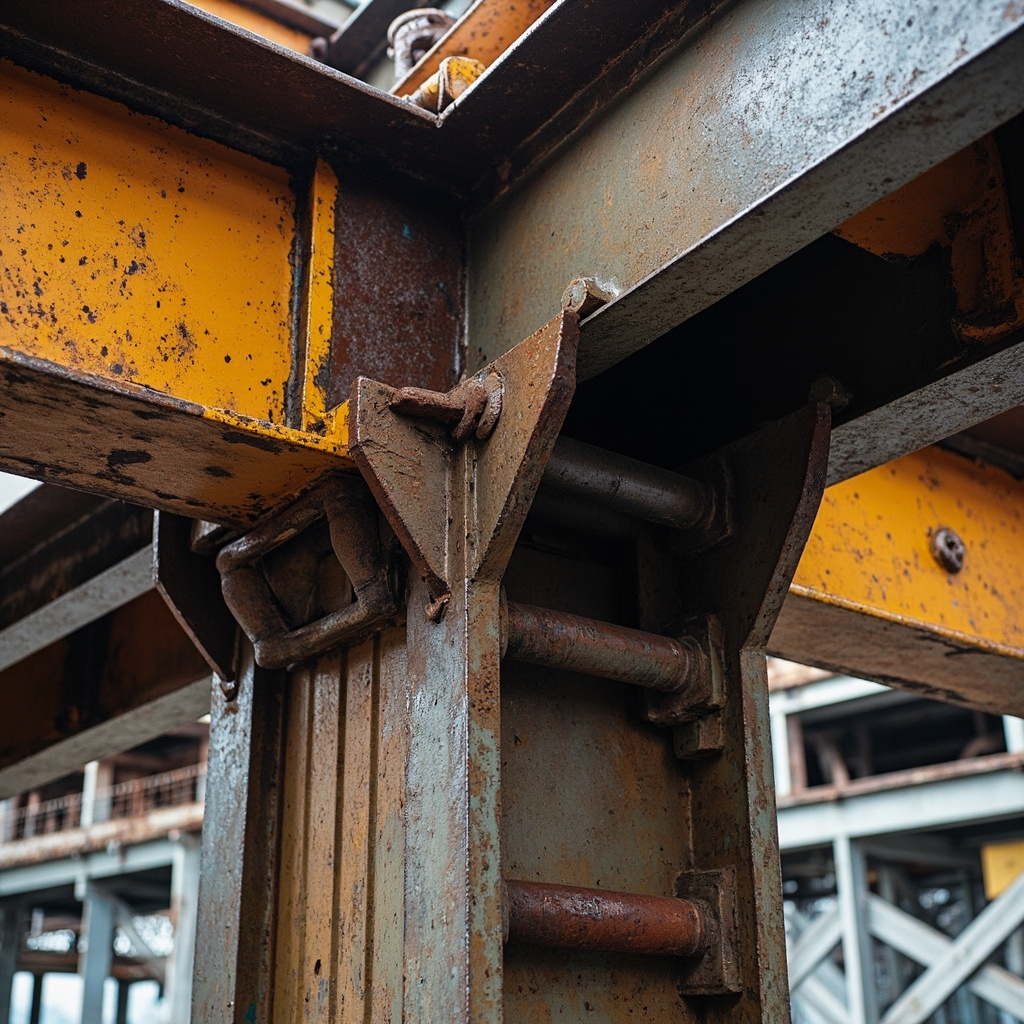
钢结构连接紧固件完整指南:梁对梁、梁对柱及桁架连接。螺栓类型、预紧力要求及非洲工业建筑施工规范。
结构钢连接的分类
结构钢连接按其荷载传递机理分类:剪切连接——仅传递剪力(无弯矩);梁端可自由转动;设计假定为铰接连接;常见于简单结构(仓库、低层框架)。弯矩连接——同时传递剪力和弯矩;梁端受约束不能转动;设计更为复杂且成本较高;用于结构稳定性需要连续性的部位。支撑连接——沿斜撑构件传递拉力或压力;用于支撑框架以提供侧向稳定性;设计相对简单。底板连接——将荷载从柱子传递至混凝土基础;锚栓(J型螺栓或锚杆)埋入混凝土中;这是结构与基础之间的关键界面。每种连接类型具有不同的紧固件要求和设计假定。相关资源:高强螺栓 锚栓 不锈钢紧固件 六角螺栓 锁紧螺母 垫圈 自钻螺钉 内六角螺钉。\n\n本采购框架适用于建筑、采矿、能源、汽车和通用工业领域的紧固件采购。决策逻辑优先考虑质量一致性、供应商可靠性和总拥有成本,而非短期单价。对于非洲、拉丁美洲和东南亚的B2B买家,还需考虑区域海关要求、集装箱整合选项和支付安全保障机制。可跨项目使用的标准化规格可减少培训时间、询价处理时间和供应商入职工作量。\n\n本采购框架适用于建筑、采矿、能源、汽车和通用工业领域的紧固件采购。决策逻辑优先考虑质量一致性、供应商可靠性和总拥有成本,而非短期单价。对于非洲、拉丁美洲和东南亚的B2B买家,还需考虑区域海关要求、集装箱整合选项和支付安全保障机制。可跨项目使用的标准化规格可减少培训时间、询价处理时间和供应商入职工作量。
螺栓拼接和端板连接
钢结构中的螺栓连接有多种形式:翼缘拼接(腹板拼接)——用翼缘板和腹板连接两根梁端;采用承压型连接的高强度六角螺栓;通常为M20或M24,8.8级或10.9级。fin板连接——在一根构件上焊接薄端板并用螺栓连接到另一根构件;制造和安装简便;采用8.8级单剪螺栓。端板(剪切端板)——焊接在梁端的板,用螺栓连接到连接构件;如果厚度足够,可延伸用于抗弯。螺栓托架连接——角钢或板用螺栓连接到梁腹板或翼缘,用于传递剪力;常见于工业建筑中的吊车轨道连接。所有钢结构螺栓连接必须使用结构螺栓(ISO 4014/4017、ASTM A325或等效标准),并施加正确的预紧力,不得使用普通六角螺栓。基于标准的采购需要持续学习,因为ISO、ASTM、DIN和GB标准每3-5年修订一次。订阅标准更新通知,每年审查产品规格。国际紧固件贸易中最常用的标准有ISO 898-1(机械性能)、ISO 3506-1(不锈钢)、ISO 3269(验收检验)、ISO 4042(镀层)和ISO 1502(螺纹量规)。对于B2B买家而言,建立包含至少20种与产品组合相关的主要标准的标准参考库至关重要。基于标准的采购需要持续学习,因为ISO、ASTM、DIN和GB标准每3-5年修订一次。订阅标准更新通知,每年审查产品规格。国际紧固件贸易中最常用的标准有ISO 898-1(机械性能)、ISO 3506-1(不锈钢)、ISO 3269(验收检验)、ISO 4042(镀层)和ISO 1502(螺纹量规)。对于B2B买家而言,建立包含至少20种与产品组合相关的主要标准的标准参考库至关重要。
结构连接预紧力要求
结构连接依靠预紧力(夹紧力)来正常工作:在剪切连接(承压型)中,预紧力并不关键——螺栓以承压方式承受荷载;螺栓通常安装至\u201c初步紧固\u201d状态,然后再转动一定角度。在摩擦型连接(抗滑移型)中,预紧力至关重要——预紧力在连接板之间产生摩擦;螺栓被拉伸至保证载荷的50-75%;接头在设计荷载下不得发生滑移。对于非洲建筑中的承压型剪切连接,螺母转动法是最常用的方法:步骤1——将所有螺栓初步紧固(从中心向外,星形模式);步骤2——标记螺母位置;步骤3——将每个螺母转动1/2圈(对于
柱脚板连接
柱脚板将整栋建筑的荷载传递至混凝土基础:锚栓(J型螺栓、L型螺栓)——通常为M20至M36,具体取决于柱截面尺寸和荷载;浇筑混凝土时预埋;必须精确定位以匹配柱脚板孔位;浇筑时使用定位模板。柱脚板灌浆——柱安装就位后,板与混凝土之间的间隙采用无收缩灌浆料填充;锚栓螺母在灌浆固化后拧紧。锚栓外露高度——锚栓必须从混凝土表面向上伸出足够距离,以容纳柱脚板、垫圈和螺母;通常超出螺母3-5个螺距。抗拔螺栓与柱脚板——某些设计采用预埋钢板焊接栓钉,而非外露锚栓;这需要不同的安装工艺。\n\n验证清单适用于供应商初次资质确认和持续批次检验。对于高风险应用(承重结构、压力容器、矿山、海洋),需增加疲劳试验、盐雾试验(ASTM B117)、扭矩-拉伸试验及安装后检验。额外验证成本仅为订单价值的0.1-0.3%,而未检出质量问题的损失可达订单价值的10-100倍。\n\n验证清单适用于供应商初次资质确认和持续批次检验。对于高风险应用(承重结构、压力容器、矿山、海洋),需增加疲劳试验、盐雾试验(ASTM B117)、扭矩-拉伸试验及安装后检验。额外验证成本仅为订单价值的0.1-0.3%,而未检出质量问题的损失可达订单价值的10-100倍。
非洲结构钢建筑规范
对于非洲的结构钢项目,以下紧固件规格适用:南非项目——SANS 2001-C2(结构钢安装)和SANS 1431(高强度结构螺栓)作为规范依据;主结构连接需使用SABS认证的螺栓。东非/西非项目——通常遵循BS 5950(英国)或AISC(美国)标准进行设计;螺栓规格采用ISO 4014/4017;需要材料证书(MTRs)。坦桑尼亚/肯尼亚——政府项目可能适用当地标准(KS、TZ Standards);私营项目接受国际标准。对于所有结构连接,请验证:螺栓等级符合结构工程师的规格要求;垫圈适用于螺栓类型和涂层;结构螺栓标有等级(8.8、10.9)和制造商标识;可提供合格证书。\n\n供应商评估应是一个持续过程,而非一次性工作。根据交货绩效、质量指标、价格竞争力和响应速度,每年对供应商进行重新评估。使用加权指标维护供应商记分卡:准时交货率(25%)、质量验收率(30%)、价格竞争力(20%)、响应速度(15%)和文件准确性(10%)。淘汰6个月内评分低于70%的供应商,并确定替代供应商。\n\n供应商评估应是一个持续过程,而非一次性工作。根据交货绩效、质量指标、价格竞争力和响应速度,每年对供应商进行重新评估。使用加权指标维护供应商记分卡:准时交货率(25%)、质量验收率(30%)、价格竞争力(20%)、响应速度(15%)和文件准确性(10%)。淘汰6个月内评分低于70%的供应商,并确定替代供应商。
Frequently Asked Questions
See frequently asked questions below.
What is the difference between a bearing-type and a friction-type (slip-critical) connection?
In a bearing-type connection, the bolts carry the applied load by bearing against the connected plates — the bolt itself is in shear. The preload (clamp force) doesn't matter as much; the bolt just needs to be snug-tight. In a friction-type (slip-critical) connection, the applied load is transferred by friction between the connected plates, created by the bolt's preload. If the preload is insufficient, the joint slips — causing failure. Slip-critical connections require higher preload (verified by DTI washers or calibrated wrench), and the connected surfaces must be free of paint and mill scale (cleaned to bare metal) to achieve the specified coefficient of friction.
Why do structural bolts have washers under both the head and the nut?
Under the bolt head — distributes the load from the bolt head onto the connected plate, preventing localized bearing stress that could deform the plate; hardened washers are used with high-strength bolts to prevent embedding. Under the nut — serves the same purpose on the other side of the joint; the nut bearing surface is smaller than the head, so the washer is even more important here. For structural connections using high-strength bolts (Grade 8.8, 10.9), hardened washers (to HRC 38-45) are specified for both positions. Using standard (soft) washers with high-strength bolts can cause the washer to deform and lose preload.
What is the maximum bolt spacing in a structural connection?
Bolt spacing is governed by the structural design code (BS 5950, AISC, SANS, etc.) and the design loads. General guidelines: Minimum spacing — not less than 2.5× bolt diameter (to prevent edge splitting); Maximum spacing in tension — not more than 14× t (thinner connected plate) or 200mm; Maximum spacing in compression — not more than 24× t or 300mm; Edge distance — minimum edge distance varies from 1.5D to 2.0D depending on edge condition (sheared, rolled, etc.) and loading direction. Always follow the structural engineer's connection design — these are general guidelines only.
需要钢结构连接紧固件?从TradeGo获取工厂报价。
获取报价