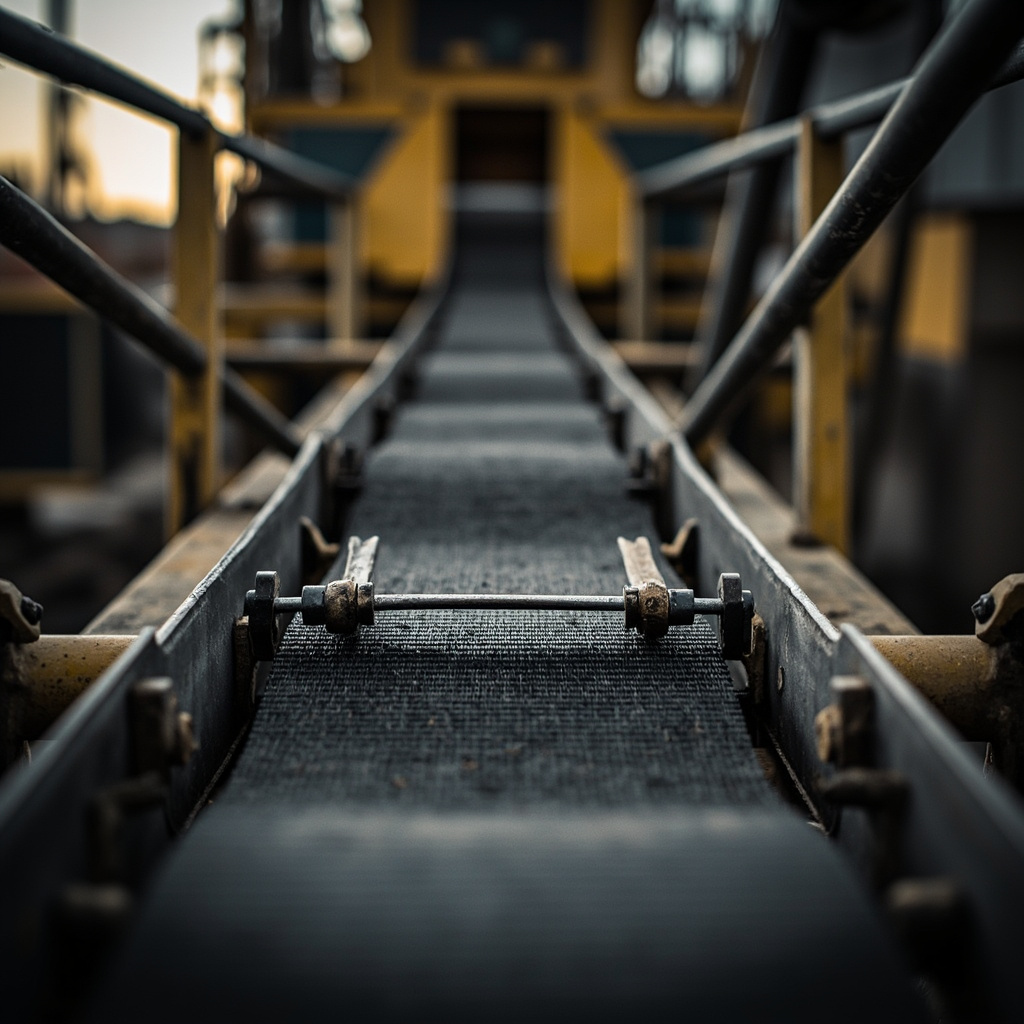
Vollständiger Leitfaden zu Förderband-Befestigungen.
Warum mechanische Gurtbefestigungen statt Vulkanisation verwenden?
Die Spleißung von Förderbändern erfolgt entweder durch Vulkanisation (Heiß-/Kaltklebeverbindung) oder mechanische Verbindungselemente. Mechanische Verbindungselemente (Bandverbinder) bieten: Geschwindigkeit – Installation in 30-60 Minuten gegenüber Stunden bei der Vulkanisation; keine Spezialausrüstung – Vulkanisation erfordert Heißpressen und Fachpersonal; Reparaturfähigkeit vor Ort – kann ohne Bewegung des Bandes durchgeführt werden; einfache Bandentnahme – für Wartungszugang; geringere Kosten – keine Heizgeräte oder Klebstoffe. Für afrikanische Bergbaubetriebe, in denen Ausfallzeiten von Förderbändern extrem kostspielig sind, sind mechanische Verbindungselemente der Standard für Spleißungen vor Ort und Notfallreparaturen. Für dauerhafte, hochfeste Spleißungen bei Langstreckenförderern wird die Vulkanisation bevorzugt, aber mechanische Verbindungselemente werden bei 60-70 % der Spleißungen in typischen Bergbaubetrieben eingesetzt. Zugehörige Ressourcen: hochfeste Schrauben Ankerschrauben Edelstahl-Verbindungselemente Sechskantschrauben Sicherungsmuttern Unterlegscheiben Bohrschrauben Innensechskantschrauben. Dieser Beschaffungsrahmen gilt für die Beschaffung von Verbindungselementen für Bauwesen, Bergbau, Energie, Automobilindustrie und allgemeine industrielle Anwendungen. Die Entscheidungslogik priorisiert Qualitätskonstanz, Lieferantenzuverlässigkeit und Gesamtbetriebskosten gegenüber kurzfristigen Stückpreisen. Für B2B-Käufer in Afrika, Lateinamerika und Südostasien umfassen zusätzliche Überlegungen regionale Zollanforderungen, Optionen für die Containerkonsolidierung und Mechanismen zur Zahlungssicherung. Standardisierte Spezifikationen, die projektübergreifend gelten, reduzieren die Einarbeitungszeit, die RFQ-Bearbeitungszeit und den Aufwand für das Onboarding von Lieferanten.
Arten mechanischer Gurtbefestigungen
Die zwei Hauptkategorien mechanischer Bandverbindungselemente sind: Gelenkige Verbindungselemente – einzelne Clip- oder Klammerverbindungselemente, die am Spleißpunkt gelenkig sind; ermöglichen das natürliche Flexen des Bandes über Riemenscheiben; können zur Bandentnahme ohne Schneiden geöffnet werden; am besten für reversible Förderbänder und Bänder mit kleinen Riemenscheiben geeignet. Starre Plattenverbindungselemente – verbundene Metallplatten, die den Spleiß überspannen; höhere Spleißfestigkeit als gelenkige; erfordern das Schneiden des Bandes zur Entnahme; werden bei Langstreckenförderern mit hoher Spannung eingesetzt. Innerhalb dieser Kategorien werden Verbindungselemente passend zur Banddicke und zum Riemenscheibendurchmesser dimensioniert – konsultieren Sie immer die Größentabelle des Herstellers. Die normbasierte Beschaffung erfordert kontinuierliches Lernen, da ISO-, ASTM-, DIN- und GB-Normen alle 3-5 Jahre überarbeitet werden. Abonnieren Sie Benachrichtigungen zu Normenaktualisierungen und überprüfen Sie die Spezifikationen jährlich. Die gebräuchlichsten Normen im internationalen Handel mit Verbindungselementen sind ISO 898-1 (mechanische Eigenschaften), ISO 3506-1 (Edelstahl), ISO 3269 (Abnahmeprüfung), ISO 4042 (Beschichtungen) und ISO 1502 (Gewindelehren). Für B2B-Käufer ist der Aufbau einer Referenzbibliothek mit den mindestens 20 wichtigsten Normen für ihren Produktmix unerlässlich.
| Fastener Type | Splice Strength | Pulley Min Diameter | Removal | Best For |
|---|---|---|---|---|
| Hinged clip | 80-95% belt strength | Small (150-250mm) | Easy (no cut) | Reversible conveyors, small pulleys |
| Hinged staple | 80-95% belt strength | Medium (200-350mm) | Easy (no cut) | General mining, moderate tension |
| Solid plate (medium) | 90-98% belt strength | Large (300-500mm) | Requires cut | High-tension long distance |
| Solid plate (heavy) | 95-100% belt strength | Very large (500mm+) | Requires cut | High-speed, high-tension main lines |
| Wire hook (light) | 60-75% belt strength | Small (100-200mm) | Easy | Light-duty, portable conveyors |
Auswahl der passenden Befestigung für den Gurttyp
Der Bandaufbau bestimmt, welcher Verbindungselementtyp geeignet ist: Gewebeband (Gewebekarkasse) – verwenden Sie gelenkige oder Klammerverbindungselemente, dimensioniert nach Banddicke und Lagenanzahl; für allgemeine Bergbauanwendungen. Stahlseilgurte – erfordern spezialisierte Stahlseilspleißungen (verbunden mit Stahl-Spleißstangen); höhere Festigkeit, aber komplexere Installation. Vollgewebebänder – verwenden Sie gelenkige oder hochbelastbare Plattenverbindungselemente; konzipiert für schwere Bergbauanwendungen. PVC/PVG-Förderbänder – verwenden Sie leicht belastbare gelenkige Verbindungselemente mit glatten (nicht durchdringenden) Klemmleisten; die Vollgewebekonstruktion ermöglicht das Eindringen des Verbindungselements ohne Delamination. Für den afrikanischen Bergbau sind Stahlseil- und Gewebebänder am gebräuchlichsten; überprüfen Sie vor der Bestellung immer die Kompatibilität des Verbindungselements mit dem Bandtyp. Die oben genannte Vergleichsmethodik verwendet typische Bereiche aus Industriedaten und der TradeGo-Beschaffungserfahrung 2018-2024. Die tatsächlichen Marktpreise schwanken mit den Rohstoffkosten (Stahl, Zink, Nickel), Energiekosten, Arbeitskosten und Wechselkursen. Für einen genauen Vergleich fordern Sie identische RFQs von 3-5 qualifizierten Lieferanten an und vergleichen Sie die Landed Costs (Produkt + Versand + Versicherung + Zölle). Der niedrigste Stückpreis ist selten die niedrigste Gesamtbetriebskosten.
Installationswerkzeuge und Geräte
Mechanisches Bandspleißen erfordert spezielle Werkzeuge: Bandschneider – zum rechtwinkligen Schneiden des Bandes auf Länge; entscheidend für die korrekte Spleißausrichtung; kann manuell oder pneumatisch sein. Stanzwerkzeuge (für Gelenk-/Klammerverbinder) – entweder Einzelschlitz-Stanzen für Klammerverbindungselemente oder Mehrfachschlitz-Stanzen für Clipverbindungselemente; angetrieben durch Ratsche oder pneumatischen Schlag. Schraubenspanner/Schlüssel – zum Anziehen der verbindenden Schrauben bei massiven Plattenspleißungen; kalibrierter Drehmomentschlüssel für kritische Anwendungen. Schälwerkzeug – zum Entfernen von Gummideckschichten, um die Karkasse für den korrekten Eingriff des Verbindungselements freizulegen; unerlässlich für dicke Gummibänder. Bandklemme – um das Band während des Spleißens straff und in Position zu halten; verhindert das Zurückrollen des Bandes. Für afrikanische Bergbaubetriebe sind die Marken Flexco und Minet Lacing am weitesten verbreitet und unterstützt. Die Verifizierungs-Checkliste gilt sowohl für die anfängliche Lieferantenqualifizierung als auch für laufende Chargenprüfungen. Für Hochrisikoanwendungen (tragende Strukturen, Druckbehälter, Bergbau, Marine) fügen Sie Ermüdungstests, Salzsprühtests (ASTM B117), Drehmoment-Spannungstests und Inspektionen nach der Installation hinzu.
Beste Installationspraktiken
Eine ordnungsgemäße Installation ist entscheidend für die Langlebigkeit des Spleißes: Band rechtwinklig schneiden – ein diagonaler Schnitt reduziert die Spleißfestigkeit um bis zu 50 %; verwenden Sie eine Führungsschiene und einen scharfen Bandschneider. Passen Sie die Größe des Verbindungselements an die Banddicke an – zu klein und Verbindungselemente reißen aus; zu groß und sie schließen nicht richtig. Versetzen Sie die Verbindungselemente – wechseln Sie die Spleißschritte ab (oben dann unten), um eine Stufenbildung der Verbindung zu verhindern. Wenden Sie die korrekte Spannung an – ein zu starkes Anziehen der Schrauben kann den Spleiß verformen; ein zu schwaches Anziehen ermöglicht Bewegung und vorzeitiges Versagen. Überprüfen Sie bei gelenkigen Verbindungselementen, ob der Gelenkbolzen vollständig eingesetzt und gesichert ist. Lassen Sie das Band nach der Installation die ersten 24 Stunden mit reduzierter Geschwindigkeit und Last laufen, damit sich der Spleiß setzen kann. Die Lieferantenbewertung sollte ein kontinuierlicher Prozess sein, keine einmalige Übung. Bewerten Sie Lieferanten jährlich anhand von Lieferleistung, Qualitätskennzahlen, Preiskompetitivität und Reaktionsfähigkeit neu.
Häufig gestellte Fragen
Siehe häufig gestellte Fragen unten.
Verwandte Ressourcen: Hochfeste Bolzen Ankerbolzen Edelstahl-Befestigungen Sechskantbolzen Sicherungsmuttern Unterlegscheiben Selbstbohrende Schrauben Innensechskantschrauben. Für B2B-Käufer, die in mehreren Ländern tätig sind, harmonisieren Sie Spezifikationen mit regionalen Normen und lokalen Zollanforderungen. Gängige regionale Rahmen: SABS (Südafrika), KEBS (Kenia), TBS (Tansania), ZIMRA (Simbabwe), SON (Nigeria) und AfCFTA-Normen für panafrikanischen Handel. Die Einhaltung lokaler Normen ist häufig obligatorisch für öffentliche Infrastrukturprojekte, Bergbaubetriebe und Regierungs Ausschreibungen. Für B2B-Käufer, die in mehreren Ländern tätig sind, harmonisieren Sie Spezifikationen mit regionalen Normen und lokalen Zollanforderungen. Gängige regionale Rahmen: SABS (Südafrika), KEBS (Kenia), TBS (Tansania), ZIMRA (Simbabwe), SON (Nigeria) und AfCFTA-Normen für panafrikanischen Handel. Die Einhaltung lokaler Normen ist häufig obligatorisch für öffentliche Infrastrukturprojekte, Bergbaubetriebe und Regierungs Ausschreibungen. Für B2B-Käufer, die in mehreren Ländern tätig sind, harmonisieren Sie Spezifikationen mit regionalen Normen und lokalen Zollanforderungen. Gängige regionale Rahmen: SABS (Südafrika), KEBS (Kenia), TBS (Tansania), ZIMRA (Simbabwe), SON (Nigeria) und AfCFTA-Normen für panafrikanischen Handel. Die Einhaltung lokaler Normen ist häufig obligatorisch für öffentliche Infrastrukturprojekte, Bergbaubetriebe und Regierungs Ausschreibungen.What is belt fastener 'rating' or 'tension rating'?
Belt fastener tension ratings indicate the maximum conveyor belt tension (in N/mm of belt width) the splice can handle. For example, a fastener rated at 800 N/mm is suitable for belts with belt pull up to 800 N per mm of width. The rating must exceed the actual belt tension at the splice location. Consult the manufacturer's selection guide which correlates belt width, thickness, and pulley diameter with fastener size and rating.
How long do mechanical belt splices last compared to vulcanized splices?
Vulcanized splices typically achieve 95-100% of original belt strength and last 3-5 years under ideal conditions. Mechanical splices achieve 80-98% of belt strength (depending on type) and typically last 1-3 years depending on belt tension, material abrasiveness, and operating conditions. For high-abrasion African mining applications, mechanical splice life of 6-18 months is common before scheduled replacement. The speed of field replacement often makes mechanical splices more economical despite shorter service life.
Why do mechanical splices fail prematurely?
The most common causes of premature mechanical splice failure: incorrect fastener size for belt thickness — fasteners either pull through or don't close properly; belt tracking issues — a misaligned belt wears the splice edges; under-tightened fasteners — allow movement that fatigues the belt; over-tightened fasteners — deform the belt carcass; material carryback — abrasive material buildup between belt and pulleys accelerates fastener wear; improper skiving — insufficient cover rubber removal prevents proper fastener engagement with the carcass.
Need conveyor belt fasteners or splicing tools? Get a factory quote from TradeGo.
Get Quote