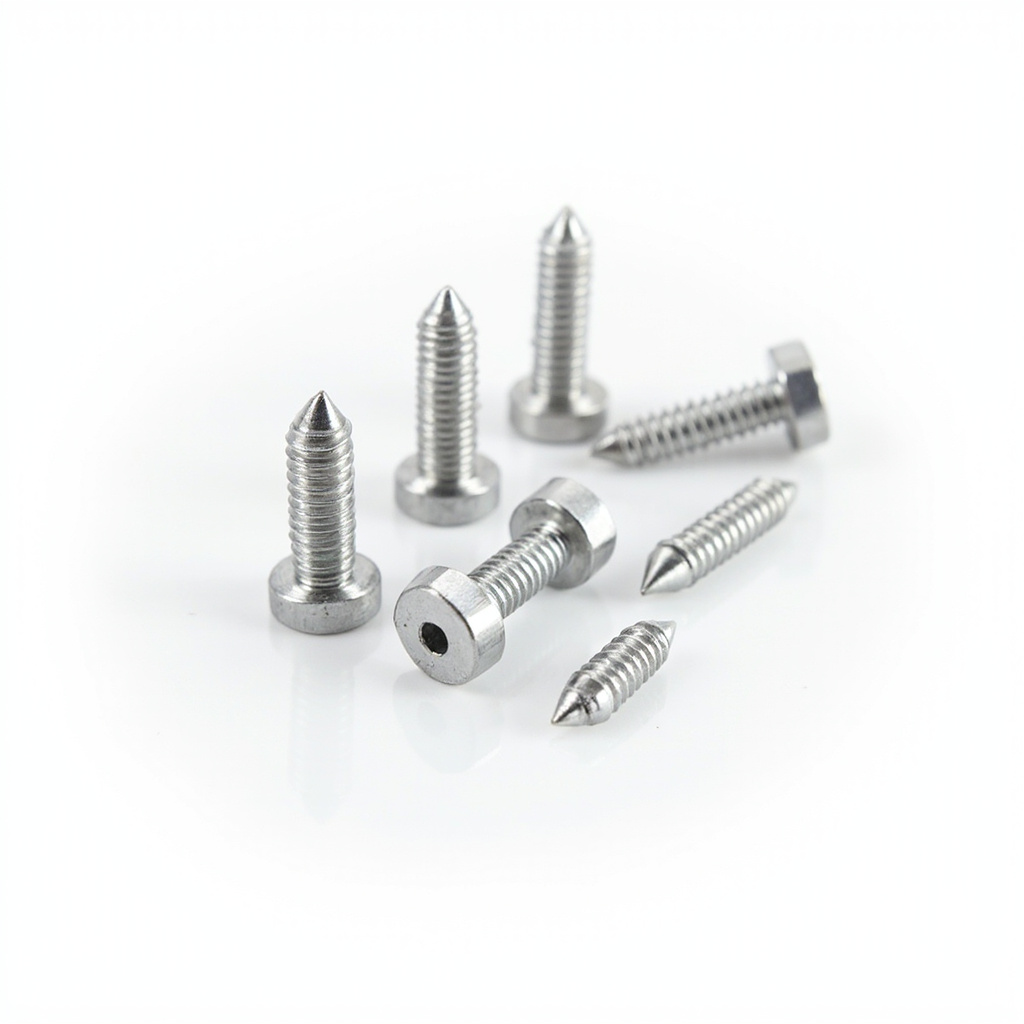
Vollständiger Leitfaden zu Gewindestifte und Passstifte.
Gewindestift-Typen und Kopfformen
Gewindestifte (auch Madenschrauben genannt) sind kopflose Schrauben mit einer Innensechsrund- oder Schlitzaufnahme an einem oder beiden Enden, die dazu dienen, ein Bauteil auf einer Welle oder in einer Bohrung zu sichern. Sie drücken gegen die Wellenoberfläche, um Rotation oder axiale Bewegung zu verhindern. Wichtige Typen: Ringschneide – die häufigste Form; das Ende ist als Ringschneide ausgebildet, die auf der Welle aufsitzt; bietet gute Haltekraft ohne Beschädigung der Wellenoberfläche; geeignet für weiche Wellen. Flachspitze – bietet Linienkontakt; höhere Haltekraft, kann aber weichere Wellen beschädigen; gut für gehärtete Wellen. Kegelspitze – scharfer Kegel, der in die Wellenoberfläche eindringt; höchste Haltekraft, hinterlässt aber Markierungen auf der Welle; verwendet für permanente oder semi-permanente Installationen. Halbspitz (Half-dog) – zylindrisches Ende, das in eine flache Bohrung in der Welle eingreift; ermöglicht Neupositionierung ohne Markierung der Wellenoberfläche. Gerändelte Ringschneide – zusätzlicher Grip für Anwendungen mit häufiger Verstellung. Verwandte Ressourcen: Hochfeste Schrauben Ankerschrauben Edelstahlverbindungselemente Sechskantschrauben Kontermuttern Unterlegscheiben Bohrschrauben Innensechskantschrauben. Dieser Beschaffungsrahmen gilt für die Beschaffung von Verbindungselementen in den Bereichen Bauwesen, Bergbau, Energie, Automobil und allgemeine industrielle Anwendungen. Die Entscheidungslogik priorisiert Qualitätskonstanz, Lieferantenzuverlässigkeit und Gesamtbetriebskosten gegenüber kurzfristigen Stückpreisen. Für B2B-Einkäufer in Afrika, Lateinamerika und Südostasien sind zusätzliche Aspekte zu berücksichtigen: regionale Zollanforderungen, Container-Konsolidierungsoptionen und Zahlungssicherheitsmechanismen. Standardisierte Spezifikationen, die projektübergreifend funktionieren, reduzieren Schulungszeit, RFQ-Bearbeitungszeit und Aufwand für die Lieferanteneinführung. Dieser Beschaffungsrahmen gilt für die Beschaffung von Verbindungselementen in den Bereichen Bauwesen, Bergbau, Energie, Automobil und allgemeine industrielle Anwendungen. Die Entscheidungslogik priorisiert Qualitätskonstanz, Lieferantenzuverlässigkeit und Gesamtbetriebskosten gegenüber kurzfristigen Stückpreisen. Für B2B-Einkäufer in Afrika, Lateinamerika und Südostasien sind zusätzliche Aspekte zu berücksichtigen: regionale Zollanforderungen, Container-Konsolidierungsoptionen und Zahlungssicherheitsmechanismen. Standardisierte Spezifikationen, die projektübergreifend funktionieren, reduzieren Schulungszeit, RFQ-Bearbeitungszeit und Aufwand für die Lieferanteneinführung.
| Point Type | Holding Power | Shaft Damage | Best Use |
|---|---|---|---|
| Cup point | Medium-high | Minimal | General shaft fixing, soft to medium shafts |
| Flat point | High | Moderate | Hardened shafts, permanent installations |
| Cone point | Very high | Significant | Permanent locking, hardened shafts only |
| Half-dog point | Medium | None | Adjustable assemblies, positioning pins |
| Knurled cup | High | Moderate | Frequent adjustment, soft shafts |
Zylinderstifte: Präzise Positionierung und Ausrichtung
Zylinderstifte sind präzise dimensionierte zylindrische Stifte, die zur Aufrechterhaltung genauer Ausrichtung zwischen zusammenpassenden Bauteilen, zur Verhinderung relativer Bewegung und zur Ermöglichung wiederholbarer Positionierung verwendet werden. Sie werden in koinzidente Bohrungen in beiden Bauteilen eingesetzt. Typen: Zylinderstifte (geschliffene Passung) – der häufigste Typ; hergestellt mit engen Toleranzen (h6, m6, h7); erhältlich in mehreren Passungsklassen; bieten präzise Positionierung und mäßige Haltekraft. Spannhülsen (Federspannstifte) – längs geschlitzt und durch eine Kugel aufgespreizt; Einsatz in standardmäßig geräumten Bohrungen; bieten Vibrationsfestigkeit und sind wiederverwendbar; nicht für Präzisionsausrichtung geeignet. Kegelstifte – verjüngen sich allmählich über ihre Länge; werden in passende Kegelbohrungen eingetrieben; bieten sehr sichere Befestigung und präzise Positionierung; verwendet in Maschinen, die hohe Positionsgenauigkeit erfordern. Spiral-Spannhülsen (gewickelte Federspannstifte) – ähnlich wie Spannhülsen, aber als Spirale statt mit Schlitz; höhere Festigkeit als Spannhülsen; werden in Standardbohrungen eingetrieben. Normenbasierte Beschaffung erfordert kontinuierliches Lernen, da ISO-, ASTM-, DIN- und GB-Normen alle 3-5 Jahre überarbeitet werden. Abonnieren Sie Benachrichtigungen für Normenaktualisierungen und überprüfen Sie Spezifikationen jährlich. Die im internationalen Handel mit Verbindungselementen am häufigsten verwendeten Normen sind ISO 898-1 (mechanische Eigenschaften), ISO 3506-1 (Edelstahl), ISO 3269 (Abnahmeprüfung), ISO 4042 (Beschichtungen) und ISO 1502 (Gewindelehren). Für B2B-Einkäufer ist der Aufbau einer Normen-Referenzbibliothek mit mindestens den 20 wichtigsten Normen, die für Ihr Produktsortiment relevant sind, unerlässlich. Normenbasierte Beschaffung erfordert kontinuierliches Lernen, da ISO-, ASTM-, DIN- und GB-Normen alle 3-5 Jahre überarbeitet werden. Abonnieren Sie Benachrichtigungen für Normenaktualisierungen und überprüfen Sie Spezifikationen jährlich. Die im internationalen Handel mit Verbindungselementen am häufigsten verwendeten Normen sind ISO 898-1 (mechanische Eigenschaften), ISO 3506-1 (Edelstahl), ISO 3269 (Abnahmeprüfung), ISO 4042 (Beschichtungen) und ISO 1502 (Gewindelehren). Für B2B-Einkäufer ist der Aufbau einer Normen-Referenzbibliothek mit mindestens den 20 wichtigsten Normen, die für Ihr Produktsortiment relevant sind, unerlässlich.
| Pin Type | Tolerance | Holding Power | Best Use |
|---|---|---|---|
| Parallel dowel (h6) | Very tight | High | Precision alignment, permanent |
| Parallel dowel (m6) | Tight | High | General precision alignment |
| Spring/tension pin | Standard hole | Medium | Vibration resistance, reusable |
| Taper pin | Very precise | Very high | Permanent, high accuracy machinery |
| Roll pin (coiled) | Standard hole | Medium-high | High shock loads, reusable |
Werkstoffe für Gewindestifte und Zylinderstifte
Die Werkstoffauswahl für Gewindestifte und Zylinderstifte hängt von der Anwendung ab: Gehärteter Stahl (Rc 45-58) – Standard für die meisten Gewindestifte und Zylinderstifte; bietet gute Verschleißfestigkeit und Haltekraft; typischerweise mit Brünierung oder Zinkbeschichtung geliefert. Edelstahl 304/316 – für korrosionsbeständige Anwendungen; 316 für Marine-, Chemie- und Lebensmittelverarbeitungsumgebungen; nicht so hart wie gehärteter Stahl, daher geringere Verschleißfestigkeit. Nylon-beschichtete Gewindestifte – weiche Nylonspitze verhindert Wellenbeschädigung; verwendet für empfindliche Wellen (Instrumentierung, optische Geräte); begrenzte Haltekraft. Einsatzgehärteter Stahl – kohlenstoffarmer Stahl mit gehärteter Oberfläche; wirtschaftlich für Großserienproduktion; verwendet wo nur Oberflächenhärte zählt. Für afrikanische Industrieanwendungen sind gehärtete Stahlschrauben mit Zinkbeschichtung die Standardwahl für Wellenbunde, Lagersicherung und Zahnradpositionierung. Die oben dargestellte Vergleichsmethodik verwendet typische Bereiche aus Branchendaten und TradeGo-Beschaffungserfahrung 2018-2024. Tatsächliche Marktpreise schwanken mit Rohstoffkosten (Stahl, Zink, Nickel), Energiekosten, Lohnkosten und Wechselkursen. Für einen genauen Vergleich fordern Sie identische RFQs von 3-5 qualifizierten Lieferanten an und vergleichen Sie die Landed Cost (Produkt + Versand + Versicherung + Zölle). Der niedrigste Stückpreis ist selten die niedrigste Gesamtbetriebskosten. Die oben dargestellte Vergleichsmethodik verwendet typische Bereiche aus Branchendaten und TradeGo-Beschaffungserfahrung 2018-2024. Tatsächliche Marktpreise schwanken mit Rohstoffkosten (Stahl, Zink, Nickel), Energiekosten, Lohnkosten und Wechselkursen. Für einen genauen Vergleich fordern Sie identische RFQs von 3-5 qualifizierten Lieferanten an und vergleichen Sie die Landed Cost (Produkt + Versand + Versicherung + Zölle). Der niedrigste Stückpreis ist selten die niedrigste Gesamtbetriebskosten.
Wellenbund- und Zahnradsicherungs-Anwendungen
Gewindestifte werden am häufigsten verwendet für: Wellenbunde – mittels Ringschneidengewindestiften auf Wellen fixierte Bunde; Bunde definieren die axiale Position von Bauteilen (Lager, Riemenscheiben, Kettenräder); zwei Gewindestifte im 90-Grad-Winkel zueinander bieten den sichersten Halt; bei weichen Wellenwerkstoffen (Aluminium, Messing, Edelstahl) immer Ringschneide spezifizieren. Lagersicherung – Gewindestifte zur Befestigung von Lagern auf Wellen; Ringschneidengewindestift in der Dichtringbohrung des Innenrings; nicht empfohlen für Anwendungen mit hohen Vibrationen oder häufigem Ausbau. Zahnrad- und Riemenscheibenpositionierung – Gewindestifte drücken gegen eine Fläche oder Halbspitz gegen eine Bohrung in der Welle; Halbspitze ermöglicht Neupositionierung ohne Wellenbeschädigung. Exzentrische Verstellvorrichtungen – Halbspitzgewindestifte greifen in eine exzentrische Bohrung einer Vorrichtungsplatte für präzise Winkeleinstellung; üblich in Maschinenverstellanwendungen. Für jede Anwendung mit häufigem Aus- oder Umbau erwägen Sie die Verwendung eines geteilten Wellenbunds mit Klemmschrauben anstelle von Gewindestiften. Die Verifikations-Checkliste gilt sowohl für die Erstlieferantenqualifizierung als auch für die laufende Chargeninspektion. Für Hochrisikoanwendungen (tragende Strukturen, Druckbehälter, Bergbau, Marine) fügen Sie Ermüdungsprüfungen, Salzsprühnebeltests (ASTM B117), Drehmoment-Dehnkraft-Prüfungen und Installationskontrollen hinzu. Die Kosten für zusätzliche Verifikation betragen 0,1-0,3% des Bestellwerts, während unentdeckte Qualitätsmängel ein 10-100-faches des Bestellwerts an Schäden verursachen können. Die Verifikations-Checkliste gilt sowohl für die Erstlieferantenqualifizierung als auch für die laufende Chargeninspektion. Für Hochrisikoanwendungen (tragende Strukturen, Druckbehälter, Bergbau, Marine) fügen Sie Ermüdungsprüfungen, Salzsprühnebeltests (ASTM B117), Drehmoment-Dehnkraft-Prüfungen und Installationskontrollen hinzu. Die Kosten für zusätzliche Verifikation betragen 0,1-0,3% des Bestellwerts, während unentdeckte Qualitätsmängel ein 10-100-faches des Bestellwerts an Schäden verursachen können.
Häufig gestellte Fragen
Siehe häufig gestellte Fragen unten.
Verwandte Ressourcen: Hochfeste Schrauben Ankerschrauben Edelstahlverbindungselemente Sechskantschrauben Kontermuttern Unterlegscheiben Bohrschrauben Innensechskantschrauben. Die Lieferantenbewertung sollte ein kontinuierlicher Prozess sein, keine einmalige Übung. Bewerten Sie Lieferanten jährlich basierend auf Lieferleistung, Qualitätskennzahlen, Preiswettbewerbsfähigkeit und Reaktionsfähigkeit neu. Führen Sie eine Lieferanten-Scorecard mit gewichteten Kennzahlen: pünktliche Lieferung (25%), Qualitätsabnahmerate (30%), Preiswettbewerbsfähigkeit (20%), Reaktionsfähigkeit (15%) und Dokumentationsgenauigkeit (10%). Lieferanten, die über einen Zeitraum von 6 Monaten unter 70% fallen, sollten aussortiert und Ersatz qualifiziert werden. Die Lieferantenbewertung sollte ein kontinuierlicher Prozess sein, keine einmalige Übung. Bewerten Sie Lieferanten jährlich basierend auf Lieferleistung, Qualitätskennzahlen, Preiswettbewerbsfähigkeit und Reaktionsfähigkeit neu. Führen Sie eine Lieferanten-Scorecard mit gewichteten Kennzahlen: pünktliche Lieferung (25%), Qualitätsabnahmerate (30%), Preiswettbewerbsfähigkeit (20%), Reaktionsfähigkeit (15%) und Dokumentationsgenauigkeit (10%). Lieferanten, die über einen Zeitraum von 6 Monaten unter 70% fallen, sollten aussortiert und Ersatz qualifiziert werden.What happens if a set screw keeps loosening on my shaft?
Set screw loosening on shafts is caused by: insufficient tightening torque — ensure you are using the correct socket size and applying adequate torque; a 3mm set screw requires only 0.5-1 N·m, while an M8 requires 5-10 N·m; vibration — specify cup point or knurled cup for vibration environments; consider adding a second set screw at 90 degrees to the first; soft shaft material — cup point set screws indent soft shafts over time; use a shaft with a drilled positioning hole (half-dog) or specify a harder shaft material; inadequate thread engagement — the set screw must thread fully into the component (minimum 1.5× diameter engagement); if the component is too thin, the set screw bottoms out before providing adequate clamping force.
When should I use a taper pin vs a parallel dowel pin?
Use taper pins for: permanent, high-accuracy positioning where the joint will not be disassembled; applications requiring very high positional accuracy (machine tool fixtures, precision instruments); joints where the pin must also transmit shear load. Use parallel dowel pins for: applications where components may need to be disassembled and reassembled; general precision alignment in machinery; where ease of assembly/disassembly is important. Taper pins require matching taper holes (reamed with a taper reamer) which are more expensive to produce than straight holes for parallel dowels.
What is the difference between a spring pin and a roll pin?
Spring pins (tension pins) and roll pins (coiled spring pins) are both split longitudinally to allow compression during insertion, but they differ in manufacture and performance: Spring pins are a single piece of spring steel with a longitudinal slit; roll pins are a coiled strip of steel — essentially a spring wound into a pin shape. Roll pins are significantly stronger than spring pins (approximately 3× the shear strength) and resist jamming better. Roll pins are the preferred choice for most industrial applications; spring pins are used where very precise control of expansion force is needed.
Benötigen Sie Gewindestifte oder Zylinderstifte für Ihre Maschinen? Fordern Sie ein Werksangebot von TradeGo an.
Get Quote