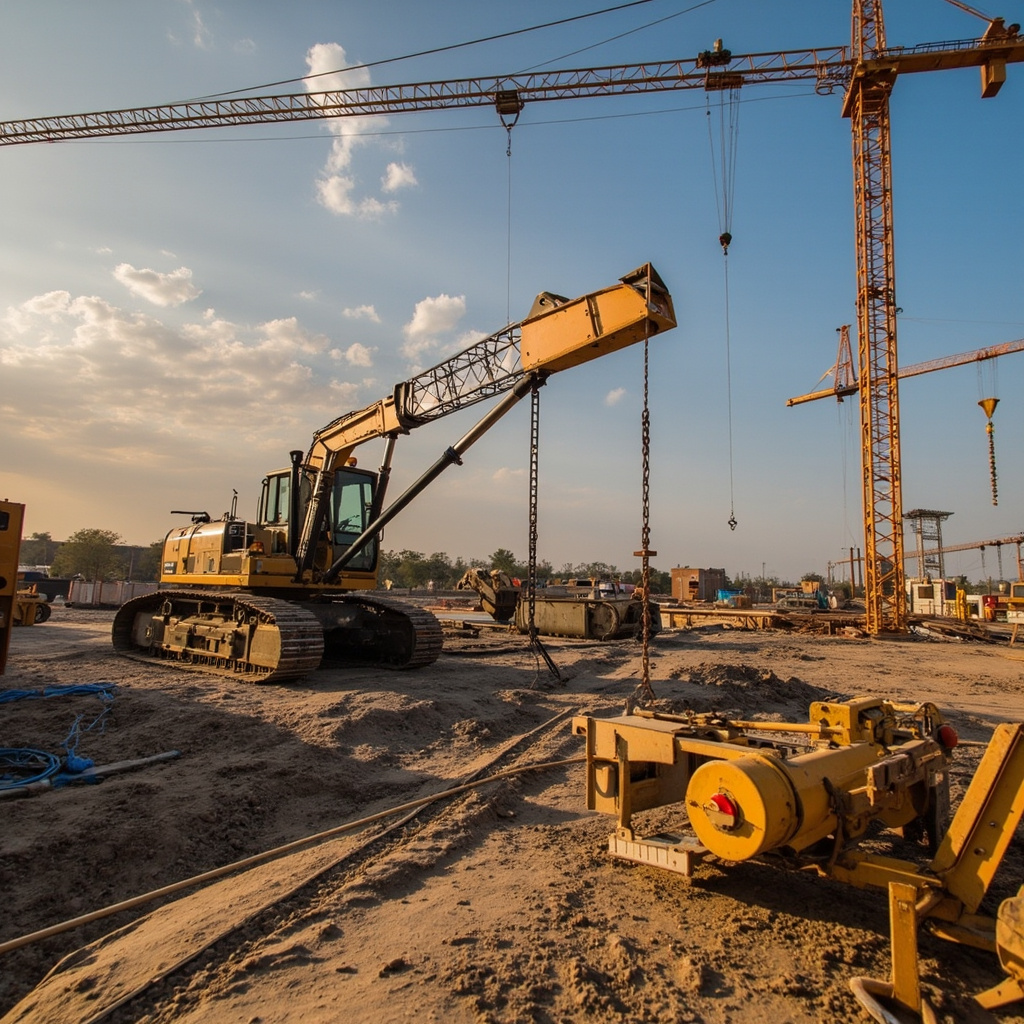
Import fasteners to Botswana with confidence. Our guide covers regulations, trusted suppliers, and pricing for construction projects. Start sourcing today.
Botswana Construction Boom: Market Overview and Growth Drivers
The **Botswana fastener import** market is experiencing unprecedented momentum as the nation's construction sector projects 6.8% annual growth through 2028, according to the African Development Bank's latest economic outlook for the country [4]. This expansion creates substantial procurement opportunities for industrial buyers seeking reliable fastener supply chains for infrastructure development. Infrastructure spending constitutes the primary demand driver, with road construction, bridge projects, and commercial building development requiring consistent high-volume fastener supplies. The Botswana Investment and Trade Centre reports that urban development in Gaborone and Francistown is generating sustained demand across residential, commercial, mining infrastructure, and public works segments [1]. For procurement managers, this growth trajectory means establishing supplier relationships now becomes critical—delayed sourcing decisions risk missing project timelines during peak construction seasons. The mining sector deserves particular attention. Botswana's diamond and copper-nickel operations require heavy structural fasteners for processing facilities, conveyor systems, and equipment mounting. These applications demand fasteners with specific tensile properties and corrosion resistance, often requiring hot-dip galvanizing (HDG) treatment to withstand mining environment conditions. Construction projects in the Sekoma and Jwaneng regions exemplify the scale of fastener volume required for major mining infrastructure. Commercial construction in Gaborone's central business district and emerging Francistown commercial zones creates demand for architectural fasteners including specialized roofing systems and curtain wall fixings. Public works projects under government procurement contracts frequently specify metric fasteners meeting ISO standards, making supplier qualification for specific standards essential for contract eligibility. For industrial buyers, the strategic implication is clear: Botswana's construction expansion through 2026 and beyond demands proactive inventory planning and supplier qualification. The market's growth fundamentals—backed by stable governance and infrastructure investment commitments—support long-term procurement strategies for construction fastener supplies.
Import Regulations and Customs Requirements for Fasteners
Importing fasteners into Botswana requires navigating the Botswana Unified Revenue Service (BURS) customs framework, with specific documentation and licensing requirements that procurement managers must understand before initiating shipments [2]. Non-compliance can result in shipment delays, storage fees, and potential re-export orders that disrupt project schedules. All fastener imports require customs clearance through BURS, with documentation requirements including certificate of origin, commercial invoice, and detailed packing list. The certificate of origin proves manufacturing provenance—critical for duty calculations and potential preferential tariff treatment under bilateral trade agreements. Commercial invoices must accurately describe fastener types, quantities, and values using internationally recognized HS codes for fasteners, typically falling under HS Chapter 7318. Import licenses become mandatory for industrial quantities exceeding BWP 50,000 in declared value [2]. This threshold means most construction fastener orders for commercial projects will require license documentation before shipment. Procurement teams should factor license application timelines into procurement planning—typical processing takes 5-10 business days, though complete documentation packages expedite approval. Customs duties range from 10-20% depending on fastener type and precise HS code classification [2]. Raw steel fasteners such as unfinished hex bolts and plain washers generally attract lower rates around 10-12%, while finished precision fasteners including high-strength structural bolts and specialty coatings may face rates toward the upper range. Understanding the duty differential influences procurement decisions—specifying simpler fastener grades may reduce landed costs despite potentially lower performance characteristics. Before customs release, certain fastener categories require inspection by the Botswana Bureau of Standards to verify compliance with applicable standards [3]. This inspection requirement adds timeline uncertainty; procurement managers should anticipate potential delays and build buffer time into project schedules, particularly for first-time shipments from new suppliers. The practical implication for buyers: comprehensive documentation packages prepared before shipment significantly reduce customs friction. Suppliers experienced with Botswana imports can provide pre-shipment documentation that meets BURS requirements, minimizing clearance delays that translate directly into project cost overruns.
Product Standards and Certifications for Botswana Import
Fasteners imported for construction applications in Botswana must meet specific standards and certification requirements that procurement managers cannot afford to overlook [3][6]. Understanding why these standards matter—not merely which standards apply—enables smarter specification decisions that balance compliance, performance, and cost. The Botswana Bureau of Standards establishes product requirements that parallel international best practices [3]. For structural applications, ISO 9001 certification from suppliers provides baseline quality management assurance, indicating consistent manufacturing processes and traceability systems [6]. Procurement specifications requiring ISO 9001 supplier certification effectively filter out inconsistent manufacturers while establishing accountability frameworks for quality disputes. For construction fastener applications, SABS (South African Bureau of Standards) mark certification is preferred and often specified by project engineers [3]. The SABS mark indicates compliance with South African National Standards, which align closely with Botswana requirements due to regional harmonization efforts. While not always legally mandatory, SABS-certified fasteners demonstrate documented performance characteristics that project specifications frequently require. Specific fastener standards carry direct performance implications. ISO 4014 defines hex bolt dimensions and mechanical properties critical for structural steel connections—the standard specifies minimum tensile strength (typically 800 MPa for grade 8.8 bolts) and yield strength requirements that ensure bolted connections can resist design loads [6]. Specifying "hex bolts" without ISO 4014 reference invites supplier substitution with inferior products that may fail under load. ISO 4032 for nuts and ISO 7089 for washers complete the bolting assembly specifications [6]. Nuts must match bolt grade requirements—a grade 8.8 bolt requires a grade 8 nut to achieve proper joint performance. Washers distribute load and protect surfaces; ISO 7089 specifies hardness and thickness tolerances that ensure consistent load distribution. Material specifications demand particular attention. Test reports documenting tensile strength, yield strength, and hardness provide verification that fasteners meet design requirements. For structural applications in Botswana's variable climate, corrosion resistance specifications become essential—hot-dip galvanized (HDG) fasteners provide 40+ year service life in atmospheric exposure, while zinc-electroplated alternatives may degrade within 10-15 years in humid conditions. Procurement managers should specify standards precisely, request certified test reports with each shipment, and verify that supplier certifications remain current. Expired certifications indicate quality system breakdowns that may have allowed non-conforming product to enter supply chains.
Top Fastener Types in Demand for Construction Projects
Construction fastener demand in Botswana concentrates on specific product categories that procurement managers should prioritize for supply chain planning [1]. Understanding which fastener types dominate construction volume enables smarter inventory positioning and supplier relationship development. Structural bolts constitute the largest demand category, with hot-dip galvanized (HDG) and alloy grade structural bolts serving mining infrastructure, commercial buildings, and bridge projects. Grade 8.8 and Grade 10.9 high-strength bolts provide the tensile capacity that structural steel connections require. For buyers, specifying HDG over zinc-electroplated finish for structural applications reflects superior corrosion resistance—the galvanizing process creates a metallurgical bond (approximately 85 μm coating thickness) that outperforms electroplated zinc (typically 8-12 μm) in Botswana's varied climate conditions. Hex bolts in sizes M12 to M30 dominate structural demand, with M16 and M20 sizes being particularly common for steel construction projects [5]. These metric sizes align with international construction standards and simplify procurement from global suppliers. Imperial sizes (3/4" through 1-1/4") remain available but typically command premium pricing and longer lead times when sourced for African delivery. Anchor fasteners for concrete applications see high-volume procurement across residential, commercial, and infrastructure projects. Expansion anchors, chemical anchors, and undercut anchors each serve specific applications—procurement managers should match anchor type to concrete condition, load requirements, and installation constraints. Post-installed anchors require hole preparation and proper installation torque; specification should account for on-site quality control capabilities. Roofing fasteners including self-drilling screws are essential for Botswana's residential sector and agricultural building construction. These fasteners combine drilling and fastening functions, reducing installation time and eliminating pre-drilling operations. Zinc-neoplated and stainless steel variants serve different environmental conditions—coastal-adjacent projects benefit from stainless steel's superior corrosion resistance despite higher per-unit costs. Complementary fastener categories include nuts, washers, and threaded rod that complete bolting assemblies. Ordering these components with primary bolt orders ensures matched specifications and eliminates cross-supplier quality inconsistencies. Procurement managers should specify assembly kits for critical connections rather than sourcing components separately. Metric and imperial sizes both circulate in the Botswana market, though metric predominates in new construction. For maintenance and retrofit projects, existing structures may use imperial fasteners, requiring procurement flexibility and supplier relationships covering both measurement systems.
Supplier Selection and Logistics for Fastener Imports
Supply chain logistics for Botswana fastener imports primarily route through South African ports before overland transport to Gaborone, making port selection and logistics coordination critical competencies for procurement managers [1][5]. Understanding these logistics enables cost optimization and reliability improvement in fastener procurement. Major supply routes via Durban and Cape Town ports in South Africa handle the majority of fastener shipments destined for Botswana [5]. Durban's superior container handling capacity and more frequent vessel schedules generally provide better pricing and shorter transit times. Cape Town serves as viable alternative when Durban congestion or specific routing requirements necessitate. For procurement planning, shipping from Durban to Gaborone typically requires 14-21 days from order confirmation to delivery, including customs clearance procedures. Lead time planning should account for several sequential phases: production lead time (5-10 days for standard fastener inventory, 15-30 days for custom orders), ocean freight (7-12 days to South African ports), customs clearance (3-5 days with complete documentation), and overland transport to Gaborone (2-3 days). Total pipeline time of 17-27 days represents realistic planning parameters for fastener procurement. Local Botswana distributors provide smaller volume sourcing options for urgent requirements and project emergency stock [1]. While unit pricing exceeds direct imports, local availability eliminates pipeline inventory requirements and provides immediate access for time-sensitive applications. Procurement managers should establish relationships with local distributors as supply chain backup while maintaining primary import relationships for volume procurement. Evaluating supplier certifications and quality systems requires due diligence beyond certificate collection. Site audits or third-party inspection services provide verification that manufacturing facilities and quality systems match supplier claims. For construction fastener applications where failure consequences are severe, supplier qualification investment pays returns through reduced quality incidents. Shipping methods divide between full container loads (FCL) for large orders exceeding 20 metric tons and less-than-container loads (LCL) for smaller quantities [5]. FCL shipping typically costs 30-40% less per unit than LCL, making bulk ordering economically attractive. Procurement managers should consolidate annual fastener requirements into container-sized orders rather than frequent small shipments. Warehouse inventory management at project sites requires careful planning. Fastener theft and misplacement are common on construction sites—locked storage containers, issuance controls, and regular inventory counts preserve inventory value. Just-in-time delivery from regional warehouses reduces on-site storage requirements while maintaining supply availability.
Cost Analysis and Strategic Sourcing Recommendations
Total cost considerations for Botswana fastener imports extend well beyond unit pricing, requiring procurement managers to evaluate landed costs comprehensively to make informed sourcing decisions [1][2][5]. Strategic sourcing approaches can reduce effective costs by 15-25% compared to reactive spot purchasing. Pricing factors divide into production costs, logistics costs, and regulatory costs. Production costs include raw material (steel prices fluctuate with commodity markets), manufacturing specifications (higher grades command premium pricing), and processing requirements (HDG costs approximately 20-30% more than zinc-plated finish). Logistics costs cover ocean freight, insurance, port handling, customs brokerage, and inland transport to Gaborone. Regulatory costs include import duties (10-20% depending on HS code), import license fees, and inspection charges by Botswana Bureau of Standards. Bulk ordering strategies provide the most significant cost reduction opportunity—volume procurement typically achieves 15-25% per-unit savings compared to small-quantity purchases [5]. For construction projects spanning multiple months, consolidating fastener requirements into quarterly or semi-annual orders rather than frequent small shipments captures volume pricing while managing working capital. The trade-off requires accurate demand forecasting to avoid overstock situations. Duty optimization strategies deserve attention during specification and sourcing phases. Classifying fasteners under precise HS codes enables duty rate optimization—finished nuts may carry different rates than unfinished nuts, while certain specialty fasteners may qualify for reduced rates under applicable trade agreements. Procurement managers should work with customs brokers to verify HS code classifications before finalizing supplier quotes. Payment terms typically involve letters of credit for new supplier relationships, providing documentary payment security that protects buyers until shipment verification [2]. Established supplier relationships may qualify for open account terms (30-60 days payment after delivery), reducing working capital requirements and improving cash flow management. Procurement policies should establish payment term authorization frameworks that balance supplier relationship development with financial risk management. Building supplier partnerships through long-term agreements ensures consistent pricing and availability for ongoing projects [1]. Annual pricing agreements lock in rates for contract duration, protecting against commodity price volatility while providing suppliers volume commitment that justifies price concessions. For contractors with multiple concurrent projects in Botswana, umbrella agreements covering aggregate volume requirements provide pricing advantages while simplifying procurement administration. CIF Gaborone pricing comparisons across multiple suppliers provide essential market intelligence for cost optimization [5]. Requesting quotes on consistent specifications from three or more qualified suppliers reveals market pricing variations and identifies competitive pressure opportunities. However, lowest price rarely equals best value—quality consistency, delivery reliability, and service responsiveness deserve weighting alongside pricing in supplier selection decisions.
Need a quote for Botswana fastener import? Contact TradeGo for factory pricing and SADC logistics.
Request Quote