Complete comparison of <a href="/products" class="text-primary-600 hover:text-primary-800 underline underline-offset-2"><a href="/products".
Understanding Fastener Standards Systems
Different regions use different fastener standards, which can cause confusion in international trade: DIN (Deutsche Industrie Norm): German standard, widely used in Europe and adopted internationally. Now largely harmonized with ISO standards. ISO (International Organization for Standardization): Global standard, adopted by most countries. ISO standards are the most widely recognized internationally. ASTM (American Society for Testing and Materials): American standard, primarily used in North America but recognized worldwide. ANSI (American National Standards Institute): Coordinates American standards, often adopts ASME/ANSI standards for fasteners. BS (British Standards): British standard, now largely aligned with European EN standards. Related resources: high-tensile bolts anchor bolts stainless steel fasteners hex bolts lock nuts washers self-drilling screws socket screws. This procurement framework applies to fastener sourcing for construction, mining, energy, automotive, and general industrial applications. The decision logic prioritizes quality consistency, supplier reliability, and total cost of ownership over short-term unit price. For B2B buyers in Africa, Latin America, and Southeast Asia, additional considerations include regional customs requirements, container consolidation options, and payment security mechanisms. Standardized specifications that travel across projects reduce training time, RFQ processing time, and supplier onboarding effort. This procurement framework applies to fastener sourcing for construction, mining, energy, automotive, and general industrial applications. The decision logic prioritizes quality consistency, supplier reliability, and total cost of ownership over short-term unit price. For B2B buyers in Africa, Latin America, and Southeast Asia, additional considerations include regional customs requirements, container consolidation options, and payment security mechanisms. Standardized specifications that travel across projects reduce training time, RFQ processing time, and supplier onboarding effort. This procurement framework applies to fastener sourcing for construction, mining, energy, automotive, and general industrial applications. The decision logic prioritizes quality consistency, supplier reliability, and total cost of ownership over short-term unit price. For B2B buyers in Africa, Latin America, and Southeast Asia, additional considerations include regional customs requirements, container consolidation options, and payment security mechanisms. Standardized specifications that travel across projects reduce training time, RFQ processing time, and supplier onboarding effort.
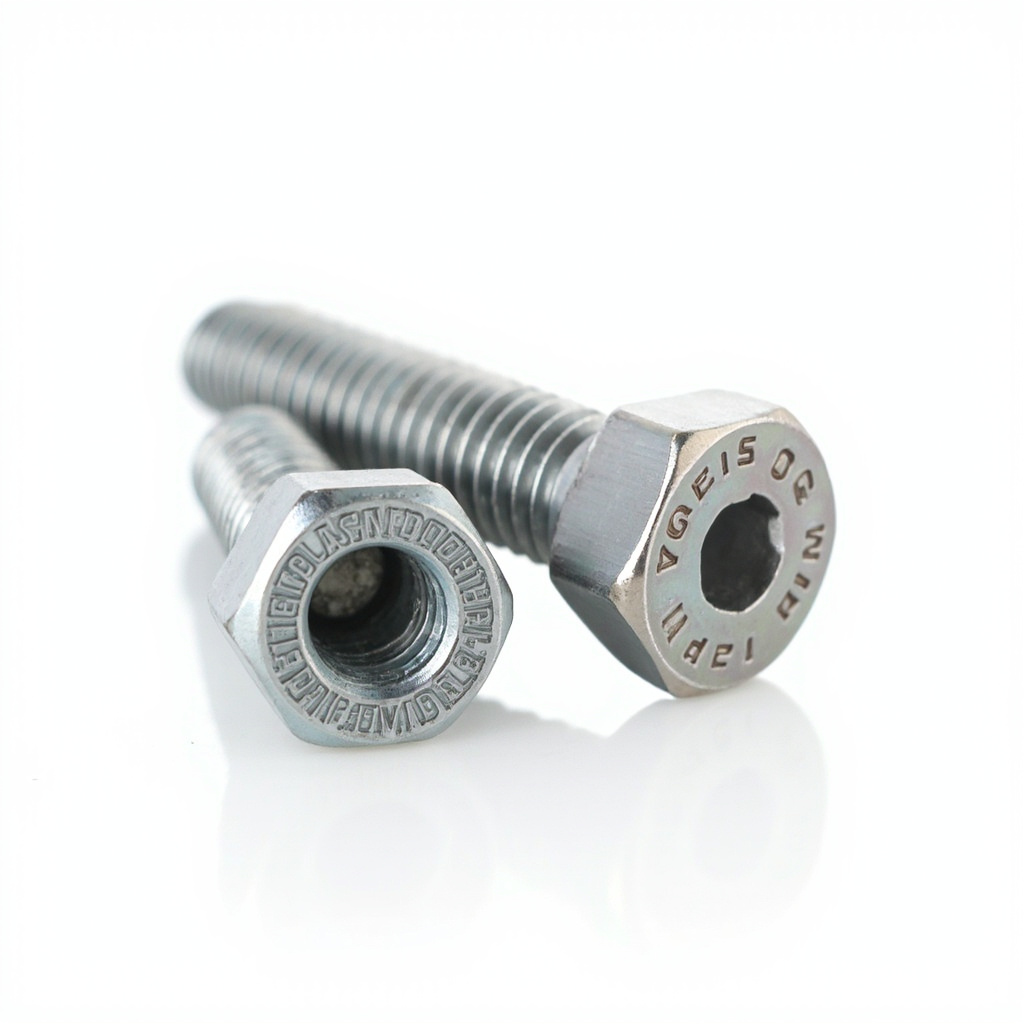
Head Marking Comparison
Head markings indicate fastener grade and manufacturer: Metric Hex Bolts (ISO/DIN): - 8.8: Two radial lines below grade marking - 10.9: Three radial lines - 12.9: Three radial lines with higher contrast Inch Hex Bolts (ASTM/ANSI): - Grade 5: Three radial lines - Grade 8: Six radial lines - Grade ASTM A325: 'A325' marking Understanding markings helps verify fastener grade at delivery. Standards-based procurement requires continuous learning as ISO, ASTM, DIN, and GB standards are revised every 3-5 years. Subscribe to standards update notifications and review specifications annually. The most common standards used in international fastener trade are ISO 898-1 (mechanical properties), ISO 3506-1 (stainless), ISO 3269 (acceptance inspection), ISO 4042 (coatings), and ISO 1502 (thread gauges). For B2B buyers, building a standards reference library with at least the top 20 standards relevant to your product mix is essential. Standards-based procurement requires continuous learning as ISO, ASTM, DIN, and GB standards are revised every 3-5 years. Subscribe to standards update notifications and review specifications annually. The most common standards used in international fastener trade are ISO 898-1 (mechanical properties), ISO 3506-1 (stainless), ISO 3269 (acceptance inspection), ISO 4042 (coatings), and ISO 1502 (thread gauges). For B2B buyers, building a standards reference library with at least the top 20 standards relevant to your product mix is essential. Standards-based procurement requires continuous learning as ISO, ASTM, DIN, and GB standards are revised every 3-5 years. Subscribe to standards update notifications and review specifications annually. The most common standards used in international fastener trade are ISO 898-1 (mechanical properties), ISO 3506-1 (stainless), ISO 3269 (acceptance inspection), ISO 4042 (coatings), and ISO 1502 (thread gauges). For B2B buyers, building a standards reference library with at least the top 20 standards relevant to your product mix is essential.
| Metric Grade | Tensile Strength (MPa) | Equivalent ASTM Grade | Head Marking |
|---|---|---|---|
| 4.8 | 400 | Grade 2 | None or 4.8 |
| 8.8 | 800 | Grade 5 | 8.8 |
| 10.9 | 1000 | Grade 8 | 10.9 |
| 12.9 | 1200 | Grade B | 12.9 |
Thread Standards: Metric vs UNC/UNF
Thread standards differ between metric and inch systems: Metric Threads (ISO/DIN): - Designation: M + nominal diameter (e.g., M10) - Thread pitch: Distance between threads (e.g., M10x1.5) - Angle: 60 degrees Inch Threads (UNC/UNF/UNEF): - UNC: Unified National Coarse (standard for general use) - UNF: Unified National Fine (higher strength applications) - UNEF: Unified National Extra Fine (special applications) - Thread count: Threads per inch (e.g., 3/4"-10 UNC) China manufacturers typically produce metric threads as standard but can produce UNC/UNF upon request. The comparison methodology above uses typical ranges from industry data and TradeGo procurement experience 2018-2024. Actual market prices fluctuate with raw material costs (steel, zinc, nickel), energy costs, labor costs, and currency exchange rates. For accurate comparison, request identical RFQs from 3-5 qualified suppliers and compare landed cost (product + shipping + insurance + duties). The lowest unit price is rarely the lowest total cost of ownership. The comparison methodology above uses typical ranges from industry data and TradeGo procurement experience 2018-2024. Actual market prices fluctuate with raw material costs (steel, zinc, nickel), energy costs, labor costs, and currency exchange rates. For accurate comparison, request identical RFQs from 3-5 qualified suppliers and compare landed cost (product + shipping + insurance + duties). The lowest unit price is rarely the lowest total cost of ownership. The comparison methodology above uses typical ranges from industry data and TradeGo procurement experience 2018-2024. Actual market prices fluctuate with raw material costs (steel, zinc, nickel), energy costs, labor costs, and currency exchange rates. For accurate comparison, request identical RFQs from 3-5 qualified suppliers and compare landed cost (product + shipping + insurance + duties). The lowest unit price is rarely the lowest total cost of ownership.
Common Standard Equivalents
Common fastener standards and their equivalents: Hex Bolts: - DIN 933 = ISO 4017 (full thread) - DIN 931 = ISO 4014 (partial thread) - ASTM A325 = ISO 4014 (high strength) Hex Nuts: - DIN 934 = ISO 4032 (standard hex nut) - DIN 985 = ISO 10511 (nylon insert lock nut) Washers: - DIN 125 = ISO 7089 (flat washer) - DIN 127 = ISO 7092 (spring lock washer) When ordering, specify the standard you require - most Chinese manufacturers can produce to any standard specification. The verification checklist applies to both initial supplier qualification and ongoing batch inspection. For high-risk applications (load-bearing structural, pressure vessels, mining, marine), add fatigue testing, salt-spray testing (ASTM B117), torque-tension testing, and post-installation inspection. The cost of additional verification is 0.1-0.3% of order value, while undetected quality failures can be 10-100x the order value in damages. The verification checklist applies to both initial supplier qualification and ongoing batch inspection. For high-risk applications (load-bearing structural, pressure vessels, mining, marine), add fatigue testing, salt-spray testing (ASTM B117), torque-tension testing, and post-installation inspection. The cost of additional verification is 0.1-0.3% of order value, while undetected quality failures can be 10-100x the order value in damages. The verification checklist applies to both initial supplier qualification and ongoing batch inspection. For high-risk applications (load-bearing structural, pressure vessels, mining, marine), add fatigue testing, salt-spray testing (ASTM B117), torque-tension testing, and post-installation inspection. The cost of additional verification is 0.1-0.3% of order value, while undetected quality failures can be 10-100x the order value in damages.
Frequently Asked Questions
See frequently asked questions below.
Related resources: high-tensile bolts anchor bolts stainless steel fasteners hex bolts lock nuts washers self-drilling screws socket screws. Supplier evaluation should be a continuous process, not a one-time exercise. Re-evaluate suppliers annually based on delivery performance, quality metrics, price competitiveness, and responsiveness. Maintain a supplier scorecard with weighted metrics: on-time delivery (25%), quality acceptance rate (30%), price competitiveness (20%), responsiveness (15%), and documentation accuracy (10%). Drop suppliers scoring below 70% over a 6-month period and qualify replacements. Supplier evaluation should be a continuous process, not a one-time exercise. Re-evaluate suppliers annually based on delivery performance, quality metrics, price competitiveness, and responsiveness. Maintain a supplier scorecard with weighted metrics: on-time delivery (25%), quality acceptance rate (30%), price competitiveness (20%), responsiveness (15%), and documentation accuracy (10%). Drop suppliers scoring below 70% over a 6-month period and qualify replacements. Supplier evaluation should be a continuous process, not a one-time exercise. Re-evaluate suppliers annually based on delivery performance, quality metrics, price competitiveness, and responsiveness. Maintain a supplier scorecard with weighted metrics: on-time delivery (25%), quality acceptance rate (30%), price competitiveness (20%), responsiveness (15%), and documentation accuracy (10%). Drop suppliers scoring below 70% over a 6-month period and qualify replacements.Request Custom Fasteners
Request Quote