Understand full thread vs half thread <a href="/products#bolts-nuts" class="text-primary-600 hover:text-primary-800 underline.
Thread Geometry: Understanding Thread Form and Engagement
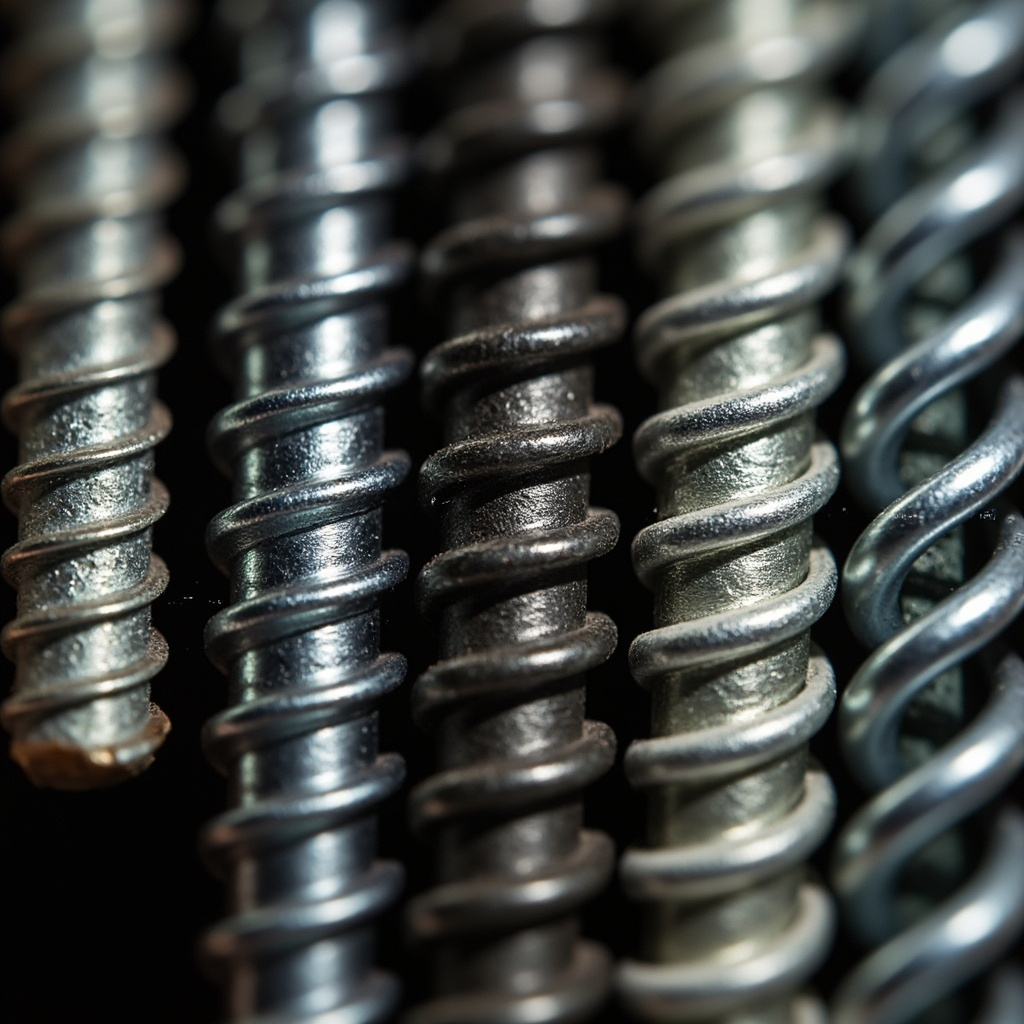
Thread terminology matters for correct specification. The thread pitch is the distance between adjacent threads. Coarse thread (c) has larger pitch per diameter—M12×1.75 (coarse) vs M12×1.25 (fine). Full thread engagement means the threads extend from the head bearing surface to the end of the bolt. Half thread (also called partial thread) bolts have an unthreaded shank between the head and thread start, providing approximately 60-70% thread engagement. Thread engagement in the nut must meet minimum requirements—typically the nut thickness equals the nominal bolt diameter for metric ISO threads. UNC (Unified National Coarse) is the American standard coarse thread with 60-degree angle and flattened roots, specified for bolts 1/4" diameter and larger. Related resources: high-tensile bolts anchor bolts stainless steel fasteners hex bolts lock nuts washers self-drilling screws socket screws. This procurement framework applies to fastener sourcing for construction, mining, energy, automotive, and general industrial applications. The decision logic prioritizes quality consistency, supplier reliability, and total cost of ownership over short-term unit price. For B2B buyers in Africa, Latin America, and Southeast Asia, additional considerations include regional customs requirements, container consolidation options, and payment security mechanisms. Standardized specifications that travel across projects reduce training time, RFQ processing time, and supplier onboarding effort. This procurement framework applies to fastener sourcing for construction, mining, energy, automotive, and general industrial applications. The decision logic prioritizes quality consistency, supplier reliability, and total cost of ownership over short-term unit price. For B2B buyers in Africa, Latin America, and Southeast Asia, additional considerations include regional customs requirements, container consolidation options, and payment security mechanisms. Standardized specifications that travel across projects reduce training time, RFQ processing time, and supplier onboarding effort. This procurement framework applies to fastener sourcing for construction, mining, energy, automotive, and general industrial applications. The decision logic prioritizes quality consistency, supplier reliability, and total cost of ownership over short-term unit price. For B2B buyers in Africa, Latin America, and Southeast Asia, additional considerations include regional customs requirements, container consolidation options, and payment security mechanisms. Standardized specifications that travel across projects reduce training time, RFQ processing time, and supplier onboarding effort.
Full Thread vs Half Thread Hex Bolts: When to Use Each
Choose full thread hex bolts when: the bolt passes completely through the母材 (base material) and engages a nut on the far side, when maximum clamping force is needed along the full bolt length, or when the母材 thickness varies (full thread adapts to any thickness). Choose half thread hex bolts when: the bolt engages a tapped hole in the母材 itself (not a nut), when shear strength of the unthreaded shank is needed (higher than thread shear), or when the connection is primarily in single shear and the thread would be in the shear plane. Long hex bolts with extended full thread are available for applications requiring deep engagement—such as machinery frames where bolt length must span multiple plate layers. Standards-based procurement requires continuous learning as ISO, ASTM, DIN, and GB standards are revised every 3-5 years. Subscribe to standards update notifications and review specifications annually. The most common standards used in international fastener trade are ISO 898-1 (mechanical properties), ISO 3506-1 (stainless), ISO 3269 (acceptance inspection), ISO 4042 (coatings), and ISO 1502 (thread gauges). For B2B buyers, building a standards reference library with at least the top 20 standards relevant to your product mix is essential. Standards-based procurement requires continuous learning as ISO, ASTM, DIN, and GB standards are revised every 3-5 years. Subscribe to standards update notifications and review specifications annually. The most common standards used in international fastener trade are ISO 898-1 (mechanical properties), ISO 3506-1 (stainless), ISO 3269 (acceptance inspection), ISO 4042 (coatings), and ISO 1502 (thread gauges). For B2B buyers, building a standards reference library with at least the top 20 standards relevant to your product mix is essential. Standards-based procurement requires continuous learning as ISO, ASTM, DIN, and GB standards are revised every 3-5 years. Subscribe to standards update notifications and review specifications annually. The most common standards used in international fastener trade are ISO 898-1 (mechanical properties), ISO 3506-1 (stainless), ISO 3269 (acceptance inspection), ISO 4042 (coatings), and ISO 1502 (thread gauges). For B2B buyers, building a standards reference library with at least the top 20 standards relevant to your product mix is essential.
Coarse vs Fine Thread: Application Selection Guide
The coarse thread vs fine thread decision depends on the application. Coarse threads (UNC for inch, metric coarse as default): faster assembly (fewer revolutions to engage), better resistance to cross-threading during installation, less sensitive to thread wear in production, preferred for tapped holes in low-strength母材 (aluminum, cast iron). Fine threads: better fatigue resistance under dynamic loading (larger stress concentration at root is offset by more threads sharing load), more Thread engagement in thin母材, easier to tune exact preload with fine adjustment, preferred for precision machinery, automotive cylinder heads, and thin-walled tubes. Our fine thread stainless steel bolts are available in M3 to M36 in both 304 and 316 grades with custom lengths. The comparison methodology above uses typical ranges from industry data and TradeGo procurement experience 2018-2024. Actual market prices fluctuate with raw material costs (steel, zinc, nickel), energy costs, labor costs, and currency exchange rates. For accurate comparison, request identical RFQs from 3-5 qualified suppliers and compare landed cost (product + shipping + insurance + duties). The lowest unit price is rarely the lowest total cost of ownership. The comparison methodology above uses typical ranges from industry data and TradeGo procurement experience 2018-2024. Actual market prices fluctuate with raw material costs (steel, zinc, nickel), energy costs, labor costs, and currency exchange rates. For accurate comparison, request identical RFQs from 3-5 qualified suppliers and compare landed cost (product + shipping + insurance + duties). The lowest unit price is rarely the lowest total cost of ownership. The comparison methodology above uses typical ranges from industry data and TradeGo procurement experience 2018-2024. Actual market prices fluctuate with raw material costs (steel, zinc, nickel), energy costs, labor costs, and currency exchange rates. For accurate comparison, request identical RFQs from 3-5 qualified suppliers and compare landed cost (product + shipping + insurance + duties). The lowest unit price is rarely the lowest total cost of ownership.
UNC Thread Stainless Steel Bolts: Stock and Availability
UNC (Unified National Coarse) stainless steel bolts in stock include sizes from #4 (2.8mm) through 1-1/2" diameter. UNC thread pitch: 1/4"-20 (20 threads per inch), 5/16"-18, 3/8"-16, 7/16"-14, 1/2"-13, 9/16"-12, 5/8"-11, 3/4"-10, 7/8"-9, 1"-8, 1-1/8"-7, 1-1/4"-7, 1-1/2"-6. Our UNC stock bolts in 304 stainless (ASTM F593 Group 1) and 316 stainless (ASTM F593 Group 2) are available for immediate shipment. UNF (Unified National Fine) variants are also stocked in common sizes. UNC hex bolts typically meet ASME B18.2.1 dimensional standards. For custom UNC special order items, lead time is 15-25 days from our factory. The verification checklist applies to both initial supplier qualification and ongoing batch inspection. For high-risk applications (load-bearing structural, pressure vessels, mining, marine), add fatigue testing, salt-spray testing (ASTM B117), torque-tension testing, and post-installation inspection. The cost of additional verification is 0.1-0.3% of order value, while undetected quality failures can be 10-100x the order value in damages. The verification checklist applies to both initial supplier qualification and ongoing batch inspection. For high-risk applications (load-bearing structural, pressure vessels, mining, marine), add fatigue testing, salt-spray testing (ASTM B117), torque-tension testing, and post-installation inspection. The cost of additional verification is 0.1-0.3% of order value, while undetected quality failures can be 10-100x the order value in damages. The verification checklist applies to both initial supplier qualification and ongoing batch inspection. For high-risk applications (load-bearing structural, pressure vessels, mining, marine), add fatigue testing, salt-spray testing (ASTM B117), torque-tension testing, and post-installation inspection. The cost of additional verification is 0.1-0.3% of order value, while undetected quality failures can be 10-100x the order value in damages.
Thread Selection Quick Reference
Content coming soon.
Supplier evaluation should be a continuous process, not a one-time exercise. Re-evaluate suppliers annually based on delivery performance, quality metrics, price competitiveness, and responsiveness. Maintain a supplier scorecard with weighted metrics: on-time delivery (25%), quality acceptance rate (30%), price competitiveness (20%), responsiveness (15%), and documentation accuracy (10%). Drop suppliers scoring below 70% over a 6-month period and qualify replacements. Supplier evaluation should be a continuous process, not a one-time exercise. Re-evaluate suppliers annually based on delivery performance, quality metrics, price competitiveness, and responsiveness. Maintain a supplier scorecard with weighted metrics: on-time delivery (25%), quality acceptance rate (30%), price competitiveness (20%), responsiveness (15%), and documentation accuracy (10%). Drop suppliers scoring below 70% over a 6-month period and qualify replacements. Supplier evaluation should be a continuous process, not a one-time exercise. Re-evaluate suppliers annually based on delivery performance, quality metrics, price competitiveness, and responsiveness. Maintain a supplier scorecard with weighted metrics: on-time delivery (25%), quality acceptance rate (30%), price competitiveness (20%), responsiveness (15%), and documentation accuracy (10%). Drop suppliers scoring below 70% over a 6-month period and qualify replacements.| Thread Type | Best For | Advantages | Disadvantages |
|---|---|---|---|
| Metric Coarse (Default) | General fastening, steel structures | Fast assembly, robust, standard | Less fine adjustment |
| Metric Fine | Precision machinery, thin walls | Better preload control, fatigue life | Slower assembly, cross-thread risk |
| UNC (Inch Coarse) | American equipment, repair parts | Global availability, cost effective | Not metric compatible |
| UNF (Inch Fine) | Aerospace, automotive, precision | High preload, vibration resistant | Limited sizes, premium cost |
Frequently Asked Questions
See frequently asked questions below.
Related resources: high-tensile bolts anchor bolts stainless steel fasteners hex bolts lock nuts washers self-drilling screws socket screws. For B2B buyers operating in multiple countries, harmonize specifications with regional standards and local customs requirements. Common regional frameworks: SABS (South Africa), KEBS (Kenya), TBS (Tanzania), ZIMRA (Zimbabwe), SON (Nigeria), and AfCFTA standards for pan-Africa trade. Local standards compliance is often mandatory for public infrastructure projects, mining operations, and government tenders. For B2B buyers operating in multiple countries, harmonize specifications with regional standards and local customs requirements. Common regional frameworks: SABS (South Africa), KEBS (Kenya), TBS (Tanzania), ZIMRA (Zimbabwe), SON (Nigeria), and AfCFTA standards for pan-Africa trade. Local standards compliance is often mandatory for public infrastructure projects, mining operations, and government tenders. For B2B buyers operating in multiple countries, harmonize specifications with regional standards and local customs requirements. Common regional frameworks: SABS (South Africa), KEBS (Kenya), TBS (Tanzania), ZIMRA (Zimbabwe), SON (Nigeria), and AfCFTA standards for pan-Africa trade. Local standards compliance is often mandatory for public infrastructure projects, mining operations, and government tenders.Can I use a fine thread nut on a coarse thread bolt?
No. Coarse and fine threads have different pitches and are not interchangeable. M12×1.75 coarse bolt requires M12×1.75 nut; M12×1.25 fine bolt requires M12×1.25 nut.
When should I specify full thread bolts?
Specify full thread when母材 thickness is variable, when bolt passes through the母材 and engages a nut beyond, or when maximum clamping range is needed along the bolt length.
Get Threaded Fastener Prices
Request Quote