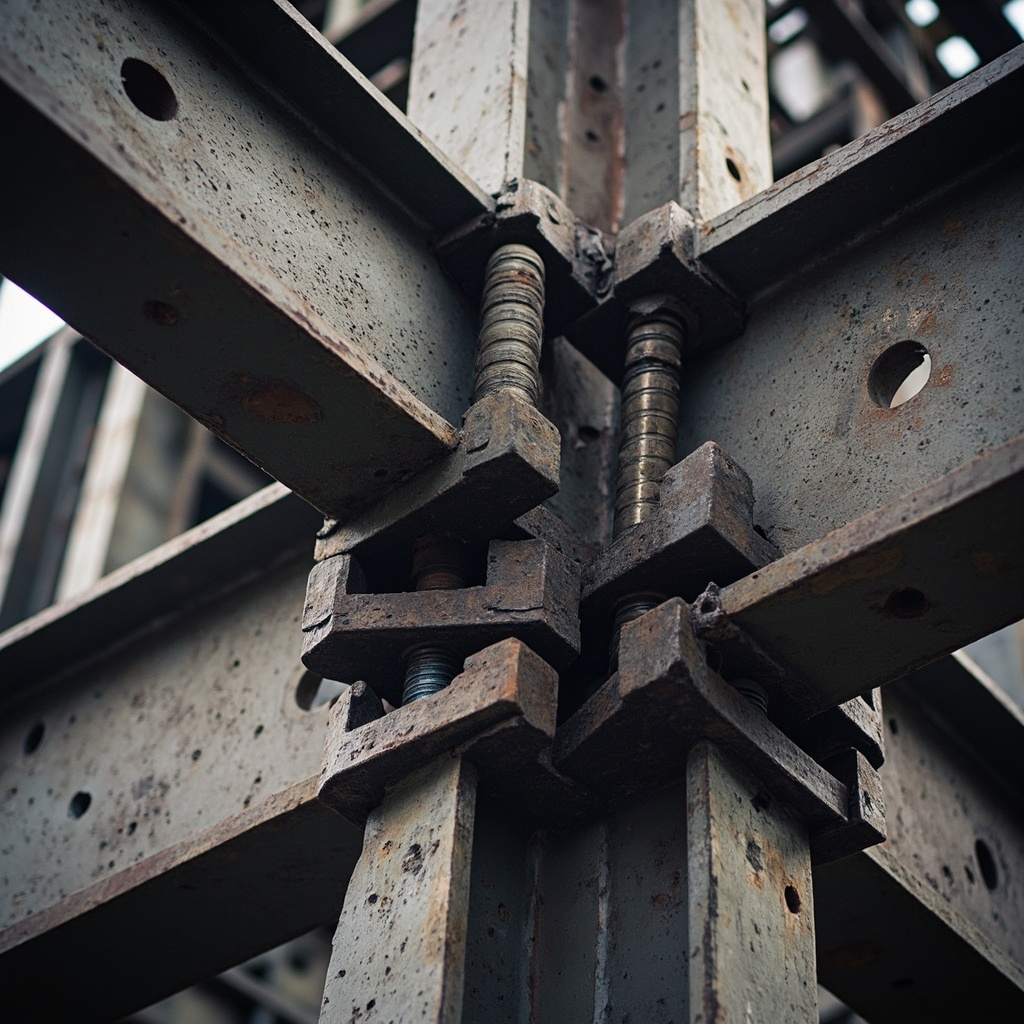
Complete guide to structural <a href="/products#bolts-nuts" class="text-primary-600 hover:text-primary-800 underline underline-offset-2">bolts</a> for.
Fixing Bolts for Building Curtain Wall Systems
Curtain wall fixing bolts anchor the building facade to the structural frame while accommodating thermal movement and deflection. The primary considerations are: (1) Load capacity—the bolt must resist wind loads (tension) and seismic forces (shear), typically requiring 10.9 or 8.8 HDG grade, (2) Corrosion resistance—exposed conditions require HDG or 316 stainless for coastal buildings, (3) Adjustability—many curtain wall systems use slotted holes requiring heavy hex nuts and washers for position adjustment before final tightening. Stainless steel刺客螺栓 (stainless steel set screws / grub screws) are used in some curtain wall systems to lock adjustable brackets. Perimeter sealants must be compatible with the fastener finish. Common specifications include M12 or M16 bolts at 300-400mm spacing around the perimeter, with calculations per ASCE 7 or equivalent local code. Related resources: high-tensile bolts anchor bolts stainless steel fasteners hex bolts lock nuts washers self-drilling screws socket screws. This procurement framework applies to fastener sourcing for construction, mining, energy, automotive, and general industrial applications. The decision logic prioritizes quality consistency, supplier reliability, and total cost of ownership over short-term unit price. For B2B buyers in Africa, Latin America, and Southeast Asia, additional considerations include regional customs requirements, container consolidation options, and payment security mechanisms. Standardized specifications that travel across projects reduce training time, RFQ processing time, and supplier onboarding effort. This procurement framework applies to fastener sourcing for construction, mining, energy, automotive, and general industrial applications. The decision logic prioritizes quality consistency, supplier reliability, and total cost of ownership over short-term unit price. For B2B buyers in Africa, Latin America, and Southeast Asia, additional considerations include regional customs requirements, container consolidation options, and payment security mechanisms. Standardized specifications that travel across projects reduce training time, RFQ processing time, and supplier onboarding effort. This procurement framework applies to fastener sourcing for construction, mining, energy, automotive, and general industrial applications. The decision logic prioritizes quality consistency, supplier reliability, and total cost of ownership over short-term unit price. For B2B buyers in Africa, Latin America, and Southeast Asia, additional considerations include regional customs requirements, container consolidation options, and payment security mechanisms. Standardized specifications that travel across projects reduce training time, RFQ processing time, and supplier onboarding effort.
Heavy Duty Bolts for Container Connections
Intermodal shipping container connection systems use specialized heavy duty bolts to secure containers to chassis, stackers, and ground anchors. ISO containers use COR-TEN steel with specific mounting provisions at the corner castings—the standard fastener is a M12 or M16 Grade 8.8 set with spring washers and flat washers. For container stacking connections (twistlock bolts), the fastener must withstand high preload and vibration. Our heavy duty bolts for container applications include Grade 8.8 HDG for standard connections and Grade 10.9 HDG for high-load stacking applications. Custom length extra large hex bolts (M20-M30) with heavy hex nuts are available for specialized container modification projects. Standards-based procurement requires continuous learning as ISO, ASTM, DIN, and GB standards are revised every 3-5 years. Subscribe to standards update notifications and review specifications annually. The most common standards used in international fastener trade are ISO 898-1 (mechanical properties), ISO 3506-1 (stainless), ISO 3269 (acceptance inspection), ISO 4042 (coatings), and ISO 1502 (thread gauges). For B2B buyers, building a standards reference library with at least the top 20 standards relevant to your product mix is essential. Standards-based procurement requires continuous learning as ISO, ASTM, DIN, and GB standards are revised every 3-5 years. Subscribe to standards update notifications and review specifications annually. The most common standards used in international fastener trade are ISO 898-1 (mechanical properties), ISO 3506-1 (stainless), ISO 3269 (acceptance inspection), ISO 4042 (coatings), and ISO 1502 (thread gauges). For B2B buyers, building a standards reference library with at least the top 20 standards relevant to your product mix is essential. Standards-based procurement requires continuous learning as ISO, ASTM, DIN, and GB standards are revised every 3-5 years. Subscribe to standards update notifications and review specifications annually. The most common standards used in international fastener trade are ISO 898-1 (mechanical properties), ISO 3506-1 (stainless), ISO 3269 (acceptance inspection), ISO 4042 (coatings), and ISO 1502 (thread gauges). For B2B buyers, building a standards reference library with at least the top 20 standards relevant to your product mix is essential.
Extra Large & Heavy Duty Hex Bolts: Dimensions and Selection
Extra large heavy duty hex bolts (M24 to M72) are specified for the most demanding structural connections in bridges, stadium structures, and industrial plants. Heavy hex bolts (ASME B18.2.1 / DIN 931) have a larger bearing surface than standard hex bolts, providing improved distribution of load on the connected material—critical for bolted steel connections where the hole-diameter-to-bolt-diameter ratio approaches 1.5. The extra thick head design (also called "fat head" or "frame bolts") provides additional bearing area for slotted or oversized holes. Grade A325 or Grade 490 (10.9 equivalent, ASTM F3125) are the standard structural grades for heavy hex bolts in North American practice, while EN 14399-1 defines the European system. The comparison methodology above uses typical ranges from industry data and TradeGo procurement experience 2018-2024. Actual market prices fluctuate with raw material costs (steel, zinc, nickel), energy costs, labor costs, and currency exchange rates. For accurate comparison, request identical RFQs from 3-5 qualified suppliers and compare landed cost (product + shipping + insurance + duties). The lowest unit price is rarely the lowest total cost of ownership. The comparison methodology above uses typical ranges from industry data and TradeGo procurement experience 2018-2024. Actual market prices fluctuate with raw material costs (steel, zinc, nickel), energy costs, labor costs, and currency exchange rates. For accurate comparison, request identical RFQs from 3-5 qualified suppliers and compare landed cost (product + shipping + insurance + duties). The lowest unit price is rarely the lowest total cost of ownership. The comparison methodology above uses typical ranges from industry data and TradeGo procurement experience 2018-2024. Actual market prices fluctuate with raw material costs (steel, zinc, nickel), energy costs, labor costs, and currency exchange rates. For accurate comparison, request identical RFQs from 3-5 qualified suppliers and compare landed cost (product + shipping + insurance + duties). The lowest unit price is rarely the lowest total cost of ownership.
Hex Nuts for Steel Structure Building Connections
Steel structure building connections require properly matched hex nuts that maintain preload under dynamic loading. Heavy hex nuts (DIN 6925 with flange) provide the increased bearing area needed for bolted shear connections in I-beam flanges and column splices. For structural steel work, the rule is simple: the nut must be of equal or greater strength than the bolt. Grade 10.9 bolts require Grade 10 nuts; Grade A325 bolts (50 ksi) require ASTM A563 Grade DH nuts. Surface finish of the nut should match or be compatible with the bolt coating—HDG bolts should be paired with HDG or mechanically deposited zinc nuts. Oversized holes require flat washers (minimum 3mm thickness) to prevent pull-through. The verification checklist applies to both initial supplier qualification and ongoing batch inspection. For high-risk applications (load-bearing structural, pressure vessels, mining, marine), add fatigue testing, salt-spray testing (ASTM B117), torque-tension testing, and post-installation inspection. The cost of additional verification is 0.1-0.3% of order value, while undetected quality failures can be 10-100x the order value in damages. The verification checklist applies to both initial supplier qualification and ongoing batch inspection. For high-risk applications (load-bearing structural, pressure vessels, mining, marine), add fatigue testing, salt-spray testing (ASTM B117), torque-tension testing, and post-installation inspection. The cost of additional verification is 0.1-0.3% of order value, while undetected quality failures can be 10-100x the order value in damages. The verification checklist applies to both initial supplier qualification and ongoing batch inspection. For high-risk applications (load-bearing structural, pressure vessels, mining, marine), add fatigue testing, salt-spray testing (ASTM B117), torque-tension testing, and post-installation inspection. The cost of additional verification is 0.1-0.3% of order value, while undetected quality failures can be 10-100x the order value in damages.
Heavy Duty Bolt Selection by Application
Content coming soon.
Supplier evaluation should be a continuous process, not a one-time exercise. Re-evaluate suppliers annually based on delivery performance, quality metrics, price competitiveness, and responsiveness. Maintain a supplier scorecard with weighted metrics: on-time delivery (25%), quality acceptance rate (30%), price competitiveness (20%), responsiveness (15%), and documentation accuracy (10%). Drop suppliers scoring below 70% over a 6-month period and qualify replacements. Supplier evaluation should be a continuous process, not a one-time exercise. Re-evaluate suppliers annually based on delivery performance, quality metrics, price competitiveness, and responsiveness. Maintain a supplier scorecard with weighted metrics: on-time delivery (25%), quality acceptance rate (30%), price competitiveness (20%), responsiveness (15%), and documentation accuracy (10%). Drop suppliers scoring below 70% over a 6-month period and qualify replacements. Supplier evaluation should be a continuous process, not a one-time exercise. Re-evaluate suppliers annually based on delivery performance, quality metrics, price competitiveness, and responsiveness. Maintain a supplier scorecard with weighted metrics: on-time delivery (25%), quality acceptance rate (30%), price competitiveness (20%), responsiveness (15%), and documentation accuracy (10%). Drop suppliers scoring below 70% over a 6-month period and qualify replacements.| Application | Bolt Size | Grade | Coating | Nut Type |
|---|---|---|---|---|
| Curtain Wall Perimeter | M12-M16 | 8.8 or 10.9 | HDG | Heavy Hex + Flat Washer |
| Steel Frame Connection | M20-M30 | 10.9 (EN 14399) | HDG | Heavy Hex Nut |
| Container Corner Locking | M12-M16 | 8.8 | HDG + ZFP | Standard Hex + SW |
| Bridge Structural | M24-M36 | 10.9 (ASTM A325) | HDG | Heavy Hex A563 DH |
| Industrial Plant Equipment | M16-M24 | 8.8 or 10.9 | HDG | Heavy Hex Nut |
| Pre-Engineered Building | M12-M22 | 8.8 | HDG or ZP | Standard Hex |
Frequently Asked Questions
See frequently asked questions below.
Related resources: high-tensile bolts anchor bolts stainless steel fasteners hex bolts lock nuts washers self-drilling screws socket screws. For B2B buyers operating in multiple countries, harmonize specifications with regional standards and local customs requirements. Common regional frameworks: SABS (South Africa), KEBS (Kenya), TBS (Tanzania), ZIMRA (Zimbabwe), SON (Nigeria), and AfCFTA standards for pan-Africa trade. Local standards compliance is often mandatory for public infrastructure projects, mining operations, and government tenders. For B2B buyers operating in multiple countries, harmonize specifications with regional standards and local customs requirements. Common regional frameworks: SABS (South Africa), KEBS (Kenya), TBS (Tanzania), ZIMRA (Zimbabwe), SON (Nigeria), and AfCFTA standards for pan-Africa trade. Local standards compliance is often mandatory for public infrastructure projects, mining operations, and government tenders. For B2B buyers operating in multiple countries, harmonize specifications with regional standards and local customs requirements. Common regional frameworks: SABS (South Africa), KEBS (Kenya), TBS (Tanzania), ZIMRA (Zimbabwe), SON (Nigeria), and AfCFTA standards for pan-Africa trade. Local standards compliance is often mandatory for public infrastructure projects, mining operations, and government tenders.What is the difference between heavy hex and standard hex bolts?
Heavy hex bolts have a larger bearing surface (wider across flats and a thicker head) than standard hex bolts. This provides better load distribution for structural connections with oversized holes.
What bolts are used for curtain wall fixing?
Curtain wall fixing typically uses M12 or M16 Grade 8.8 HDG hex bolts or specialized stainless steel刺客螺栓 with nylon anchors for concrete backup. Spec depends on wind load calculations.
Get Structural Bolt Prices for Construction
Request Quote