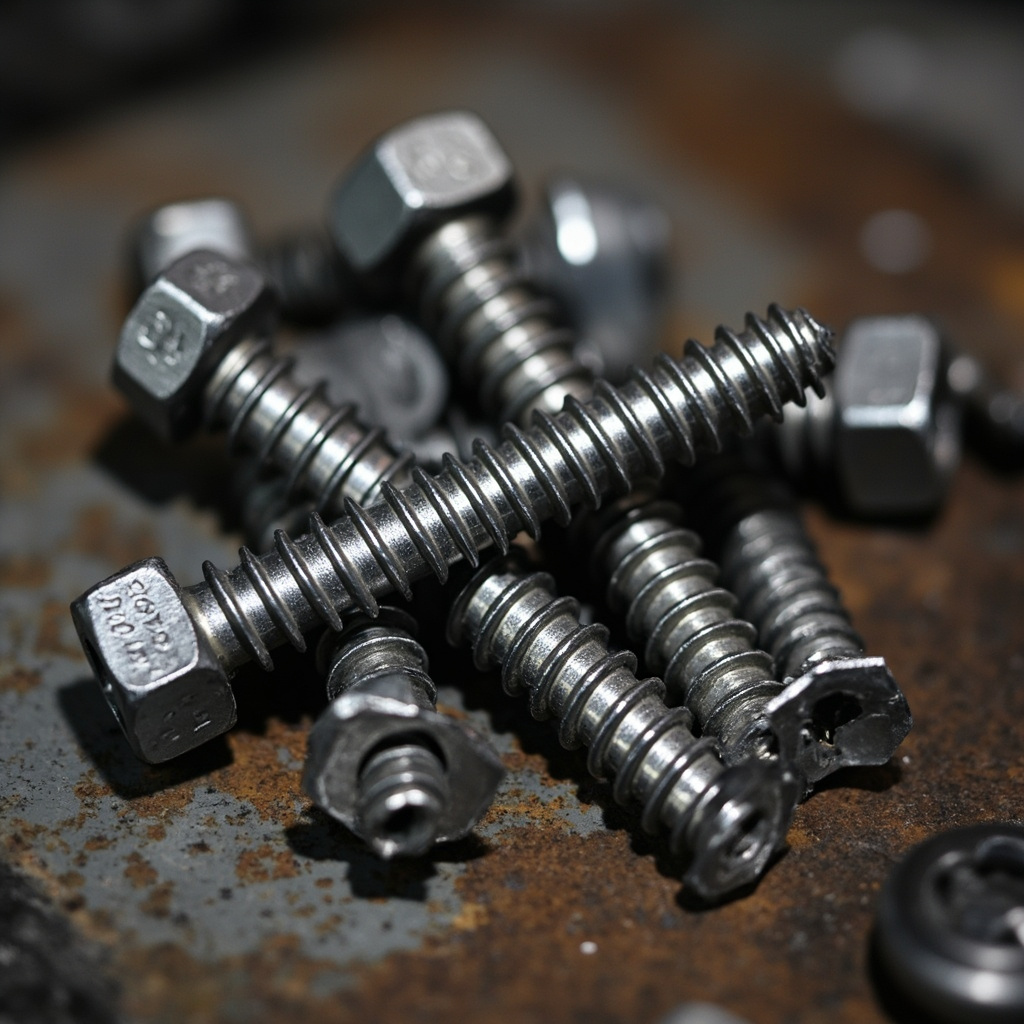
Understand bolt grades 8.8, 10.9, and 12.9 for structural, automotive, and machinery applications. Galvanized, black oxide.
Understanding the Grade Marking System
The bolt grade marking system uses two numbers separated by a decimal point. The first number represents minimum tensile strength in MPa divided by 100. The second number is the yield ratio (yield strength / tensile strength) multiplied by 10. For Grade 8.8: tensile = 800 MPa, yield = 640 MPa. For Grade 10.9: tensile = 1000 MPa, yield = 900 MPa. For Grade 12.9: tensile = 1220 MPa, yield = 1100 MPa. ISO 898-1 governs metric bolt grades globally. These markings appear on the bolt head and are the primary method for identifying bolt strength in the field. Never substitute a lower grade bolt where a higher grade is specified—structural failures can result. Related resources: high-tensile bolts anchor bolts stainless steel fasteners hex bolts lock nuts washers self-drilling screws socket screws. This procurement framework applies to fastener sourcing for construction, mining, energy, automotive, and general industrial applications. The decision logic prioritizes quality consistency, supplier reliability, and total cost of ownership over short-term unit price. For B2B buyers in Africa, Latin America, and Southeast Asia, additional considerations include regional customs requirements, container consolidation options, and payment security mechanisms. Standardized specifications that travel across projects reduce training time, RFQ processing time, and supplier onboarding effort. This procurement framework applies to fastener sourcing for construction, mining, energy, automotive, and general industrial applications. The decision logic prioritizes quality consistency, supplier reliability, and total cost of ownership over short-term unit price. For B2B buyers in Africa, Latin America, and Southeast Asia, additional considerations include regional customs requirements, container consolidation options, and payment security mechanisms. Standardized specifications that travel across projects reduce training time, RFQ processing time, and supplier onboarding effort. This procurement framework applies to fastener sourcing for construction, mining, energy, automotive, and general industrial applications. The decision logic prioritizes quality consistency, supplier reliability, and total cost of ownership over short-term unit price. For B2B buyers in Africa, Latin America, and Southeast Asia, additional considerations include regional customs requirements, container consolidation options, and payment security mechanisms. Standardized specifications that travel across projects reduce training time, RFQ processing time, and supplier onboarding effort.
Grade 8.8: Galvanized Bolts for Machinery and Auto Chassis
Grade 8.8 high strength bolts are the workhorse of machinery and automotive applications. Hot-dip galvanized 8.8 bolts provide 800 MPa tensile strength with excellent corrosion protection for automobile chassis, engine mounts, and suspension components. The zinc coating of hot-dip galvanizing (typically 40-80 microns) provides cathodic protection even if the coating is damaged. Grade 8.8 is the minimum recommended for structural connections in most building codes. In automotive applications, wheel hub bolts and steering components commonly use 8.8 grade with specific torque specifications. Our factory supplies Grade 8.8 in diameters M6 to M36, with either zinc plated (for indoor) or hot-dip galvanized (for outdoor/automotive) finishes. Standards-based procurement requires continuous learning as ISO, ASTM, DIN, and GB standards are revised every 3-5 years. Subscribe to standards update notifications and review specifications annually. The most common standards used in international fastener trade are ISO 898-1 (mechanical properties), ISO 3506-1 (stainless), ISO 3269 (acceptance inspection), ISO 4042 (coatings), and ISO 1502 (thread gauges). For B2B buyers, building a standards reference library with at least the top 20 standards relevant to your product mix is essential. Standards-based procurement requires continuous learning as ISO, ASTM, DIN, and GB standards are revised every 3-5 years. Subscribe to standards update notifications and review specifications annually. The most common standards used in international fastener trade are ISO 898-1 (mechanical properties), ISO 3506-1 (stainless), ISO 3269 (acceptance inspection), ISO 4042 (coatings), and ISO 1502 (thread gauges). For B2B buyers, building a standards reference library with at least the top 20 standards relevant to your product mix is essential. Standards-based procurement requires continuous learning as ISO, ASTM, DIN, and GB standards are revised every 3-5 years. Subscribe to standards update notifications and review specifications annually. The most common standards used in international fastener trade are ISO 898-1 (mechanical properties), ISO 3506-1 (stainless), ISO 3269 (acceptance inspection), ISO 4042 (coatings), and ISO 1502 (thread gauges). For B2B buyers, building a standards reference library with at least the top 20 standards relevant to your product mix is essential.
Grade 10.9: Structural Bolts for Construction and Engineering
Grade 10.9 structural hex bolts offer 1000 MPa tensile strength and are specified for high-stress applications in construction, bridges, and industrial equipment. These bolts are commonly used in steel structure connections, crane rail attachments, and machinery foundations where preload requirements exceed what 8.8 grade can provide. Grade 10.9 requires careful torque control during installation—always use calibrated torque wrenches and follow specified preload values. The zinc-plated finish is standard for indoor applications, while hot-dip galvanizing (at reduced thread class) is used for outdoor exposure. Many engineering projects specify 10.9 as the minimum grade for bolted connections in structural steelwork. The comparison methodology above uses typical ranges from industry data and TradeGo procurement experience 2018-2024. Actual market prices fluctuate with raw material costs (steel, zinc, nickel), energy costs, labor costs, and currency exchange rates. For accurate comparison, request identical RFQs from 3-5 qualified suppliers and compare landed cost (product + shipping + insurance + duties). The lowest unit price is rarely the lowest total cost of ownership. The comparison methodology above uses typical ranges from industry data and TradeGo procurement experience 2018-2024. Actual market prices fluctuate with raw material costs (steel, zinc, nickel), energy costs, labor costs, and currency exchange rates. For accurate comparison, request identical RFQs from 3-5 qualified suppliers and compare landed cost (product + shipping + insurance + duties). The lowest unit price is rarely the lowest total cost of ownership. The comparison methodology above uses typical ranges from industry data and TradeGo procurement experience 2018-2024. Actual market prices fluctuate with raw material costs (steel, zinc, nickel), energy costs, labor costs, and currency exchange rates. For accurate comparison, request identical RFQs from 3-5 qualified suppliers and compare landed cost (product + shipping + insurance + duties). The lowest unit price is rarely the lowest total cost of ownership.
Grade 12.9: Black Oxide Socket Bolts for Precision Machinery
Grade 12.9 black oxide socket head cap screws deliver 1220 MPa tensile strength—the highest commercial grade available. The socket head design allows installation in confined spaces where standard hex heads cannot fit, using an Allen key (hex wrench) for actuation. Black oxide finish provides mild corrosion resistance and a non-reflective appearance suitable for machinery where aesthetics matter. Grade 12.9 is used in high-precision applications including injection molding machines, press equipment, hydraulic systems, and aerospace tooling. Due to hydrogen embrittlement risk from plating processes, Grade 12.9 should not be electroplated—use black oxide or Parkerized finishes instead. Always follow proper torque specifications and consider using thread locker for vibration-prone applications. The verification checklist applies to both initial supplier qualification and ongoing batch inspection. For high-risk applications (load-bearing structural, pressure vessels, mining, marine), add fatigue testing, salt-spray testing (ASTM B117), torque-tension testing, and post-installation inspection. The cost of additional verification is 0.1-0.3% of order value, while undetected quality failures can be 10-100x the order value in damages. The verification checklist applies to both initial supplier qualification and ongoing batch inspection. For high-risk applications (load-bearing structural, pressure vessels, mining, marine), add fatigue testing, salt-spray testing (ASTM B117), torque-tension testing, and post-installation inspection. The cost of additional verification is 0.1-0.3% of order value, while undetected quality failures can be 10-100x the order value in damages. The verification checklist applies to both initial supplier qualification and ongoing batch inspection. For high-risk applications (load-bearing structural, pressure vessels, mining, marine), add fatigue testing, salt-spray testing (ASTM B117), torque-tension testing, and post-installation inspection. The cost of additional verification is 0.1-0.3% of order value, while undetected quality failures can be 10-100x the order value in damages.
Grade 8.8 vs 10.9 vs 12.9: Mechanical Properties Comparison
Compare tensile strength, yield strength, proof load, and recommended applications for each bolt grade. Supplier evaluation should be a continuous process, not a one-time exercise. Re-evaluate suppliers annually based on delivery performance, quality metrics, price competitiveness, and responsiveness. Maintain a supplier scorecard with weighted metrics: on-time delivery (25%), quality acceptance rate (30%), price competitiveness (20%), responsiveness (15%), and documentation accuracy (10%). Drop suppliers scoring below 70% over a 6-month period and qualify replacements. Supplier evaluation should be a continuous process, not a one-time exercise. Re-evaluate suppliers annually based on delivery performance, quality metrics, price competitiveness, and responsiveness. Maintain a supplier scorecard with weighted metrics: on-time delivery (25%), quality acceptance rate (30%), price competitiveness (20%), responsiveness (15%), and documentation accuracy (10%). Drop suppliers scoring below 70% over a 6-month period and qualify replacements. Supplier evaluation should be a continuous process, not a one-time exercise. Re-evaluate suppliers annually based on delivery performance, quality metrics, price competitiveness, and responsiveness. Maintain a supplier scorecard with weighted metrics: on-time delivery (25%), quality acceptance rate (30%), price competitiveness (20%), responsiveness (15%), and documentation accuracy (10%). Drop suppliers scoring below 70% over a 6-month period and qualify replacements.
| Property | Grade 8.8 | Grade 10.9 | Grade 12.9 |
|---|---|---|---|
| Tensile Strength | 800 MPa | 1000 MPa | 1220 MPa |
| Yield Strength | 640 MPa | 900 MPa | 1100 MPa |
| Proof Load | 580 MPa | 830 MPa | 1100 MPa |
| Head Marking | 8.8 | 10.9 | 12.9 |
| Common Coatings | HDG, Zinc Plated | Zinc Plated, HDG | Black Oxide, Parkerized |
| Auto Chassis | Yes (standard) | Yes (heavy duty) | Rarely |
| Structural Steel | Yes (indoor) | Yes (preferred) | Specialized |
| Machinery/Precision | General | Heavy duty | High precision |
| Price Index | 1.0x (baseline) | 1.3x | 1.8x |
Frequently Asked Questions
See frequently asked questions below.
Related resources: high-tensile bolts anchor bolts stainless steel fasteners hex bolts lock nuts washers self-drilling screws socket screws. For B2B buyers operating in multiple countries, harmonize specifications with regional standards and local customs requirements. Common regional frameworks: SABS (South Africa), KEBS (Kenya), TBS (Tanzania), ZIMRA (Zimbabwe), SON (Nigeria), and AfCFTA standards for pan-Africa trade. Local standards compliance is often mandatory for public infrastructure projects, mining operations, and government tenders. For B2B buyers operating in multiple countries, harmonize specifications with regional standards and local customs requirements. Common regional frameworks: SABS (South Africa), KEBS (Kenya), TBS (Tanzania), ZIMRA (Zimbabwe), SON (Nigeria), and AfCFTA standards for pan-Africa trade. Local standards compliance is often mandatory for public infrastructure projects, mining operations, and government tenders. For B2B buyers operating in multiple countries, harmonize specifications with regional standards and local customs requirements. Common regional frameworks: SABS (South Africa), KEBS (Kenya), TBS (Tanzania), ZIMRA (Zimbabwe), SON (Nigeria), and AfCFTA standards for pan-Africa trade. Local standards compliance is often mandatory for public infrastructure projects, mining operations, and government tenders.Can I substitute a 10.9 bolt where 8.8 is specified?
Generally yes—using a higher grade bolt where lower is specified is usually acceptable. However, always verify torque specifications match, and consider thread engagement depth.
What coating should I use for outdoor high-strength bolts?
Hot-dip galvanizing (HDG) is recommended for outdoor structural bolts. The zinc coating provides cathodic protection. Note: HDG reduces thread class from 6g to 8g.
What is the difference between hex bolts and socket head cap screws?
Hex bolts use an external hex drive requiring a wrench. Socket head cap screws use an internal hex (Allen) drive, allowing lower profile installation in recessed areas.
Get High Strength Bolt Factory Prices
Request Quote