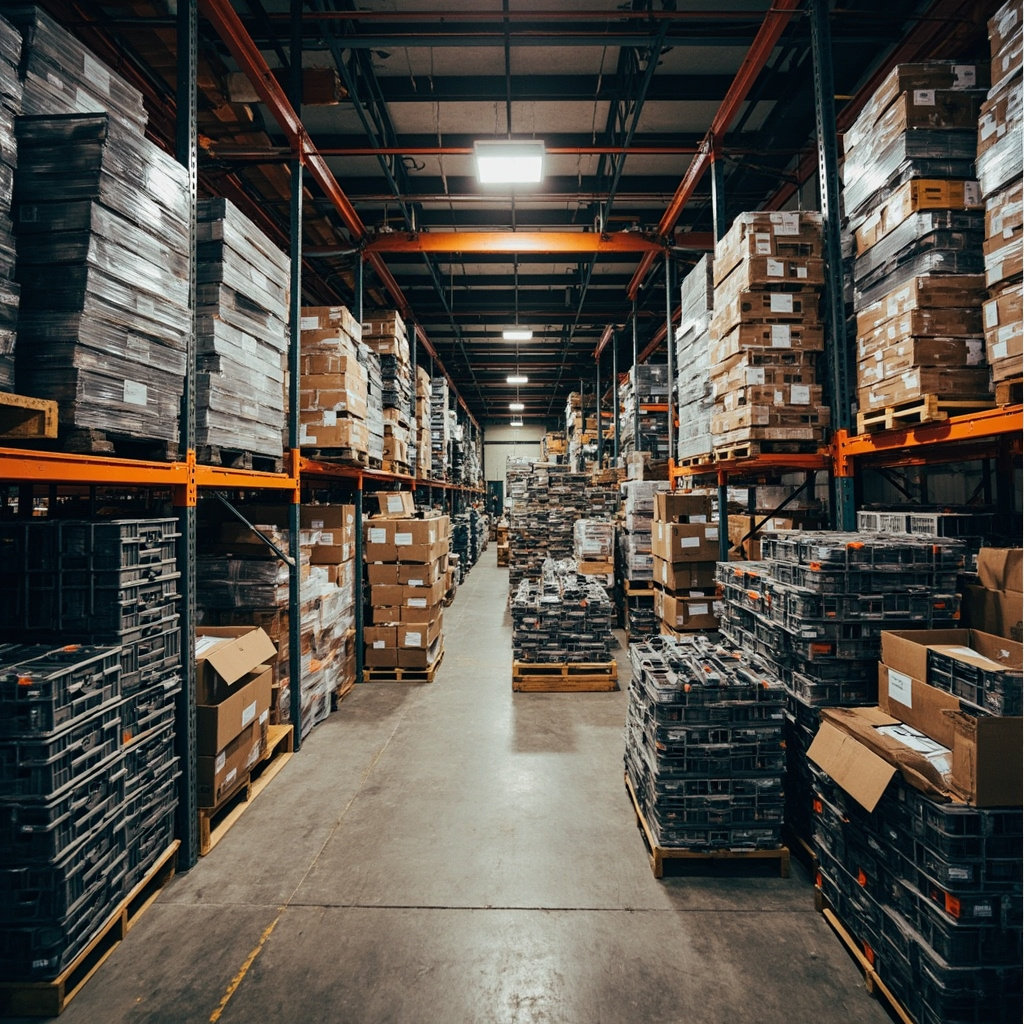
Guide to bulk fastener purchasing: volume discounts, container optimization, inventory management, and cost reduction strategies.
Benefits of Bulk Ordering
Bulk ordering fasteners offers significant cost savings through volume discounts, reduced shipping costs per unit, and lower administrative overhead from fewer purchase orders. For businesses with steady fastener consumption, strategic bulk purchasing is essential for competitive pricing. African distributors and contractors can benefit from container-load ordering from manufacturers like TradeGo. A 20ft container holds 15-25 tonnes of mixed fasteners, which can represent 3-6 months of supply for medium-sized operations. The key is balancing inventory carrying costs against purchase price savings. Well-managed bulk orders can reduce fastener costs by 20-40% compared to small retail purchases. Related resources: high-tensile bolts anchor bolts stainless steel fasteners hex bolts lock nuts washers self-drilling screws socket screws. This procurement framework applies to fastener sourcing for construction, mining, energy, automotive, and general industrial applications. The decision logic prioritizes quality consistency, supplier reliability, and total cost of ownership over short-term unit price. For B2B buyers in Africa, Latin America, and Southeast Asia, additional considerations include regional customs requirements, container consolidation options, and payment security mechanisms. Standardized specifications that travel across projects reduce training time, RFQ processing time, and supplier onboarding effort. This procurement framework applies to fastener sourcing for construction, mining, energy, automotive, and general industrial applications. The decision logic prioritizes quality consistency, supplier reliability, and total cost of ownership over short-term unit price. For B2B buyers in Africa, Latin America, and Southeast Asia, additional considerations include regional customs requirements, container consolidation options, and payment security mechanisms. Standardized specifications that travel across projects reduce training time, RFQ processing time, and supplier onboarding effort. This procurement framework applies to fastener sourcing for construction, mining, energy, automotive, and general industrial applications. The decision logic prioritizes quality consistency, supplier reliability, and total cost of ownership over short-term unit price. For B2B buyers in Africa, Latin America, and Southeast Asia, additional considerations include regional customs requirements, container consolidation options, and payment security mechanisms. Standardized specifications that travel across projects reduce training time, RFQ processing time, and supplier onboarding effort.
Understanding Volume Discounts
Manufacturers and distributors offer tiered pricing based on order quantity: Typical discount structure: - Retail (individual boxes): 0% discount - Small batch (100-500kg): 5-10% discount - Medium batch (500-2000kg): 10-20% discount - Container (15-25 tonnes): 20-35% discount - Annual volume contracts: Additional 5-10% savings Factors affecting discount levels: Product type: Common items (hex bolts, nuts) have deeper discounts than specialty items. Standardization: Orders with fewer SKUs (less variety) earn better pricing. Payment terms: Prepayment or letter of credit often earns additional discount. Lead time: Longer lead times allow manufacturers to optimize production, potentially lowering prices. Negotiation tips: Request quotes at multiple volume levels to identify discount breakpoints. Ask about freight-included pricing vs FOB pricing. Explore annual volume commitments for consistent better pricing. Standards-based procurement requires continuous learning as ISO, ASTM, DIN, and GB standards are revised every 3-5 years. Subscribe to standards update notifications and review specifications annually. The most common standards used in international fastener trade are ISO 898-1 (mechanical properties), ISO 3506-1 (stainless), ISO 3269 (acceptance inspection), ISO 4042 (coatings), and ISO 1502 (thread gauges). For B2B buyers, building a standards reference library with at least the top 20 standards relevant to your product mix is essential. Standards-based procurement requires continuous learning as ISO, ASTM, DIN, and GB standards are revised every 3-5 years. Subscribe to standards update notifications and review specifications annually. The most common standards used in international fastener trade are ISO 898-1 (mechanical properties), ISO 3506-1 (stainless), ISO 3269 (acceptance inspection), ISO 4042 (coatings), and ISO 1502 (thread gauges). For B2B buyers, building a standards reference library with at least the top 20 standards relevant to your product mix is essential. Standards-based procurement requires continuous learning as ISO, ASTM, DIN, and GB standards are revised every 3-5 years. Subscribe to standards update notifications and review specifications annually. The most common standards used in international fastener trade are ISO 898-1 (mechanical properties), ISO 3506-1 (stainless), ISO 3269 (acceptance inspection), ISO 4042 (coatings), and ISO 1502 (thread gauges). For B2B buyers, building a standards reference library with at least the top 20 standards relevant to your product mix is essential.
Container Optimization
Maximizing container utilization reduces per-unit shipping cost: 20ft Container: - Maximum payload: 28 tonnes - Maximum volume: 33 cubic meters - Optimal fastener load: 18-22 tonnes (depends on fastener mix) 40ft Container: - Maximum payload: 28 tonnes (road weight limits) - Maximum volume: 67 cubic meters - More economical for dense fasteners (bolts, nuts) or large orders Loading Strategy: 1. Calculate volume-weight ratio for your fastener mix 2. Place heaviest items at bottom for stability 3. Mix lighter cartons around perimeter 4. Reserve space for fasteners needing special handling 5. Document loaded container with photos Common Mistakes: Overloading beyond legal road limits (causes fines and port delays). Uneven weight distribution (rollover risk during transport). Insufficient blocking and bracing (cargo shifting damage). Working with manufacturers like TradeGo helps optimize container loading for your specific order mix. The comparison methodology above uses typical ranges from industry data and TradeGo procurement experience 2018-2024. Actual market prices fluctuate with raw material costs (steel, zinc, nickel), energy costs, labor costs, and currency exchange rates. For accurate comparison, request identical RFQs from 3-5 qualified suppliers and compare landed cost (product + shipping + insurance + duties). The lowest unit price is rarely the lowest total cost of ownership. The comparison methodology above uses typical ranges from industry data and TradeGo procurement experience 2018-2024. Actual market prices fluctuate with raw material costs (steel, zinc, nickel), energy costs, labor costs, and currency exchange rates. For accurate comparison, request identical RFQs from 3-5 qualified suppliers and compare landed cost (product + shipping + insurance + duties). The lowest unit price is rarely the lowest total cost of ownership. The comparison methodology above uses typical ranges from industry data and TradeGo procurement experience 2018-2024. Actual market prices fluctuate with raw material costs (steel, zinc, nickel), energy costs, labor costs, and currency exchange rates. For accurate comparison, request identical RFQs from 3-5 qualified suppliers and compare landed cost (product + shipping + insurance + duties). The lowest unit price is rarely the lowest total cost of ownership.
Inventory Management for Bulk Orders
Effective inventory management ensures bulk orders deliver value: Forecasting: - Analyze 12 months of historical usage data - Account for seasonal variations (construction slow seasons) - Include project pipeline visibility where available - Build in 10-15% safety stock for unexpected demand Stock Replenishment: - Set reorder points based on average usage and lead time - Container lead time typically 4-6 weeks from China to Africa - Place orders when stock drops to reorder point, not when depleted - Coordinate with other buyers for consolidated container loads Storage: - Dedicated fastener storage area with climate control (low humidity) - Organize by fastener type and size on labeled shelving - First-in-first-out rotation to prevent age-related issues - Regular inventory counts to verify system accuracy Cost Analysis: Inventory carrying cost is typically 20-30% annually (storage, insurance, capital cost). Balance this against purchase price savings from bulk orders. The verification checklist applies to both initial supplier qualification and ongoing batch inspection. For high-risk applications (load-bearing structural, pressure vessels, mining, marine), add fatigue testing, salt-spray testing (ASTM B117), torque-tension testing, and post-installation inspection. The cost of additional verification is 0.1-0.3% of order value, while undetected quality failures can be 10-100x the order value in damages. The verification checklist applies to both initial supplier qualification and ongoing batch inspection. For high-risk applications (load-bearing structural, pressure vessels, mining, marine), add fatigue testing, salt-spray testing (ASTM B117), torque-tension testing, and post-installation inspection. The cost of additional verification is 0.1-0.3% of order value, while undetected quality failures can be 10-100x the order value in damages. The verification checklist applies to both initial supplier qualification and ongoing batch inspection. For high-risk applications (load-bearing structural, pressure vessels, mining, marine), add fatigue testing, salt-spray testing (ASTM B117), torque-tension testing, and post-installation inspection. The cost of additional verification is 0.1-0.3% of order value, while undetected quality failures can be 10-100x the order value in damages.
Frequently Asked Questions
See frequently asked questions below.
Related resources: high-tensile bolts anchor bolts stainless steel fasteners hex bolts lock nuts washers self-drilling screws socket screws. Supplier evaluation should be a continuous process, not a one-time exercise. Re-evaluate suppliers annually based on delivery performance, quality metrics, price competitiveness, and responsiveness. Maintain a supplier scorecard with weighted metrics: on-time delivery (25%), quality acceptance rate (30%), price competitiveness (20%), responsiveness (15%), and documentation accuracy (10%). Drop suppliers scoring below 70% over a 6-month period and qualify replacements. Supplier evaluation should be a continuous process, not a one-time exercise. Re-evaluate suppliers annually based on delivery performance, quality metrics, price competitiveness, and responsiveness. Maintain a supplier scorecard with weighted metrics: on-time delivery (25%), quality acceptance rate (30%), price competitiveness (20%), responsiveness (15%), and documentation accuracy (10%). Drop suppliers scoring below 70% over a 6-month period and qualify replacements. Supplier evaluation should be a continuous process, not a one-time exercise. Re-evaluate suppliers annually based on delivery performance, quality metrics, price competitiveness, and responsiveness. Maintain a supplier scorecard with weighted metrics: on-time delivery (25%), quality acceptance rate (30%), price competitiveness (20%), responsiveness (15%), and documentation accuracy (10%). Drop suppliers scoring below 70% over a 6-month period and qualify replacements.What is the minimum quantity for container pricing?
Full container loads (18+ tonnes) typically qualify for best pricing. Some suppliers offer LCL (less than container load) at higher per-unit cost. Consolidating with other buyers to fill a container is common.
How do I know if bulk ordering is right for my business?
Calculate your annual fastener spend. If over $10,000/year, bulk ordering likely saves money. Consider storage capacity and cash flow implications.
What if my inventory needs change mid-container?
Communicate changes before container ships. Once loaded and shipped, changes are difficult. Build flexibility into initial order quantities.
How do I handle slow-moving fastener items?
Analyze usage rates before bulk ordering. Limit slow items to 3-6 month supply. Consider returning or exchanging unused stock with supplier if possible.
Should I negotiate annual contracts?
Yes, annual contracts with committed volumes typically earn additional 5-10% discount and priority production scheduling. Ensure you can meet committed volumes before signing.
Contact TradeGo for bulk fastener pricing. Email: sales@tradego-fasteners.com
Request Quote