Complete guide to timber construction <a href="/products" class="text-primary-600 hover:text-primary-800 underline underline-offset-2"><a href="/products".
Fastener Types for Structural Timber in Africa
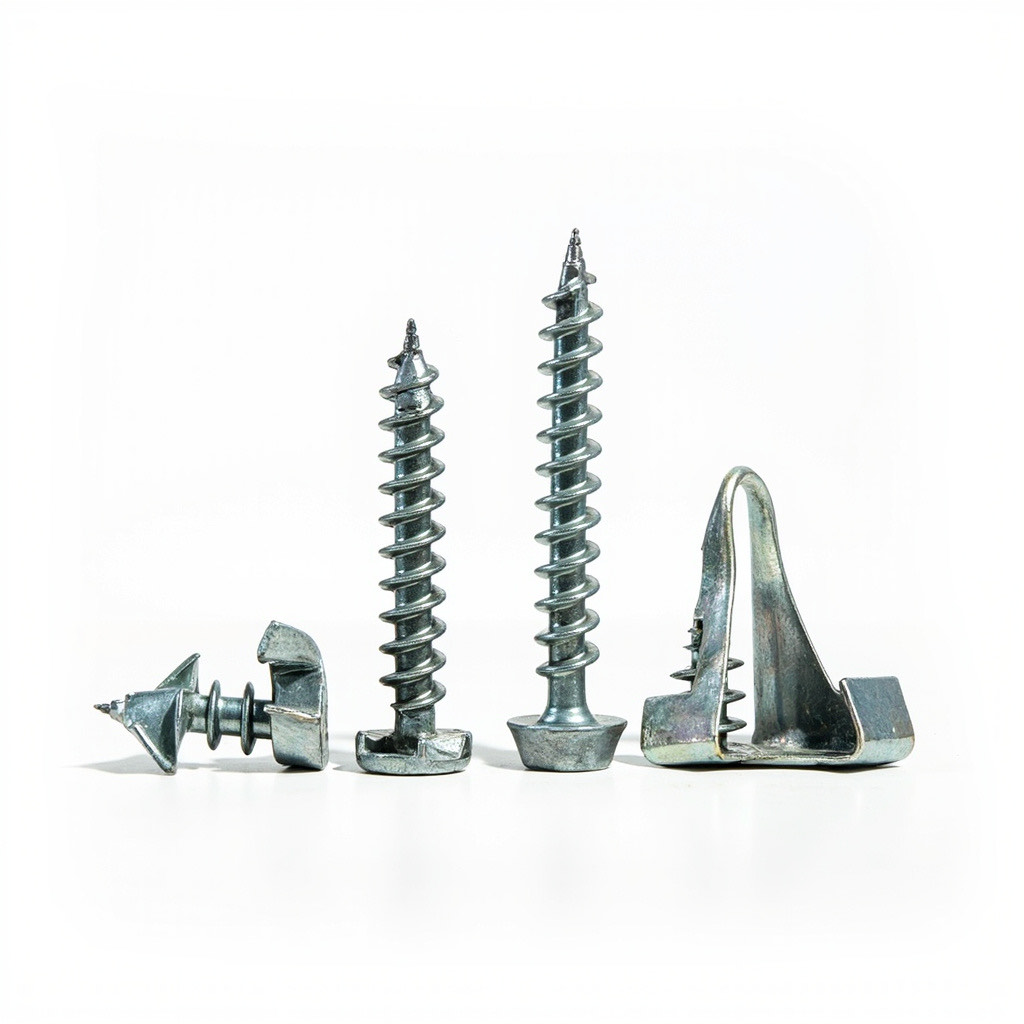
Structural timber construction in Africa uses several specialized fastener types: Nail plates (gang-nail plates) — galvanized steel plates with stamped nail-like teeth on one face; pressed into timber joints at the factory; the primary fastener for prefabricated roof trusses; thickness typically 1.0-2.0mm galvanized; must be protected from moisture to prevent corrosion. Split rings — circular steel rings with a saw-tooth edge, inserted into pre-bored grooves in timber; provides shear resistance in wood-to-wood connections; used in heavy timber structures. Shear plate connectors — similar to split rings but installed in pairs on opposite faces of the timber; used in high-load moment connections. Coach screws (lag screws) — heavy wood screws with a square head; used for moment connections in post-and-beam construction. Related resources: high-tensile bolts anchor bolts stainless steel fasteners hex bolts lock nuts washers self-drilling screws socket screws. This procurement framework applies to fastener sourcing for construction, mining, energy, automotive, and general industrial applications. The decision logic prioritizes quality consistency, supplier reliability, and total cost of ownership over short-term unit price. For B2B buyers in Africa, Latin America, and Southeast Asia, additional considerations include regional customs requirements, container consolidation options, and payment security mechanisms. Standardized specifications that travel across projects reduce training time, RFQ processing time, and supplier onboarding effort. This procurement framework applies to fastener sourcing for construction, mining, energy, automotive, and general industrial applications. The decision logic prioritizes quality consistency, supplier reliability, and total cost of ownership over short-term unit price. For B2B buyers in Africa, Latin America, and Southeast Asia, additional considerations include regional customs requirements, container consolidation options, and payment security mechanisms. Standardized specifications that travel across projects reduce training time, RFQ processing time, and supplier onboarding effort. This procurement framework applies to fastener sourcing for construction, mining, energy, automotive, and general industrial applications. The decision logic prioritizes quality consistency, supplier reliability, and total cost of ownership over short-term unit price. For B2B buyers in Africa, Latin America, and Southeast Asia, additional considerations include regional customs requirements, container consolidation options, and payment security mechanisms. Standardized specifications that travel across projects reduce training time, RFQ processing time, and supplier onboarding effort.
Roof Truss Connection Hardware
Prefabricated timber roof trusses use specific connection hardware: Truss clips (toe-nail plates) — light galvanized steel plates connecting truss members at nodes; toe-nail pattern allows quick field installation; not structural moment connections, but transfers shear loads. Gusset plates — larger galvanized plates covering the intersection of truss members; pressed with hydraulic equipment at the factory; typically 2-3mm galvanized steel. Bolt plates — steel plates with pre-drilled holes for through-bolts; used where bolts are specified in the structural design. Hanger brackets — steel hangers supporting floor joists or purlins from beams or walls; use joist hangers with nail holes for wood-to-wood connections, or I-joist hangers for engineered wood products. Hurricane ties — galvanized steel straps connecting roof trusses to wall plates; essential in high-wind African coastal and storm-prone areas; specify Simpson Strong-Tie or equivalent. Standards-based procurement requires continuous learning as ISO, ASTM, DIN, and GB standards are revised every 3-5 years. Subscribe to standards update notifications and review specifications annually. The most common standards used in international fastener trade are ISO 898-1 (mechanical properties), ISO 3506-1 (stainless), ISO 3269 (acceptance inspection), ISO 4042 (coatings), and ISO 1502 (thread gauges). For B2B buyers, building a standards reference library with at least the top 20 standards relevant to your product mix is essential. Standards-based procurement requires continuous learning as ISO, ASTM, DIN, and GB standards are revised every 3-5 years. Subscribe to standards update notifications and review specifications annually. The most common standards used in international fastener trade are ISO 898-1 (mechanical properties), ISO 3506-1 (stainless), ISO 3269 (acceptance inspection), ISO 4042 (coatings), and ISO 1502 (thread gauges). For B2B buyers, building a standards reference library with at least the top 20 standards relevant to your product mix is essential. Standards-based procurement requires continuous learning as ISO, ASTM, DIN, and GB standards are revised every 3-5 years. Subscribe to standards update notifications and review specifications annually. The most common standards used in international fastener trade are ISO 898-1 (mechanical properties), ISO 3506-1 (stainless), ISO 3269 (acceptance inspection), ISO 4042 (coatings), and ISO 1502 (thread gauges). For B2B buyers, building a standards reference library with at least the top 20 standards relevant to your product mix is essential.
Fasteners for Treated Timber: ACQ and CCA
Treated timber (preserved wood) is standard in African construction for outdoor and structural applications, but the treatment chemicals create fastener compatibility challenges: ACQ (Alkaline Copper Quaternary) — the most common modern treatment; highly corrosive to standard steel, zinc-plated, and even HDG fasteners; requires stainless steel 316 or polymer-coated (e.g., zinc epoxy) fasteners. CCA (Chromated Copper Arsenate) — older treatment still found in existing structures; extremely corrosive to steel; requires HDG or stainless steel; do not use zinc-plated. Hot-dip galvanized fasteners work with CCA but not ACQ at the standard 45μm coating thickness. For ACQ-treated timber in outdoor applications, specify stainless steel 316 or minimum 45μm HDG (heavier HDG may work but is not guaranteed). Always verify the treatment type with the timber supplier and match fastener material accordingly. The comparison methodology above uses typical ranges from industry data and TradeGo procurement experience 2018-2024. Actual market prices fluctuate with raw material costs (steel, zinc, nickel), energy costs, labor costs, and currency exchange rates. For accurate comparison, request identical RFQs from 3-5 qualified suppliers and compare landed cost (product + shipping + insurance + duties). The lowest unit price is rarely the lowest total cost of ownership. The comparison methodology above uses typical ranges from industry data and TradeGo procurement experience 2018-2024. Actual market prices fluctuate with raw material costs (steel, zinc, nickel), energy costs, labor costs, and currency exchange rates. For accurate comparison, request identical RFQs from 3-5 qualified suppliers and compare landed cost (product + shipping + insurance + duties). The lowest unit price is rarely the lowest total cost of ownership. The comparison methodology above uses typical ranges from industry data and TradeGo procurement experience 2018-2024. Actual market prices fluctuate with raw material costs (steel, zinc, nickel), energy costs, labor costs, and currency exchange rates. For accurate comparison, request identical RFQs from 3-5 qualified suppliers and compare landed cost (product + shipping + insurance + duties). The lowest unit price is rarely the lowest total cost of ownership.
African Timber Species and Fastener Holding
African timber species vary significantly in density and fastener-holding characteristics: Hardwoods (teak, African mahogany, iroko) — high density (600-900 kg/m³); excellent fastener holding but require pre-drilling; risk of splitting if drilled too close to edge. Pine species (imported or locally grown) — medium density (400-600 kg/m³); moderate fastener holding; the most common structural timber in African roof trusses; pre-drill for large fasteners. Eucalyptus species (grown in African plantations) — high density (700-900 kg/m³); excellent strength but difficult to nail; pre-drilling is recommended. For structural connections in hardwoods, specify lag screws or coach screws with pilot holes; standard nails may split the wood and provide inadequate pullout resistance. Always consult structural engineer for connection design in non-standard timber species. The verification checklist applies to both initial supplier qualification and ongoing batch inspection. For high-risk applications (load-bearing structural, pressure vessels, mining, marine), add fatigue testing, salt-spray testing (ASTM B117), torque-tension testing, and post-installation inspection. The cost of additional verification is 0.1-0.3% of order value, while undetected quality failures can be 10-100x the order value in damages. The verification checklist applies to both initial supplier qualification and ongoing batch inspection. For high-risk applications (load-bearing structural, pressure vessels, mining, marine), add fatigue testing, salt-spray testing (ASTM B117), torque-tension testing, and post-installation inspection. The cost of additional verification is 0.1-0.3% of order value, while undetected quality failures can be 10-100x the order value in damages. The verification checklist applies to both initial supplier qualification and ongoing batch inspection. For high-risk applications (load-bearing structural, pressure vessels, mining, marine), add fatigue testing, salt-spray testing (ASTM B117), torque-tension testing, and post-installation inspection. The cost of additional verification is 0.1-0.3% of order value, while undetected quality failures can be 10-100x the order value in damages.
Frequently Asked Questions
See frequently asked questions below.
Related resources: high-tensile bolts anchor bolts stainless steel fasteners hex bolts lock nuts washers self-drilling screws socket screws. Supplier evaluation should be a continuous process, not a one-time exercise. Re-evaluate suppliers annually based on delivery performance, quality metrics, price competitiveness, and responsiveness. Maintain a supplier scorecard with weighted metrics: on-time delivery (25%), quality acceptance rate (30%), price competitiveness (20%), responsiveness (15%), and documentation accuracy (10%). Drop suppliers scoring below 70% over a 6-month period and qualify replacements. Supplier evaluation should be a continuous process, not a one-time exercise. Re-evaluate suppliers annually based on delivery performance, quality metrics, price competitiveness, and responsiveness. Maintain a supplier scorecard with weighted metrics: on-time delivery (25%), quality acceptance rate (30%), price competitiveness (20%), responsiveness (15%), and documentation accuracy (10%). Drop suppliers scoring below 70% over a 6-month period and qualify replacements. Supplier evaluation should be a continuous process, not a one-time exercise. Re-evaluate suppliers annually based on delivery performance, quality metrics, price competitiveness, and responsiveness. Maintain a supplier scorecard with weighted metrics: on-time delivery (25%), quality acceptance rate (30%), price competitiveness (20%), responsiveness (15%), and documentation accuracy (10%). Drop suppliers scoring below 70% over a 6-month period and qualify replacements.Can I use standard HDG bolts with ACQ-treated timber?
No — ACQ (Alkaline Copper Quaternary) treated timber will rapidly corrode standard hot-dip galvanized fasteners. The high alkalinity of ACQ accelerates zinc corrosion, and once the zinc is consumed, the underlying steel corrodes. For outdoor ACQ-treated timber applications, specify stainless steel 316 or specialized ACQ-compatible coated fasteners. For indoor ACQ-treated timber (above ground, protected from direct moisture), some manufacturers claim HDG works, but SS316 remains the safer choice.
What is the difference between a coach screw and a lag screw?
Technically, 'coach screw' and 'lag screw' are the same thing — a heavy wood screw with a hex head. In the UK and much of Africa, they are called coach screws; in North America, they are called lag screws. Both have a coarse thread designed for wood and require pre-drilling. The hex head is driven with a spanner or socket wrench. They are used for heavy timber connections where bolts are impractical.
How do I prevent splitting when nailing near the end of timber?
Splitting is caused by the nail wedging the wood fibers apart. Prevention methods: Pre-drill pilot holes — for hardwoods and near end grain, drill a pilot hole slightly smaller than the nail diameter; for softwoods, pre-drilling is only needed near the end. Stagger nail positions — instead of driving two nails in a straight line, stagger them at slight angles; this reduces the splitting plane. Use nails with smaller diameter — spiral shank or annular ring shank nails split less than smooth shank. Nail to the side grain, not end grain where possible — end grain has much lower holding power and splits more easily. Maintain minimum edge distances — typically 2x nail diameter from the edge and 10x nail diameter from the end.
Need timber construction fasteners for your African project? Get a factory quote from TradeGo.
Get Quote